Calling 1450: Austria’s 24/7 Telephone Health Advice Line
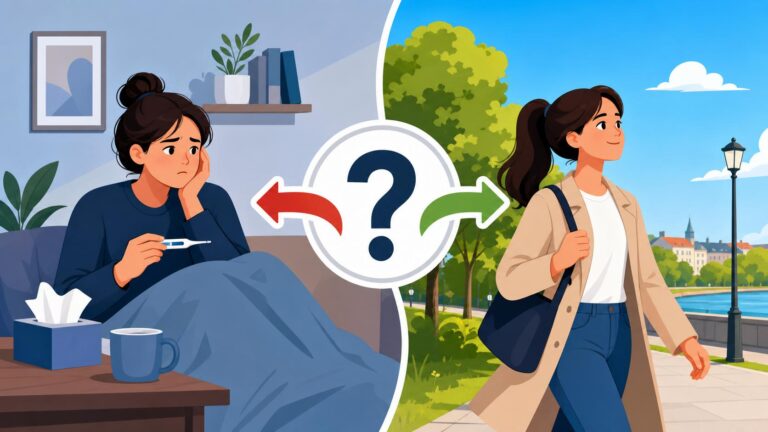
It is 2 AM on a rainy Tuesday in Vienna, your throat feels like it is swallowing glass, and you are spiraling into a Google-induced panic about rare tropical diseases. I remember sitting on my cold kitchen floor during my first year in Austria, terrified that calling an ambulance for "just a fever" would get me scolded by a stern medic. This guide explains how calling 1450, Austria's 24/7 health advice line, provides the perfect middle ground between "toughing it out" and an expensive emergency room visit.
The Role of 1450 in the Austrian Health Infrastructure
The Austrian healthcare system is world-class, but it functions on a very specific logic of order and efficiency. For a newcomer, the first instinct during a midnight health scare is often to rush to the nearest hospital. However, Austria has spent the last decade shifting toward a model of "triage before travel." This is where 1450 comes in. It is not just a phone number; it is the digital gateway to the entire medical network. When you dial those four digits, you are connecting to a system designed to ensure that hospital emergency rooms remain clear for life-threatening traumas while ensuring you get the care you need without waiting six hours in a plastic chair.
The philosophy behind 1450 is simple: "The right care, at the right time, in the right place." In the past, people often struggled to decide if their symptoms warranted a visit to a Finding an English-Speaking Hausarzt in Your District or if they should wait until Monday morning. By calling 1450, you are essentially asking a professional to make that decision for you. This reduces the burden on the Emergency Services in Austria: 144, Hospitals, and Crisis Steps and helps you avoid the "waiting room fatigue" that is common in large urban clinics like Vienna’s AKH or the Donaustadt Hospital.
Furthermore, 1450 is deeply integrated with your social insurance. Whether you are covered by the ÖGK, SVS, or BVAEB, this service is part of your mandatory coverage. You do not need to worry about hidden fees or "out-of-network" charges when you call. It is a taxpayer-funded service meant to keep the population healthy and the system sustainable. Understanding Public vs Private Health Insurance in Austria Explained can help you see why such public services are so robustly funded; they are the frontline of defense for the public health budget.
Why Austria Created the Health Advice Line
The creation of the 1450 line was a direct response to the overcrowding of hospital outpatient departments (Ambulanzen). For years, the "weekend gap"—the period between Friday afternoon and Monday morning when most family doctors are closed—led to a massive influx of patients at hospitals for issues like ear infections or minor rashes. The government realized that a significant percentage of these cases could be managed at home or by a mobile doctor if the patient just had professional guidance.
As an expat, this is a lifesaver. When you are still navigating the nuances of the Austria Healthcare System 2027: Complete Guide for Foreign Residents, having a single, easy-to-remember number takes the guesswork out of the equation. The service was piloted in Vienna, Lower Austria, and Vorarlberg before going nationwide, and it has since become the gold standard for non-emergency medical contact. It acts as a filter, ensuring that only those who truly need hospital-level technology actually go there.
The Triage Philosophy: Right Treatment Right Place
When you call 1450, you are not talking to a simple receptionist. You are speaking with qualified nursing staff who use a scientifically validated software system to assess your symptoms. This process is known as triage. The software asks a series of branching questions: Is there a fever? Are there breathing difficulties? Where exactly is the pain? Based on your answers, the system categorizes your urgency.
The nurse calmly walked me through a series of physical checks—jumping on one leg, pressing specific areas—and concluded it was likely a muscular strain. She was right. That ten-minute phone call saved me an entire night of anxiety in a hospital hallway. This "Right Place" philosophy means they might tell you to stay in bed, go to an Apotheken in Austria: Prescription Workflow and Night Shifts, or, if the situation is serious, they will even dispatch an ambulance for you.
How 1450 Connects with the e-card System
While you don't "swipe" your card over the phone, the 1450 staff will ask for your 10-digit social insurance number. This is the number found on your The Austrian e-card: Registration, Photo Rules, and Usage Guide. By providing this, they can sometimes see your basic history if you haven't opted out of the electronic health record system (ELGA). In the landscape of Austrian health, this connectivity is more seamless than ever.
The integration allows 1450 to be more than just a voice on the line. If the nurse determines you need a non-prescription medication that requires a specific strength, or if they recommend a follow-up that needs to be documented, having your e-card info ready ensures your medical "trail" is consistent. For those still waiting on their physical card, knowing The e-card Photo Requirement: How and Where to Register is crucial, as the 1450 service will eventually need that number to coordinate with other doctors who might be sent to your home.
Decoding the 1450 Experience: What Actually Happens When You Call
Many expats hesitate to call because they don't know what to expect. Will they be rude? Will they hang up if I can't explain "abdominal cramping" in German? Let's break down the actual anatomy of a 1450 call. When you dial 1450, you are first greeted by an automated message (usually in German) before being connected to a human. The call is free from all Austrian networks, so you don't need to worry about your prepaid balance.
The first thing they will ask for is your location. This is vital because 1450 is a decentralized service; your call is routed to a control center in your specific province (Bundesland). If you are in Vienna, you are talking to a specialist who knows exactly which Vienna Healthcare Guide: Top Expat Clinics and Hospitals are currently under the most pressure and which ones have the shortest wait times. If you are in rural Styria, they know which local mountain rescue or community doctor is on duty.
The conversation follows a strict medical protocol. You will be asked about your "Leitsymptom" or primary symptom. It is helpful to have a thermometer and any medications you’ve already taken sitting in front of you. The nurse will spend about 5 to 15 minutes asking detailed questions. Do not feel rushed. The goal of 1450 is to be thorough so that the recommendation they give—whether it’s "wait until morning" or "go to the ER now"—is medically sound.
The Initial Triage Interview
The interview is the heart of the service. The questions are designed to rule out immediate life-threatening conditions. If at any point the nurse realizes you are having a heart attack or a stroke, they will immediately switch the call to the emergency dispatcher (144). You don't even have to hang up and redial. This safety net is why 1450 is always the better choice if you are "unsure" if it's a real emergency.
Be prepared to provide your age, weight, and any pre-existing conditions. If you are Managing Chronic Illness: Diabetes and Hypertension Care, make sure to mention this early. The triage algorithm changes significantly for someone with underlying health issues compared to a healthy 20-year-old. I’ve found that being very literal with your descriptions helps. Instead of saying "I feel bad," say "I have a throbbing pain behind my left eye that started three hours ago."
Medical Guidance and the Protocol System
The advice you receive is based on the "Manchester Triage System" or similar protocols. These are international standards adapted for the Austrian context. After the questions, the nurse will give you a "level of care" recommendation. Level 1 might be self-care (rest, fluids). Level 2 could be seeing a doctor within the next 24 hours. Level 3 might be an immediate visit to an urgent care center or a hospital.
In many cases, they will give you practical tips you can use immediately. If you have a high fever, they might explain how to do "Essigpatscherl" (vinegar compresses), a very traditional Austrian home remedy that even modern nurses still recommend. This level of personalized guidance is something you simply don't get by just reading a wiki. They will also tell you exactly which Pharmacies (Apotheken) and Medication Rules in Austria are open for "Nachtdienst" (night service) in your specific district.
Referral to the Hausärztlicher Notdienst (HÄND)
One of the most powerful features of 1450 is its ability to trigger a home visit. In Austria, we have a service called the Hausärztlicher Notdienst (HÄND), which translates to the Family Doctor Emergency Service. If the 1450 nurse decides your condition is too serious to wait until morning but not serious enough for a hospital, they can dispatch a roaming doctor to your apartment.
This is a game-changer for parents or people living alone. Having a doctor come to your door at 11 PM to check your lungs or prescribe an antibiotic is a luxury of the Austrian system that many expats don't realize exists. The 1450 operator coordinates this, giving the HÄND doctor your details so they arrive prepared. You usually only pay a small co-payment or nothing at all, depending on your insurance. This is much better than trying to find a Booking a Kassenarzt (Public Doctor): Wait Times and Tips in the middle of a flu outbreak.
Language Barriers and Navigating 1450 as an Expat
Let's address the elephant in the room: the German language. Many expats fear that calling 1450 will result in a frustrating exchange where they can't be understood. While the official language of the service is German, the reality is that many staff members are proficient in English, especially in international hubs like Vienna, Graz, or Salzburg. However, it is not a "guaranteed" English-speaking service like a private expat clinic might be.
When you call, it is helpful to start the conversation by asking, "Sprechen Sie Englisch?" (Do you speak English?). If they don't, they will often try to find a colleague who does. If you are stuck in German, keep your sentences short and use "Internationalisms"—words that are similar in both languages like Infektion, Allergie, Diabetes, or Kollaps. The nurses are trained to be patient, as they often deal with elderly residents or people in high-stress situations who might struggle to speak clearly.
If your German is very limited, I highly recommend having a friend or neighbor help with the call. However, don't let a lack of German stop you from calling. The system is designed to save lives, and the operators will do their absolute best to understand the level of danger you are in. It is always better to have a clunky, broken-German conversation with 1450 than to ignore a serious symptom because you were embarrassed.
Does 1450 Health Line Provide English Language Support?
The short answer is: Does 1450 Health Line Provide English Language Support? usually depends on the person who answers, but it is increasingly common. In the larger cities, the dispatch centers recognize the high volume of international residents and try to staff accordingly. If you find yourself in a situation where the language barrier is insurmountable, they may advise you to call 144, where the dispatchers are often trained for multi-language emergency coordination.
In my experience, even if the nurse's English isn't perfect, their "medical English" is usually quite good. They will understand words like "vomiting," "dizzy," or "chest pain." If you are worried, you can pre-write a few key German phrases like "Ich habe Schmerzen" (I have pain) or "Ich brauche Hilfe" (I need help) to get the conversation started.
Strategies for Non-German Speakers
A great strategy for navigating this is to have your The Digital Eltern-Kind-Pass 2026: What Changed for Parents or your medication packaging ready. You can read the names of the medications directly to the operator; medical brands in Austria are often the same or very similar to those in other Western countries. If you are calling for a child, having their weight in kilograms and their temperature in Celsius is non-negotiable.
Another tip is to use the "Health Advisor" apps that sometimes link into the 1450 system. Some provinces have experimented with chat functions or digital symptom checkers that can help bridge the language gap before you even pick up the phone. Always remember that the goal of the 1450 nurse is to help you, not to test your grammar. They would much rather you call and struggle with the language than have you show up at an ER with a condition that has worsened because you waited.
Understanding Technical Medical Instructions
If the nurse gives you instructions, repeat them back to ensure you understood correctly. If they say "Krankenhaus" (hospital), ask which one. If they say "Apotheke," ask for the address. They can often send a summary of the advice via SMS to your phone if you ask. This is incredibly helpful because you can then put that text into a translation app to be 100% sure of the dosage or the follow-up steps recommended.
Also, be aware of the term "e-Rezept." If a doctor is dispatched or if you are given a recommendation that involves a prescription, it will likely be an electronic one. You should know How the e-Rezept (Electronic Prescription) System Works so that you don't feel lost when you arrive at the pharmacy and they tell you your "prescription" is already on your e-card chip.
Knowing When to Call: 1450 vs 144 vs 141
One of the most confusing parts of the Austrian system is the "number soup." You have 144 for ambulances, 1450 for health advice, 141 for the weekend doctor service, and 112 for the general European emergency number. It feels like you need a PhD just to get a Band-Aid. But there is a clear hierarchy that will help you stay calm during a crisis.
The rule of thumb is: If a life is in immediate danger, call 144. If you aren't sure if it's an emergency, but you feel "sick" and your doctor is closed, call 1450. Think of 1450 as the "I don't know what to do" number. Because 1450 can transfer you to 144, but 144 doesn't like being used for "advice," 1450 is actually the safer starting point for non-obvious traumas.
| Number | Name | When to Call |
|---|---|---|
| 1450 | Health Advice Line | Unsure of symptoms, high fever, minor injuries, "weekend gap" issues. |
| 144 | Ambulance (Rettung) | Unconsciousness, severe bleeding, chest pain, inability to breathe. |
| 141 | Doctor on Call | Specifically for finding which GP is working in your area on a Sunday. |
| 112 | European Emergency | Use this if you forget 144; it works everywhere in the EU. |
Emergency Services in Austria: 144, Hospitals, and Crisis Steps
If you do end up needing an ambulance, the 1450 operator will handle the logistics. It is important to know that Emergency Services in Austria: 144, Hospitals, and Crisis Steps are highly professional but strictly regulated. If an ambulance is sent via 1450/144 and it turns out you were "faking" or being extremely negligent, there have been rare cases of being billed, but this almost never happens if you acted in good faith based on medical symptoms.
When the ambulance arrives, they will take you to the "nearest appropriate" hospital. This might not be your favorite one, but it will be the one with the right specialist on duty. If you have private insurance, you might have more options later, but in the acute phase, the public system takes over to save your life.
The Weekend Doctor: Using 141 and 1450 Together
In many parts of Austria, the 141 and 1450 numbers are starting to merge or cooperate closely. 141 (Ärztefunkdienst) is the traditional number for finding an on-call GP. However, 1450 is now the primary point of contact in many provinces like Vienna and Lower Austria. When you call 1450 on a Sunday morning because of a screaming earache, they will likely look into the 141 database to see which doctor in your district is actually holding office hours.
This saves you the trouble of driving around to three different closed clinics. They will give you the exact address and even tell you if that doctor speaks English if that information is in their system. This is especially helpful if you are new and don't yet have a rapport with a local Finding Medical Care in Austria: Clinics, Hospitals, and Referrals.
When Your Hausarzt is Unavailable
Your Hausarzt (GP) is your primary gatekeeper, but they have lives too. Most are closed by 6 PM and don't work weekends. If you have a question about a recurring issue or a new symptom during these "off-hours," 1450 is your bridge. Do not wait until Monday if you are feeling significantly worse. The 1450 service can provide "bridging advice" to get you through the night safely.
They can also tell you if there is an "Erstversorgungszentrum" (Primary Care Center) open nearby. These are newer, high-capacity clinics that stay open later than traditional doctors and have more diagnostic equipment. They are a middle ground between a small GP office and a massive hospital.
Practical Scenarios: When 1450 is Your Best Friend
To truly understand the value of 1450, let's look at a few common expat scenarios where this number is much better than a Google search. Austria’s environment and lifestyle come with their own specific health risks, from the mountains to the local viruses.
One major scenario is the "Pediatric Panic." Children always seem to get sick at 9 PM on a Friday. Calling 1450 allows a parent to get an objective assessment of a fever. The nurse can tell you if a "39.5C" fever is cause for an ER trip or if you should use a suppository and call back in two hours. This prevents parents from dragging a sick child through the cold to a crowded waiting room unless absolutely necessary.
Another scenario is the "Expat Injury." Maybe you went hiking in the Vienna Woods and twisted your ankle, or you had a minor kitchen accident. Calling 1450 can help you decide if you need an X-ray (which requires a hospital or a specialized radiologist) or if a pressure bandage and elevation are enough. They can even guide you on how to apply that bandage over the phone.
Tick Bites and Alpine Safety
If you spend any time in the Austrian outdoors, you will eventually encounter a tick. Austria is a high-risk area for FSME (Tick-borne encephalitis) and Lyme disease. If you find a tick and aren't sure how to remove it, or if a red ring starts to form days later, call 1450. They have specific protocols for tick-borne illnesses and can tell you if you need to see a doctor for antibiotics immediately.
They will also ask if you have had your Tick-Borne Encephalitis (FSME) Vaccine: Why You Need It. This is one of the most important vaccines for residents in Austria. If you haven't had it, the 1450 nurse will strongly advise you to get it once your current symptoms are managed. For those who love the mountains, having this advice line is as essential as a good pair of boots.
Managing High Fevers and Pediatric Concerns
When dealing with children, the 1450 nurses use even stricter protocols. They will ask about the child's mood: Is the baby "shreierisch" (screaming) or "apathisch" (apathetic)? These are the nuances that help them decide if a home-visit doctor should be sent. If you are in Vienna, they might refer you to the specific pediatric emergency service (Kindermedizinischer Notdienst).
I’ve found that 1450 is incredibly reassuring for new parents. They don't judge you for being worried. They provide a calm, professional voice that helps you regain control. They can also explain the dosages for common Austrian child medicines like Nureflex or Mexalen, ensuring you don't make a mistake in your stressed state.
Dealing with Sudden Pain and Minor Injuries
Sudden pain—like a toothache or a suspected urinary tract infection—can be agonizing. 1450 can help you find an Emergency Services in Austria: 144, Hospitals, and Crisis Steps or a dentist who is on duty for emergencies. In Austria, the "Zahnärztlicher Notdienst" (Emergency Dentist) is often a rotating shift, and 1450 has the most up-to-date schedule.
They can also advise on whether you should take an Ibuprofen or Paracetamol in the meantime. Understanding the difference—Paracetamol vs Ibuprofen: What to Ask For at the Apotheke—is something the nurse can clarify based on your specific pain and medical history. This prevents you from taking something that might mask a symptom they need to see later.
Integration with Modern Digital Health Tools
As we move through 2026, the 1450 service is becoming even more high-tech. With the widespread adoption of ID Austria, your health data is more portable than ever. If you have the "Gesundheit" app on your phone, you may eventually be able to "send" your vitals or a photo of a rash directly to the 1450 center while you are on the line.
This digital shift also means that the advice you get is recorded in your ELGA (Electronic Health Record) if you haven't opted out. This is incredibly helpful because when you see your regular doctor on Monday, they can see exactly what the 1450 nurse observed and what advice was given. It creates a "closed loop" of care that prevents things from falling through the cracks.
How the e-Rezept Electronic Prescription System Works
If you call 1450 and they send a HÄND doctor to your house, that doctor will likely issue an e-Rezept. You won't get a yellow piece of paper. Instead, the doctor "uploads" the prescription to your e-card. You simply take your physical card to any Pharmacies (Apotheken) and Medication Rules in Austria that is open, and they scan it to see what you need.
This system is incredibly efficient for late-night illness. It means you don't have to worry about losing a paper slip in the dark or the doctor running out of prescription pads. You should familiarize yourself with How the e-Rezept (Electronic Prescription) System Works because it is now the standard across all of Austria, and 1450 is a key part of this paperless workflow.
Accessing Results via ELGA and ID Austria
If 1450 refers you to a hospital for a blood test or an X-ray, you no longer have to wait for a letter in the mail to see the results. By using your ID Austria, you can log into the ELGA portal and see your "Befunde" (findings) often within hours of the test being completed. This allows you to have a more informed follow-up conversation with your Hausarzt later.
Knowing how to navigate these digital tools is part of being a "savvy" resident in modern Austria. If you haven't yet set up your digital ID, now is the time. It turns the 1450 service from a simple phone call into a sophisticated remote health management experience.
Important Medical Numbers at a Glance
| Service | Phone Number | Best For |
|---|---|---|
| Health Advice | 1450 | "Should I see a doctor?" questions. |
| Emergency | 144 | Immediate life-threats. |
| Weekend Doctor | 141 | Finding an open GP on Sundays. |
| European Emergency | 112 | Universal emergency backup. |
| Poison Control | 01 406 43 43 | Swallowing chemicals or unknown plants. |
| Psychiatric Crisis | 01 313 30 | Immediate mental health support (Vienna). |
Legal and Medical Disclaimer
The information provided in this guide is for educational and informational purposes only. It is based on the general functioning of the Austrian healthcare system. While calling 1450 is a recommended step for health advice, this guide does not replace the professional medical judgment of a qualified healthcare provider. Always follow the direct instructions of emergency dispatchers (144) or the 1450 medical staff. If you believe you are experiencing a life-threatening emergency, do not wait; dial 144 immediately. The author and publisher are not liable for any actions taken based on the content of this article.