The Austrian e-card: Registration, Photo Rules, and Usage Guide
Trying to decipher the Austrian medical system while nursing a fever is a special kind of hell that I wouldn't wish on anyone. When I first moved to Vienna, I spent three hours in a waiting room because I didn't realize I needed a specific referral for a simple ultrasound. This guide simplifies the bureaucratic maze, ensuring you get care without the headache.
The Foundation of the Austrian Healthcare System
The Austrian healthcare system is built on a principle of social solidarity, often referred to as the "Bismarckian" model. This means that access to care is a right, not a privilege, funded primarily through mandatory contributions from the working population. For a newcomer, the first thing to understand is that you don't really "choose" your public insurance provider; it is determined by your employment status and location. If you are a standard employee, you will likely be under the Navigating Social Insurance: ÖGK, SVS, and BVAEB Overview. This system ensures that even if you lose your job or face a chronic illness, your coverage remains stable, though the administrative wheels can sometimes grind slowly.
The beauty of this system lies in its universality. Whether you are a high-earning CEO or a student working a part-time job, the quality of the actual medical treatment remains consistently high. However, the "experience" of receiving that care can vary wildly depending on whether you stay strictly within the public system or opt for private add-ons. I remember my first visit to an ÖGK clinic; it felt a bit like a high-efficiency factory. You check in, you wait, you see a doctor for seven minutes, and you leave. It’s effective, but it lacks the "bedside manner" or cozy environment some expats might be used to from systems in the US or UK.
The system has become increasingly digitized. We’ve moved past the days of carrying stacks of paper records between specialists. While the bureaucracy still loves its stamps and signatures, the backend is surprisingly modern. Your entire medical history, prescriptions, and lab results are increasingly tied to your digital identity. This integration is designed to prevent drug interactions and redundant testing, though as an expat, setting this up requires navigating the ID Austria system, which is its own unique hurdle.
Mandatory Social Insurance and Your Gross Pay
If you’ve looked at your first Austrian payslip (Lohnzettel) and gasped at the difference between your gross and net salary, you’ve seen the healthcare system in action. A significant chunk of those deductions goes toward social insurance, which covers health, accident, and pension insurance. Unlike some countries where you buy a "plan," in Austria, your contribution is a fixed percentage of your income. This creates a safety net where those who earn more subsidize the care for those who earn less, but everyone receives the same standard of public hospital care.
For those who are self-employed, the process is slightly different. You will be insured under the SVS (Social Insurance for the Self-Employed). It’s important to note that SVS members often have a small deductible (Selbstbehalt) of around 20% for certain services, whereas ÖGK members generally have no co-pays for standard doctor visits. This is a common point of confusion for freelancers who transition from a "regular" job to self-employment and are surprised when a small bill arrives in the mail after a routine checkup.
The e-card: Your Golden Ticket
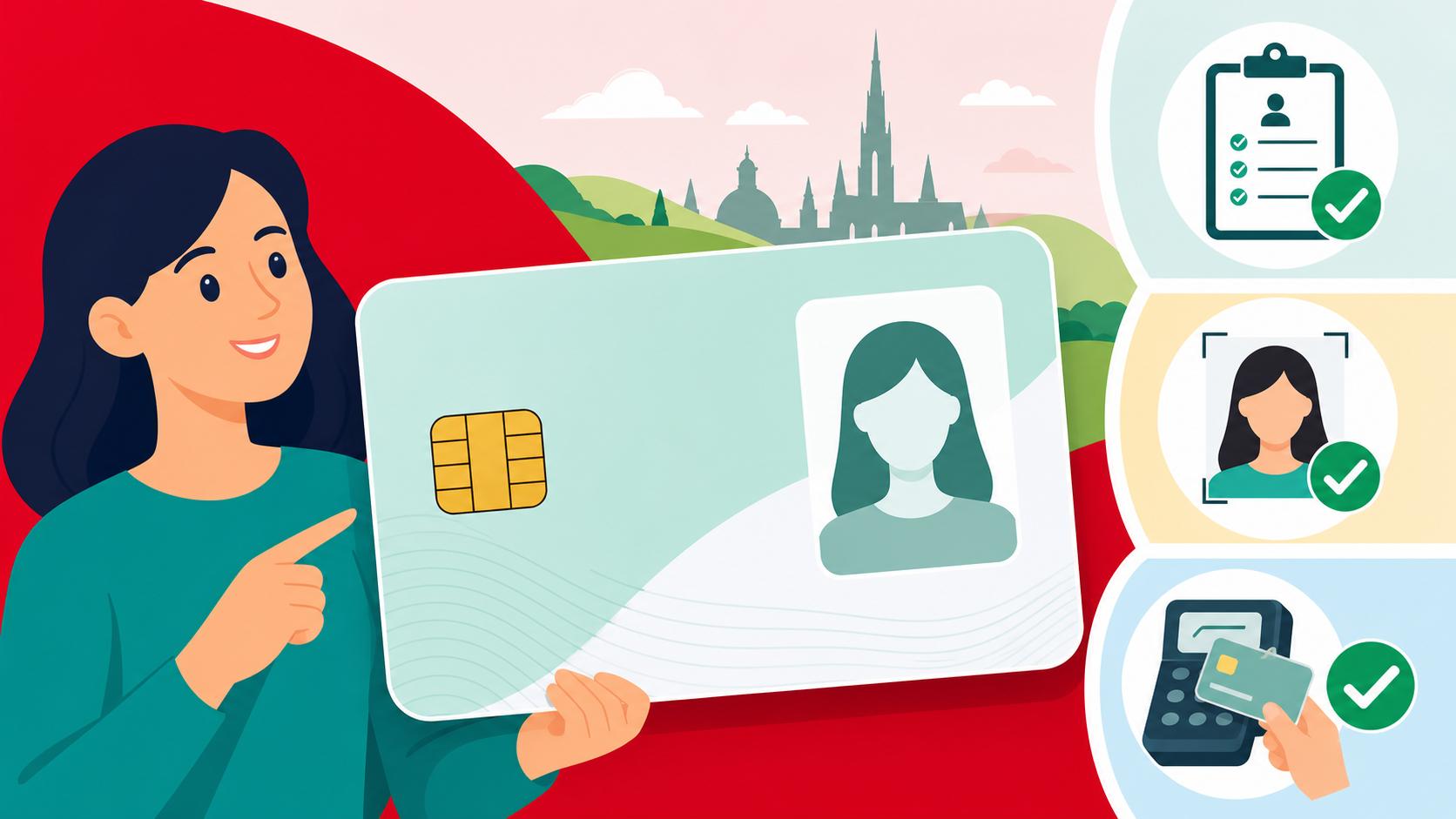
The e-card is the physical manifestation of your right to healthcare. It is a small, green (or blue) plastic card that you must bring to every single medical appointment. Without it, you may be asked to pay a deposit or the full private rate upfront. In recent years, the rules for the e-card have tightened significantly, particularly regarding The Austrian e-card: Registration, Photo Rules, and Usage Guide. If the authorities don't have a photo of you on file (for example, from an Austrian driver's license or passport), you must proactively provide one, or your card will be deactivated.
Many expats get caught in a loop where their employer has registered them, but the e-card hasn't arrived because of a missing photo or a mismatch in the Meldezettel (address registration). If you are waiting for your card, you can usually request a "replacement document" (Ersatzbeleg) from the insurance office, which acts as a temporary pass. Always check that your name is spelled exactly as it appears on your passport; even a missing middle name can cause data sync issues between the insurance provider and the doctors' offices.
ELGA: The Digital Health Record
ELGA is Austria’s electronic health record system. It’s designed to allow doctors, hospitals, and pharmacies to access your health data seamlessly. For example, if you see a specialist in Salzburg and then visit your GP in Vienna, the GP can see the results of your blood tests without you having to carry a physical folder. While this is incredibly convenient, some residents have privacy concerns and choose to "opt-out" of ELGA.
As a foreign resident, I generally recommend staying in ELGA. It makes the How the e-Rezept (Electronic Prescription) System Works much smoother. When a doctor prescribes medication, it is uploaded to your e-card. You simply go to any pharmacy (Apotheke), hand over your card, and they see exactly what you need. No more squinting at a doctor’s illegible handwriting on a scrap of paper. However, if you do choose to opt out, be prepared to manage all your medical documentation manually, which can be a nightmare during complex treatments.
Navigating the Public vs. Private Divide
One of the most frequent questions I get from new arrivals is whether they need private insurance. Austria has a "two-tier" system, but not in the way you might think. Everyone has public insurance, but many people choose to pay for private supplemental insurance to skip waiting times or get a private room in the hospital. Understanding the difference between a Public vs Private Health Insurance in Austria Explained is the key to managing your expectations and your budget.
In the public system, you visit a "Kassenarzt" (a doctor who has a contract with the insurance funds). These doctors are highly qualified, but their clinics are often "high volume." You might find it difficult to get an appointment for a non-urgent matter within a week, and once you’re in the room, the consultation might feel rushed. On the other hand, the private system ("Wahlarzt") offers a much more relaxed experience, with longer appointment times and often more English-speaking options, but you have to pay the bill yourself and seek a partial refund later.
Understanding the Kassenarzt (Public Doctor)
A Kassenarzt is a doctor who bills the insurance company directly. When you visit them, you swipe your e-card, and you never see a bill. This is the backbone of the system. The challenge is that the best Kassenärzte—especially specialists like dermatologists or ophthalmologists—can have waiting lists that stretch for months.
To navigate this, many expats use platforms like DocFinder to see which doctors are currently accepting new patients. It’s also helpful to look for doctors in less "trendy" districts. While everyone wants a doctor in the 1st or 7th district, you might find a fantastic, English-speaking GP in the 10th or 21st district with much shorter wait times. Just be prepared for the waiting room culture; even with an appointment, it’s common to wait 30 to 60 minutes past your scheduled time.
The Wahlarzt (Private Doctor) and Reimbursements
A Wahlarzt (Choice Doctor) does not have a direct contract with the public insurance funds. You pay them directly—usually between €100 and €250 per visit—and then you submit the invoice to your insurance (like the ÖGK) to get a portion of it back. The rule of thumb is that you get back 80% of what a public doctor would have been paid for that same service. Crucially, this is often much less than 80% of what you actually paid.
For example, if you pay a private cardiologist €200, the ÖGK might determine that a public cardiologist would have been paid €40, so they refund you €32. You are still out of pocket €168. Despite this, many expats find Using a Wahlarzt (Private Doctor) and Claiming 80% Refunds to be worth it for the speed and the quality of communication. If you have a complex health issue that requires long discussions, a Wahlarzt is often a better choice than a public doctor who is incentivized to see a patient every ten minutes.
Private Supplemental Insurance (Zusatzversicherung)
Private supplemental insurance is an "add-on" that covers the gaps left by the public system. There are two main types: outpatient (Ambulant) and inpatient (Stationär). Outpatient coverage helps pay the remaining costs of Wahlarzt visits, while inpatient coverage ensures you get a "first-class" (Sonderklasse) experience in the hospital, which usually means a private or semi-private room and the ability to choose your surgeon.
Is it worth it? If you are young and healthy, maybe not. But as you age, or if you have children, the peace of mind can be significant. The Austrian public hospitals are medically excellent, but the standard rooms can have three to six beds. If the idea of recovering from surgery in a room with five snoring strangers sounds unappealing, private insurance is the solution. Just keep in mind that private insurers in Austria are very strict about pre-existing conditions. If you try to sign up after you've already been diagnosed with a chronic back issue, they will likely exclude that condition from your coverage.
Registration and Enrollment Processes
The administrative side of Austrian healthcare is where most expats feel the "administrative hurdle" the most. Depending on your visa and work status, the way you enter the system changes. It isn’t always automatic, and a mistake in the beginning can lead to months without an active e-card or, worse, a massive back-payment bill from the insurance authorities.
If you are moving here for a job, your employer is legally required to register you with the health insurance provider (usually the ÖGK) on your first day of work. You should receive a registration confirmation (Abmeldung/Anmeldung) in the mail within a couple of weeks. If you haven't received anything, don't wait—check with your HR department immediately. I’ve known people who worked for three months only to realize a typo in their Social Security number meant they weren't actually insured the whole time.
Employment-Based Enrollment (ÖGK)
Most salaried employees in Austria are covered by the Österreichische Gesundheitskasse (ÖGK). This is the largest provider and handles the vast majority of residents. Once you are registered, your e-card is usually triggered to be sent to your registered address. It’s vital that your name is on your mailbox; the Austrian Post is notorious for returning official mail to the sender if the name on the letter doesn't match the name on the box.
For non-EU citizens, the ÖGK Enrollment Step-by-Step for Employed Residents in Austria is often a prerequisite for the final approval of a residence permit like the Red-White-Red card. Sometimes, the MA 35 (Immigration Office) will ask for "proof of health insurance." Your employment contract is usually enough to start the process, but the official insurance data record (Versicherungsdatenauszug) is the gold standard of proof. You can pull this record yourself if you have ID Austria set up.
Self-Employed and Freelancers (SVS)
If you are a "Neue Selbständige" (New Self-Employed) or have a "Gewerbe" (Trade License), you fall under the SVS. This is where things get slightly more expensive and complicated. The SVS contributions are based on your profit, but since they don't know your profit in your first year, they charge a minimum monthly amount. This can be a shock to the system for a freelancer who is just starting out and hasn't made much money yet.
The SVS Health Insurance: Rules for Freelancers and Self-Employed also include a small deductible (Selbstbehalt). When you visit a doctor, the doctor bills the SVS, and then a few weeks later, the SVS sends you a bill for 20% of the cost. You can actually reduce this deductible to 10% if you participate in their "Health Partner" program and complete certain preventive checkups. It’s a bit of extra paperwork, but it saves money in the long run and encourages you to stay on top of your health.
Co-insuring Family Members (Mitversicherung)
One of the great features of the Austrian system is that you can often cover your family members under your own policy for little to no extra cost. This is known as "Mitversicherung." Typically, children are covered for free. A spouse or partner can also be co-insured, although if they are capable of working and don't have children to care for, there might be a "supplemental contribution" (Zusatzbeitrag) of around 3.4% of your income.
The process of Co-insuring Family Members (Mitversicherung) on Your Policy requires submitting birth certificates and marriage certificates—often with certified German translations and apostilles. If you are in a registered partnership or a long-term cohabiting relationship (Lebensgemeinschaft), you can also co-insure your partner, but you usually have to prove you have lived at the same address for at least ten months. It’s a lifesaver for families where one person is working and the other is still learning German or looking for a job.
| Insurance Type | Target Group | Key Feature | Cost Structure |
|---|---|---|---|
| ÖGK | Salaried employees, students | Most common, no deductibles for GP | % of gross salary |
| SVS | Freelancers, business owners | Includes "Health Partner" discounts | Based on profit, has 20% co-pay |
| BVAEB | Civil servants, railway workers | Slightly better dental coverage | Fixed % with some deductibles |
| Private | High-income, expats, families | Choice of surgeon, private rooms | Fixed monthly premium |
Seeking Medical Care: Specialists and General Practitioners
Once you have your e-card in hand, the next step is actually using the system. In Austria, the "Hausarzt" (General Practitioner) is your gatekeeper. While you can go to some specialists directly, it is almost always better to go through your GP first. Not only do they keep your central file updated, but they also provide the necessary "Überweisung" (referral) that many specialists require to accept you as a public patient.
Finding a doctor who speaks English is generally easy in cities like Vienna, Graz, or Salzburg, but it can be a challenge in more rural areas of Tyrol or Styria. Even if a doctor speaks English, their reception staff might not. I’ve found that many offices prefer to be contacted via email for appointments if your German is shaky, as it gives them time to use a translator if needed. Alternatively, look for doctors who have an online booking system like Doctolib or DocFinder.
Finding an English-Speaking Hausarzt
Your Hausarzt is the person you’ll visit for everything from a common cold to a Sick Leave (Krankenstand): Employer Notification and Doctor Notes. Finding one you trust is vital. When searching, look specifically for doctors who list "Fremdsprachen: Englisch" on their profile. In Vienna, the medical chamber (Ärztekammer) has a searchable database where you can filter by language and district.
Don't be discouraged if the first three doctors you call say they aren't taking new patients (Aufnahmestopp). This is common in densely populated areas. A tip I learned: if you are a resident in a specific district, a Kassenarzt in that same district is generally more likely to feel a "duty" to take you on. If you are truly struggling, you can contact the ÖGK directly, and they can sometimes provide a list of doctors in your area who have capacity.
The Referral System (Überweisung)
In many countries, you just call a specialist and book an appointment. In Austria, the system prefers that you have an Überweisung. For certain specialists, like a radiologist (for X-rays or MRIs) or a laboratory (for blood work), a referral is mandatory if you want the insurance to pay for it. For others, like a gynecologist or a dentist, you can go directly without a referral.
If you go to a specialist without a referral when one is required, you might be treated as a private patient and have to pay the full cost. I learned this the hard way when I tried to get a blood test for "personal curiosity" without a doctor's order. The lab bill was over €200. If you think you need to see a specialist, visit your Hausarzt first, explain your symptoms, and get that piece of paper. It saves you money and ensures that the specialist sends a report back to your GP, keeping your medical records organized in one place.
Pharmacies (Apotheken) and Prescription Rules
Pharmacies in Austria (Apotheken) are easy to spot thanks to the large red "A" sign. They are not like drugstores in the US or UK; you cannot buy aspirin or cough syrup in a supermarket. Everything medicinal must be bought at an Apotheke. If you have a prescription on your e-card (an e-Rezept), the pharmacist will scan your card and give you the medication. You will pay a "prescription fee" (Rezeptgebühr), which is currently around €7.10 per item.
If you need a pharmacy at night or on a Sunday, look for the "Nachtdienst" (night shift) schedule. One pharmacy in every area is always open 24/7. Note that there is a small "night fee" (usually a few Euros) for purchases made outside of regular business hours. For expats, it’s also important to know that many medications that are over-the-counter in other countries (like high-dose Ibuprofen or certain allergy meds) require a prescription here. Always check Pharmacies (Apotheken) and Medication Rules in Austria for the latest regulations on bringing medication from home.
Emergency Services and Hospital Care
No one wants to think about emergencies, but knowing the "numbers" in Austria is literally a lifesaver. Unlike the US "911" or the UK "999," Austria has specific numbers for different types of emergencies. If you are in a life-threatening situation, dial 144 for an ambulance. If you are sick but it’s not an emergency, dial 1450 for the health advice hotline.
When an ambulance arrives, you will be taken to the nearest public hospital that has capacity and the right specialty. Public hospitals in Austria are top-tier. Even without private insurance, you will receive world-class surgery and care. The "1450" service is particularly helpful because it’s staffed by medical professionals who can tell you whether you should wait for your GP to open on Monday or if you need to head to an emergency room (Notaufnahme) immediately.
Knowing When to Call 144 vs. 1450
Dialing 144 is for acute, life-threatening situations—heart attacks, major accidents, or unconsciousness. The dispatchers are highly trained, but they may not always speak perfect English, though they can usually transfer you to someone who does. If you call an ambulance for something trivial (like a sore throat), you might be billed for the transport cost, which can be several hundred Euros.
For everything else that happens outside of office hours, dial 1450. This service is available 24/7 and is incredibly useful for parents. If your child has a sudden high fever at 2:00 AM, the 1450 nurse can guide you through the next steps. They can even send a "mobile doctor" (Ärztefunkdienst) to your house in some cases, which is a much better alternative than sitting in a crowded emergency room for six hours with a sick toddler.
Emergency Rooms and Triage Expectations
The Notaufnahme (Emergency Room) in an Austrian hospital uses a triage system. If you arrive with a broken leg, you will be seen before someone who has a deep cut on their finger. This seems obvious, but the wait times can be grueling—sometimes 4 to 8 hours for non-life-threatening issues. Expats are often advised to bring a book, a phone charger, and some snacks if they have to go to the ER.
When you check into the ER, you will need your e-card and a form of ID. If you don't have your e-card, they will still treat you, but you'll have to provide your insurance details later. Most hospitals in big cities have English-speaking staff, but in a high-stress emergency environment, communication can be blunt. Don't take it personally; the goal is medical stabilization, not customer service. For a more tailored experience, check out the Vienna Healthcare Guide: Top Expat Clinics and Hospitals.
Hospital Stays and "Class" Systems
If you are admitted to a hospital, you will experience the "class" system of Austrian healthcare. "General Class" (Allgemeine Klasse) is covered by your public insurance. You will be in a room with other patients, and you will be treated by the doctor on duty. The care is excellent, and you will only pay a small daily "hospital contribution" fee (usually around €12 to €15 per day for the first 28 days).
If you have private insurance or choose to pay out of pocket, you can opt for "Special Class" (Sonderklasse). This gets you a private or two-bed room, better food options, and the ability to choose your specific consultant or head of the department. Medically, the treatment is often the same, but the comfort level is significantly higher. Some private insurance plans also cover the cost of a "rooming-in" partner if your child is the one hospitalized, which can be a huge relief for expat parents with no local support system.
Specialized Care: Dental, Vision, and Mental Health
Specialized care in Austria is where you might find the public insurance "coverage" a bit thin. While standard medical care is robust, dental and vision care are areas where out-of-pocket costs are common. Mental health is another area where the public system is currently struggling to keep up with demand, leading many expats to seek private options.
It’s important to manage your expectations: the ÖGK will cover a "functional" solution (like a silver filling or a basic pair of glasses for a child), but they won't cover an "aesthetic" solution (like a white filling on a back molar or high-end designer frames). If you want the best materials and the latest technology, you should be prepared to pay the difference or invest in a specialized supplemental insurance policy.
Dental Care (Zahnarzt) and Costs
A visit to the dentist (Zahnarzt) for a checkup is covered by your e-card. However, anything beyond a simple extraction or a basic filling usually incurs a cost. For example, professional dental cleaning (Mundhygiene) is highly recommended twice a year but is almost never covered by the ÖGK for adults. It usually costs between €100 and €180.
If you need a crown, an implant, or braces for your child, the costs can escalate into the thousands. The ÖGK provides small subsidies for these treatments, but the majority of the bill will be yours to pay. This is why many people in Austria have a separate dental insurance policy or a "savings fund" specifically for dental work. Always ask your dentist for a "Heilkostenplan" (cost estimate) before starting any major work so you aren't surprised by the final bill.
Vision and Eye Care (Augenarzt)
Eye care follows a similar logic. A medical exam by an Augenarzt (Ophthalmologist) to check the health of your eyes is covered by your e-card. However, getting a prescription for glasses is sometimes handled by the doctor and sometimes by the optician. The ÖGK provides a very small contribution toward the cost of glasses, but only if your prescription is quite strong.
For most adults, the cost of frames and lenses is entirely out-of-pocket. If you are looking for an Eye Care (Augenarzt): Glasses, Contacts, and Insurer Contributions, it's worth noting that many opticians (like Fielmann or Pearle) offer free eye tests if you buy your glasses from them. This can be faster than waiting three months for an appointment with a public ophthalmologist.
Mental Health Support and Counseling
The demand for mental health services in Austria has skyrocketed, and the public system hasn't quite caught up. Getting a therapy spot that is fully covered by the ÖGK is notoriously difficult and can involve waiting lists of six months or more. Most expats end up seeing a private therapist and paying between €90 and €150 per session.
You can apply for a partial refund from your insurance provider for these private sessions, but you need a "referral" from your GP and a diagnosis that qualifies as a "illness" under their guidelines. Despite the hurdles, the quality of Mental Health in Austria: Counseling, Therapy, and Expat Support is very high, with many practitioners offering services in English. If you are in a crisis, there are also 24/7 hotlines and "social-medical" services (Sozialmedizinischer Dienst) in every major city that provide immediate, free assistance.
Family Health and Preventive Services
Austria is a fantastic place to raise a family, partly because the healthcare system for children and expectant parents is so comprehensive. The focus here is heavily on prevention. From the moment you find out you’re pregnant, you are entered into a structured program of care that ensures both the mother and child are monitored closely.
This proactive approach extends to everyone through the annual "Gesundenuntersuchung" (health checkup). I highly recommend taking advantage of this. It’s free for everyone over the age of 18, and it’s a great way to build a relationship with your Hausarzt while getting a "baseline" for your health. Plus, as mentioned earlier, for SVS members, these checkups can lead to a lower insurance deductible.
The Eltern-Kind-Pass for Parents
The Family Health: Eltern-Kind-Pass 2026 and Maternity Care System is a crucial document for parents. It’s a small booklet (now transitioning to a digital format) that outlines a series of mandatory exams for the mother during pregnancy and for the child after birth. These exams are essential not only for health but also for receiving the full amount of "Kinderbetreuungsgeld" (childcare allowance).
If you miss these appointments, the government can actually reduce your monthly allowance payments. The exams include ultrasounds, blood tests, and developmental checks for the baby. Most of these are done by your gynecologist and later your pediatrician (Kinderarzt). Finding an English-speaking pediatrician who is accepting new patients can be tough, so I recommend starting your search as soon as you have your "Mutter-Kind-Pass" in hand.
Annual Checkups (Gesundenuntersuchung)
Once a year, you are entitled to a Preventive Care: Gesundenuntersuchung and Routine Checkups. This includes blood tests to check cholesterol and blood sugar, a physical exam, a skin check, and a consultation with your GP about your lifestyle and risk factors. It’s completely free—no prescription fee, no co-pay.
I make an appointment for mine every January. It’s a good way to get a full blood panel done without needing a specific symptom. If the doctor finds anything concerning, they will issue referrals for further testing. It’s one of the best "perks" of the Austrian system, and it’s surprising how many expats don’t know about it.
Mandatory Vaccinations and School Health
Austria has a recommended vaccination schedule, but unlike some other countries, many vaccinations are not technically "mandatory" for school entry. However, they are highly encouraged, and some (like the FSME/tick-borne encephalitis vaccine) are essential due to the high risk in the Austrian forests.
Schools also conduct regular health checks by a "Schularzt" (school doctor). These are basic screenings for posture, vision, and hearing. If the school doctor finds an issue, they will send a note home asking you to take your child to a specialist. It’s a helpful safety net that catches issues parents might miss in the busyness of daily life. For more details on child health, see the guide on Pediatricians (Kinderarzt): Required Vaccines and Checkups.
Administrative Realities and Costs
Finally, we have to talk about the "non-medical" part of medical care: the paperwork. Austria loves its protocols. Whether you are calling in sick to work or trying to get a refund for a private doctor, there is a specific way things must be done. Failure to follow these rules can result in lost pay or denied claims.
One thing that surprises many expats is the Sick Leave (Krankenstand): Employer Notification and Doctor Notes rule. In many countries, you can just tell your boss you have a headache and stay home. In Austria, you often need a formal "Krankenmeldung" from your doctor starting from the first or third day of illness, depending on your employment contract.
Sick Leave (Krankenstand) Protocols
If you are too sick to work, you must notify your employer immediately (usually before your shift starts). You then need to see a doctor. The doctor will "open" a Krankenstand in the system. This information is sent to the insurance company and your employer. While you are on sick leave, your pay continues (Entgeltfortzahlung), but you must follow the doctor's "rules."
For example, if your doctor says you are only allowed to leave the house for medical appointments or light walks (Ausgehzeiten), and your boss sees you at a nightclub, you could be fired for cause. The system is designed to help you recover, but it’s strictly monitored. Always make sure your doctor "closes" the Krankenstand once you are healthy enough to return to work.
Yearly Service Fees and Prescription Charges
In addition to your monthly salary deductions, there are a few small "extra" costs. There is a yearly "e-card service fee" (around €13 to €15) that is automatically deducted from your salary or charged via your insurance. There is also the prescription fee mentioned earlier.
If you have a very low income or a chronic illness that requires many medications, you can apply for an "exemption" (Gebührenbefreiung) from these fees. Once you have reached a certain "cap" of prescription spending for the year (usually 2% of your net income), the system should automatically stop charging you for prescriptions for the remainder of the year. This is a vital safeguard for those with long-term health needs.
Language Barriers and Medical Translation
While many doctors speak English, the technical nature of medical discussions can be overwhelming in a foreign language. If you are facing a major surgery or a complex diagnosis, you have the right to an interpreter. In public hospitals, you can often request a Medical Translation Services: Interpreters for Hospital Visits in advance.
Don't be afraid to bring a German-speaking friend with you to important appointments. Most doctors are perfectly fine with this. Also, use your phone! Translation apps have improved significantly, and I’ve used them many times to translate specific medical terms on the fly. Being your own advocate is the most important skill you can have in any healthcare system, and Austria is no exception.
Disclaimer
The information provided in this guide is for general informational purposes only and does not constitute professional medical or legal advice. While every effort has been made to ensure the accuracy of the details regarding the Austrian healthcare system in 2026, laws and regulations can change frequently. Always consult with the official websites of the ÖGK, SVS, or your private insurance provider for the most current information regarding your specific situation.