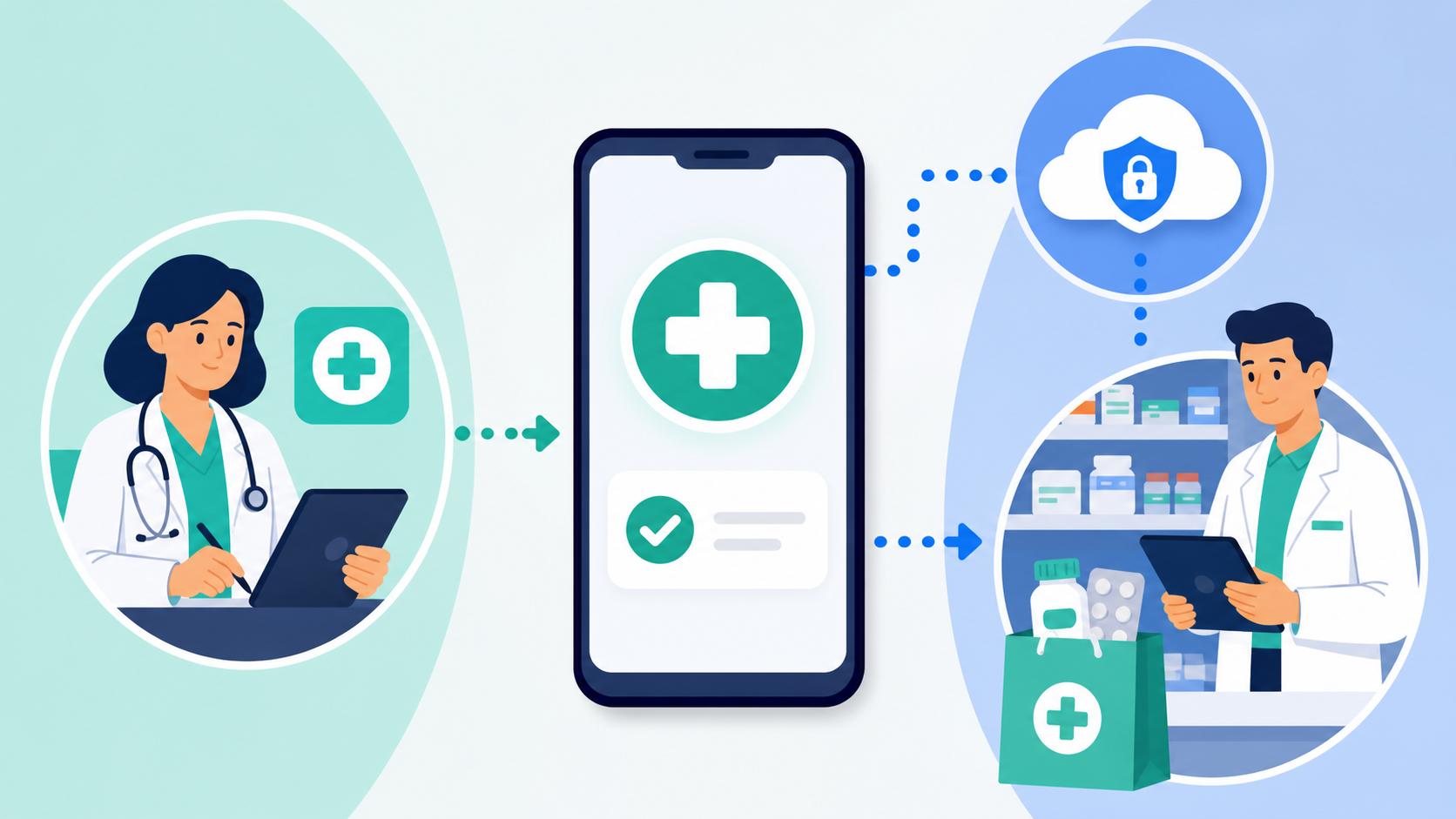
How the e-Rezept (Electronic Prescription) System Works
Few things are more stressful than navigating a foreign healthcare system when you are actually sick. I remember my first winter in Vienna, shivering in a doctor's waiting room, only to be handed a tiny yellow slip of paper with handwriting so cryptic I wasn't even sure if it was German. If you have ever lost one of those slips or worried about misplacing a physical prescription before reaching the pharmacy, the Austrian electronic prescription system is the solution you have been waiting for. This guide explains exactly how the e-Rezept system works so you can get your medication without the paperwork headache.
Understanding the Digital Shift: What is an e-Rezept?
For decades, the Austrian medical landscape relied on the "Gelbes Rezept"—the iconic yellow paper prescription. It was the gold standard, but it was fraught with issues: it could be lost, damaged, or forged, and it required a physical visit to the doctor just to pick up a refill for a chronic condition. As of 2024 and moving into 2026, the system has fully matured into the digital e-Rezept. Essentially, an e-Rezept is a digital data record generated by your doctor and stored in a secure central database.
When your physician prescribes a medication, they no longer need to print anything out (though they can if you specifically request it). Instead, the prescription is linked directly to your social insurance number. This digital record contains everything the pharmacist needs to know: the exact medication, the dosage, the frequency of intake, and whether it is a "repeat" prescription. For those of us who have spent years Finding Medical Care in Austria: Clinics, Hospitals, and Referrals, this shift represents a massive reduction in administrative friction.
The beauty of this system is that it lives "in the cloud," specifically within the secure infrastructure of the Austrian social insurance providers. It is not stored on the physical chip of your e-card, which is a common misconception. Your e-card simply acts as the "key" that allows the pharmacist to pull your data from the central server. This means that even if you have a brand new card or are waiting for a replacement, as long as your insurance is active, your prescriptions are safe and accessible.
How Doctors Issue Digital Prescriptions
The process begins during your consultation. Whether you are seeing a Kassenarzt (Public Doctor): Wait Times and Tips or a private physician, the doctor enters the prescription into their management software. If they are a contract doctor (Kassenarzt), the system automatically checks your insurance status. Once they hit "send," the prescription is assigned a unique 12-digit e-Rezept ID and a QR code.
For those with chronic illnesses, the e-Rezept is a game-changer. Many doctors now allow you to request "repeat" prescriptions via telephone or an online portal. Since the doctor can push the prescription to the central server digitally, you often don't even need to step foot in the surgery. You can simply call your GP in the morning and head straight to the Apotheken in Austria: Prescription Workflow and Night Shifts in the afternoon. This is a massive relief for busy expats who cannot afford to spend half a day in a waiting room for a routine inhaler or blood pressure pill.
The Role of the Austrian e-card
While the data isn't on the card, the card is your primary identification tool. When you walk into any pharmacy in Austria, the first thing the pharmacist will ask for is your e-card. By swiping or inserting your card, the pharmacy’s computer terminal communicates with the social insurance database to see which prescriptions are currently "open" for you. It is a seamless interaction that usually takes less than five seconds.
If you are a new arrival and are still figuring out The Austrian e-card: Registration, Photo Rules, and Usage Guide, you might be worried about what happens if your card hasn't arrived yet. In these cases, the doctor can provide you with the 12-digit e-Rezept ID or a printed "e-Rezept-Ausdruck" (a paper printout with a QR code). You can take this paper to any pharmacy, and they can scan the code to access the digital record. However, once you have your physical card, that is all you will ever need to carry.
Picking up Your Medication at the Apotheke
The experience at an Austrian pharmacy (Apotheke) is quite formal and highly regulated. When you arrive, you will usually see a counter with a pharmacist in a white coat. You don't browse the aisles for prescription meds; everything is stored behind the counter in massive automated drawer systems. You hand over your e-card, and the pharmacist will view a list of your active prescriptions on their screen.
One detail that often trips up foreigners is the "Rezeptgebühr" or prescription fee. Even though the prescription is digital and you may have "free" public insurance, there is a standard co-payment for every item on the prescription. As of 2026, this fee is adjusted annually but generally hovers around 7 Euros per item. The pharmacist will collect this fee from you directly at the counter. If the actual cost of the medication is lower than the prescription fee, you will only pay the lower price.
What Happens at the Counter?
Once the pharmacist scans your e-card, they will confirm which medications you want to pick up. This is an important step because a doctor might put three different items on one e-Rezept, but you might only need one of them today. You have the right to choose. The pharmacist will then fetch the medication, often explaining the dosage in German. If your German is still a work in progress, it is perfectly okay to ask, "Können Sie das bitte auf Englisch erklären?" Most pharmacists in major cities like Vienna, Graz, or Salzburg are highly trained and speak excellent English.
They will often write the dosage instructions directly on the box (e.g., "1-0-1" meaning one in the morning, none at noon, and one in the evening). After the medication is handed over, the e-Rezept is marked as "redeemed" in the national system. It disappears from your active list, preventing any double-dipping at a different pharmacy. If you have a Using a Wahlarzt (Private Doctor) and Claiming 80% Refunds setup, the process is slightly different as you may need to pay the full price upfront and seek reimbursement later, but the digital backbone remains the same.
Picking up Meds for Family Members
One of the most practical questions expats ask is: "Can I pick up a prescription for my sick partner or child?" The answer is yes, and it is remarkably easy with the e-Rezept system. You do not need a power of attorney or a written note. You simply need to bring their physical e-card to the pharmacy.
For parents, this is a lifesaver. If your child is Co-insuring Family Members (Mitversicherung) on Your Policy, they will have their own e-card. When they are sick at home, you can take their card to the pharmacy, and the pharmacist will treat it exactly as if the child were standing there. The digital link ensures that the prescription is verified, and since you have the card, the system assumes you have the authorization to collect the medicine. This also applies to elderly parents or spouses who may be too ill to leave the house.
Digital Alternatives: The MeineSV App and QR Codes
Austria has made a significant push toward "ID Austria," the national digital identity system. If you have activated your digital ID, you can use the "Meine SV" (My Social Insurance) smartphone app. This app is incredibly powerful because it displays all your open e-Rezepts in real-time.
Within the app, you can see a digital QR code for every prescription. If you forget your e-card at home—which happens to the best of us—you can simply show the QR code on your phone to the pharmacist. They scan the screen, and the result is the same as swiping the card. This digital backup provides an extra layer of security for those of us who tend to be a bit forgetful with our wallets.
Troubleshooting Common e-Rezept Issues
Even the best systems have hiccups. Occasionally, a pharmacist might tell you, "There is no prescription on the card." This is usually due to one of three things:
- The doctor forgot to click the final "release" or "send" button in their software.
- There is a lag in the sync between the doctor's office and the central server (rare, but it happens).
- Your insurance status has lapsed, or you have hit a "Geringfügigkeitsgrenze" issue where your coverage is temporarily paused.
If this happens, don't panic. Ask the pharmacist if they can see any recently expired prescriptions or if they can check via your Social Security Number (Versicherungsnummer). Often, a quick phone call to the doctor’s office can resolve the "missing" prescription in seconds. If you are unsure if your card is even working, you can learn How to Check if Your e-card is Active Online to save yourself a wasted trip to the Apotheke.
| Feature | Old Paper Prescription | New e-Rezept System |
|---|---|---|
| Physical Requirement | Must carry the yellow slip | e-card or smartphone QR code |
| Lost Document | Requires a new visit to the doctor | Impossible to lose (stored in cloud) |
| Refills | Physical pickup of paper needed | Can be requested via phone/portal |
| Pharmacy Choice | Any pharmacy in Austria | Any pharmacy in Austria |
| Security | Susceptible to theft or forgery | High-level encrypted digital record |
| Information | Limited to what is written on paper | Integrated with your digital health record |
Privacy, ELGA, and Data Security
A common concern for many expats, especially those coming from countries with different privacy standards, is who can see their medication history. In Austria, the e-Rezept system is closely tied to ELGA (Electronic Health Record): How to Opt-Out. ELGA is the overarching system that stores your lab results, hospital reports, and medication history.
By default, every resident is enrolled in ELGA. This means that if you go to a new doctor, they can see what medications you have been prescribed in the past, which helps prevent dangerous drug interactions. However, Austria takes "Datenschutz" (data protection) very seriously. You have the right to opt-out of ELGA entirely, or specifically opt-out of the "e-Medikation" portion.
If you opt-out of e-Medikation, your e-Rezepts will still work for the purpose of picking up medicine, but your doctors won't be able to see a compiled list of everything you've taken over the last year. For most of us, staying in the system is beneficial because it allows for a more holistic approach to our health, especially if we are Finding English-Speaking Doctors in Austria's Major Cities who might need to coordinate with specialists.
Managing Costs and Exemptions
While the e-Rezept makes the process easier, it doesn't change the cost. It is important to stay informed about the yearly service fees. Every year, a small amount is deducted from your salary or charged to your account to keep the system running. You can find more details on What is the Yearly e-card Service Fee for 2026? to ensure your budget is prepared.
Additionally, if you have a low income or a chronic illness that requires a massive amount of medication, you might be eligible for a "Rezeptgebührenbefreiung" (exemption from prescription fees). Once you reach a certain threshold of spending (usually 2% of your annual net income), the e-Rezept system automatically recognizes that you have paid enough for the year. From that point on, when the pharmacist scans your card, the screen will show that the items are free of charge. This is all handled automatically—no more saving paper receipts in a shoebox to prove your spending to the insurance company.
Navigating Night Shifts and Emergencies
Finally, it is worth noting how the e-Rezept functions during emergencies. If you find yourself needing urgent medication at 3:00 AM on a Sunday, you will need to find a "Bereitschaftsdienst" (duty pharmacy). When you buzz the night bell, the pharmacist will take your e-card through a small security window. They can access your e-Rezept just as easily as they would during normal business hours.
Keep in mind that using a pharmacy at night usually incurs an Understanding the Apotheke Night Service Fee (Nachtdienstgebühr), which is a small surcharge for the convenience of after-hours service. Whether it is a midnight fever or a forgotten inhaler, the digital system ensures that your prescription is available whenever and wherever you need it across Austria. For minor issues that don't require a prescription, you might also want to look into Over-the-Counter (OTC) Medicines: What You Can Buy Legally so you know what is available without a doctor's digital sign-off.
Important Medical Disclaimer
The information provided in this guide is for educational and informational purposes only and is intended to help expats navigate the Austrian healthcare system. I am a lifestyle blogger and veteran expat, not a medical professional or a legal expert. While I strive to keep this information accurate and up-to-date, healthcare regulations, digital systems, and fees in Austria can change. Always consult with your doctor, pharmacist, or social insurance provider (such as ÖGK, SVS, or BVAEB) for specific medical advice or official administrative guidance. Use of the e-Rezept system and e-card should always follow the latest official government protocols.