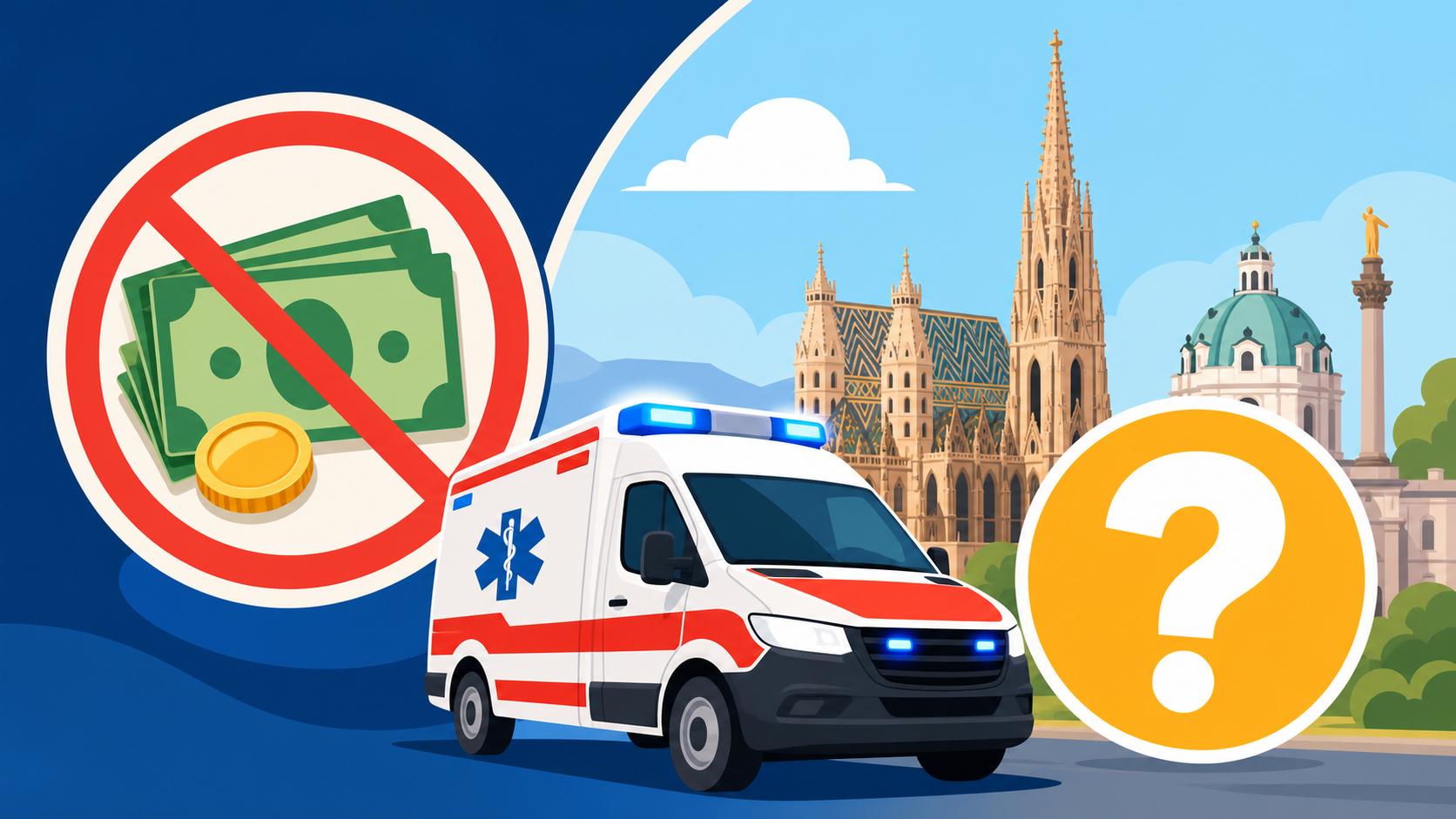
Is Calling an Ambulance Free in Vienna?
One of the most terrifying moments for any expat is facing a medical emergency in a foreign city while simultaneously worrying about whether the sirens outside will cost them a month's rent. I still remember standing frozen on a sidewalk in the 7th District when my neighbor collapsed; my first instinct was to help, but my second was a pang of guilt wondering if calling for help would bankrupt him. This guide clarifies exactly when calling an ambulance in Vienna is free and when you might be left holding the bill.
Emergency Situations versus Patient Transport
The most important distinction to understand in the Austrian medical system is the difference between a life-threatening emergency and a medical transport service. In Vienna, the "Berufsrettung" (Municipal Ambulance Service) operates on a logic of medical necessity. If you are in a situation where your life is at risk—think heart attacks, severe trauma from a car accident, or loss of consciousness—the question of "cost" is handled by the social system first and the paperwork second.
When the State Picks Up the Tab
If a doctor or a qualified emergency dispatcher deems that an ambulance was medically necessary for a life-threatening or acute condition, the cost is generally covered by your social insurance. This is why understanding Navigating Social Insurance: ÖGK, SVS, and BVAEB Overview is so critical for anyone living here. When the paramedics arrive, their primary goal is stabilization and transport to the nearest suitable hospital. If you are a registered resident with an active insurance status, the ambulance crew will typically ask for your e-card.
Under the Austria Healthcare System 2027: Complete Guide for Foreign Residents, the billing happens behind the scenes. The ambulance service bills the social insurance provider directly. You won’t see an invoice, and you won’t have to pay a deductible for the ride itself if the emergency was genuine. This "free" service extends to any situation where a delay in transport would have led to a permanent health impairment.
The Grey Areas of Medical Necessity
The confusion usually starts when the situation isn't a "lights and sirens" emergency. If you have a broken leg but are stable, or if you need to get to a hospital for a scheduled surgery but cannot walk, you are looking at a "Krankentransport" (Patient Transport) rather than an emergency intervention. For these cases, you often need a "Transportschein" (transport permit) issued by a doctor in advance.
If you call 144 for something that could have been handled by a taxi or a ride from a friend—like a mild fever or a small cut—the insurance company might refuse to pay the bill. In these instances, the city can send you an invoice for the full cost of the deployment, which usually starts at several hundred euros. If you are unsure whether your situation warrants a full emergency response, Calling 1450: Austria's 24/7 Telephone Health Advice Line is the best first step. The operators there can triage your symptoms and tell you if you need an ambulance or just a visit to an after-hours clinic.
Who Covers the Cost and Out of Pocket Scenarios
While the system is designed to protect residents, your specific insurance status dictates how the paperwork flows. Austria’s social security net is robust, but it isn't a "blank check" for everyone standing on Austrian soil. The paramedics will help you regardless of your ability to pay in the heat of the moment, but the financial aftermath depends on your "Versicherungsstatus."
Social Insurance Coverage for Residents
For the vast majority of expats working in Vienna, you are covered by either the ÖGK (for employees), the SVS (for freelancers), or the BVAEB (for public sector workers). These providers have "Direct Billing" agreements with the Vienna Rescue Service. As long as you have your The Austrian e-card: Registration, Photo Rules, and Usage Guide ready, the paramedics scan it, and the data is transmitted to their billing department.
If you are a student, ensure you have your Student Self-Insurance Requirements and Monthly Costs 2026 in order. Students often forget to renew their self-insurance, and an expired policy is the fastest way to receive a 700-euro bill in the mail. If your insurance is active, the ride is effectively "free" at the point of service, meaning no cash changes hands and no invoice follows, provided the medical necessity was documented by the emergency physician or the hospital intake team.
Costs for Tourists and Non-EU Residents
If you are a tourist or a visitor from outside the EU without a European Health Insurance Card (EHIC), the situation is different. Without local social insurance, the Vienna Rescue Service will issue a bill for the intervention. A standard ambulance deployment in Vienna for an uninsured person can cost between 500 and 900 euros, depending on the equipment used and whether an emergency doctor (Notarzt) was required to be on board.
This is why travel insurance is non-negotiable. If you receive a bill, you must pay the city of Vienna (MA 70) and then seek reimbursement from your private provider. For those living here permanently but waiting for their papers, understanding Public vs Private Health Insurance in Austria Explained can help you bridge the gap with a private "Gästeversicherung" (Guest Insurance) that covers emergency transport.
| Service Type | Covered by ÖGK/SVS? | Cost for Uninsured (Approx.) | Documentation Needed |
|---|---|---|---|
| Emergency (144) | Yes (If medically necessary) | €550 – €950 | E-card or ID |
| Patient Transport | Yes (With Transportschein) | €150 – €300 | Doctor's Permit |
| Mountain Rescue | No (Usually excluded) | €3,000+ | Private Alpinpolizze |
| Helicopter (Emergency) | Only if life-threatening | €5,000+ | Clinical justification |
How Much Does it Cost? Breakdown of Fees in 2026
If the insurance company denies a claim—perhaps because they felt a taxi would have sufficed—you will receive a "Kostenbescheid" (Fee Notice). The rates for the Vienna Rescue Service are set by provincial law and are adjusted annually. As of 2026, the fees have increased slightly to account for rising fuel and specialized medical equipment costs.
Standard Transport Fees in Vienna
A "simple" ambulance ride within city limits without an emergency doctor generally starts around 580 euros. If the situation is more complex and requires a "Notarzteinsatzfahrzeug" (the fast car that brings the doctor to the scene), you are looking at an additional fee for the physician's intervention. In Vienna, the "Berufsrettung" is world-class, but the high level of training and technology means that a full-scale intervention involving multiple units can easily cross the 1,000-euro mark if billed privately.
If you find yourself with an invoice you cannot pay, do not ignore it. The City of Vienna is often willing to set up a payment plan for residents, but you must contact them immediately. This is especially true if you were in the process of ÖGK Enrollment Step-by-Step for Employed Residents in Austria and your coverage hadn't quite "clicked" in the system yet. Usually, if you can prove you were employed on the day of the incident, the ÖGK can backdate the coverage.
Hidden Costs: Mountain Rescue and Air Ambulance
A common trap for expats living in Vienna is the "Weekend Trip to the Alps." If you take a train to Rax or Schneeberg for a hike and need an ambulance or a helicopter, the rules change completely. Standard social insurance in Austria does not cover Ambulance Fees and Mountain Rescue Costs (Alpinpolizze). Even if you have an e-card, a helicopter rescue from a hiking trail for a non-life-threatening injury (like a broken ankle) can cost you 5,000 euros or more out of pocket.
For anyone who plans to leave the city limits for outdoor sports, I highly recommend joining the "Alpenverein" or getting a dedicated "Alpin-Rechtsschutz" insurance. These memberships often cost less than 70 euros a year and provide full coverage for helicopter rescues and mountain transport. Within Vienna, you are safe from these specific "Alpine" costs, but the moment you step onto a marked hiking trail in the mountains, the "free" nature of the emergency system disappears unless your life is in immediate danger.
What to Do in a Medical Crisis: A Step-by-Step Guide
Navigating the moment of crisis is about more than just the money; it’s about getting the right level of care so you don't end up with an unnecessary bill or, worse, inadequate medical attention. The Austrian system is highly structured, and following the "intended" path saves both lives and money.
Calling 144 versus 1450
The first rule of thumb: If someone is not breathing, has chest pain, or is bleeding uncontrollably, call 144 immediately. This is the direct line to the "Rettung." In Vienna, the dispatchers are trained to give instructions over the phone in multiple languages, though German is preferred. You do not need to worry about the cost in this split second.
However, if you are experiencing something concerning but not clearly life-threatening—like a high fever, sudden intense back pain, or a child who won't stop vomiting—call 1450 first. This is the "Health Advice Line." A medical professional will talk you through your symptoms. If they decide you need an ambulance, they will dispatch one for you. Because the dispatch came through 1450, it serves as an automatic "medical necessity" justification, which significantly reduces the risk of the ÖGK rejecting the bill later. This is a crucial tip for Finding Medical Care in Austria: Clinics, Hospitals, and Referrals without incurring surprise fees.
Documentation Needed for the Paramedics
When the ambulance arrives, the scene can be chaotic. To ensure the billing goes smoothly and you are taken to the right facility, have the following ready:
- Your E-Card: This is the most important document. If you don't have it, a photo of it on your phone is a good backup.
- Photo ID: Paramedics need to verify your identity to match the insurance record.
- Medication List: If you are on regular medication, have the boxes or a list ready.
- Allergy Information: Specifically for those who might need emergency drugs on the way.
If you end up at the hospital, keep in mind that the Emergency Rooms in Austria: Triage, Waiting, and What to Bring experience can be long. The ambulance crew will hand you over to the triage nurse. At this point, your "ambulance journey" is technically over, and your hospital care begins. As a resident, your hospital stay is also covered, though there is a very small daily "Kostenbeitrag" (contribution) of about 10 to 15 euros per day for the first 28 days of the year, which is standard for everyone.
Summary Checklist for Ambulance Usage in Vienna
To keep your move to Austria stress-free, remember that the system is there to help you, not to exploit you. If you act in good faith during a medical crisis, the social safety net almost always catches the cost. The only times you truly need to worry about being "billed" are when you use an ambulance as a "luxury taxi" or if you are participating in high-risk mountain sports without the proper supplemental insurance.
When you are settled, take a moment to look at your Healthcare Checklist for Your First 30 Days in Austria to make sure your family members are properly co-insured. Knowing that a call to 144 won't result in a financial nightmare allows you to focus on what really matters: getting healthy and enjoying your life in this beautiful city.
Disclaimer
This guide provides an overview of the emergency medical billing system in Vienna based on current 2026 regulations and personal expat experience. Medical laws and insurance policies can change. Always consult with your specific insurance provider (ÖGK, SVS, BVAEB, or private) for the most up-to-date information regarding your coverage limits and potential out-of-pocket costs. In a life-threatening emergency, always dial 144 immediately regardless of your insurance status.