Does 1450 Health Line Provide English Language Support?
You’re lying in bed at 3 AM with a skyrocketing fever, staring at your phone and wondering if you should wake the neighbors or drive to the ER. I remember my first winter in Vienna, terrified to call for help because my German was stuck at "Ich möchte ein Bier" and I didn't want to mess up a medical emergency. This guide explains exactly how to use the 1450 health line and how to navigate the language barrier effectively.
Understanding the 1450 Hotline: More Than Just a Phone Number
The 1450 health line is a cornerstone of the Austrian medical system, often referred to as "Wenn’s zwwickt" (when it pinches or stings). It is designed to be the first point of contact for non-life-threatening medical issues. In a country where the bureaucratic gears can turn slowly, 1450 is remarkably efficient, but its primary function is triage. This means the operator’s job is to assess the severity of your condition and direct you to the right place, whether that is a Finding a Dentist (Zahnarzt): What ÖGK Covers and What You Pay for a sudden toothache or a recommendation to wait for your regular GP in the morning.
Unlike a simple information desk, the people answering the phones are trained medical professionals, usually nurses with years of experience. They follow a standardized, software-supported assessment protocol to determine the risk level of your symptoms. For an expat, this can feel a bit like an interrogation, especially when you are already feeling unwell. However, understanding this protocol is key to getting the help you need. They will ask about your age, pre-existing conditions, and the specific timeline of your symptoms.
One common misconception among foreigners is that 1450 is a substitute for the emergency services. It is not. If you are experiencing chest pain, difficulty breathing, or severe trauma, you should bypass 1450 and go straight to the Emergency Services in Austria: 144, Hospitals, and Crisis Steps. 1450 is there to bridge the gap between "I'm a bit worried" and "I need a hospital bed right now." By using it correctly, you help keep the emergency rooms free for those in critical condition, which is a highly valued aspect of Austrian civic responsibility.
When should you call 1450 instead of other numbers?
Determining which number to dial in the heat of the moment is a frequent source of stress for residents. You should call 1450 if you have a sudden health problem that isn't life-threatening but requires professional advice. For example, if your child has a persistent high fever on a Sunday afternoon, 1450 can tell you which Pediatricians (Kinderarzt): Required Vaccines and Checkups are on duty or if you need to visit a specialized pediatric clinic.
It is also the correct number to call if you are unsure about the severity of a symptom, such as a strange rash or localized pain that isn't subsiding. The operators are particularly helpful during weekends and public holidays when most regular clinics are closed. They have real-time access to databases showing which After-Hours Medical Care: Weekend Clinics and Night Doctors are open in your specific district, saving you the trouble of driving around a dark city looking for an open door.
The 1450 Workflow: What Happens During the Call
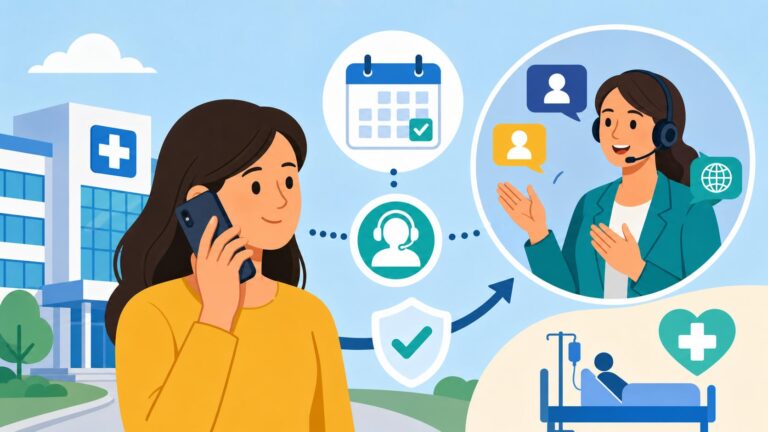
The call begins with a basic intake. You will be asked for your location first. This is crucial because the Austrian healthcare system is decentralized; the advice for someone in a remote village in Tyrol might differ from someone in the center of Vienna. Once your location is established, the medical assessment begins. This is where the Calling 1450: Austria's 24/7 Telephone Health Advice Line becomes a technical conversation about symptoms.
You should be prepared to describe your pain on a scale of one to ten and mention any medications you have already taken. The operator will then use their system to provide a recommendation. This could range from "stay home and drink tea" to "we are sending a mobile doctor to your house" or "please go to the nearest hospital immediately." In some cases, if the operator deems it necessary, they can even trigger an ambulance dispatch themselves, though this is rare.
English Language Support on 1450: Expectations vs. Reality
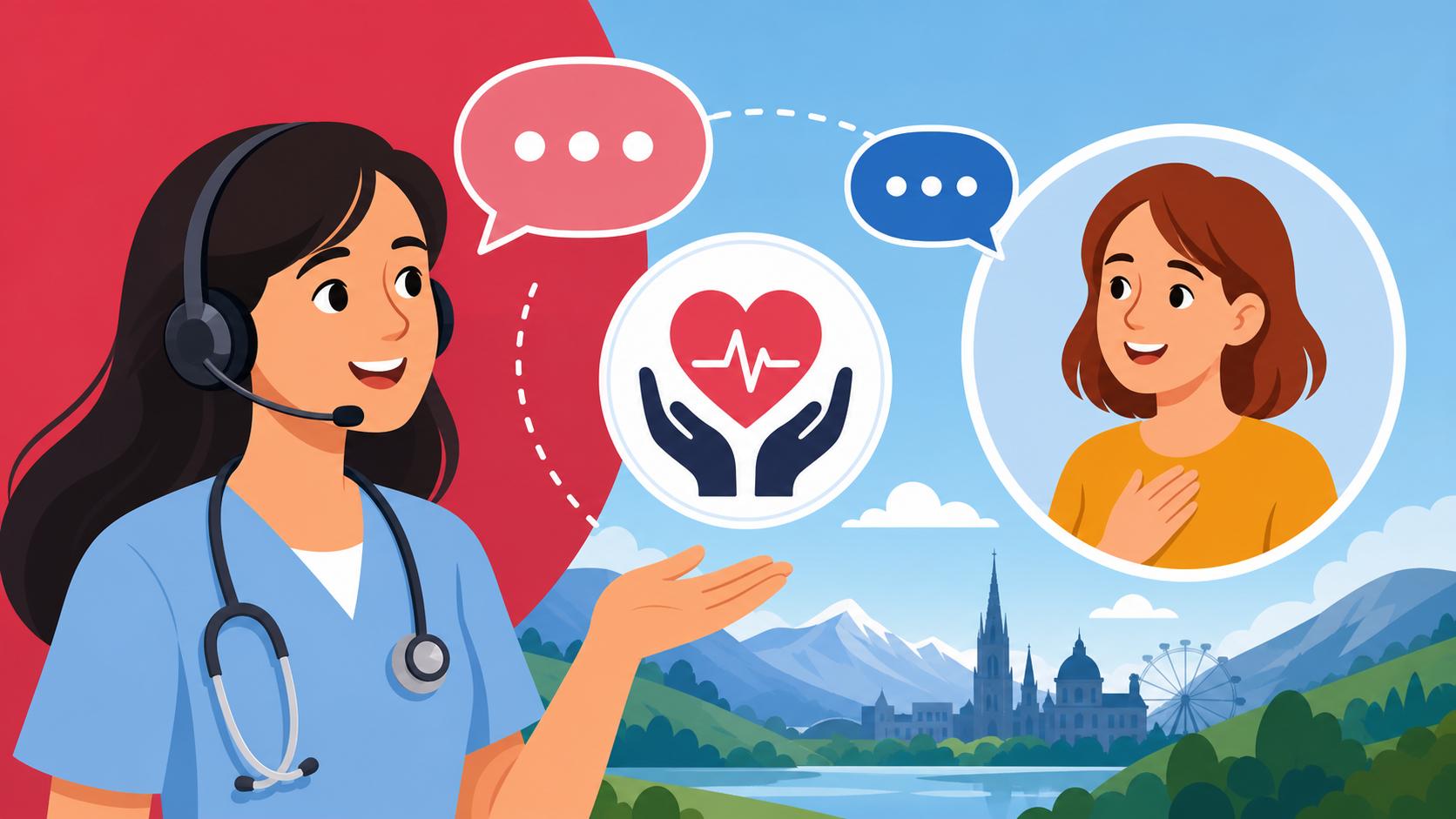
The official language of the 1450 service is German. In a perfect world, every operator would be fluent in multiple languages, but the reality on the ground is a bit more nuanced. While there is no official "Press 2 for English" option in the main menu, a very large percentage of the medical staff working the lines speak excellent English. Most have undergone academic training where English-language medical literature is standard. However, during peak times—like a flu wave or a Monday morning—you might encounter an operator whose English is limited.
The frustration for many expats comes from the initial automated greeting. This recording is entirely in German and can be intimidating. It usually lists data privacy information and asks you to stay on the line. Many newcomers have hung up at this stage, thinking they’d dialed a wrong number or that the service was only for German speakers. The secret is to stay on the line until a human picks up. Once you hear a voice, simply saying "Hello, do you speak English?" will usually lead to one of two outcomes: the operator will switch to English, or they will ask you to wait a moment while they find a colleague who can assist you.
If you are living in a major hub, you will find it much easier to access Finding English-Speaking Doctors in Austria's Major Cities through this line. In more rural areas, the English proficiency might be slightly lower, but the staff will still do their absolute best to understand you. Austrians generally have a high level of English comprehension, and when it comes to a health crisis, they are trained to prioritize communication over perfect grammar.
Tips for Communicating Your Symptoms in English
When you do get an English-speaking operator, keep your language simple and direct. Medical terminology can be tricky even for native speakers. Instead of using complex idioms, stick to "It hurts here," "I have a fever of 39 degrees," or "I feel dizzy." If you have a roommate or a neighbor who speaks some German, having them nearby to translate the initial intake can be a lifesaver.
It also helps to have your The Austrian e-card: Registration, Photo Rules, and Usage Guide ready. The operator will often ask for your social insurance number (Sozialversicherungsnummer). This is a 10-digit number. If you struggle to say numbers in German, having them written down in front of you so you can read them clearly is a small step that prevents a lot of stress. Remember, the operator is trying to help you under high-pressure conditions, so patience is your best tool.
What to do if no English speaker is available?
In the rare event that you cannot find an English-speaking operator immediately, do not panic. You can try calling back after a few minutes to reach a different staff member. Alternatively, you can use translation apps on a secondary device. There is also the option of looking for Medical Translation Services: Interpreters for Hospital Visits, though these are usually for pre-planned appointments rather than midnight health queries.
If the situation is becoming urgent and you cannot communicate via 1450, it is better to move to a more direct form of care. If you can safely get to a hospital, the triage staff in the emergency room (Notaufnahme) are very accustomed to treating international patients. In cities like Vienna, the Vienna Healthcare Guide: Top Expat Clinics and Hospitals lists facilities where English is the primary language for many staff members.
Step-by-Step Guide to Calling 1450 for Expats
Navigating the Austrian medical phone system is much easier when you know the "hidden" script. Most of us arrive in the country expecting a seamless digital experience, but Austria still relies heavily on voice communication for triage. To make your call to 1450 as smooth as possible, follow these specific steps.
First, ensure you are calling from an Austrian SIM card or a phone that allows location tracking. The 1450 number is free of charge, but some international roaming plans might block short-code numbers. Once the call connects, you will hear a recorded message. This message typically says: "Herzlich willkommen bei 1450, der Gesundheitsnummer. Bitte bleiben Sie am Apparat." This just means "Welcome to 1450, please stay on the line." Don't let the long German sentences discourage you.
While you are waiting, gather your "medical kit." This includes your e-card, any medication you are currently taking (have the boxes ready so you can read the active ingredients, like Ibuprofen or Paracetamol), and a thermometer if you have one. Having a pen and paper is also vital because the operator will likely give you an address or a phone number for a Pharmacies (Apotheken) and Medication Rules in Austria that is open late in your area.
| Emergency Contact Type | Number | Best For | English Support Level |
|---|---|---|---|
| Health Advisory (1450) | 1450 | Non-life-threatening advice | High (Unofficial) |
| Ambulance / Rescue | 144 | Life-threatening emergencies | Moderate |
| Doctor on Call | 141 | GP home visits at night | Low to Moderate |
| Euro Emergency | 112 | General emergencies | High |
| Poison Control | 01 406 43 43 | Ingestion of toxins | Moderate |
Navigating the Automated German Menu
Some regions have introduced basic menu options to handle the high volume of calls. If you hear a voice asking you to press a button, it is usually to categorize the call. If you hear the word "Notfall" (emergency), do not press anything—the system will usually prioritize your call if it thinks you are in distress. If you hear "Beratung" (advice), that is the section you want.
If you are forced to choose a district, you can often just wait for a human. If you must enter a postal code (Postleitzahl), use the 4-digit code of your residence. For example, if you live in the 7th district of Vienna, you would type 1070. This helps the system route you to an operator who knows the local After-Hours Medical Care: Weekend Clinics and Night Doctors available in your specific part of the city.
Information You Must Have Ready
Once the human operator answers, the first thing they will do is verify your identity and location. They will ask for your name (Name), date of birth (Geburtsdatum), and address (Adresse). If you are staying in a hotel or a Short-Term Rentals: WG-Gesucht, Serviced Flats, and Airbnb, make sure you have the exact street address and door number written down. Austrians are very precise about addresses; you need the street name, house number, Stiege (staircase), and door number.
The operator will then ask about the "Hauptbeschwerde" (main complaint). This is your cue to say, "I am an English speaker, I have a severe stomach pain." If you have your The Austrian e-card: Registration, Photo Rules, and Usage Guide handy, the call will go much faster as they can pull up your basic insurance data. If you don't have an e-card yet (for example, if you are a new arrival), they will still help you, but they may ask for your passport number instead.
Alternatives When Language is a Barrier
If you find that calling 1450 is too stressful due to the language barrier, there are several other ways to get medical advice in Austria. One of the best digital tools is DocFinder.at. While it doesn't offer live triage, it allows you to filter for Finding English-Speaking Doctors in Austria's Major Cities who accept your specific insurance (like ÖGK or SVS). You can often see real-time reviews from other expats which can be very reassuring.
Another alternative is the 24/7 pharmacies. In every city, there is a rotating system of "Nachtapotheken" (night pharmacies). You can find which one is open by checking the sign on the door of any pharmacy or using an online tracker. The pharmacists in Austria are highly trained and can offer significant medical advice for minor ailments. They are often more than happy to speak English and can recommend over-the-counter treatments that might save you a trip to the doctor.
For those who prefer a digital-first approach, some private insurance add-ons now offer "Telemedicine" apps. These services connect you via video call to a doctor who is often guaranteed to speak English. While these are not part of the public Calling 1450: Austria's 24/7 Telephone Health Advice Line system, they are becoming an essential tool for the international community in Austria.
Using the 144 Emergency Line Appropriately
If you truly cannot communicate and you feel your health is deteriorating rapidly, you should not hesitate to call 144. While 1450 is for advice, 144 is for action. The dispatchers at 144 are used to dealing with high-stress situations and panic, and they have more robust systems for handling multiple languages. However, please be aware of Ambulance Fees and Mountain Rescue Costs (Alpinpolizze); if you call an ambulance for a minor issue like a cold, you might end up with a bill if your insurance deems the transport unnecessary.
Relying on Your Local Community and Apps
Don't underestimate the power of expat Facebook groups or local WhatsApp chats. If you are feeling unwell, asking "Does anyone know an English-speaking doctor open now in the 2nd district?" can often yield a faster and more empathetic response than a government hotline. Additionally, keep the Emergency Services in Austria: 144, Hospitals, and Crisis Steps guide bookmarked on your phone so you have the specific addresses of the nearest "Unfallambulanz" (accident clinic) or "Bereitschaftsdienst" (on-call service) at your fingertips.
In conclusion, while 1450 doesn't have a dedicated English department, it is an incredibly valuable resource that is accessible to English speakers with a little bit of patience and preparation. Don't let the "German-only" myth stop you from getting the medical advice you need. Most of the time, there is a friendly, English-proficient nurse on the other end of the line ready to help you navigate the Austrian healthcare landscape.
Disclaimer
This guide is for informational purposes only and does not constitute professional medical or legal advice. Healthcare regulations and hotline procedures in Austria can change. Always consult with a qualified medical professional or contact official Austrian health authorities for the most current information regarding your specific health situation or insurance coverage.