Ambulance Fees and Mountain Rescue Costs (Alpinpolizze)
Imagine the panic of a medical emergency in a foreign country, quickly followed by the sinking feeling of receiving a four-figure bill for the ambulance ride you thought was covered. I’ve been there, staring at a bill for hundreds of Euros because I didn't understand the difference between "medical necessity" and "convenience." This guide solves the mystery of Austrian emergency costs, from city ambulances to high-altitude helicopter rescues.
Understanding Emergency Transport in Austria
The Austrian emergency system is world-class, but it is also highly compartmentalized. When you dial the Emergency Numbers: 144 Ambulance, 133 Police, 122 Fire, you are activating a complex logistics chain. In many countries, the ambulance is seen as a public service funded entirely by taxes. In Austria, it is a hybrid system where social insurance providers, the Red Cross (Rotes Kreuz), and the patient all share the financial burden.
One of the first things I learned as an expat is that the ambulance is not a taxi. If you can reasonably take a car, a bus, or a tram to the hospital, you are expected to do so. The system is designed to keep life-saving vehicles available for life-threatening situations. When you call 144, the dispatcher will ask specific questions to determine if a "Notarzt" (emergency doctor) is needed or if a standard paramedic team is sufficient. This distinction has massive implications for who pays the bill.
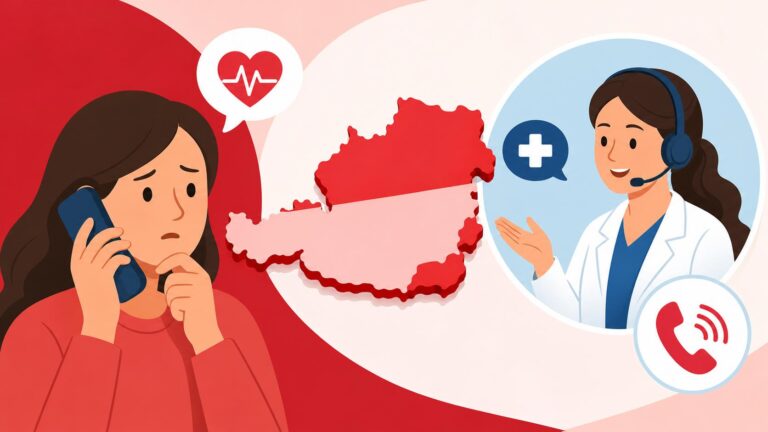
If you are unsure whether your situation is a true emergency, you should start by Calling 1450: Austria's 24/7 Telephone Health Advice Line. This is the "health advisor" number where medically trained staff can tell you whether you need an emergency room, a weekend doctor, or just an aspirin. Using 1450 can save you from a massive ambulance bill by directing you to the appropriate level of care before you make an expensive transport mistake.
The Role of the Austrian Red Cross and Samariterbund
In most of Austria, the Red Cross (Österreichisches Rotes Kreuz) handles the lion's share of emergency transport. In Vienna and some other urban areas, the Samariterbund and the municipal ambulance service (MA 70) also play huge roles. These are technically non-profit organizations, but they still operate on a fee-for-service basis when it comes to billing your insurance.
When the ambulance arrives, they will ask for your social insurance card. If you have already completed your The Austrian e-card: Registration, Photo Rules, and Usage Guide, the process is usually seamless. The paramedics will scan your card, and the data is sent to your insurer. However, simply having an e-card doesn't mean the ride is free. It only means the bill goes to the insurer first for "approval."
Direct Billing vs Private Invoicing
If you are a tourist or a new resident waiting on your papers, you might receive a direct invoice. This happens if the paramedics cannot verify your insurance status on the spot. Don't panic when you see a bill for €600 or more in the mail. If you were already covered under ÖGK Enrollment Step-by-Step for Employed Residents in Austria at the time of the incident, you can usually submit this bill to the ÖGK for retroactive coverage.
However, if you are a freelancer or self-employed, you must ensure your SVS Health Insurance: Rules for Freelancers and Self-Employed status is active. The SVS has slightly different rules regarding co-payments for transport, and they can be stricter about what they deem "medically necessary." Understanding this nuance early on will save you from an administrative nightmare three months down the line when the collection agency (Inkasso) starts calling.
Ambulance Fees What is Covered and What is Out-of-Pocket
The most common question I get from newcomers is, "Is Calling an Ambulance Free in Vienna?" or in any other Austrian city. The short answer is: almost never entirely free, but usually very affordable—provided it’s a genuine emergency. For most residents, there is a small "Transportkostenbeitrag" (transport contribution fee) which is currently around €35 to €40 in 2026. This is a flat fee that the insurance company charges you to cover the administrative overhead of the dispatch.
The "long" answer involves the concept of "Transportanweisung." This is a piece of paper—a referral—from a doctor stating that you are physically unable to use public transport or a private car. Without this referral, the insurance company might refuse to pay the transport provider, leaving you with the full bill, which can range from €200 to €800 depending on the distance and the equipment used.
Medical Necessity and the Transport Fee
In a life-or-death situation—say, a car accident or a heart attack—nobody is looking for a referral. The emergency itself justifies the transport. In these cases, the hospital will generate the necessary paperwork to ensure the insurer pays. You will simply receive a small bill for the contribution fee a few weeks later.
While incredibly painful, the insurance company later ruled it wasn't a life-threatening emergency and that the patient could have taken a taxi. They refused the claim, and the patient had to pay the full €450 for the 10-minute ride. This is why understanding Public vs Private Health Insurance in Austria Explained is so vital; some private plans will cover these "comfort" transports where the public system will not.
Non-Emergency Ambulance Trips
Sometimes, you might need an ambulance for a non-emergency, such as moving from a hospital to a rehab center or going to a specialized dialysis appointment. For these, you must have a "Transportschein" from your doctor in advance. If you don't have this, the transport company will treat it as a private taxi service with medical equipment, and the rates are astronomical.
Always ask your doctor: "Is this transport covered by my insurance?" (Wird dieser Krankentransport von der Kasse übernommen?). If they say no, look into private alternatives or ask a friend for a ride. The difference between a €35 co-pay and a €500 private bill often comes down to this one simple question and a single stamp on a form.
Invoicing and the Role of Social Insurance
Once the transport is completed, the billing department of the Red Cross or the municipal service will contact your insurer. If you are covered by the ÖGK, SVS, or BVAEB, they will handle the bulk of the cost. The remaining fee is usually deducted from your pay or sent as a separate invoice to your home address.
If you are using a Healthcare Costs: Kassenarzt vs Wahlarzt Differences Explained model and your doctor is a private one, they can still issue a transport referral, but you must be careful that it meets the specific criteria set by the public insurers. If the insurer rejects the doctor's reasoning, you are back to paying the full amount yourself.
The Financial High-Altitude Mountain Rescue and Helicopter Costs
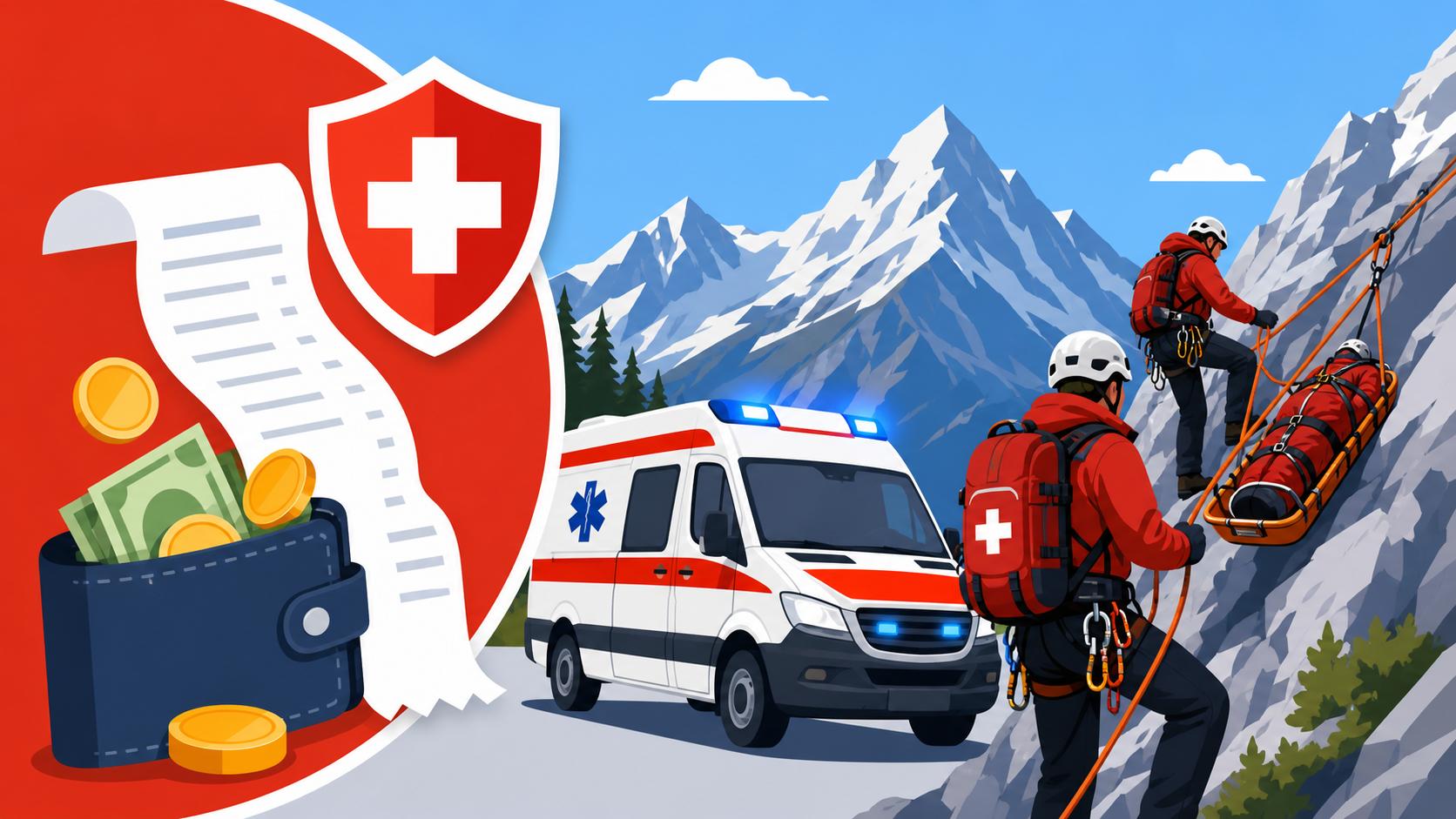
This is where the costs move from "annoying" to "life-changing." Austria’s mountains are breathtaking, but they are also expensive traps for the uninsured. Every year, hundreds of tourists and expats are rescued from the Alps, and many are shocked to find that their standard health insurance covers exactly zero percent of the rescue costs.
The hard truth is that the Austrian social insurance system (ÖGK/SVS) only pays for rescue if it is a "medical emergency" (like a heart attack on a trail) and even then, they only pay a capped amount for the helicopter. If you are uninjured but "blocked" (too tired to continue or lost), or if you have a minor injury like a sprained ankle, the Bergrettung (Mountain Rescue) will bill you for every minute of their time, and it is not cheap.
Why Social Insurance Leaves You Stranded
The legal framework in Austria distinguishes between "Rescue" (Bergung) and "Transport." Social insurance is legally obligated to cover transport to a hospital for medical treatment. They are not obligated to cover the cost of finding you in a forest or winching you off a cliffside if you aren't in immediate danger of dying.
Even if you are injured, the ÖGK typically pays a fixed rate for helicopter rescues—often capped around €1,000 to €1,500. A standard helicopter mission in 2026 can easily cost €5,000 to €8,000. Without additional coverage, you are responsible for the "gap." Families can be forced to take out loans to pay for a helicopter rescue if they assume their e-card is a "get out of jail free" card for the mountains.
Helicopter Rescue Cost Breakdown
Helicopter rescue (Flugrettung), often operated by the ÖAMTC (the Austrian auto club) or private companies like Wucher, is billed by the minute. In 2026, the rates are approximately €90 to €110 per minute of flight time. This doesn't just include the time you are in the air; it includes the time from the moment the rotors start spinning at the base until the helicopter returns and is refueled.
| Service Component | Estimated Cost (2026) | Insurance Coverage (Public) |
|---|---|---|
| Ground Mountain Rescue (Per Person/Hour) | €50 – €80 | 0% |
| Helicopter Flight (Per Minute) | €95 – €115 | Capped at ~€1,200 |
| Search Dogs / Thermal Drones | €500 – €2,000 | 0% |
| Medical Supplies in Flight | €200 – €500 | Usually covered if emergency |
Search and Rescue vs Medical Evacuation
If the Bergrettung has to call in a search team because you didn't return to your hotel, and they find you safe but lost, you will be billed for the search. This includes the hourly wages of the volunteers (who are professionals, despite being volunteers), the cost of specialized equipment, and any transport back to civilization. This is why I always tell people to carry Building a Standard First Aid Kit for an Austrian Home and a fully charged power bank, but more importantly, to have specific mountain insurance.
Alpinpolizze and Private Insurance The Safety Net You Need
If you plan on doing anything more adventurous than walking through a manicured city park, you need "Alpinpolizze" or an equivalent. This is a specialized insurance policy that covers the costs of search, rescue, and helicopter transport in the mountains. For the price of a few pizzas a year, you can save yourself €10,000 in potential debt.
The most common way to get this coverage is through a Benefits of Alpenverein (Alpine Club) Membership for Expats. When you join the Österreichischer Alpenverein (ÖAV) or the Naturfreunde, your membership fee includes a comprehensive mountain rescue insurance policy that works worldwide. This is the "gold standard" for anyone living in Austria.
What is Alpinpolizze?
Alpinpolizze is essentially a "gap" insurance. It steps in where the ÖGK stops. If the helicopter costs €6,000 and the ÖGK pays €1,200, the Alpinpolizze pays the remaining €4,800. It also covers "retrieval costs" (Rückholkosten) if you need to be transported back to your home country or a hospital near your residence after an accident abroad.
For expats, the Alpenverein membership is particularly useful because it also covers you for skiing, mountain biking, and even some forms of climbing. It’s a community-driven model where the collective membership fees fund the insurance pool. I never step foot on a trail without my Alpenverein card in my wallet; it’s just as important as my e-card.
Membership Perks Alpenverein and Naturfreunde
Beyond the insurance, these organizations offer discounts on mountain huts (Hütten). If you've ever stayed in an Austrian mountain hut, you know that members pay about half the price for a bed. Over a long weekend, the membership pays for itself just in lodging discounts, making the insurance essentially free.
The Naturfreunde is another excellent organization with similar benefits. Both groups provide peace of mind. If you are injured on the slopes or the trails, you simply give them the bill, and their insurance department handles the negotiation with the rescue company. It removes the administrative stress from an already traumatic physical event.
Private Accident Insurance
Many expats also opt for "Private Unfallversicherung" (Private Accident Insurance). Unlike standard health insurance, which pays for your doctors and hospital stay, accident insurance pays out a lump sum if you are permanently injured and covers "rescue costs" as a standard rider.
If you are a high-earning professional or have a family depending on you, a private accident policy is a wise move. It covers accidents at home, at work, and in the mountains. Check your policy details carefully; ensure it specifically mentions "Hubschrauberrettung" (helicopter rescue) and that the coverage limit is at least €15,000. Anything less might not cover a complex mission in the high Alps.
Practical Steps After an Emergency
The dust has settled, you're back home, and the first "Erlagschein" (payment slip) arrives in the mail. What do you do? The first rule is: don't ignore it. Austrian administrative systems move slowly, but they are relentless. If you don't pay or dispute a bill within the timeframe (usually 14 days), the fees will escalate rapidly.
First, check if the bill was already submitted to your insurance. Sometimes you receive a "copy" of the invoice for your records, and it will say "Zur Information" or "Bereits mit der Kassa verrechnet." If it doesn't say that, and it's a full-amount bill, you need to take action.
Handling the Bill and Filing for Reimbursement
If you have Alpinpolizze through the Alpenverein, your first call shouldn't be to the hospital, but to the insurance contact provided in your membership documents. They will usually ask you to send them the original bill along with a brief report of what happened. They will then coordinate with the Red Cross or the helicopter company.
If you are claiming through a private "Unfallversicherung," you will need a medical report from the hospital and the itemized bill from the transport provider. Most Austrian insurers now allow you to upload these via an app. If you are still navigating the system, keep every single piece of paper. In Austria, the "Papierkram" (paperwork) is the path to reimbursement.
Dealing with International Travel Insurance
If you are an expat still using travel insurance from your home country (though I highly recommend switching to local insurance as soon as you have your Meldezettel), the process is more complex. Most international travel policies require you to notify them before or immediately after the rescue.
The Austrian rescue companies are used to dealing with foreign insurers, but they may ask for a "guarantee of payment" (Zahlungsgarantie). If your insurer is slow, the rescue company might demand payment from you directly. This is why having a local "safety net" like the Alpenverein is much easier; they speak the language, they know the providers, and they settle the bills directly without you acting as a middleman.
Comparison of Potential Costs 2026
To give you a realistic idea of what you might face, here is a comparison of typical costs for various rescue scenarios in Austria.
| Scenario | Mode of Transport | Estimated Total Cost | Likely Out-of-Pocket (No Extra Insurance) |
|---|---|---|---|
| Heart attack in Vienna city center | Standard Ambulance | €450 | €35 (Standard Fee) |
| Sprained ankle on a marked trail (Tyrol) | Ground Mountain Rescue | €1,200 | €1,200 |
| Severe broken leg on a ski slope | Helicopter to Hospital | €4,800 | €3,600 |
| Lost hiker (uninjured) after dark | Search Team + Ground Rescue | €3,000 | €3,000 |
| Car accident on the Autobahn | Ambulance + Notarzt | €850 | €35 (Standard Fee) |
As you can see, the difference between a "medical" emergency in the city and a "rescue" in the mountains is thousands of Euros. The "medical" label is your best friend, but in the mountains, you cannot rely on it.
Final Advice for New Arrivals
When you move to Austria, your to-do list is likely filled with residency permits and finding the best Melange in town. However, adding "Join the Alpenverein" to that list should be a top priority. For about €70 to €90 a year, you protect yourself against the most common "financial trap" for foreigners in this beautiful country.
Additionally, always double-check your SVS Health Insurance: Rules for Freelancers and Self-Employed or ÖGK status if you change jobs. A gap in insurance of even a few days can be disastrous if an accident happens during that window. Austria is a country that loves its rules and its insurance—embrace both, and you can enjoy the mountains and the cities with total peace of mind.
Disclaimer
The information provided in this guide is for informational purposes only and does not constitute legal or medical advice. Healthcare laws, insurance coverage limits, and emergency fees in Austria are subject to change. Always verify current rates and coverage terms with your specific insurance provider (ÖGK, SVS, etc.) or specialized rescue insurance organizations like the Alpenverein.