Downloading Your Medical Records via ID Austria
Trying to navigate the medical landscape in a foreign country is stressful enough, but when you are standing at a pharmacy counter or a specialist's office and realize you have forgotten your lab results or that one specific paper prescription, the frustration peaks. I still remember the cold sweat I broke into during my first year in Vienna when a specialist asked for my previous blood work and all I had was a blank stare and a shrug. This guide solves the mystery of digital healthcare by showing you exactly how to access and download your medical records using the ID Austria system.
The Digital Backbone of Austrian Healthcare
For those of us who grew up in systems where medical records were kept in dusty manila folders at a single doctor’s office, the Austrian approach can feel like science fiction—once you actually figure out how to log in. The system is called ELGA, which stands for Elektronische Gesundheitsakte, or Electronic Health Record. It is a decentralized network that connects hospitals, pharmacies, laboratories, and doctors across the country. Instead of you carrying a physical folder from appointment to appointment, your data follows you digitally.
However, having your data in the system is one thing; seeing it for yourself is another. This is where your digital identity comes into play. If you haven't yet moved away from the old "Handy-Signatur," you’ll find that the transition to ID Austria is mandatory for accessing sensitive health data in 2026. This digital key is the only way to bypass the high-security layers protecting your private medical history. When I first attempted to look up my records, I was overwhelmed by the technical jargon, but once you are inside the portal, the wealth of information—from your How the e-Rezept (Electronic Prescription) System Works history to your latest hospital discharge papers—is incredibly empowering.
It is important to understand that ELGA doesn't store every single sneeze or minor checkup. It primarily captures "significant" medical events. This includes laboratory results, radiology reports (like X-rays or MRIs), and hospital discharge summaries. If you are someone who sees a variety of specialists, having this bird's-eye view of your health history is a lifesaver. You no longer have to play the middleman, trying to translate complex medical German between your Hausarzt and a surgeon. You can simply download the PDF and send it over or show it on your tablet.
Preparing Your Access and ID Austria Requirements
Before you can even think about downloading a PDF of your latest blood panel, you need to ensure your administrative ducks are in a row. The gateway to your health data is the official portal, gesundheit.gv.at. To enter, you must have an "ID Austria" with full functionality (Vollfunktion). If you only have the "Basic" version, you might find yourself locked out of the more sensitive health features. For expats, this often means a trip to the local passport office or the Finanzamt to verify your identity in person, a process detailed in our guide on Activating ID Austria as a Non-Citizen Resident.
Beyond the digital ID, your physical e-card is the physical link to your records. Every time a doctor "swipes" your card, they are granted a temporary window to view your ELGA records and, more importantly, to upload new ones. If you have recently changed jobs or are transitioning between insurance providers, it is vital to ensure your insurance status is active. You can learn more about this in our overview of Navigating Social Insurance: ÖGK, SVS, and BVAEB Overview. Without an active insurance link, some doctors may find it difficult to upload data to the central system, leaving your digital record incomplete.
I found out the hard way that there is often a "lag" between a medical event and the document appearing online. If you have a blood test on Monday, don't expect to see the results in your portal on Monday afternoon. Usually, the laboratory must authorize the release, which can take anywhere from a few days to a week. If you are waiting on something specific for a visa application or a follow-up, it is always worth checking the Austria Healthcare System 2027: Complete Guide for Foreign Residents to understand the typical administrative timelines for different types of care.
Step by Step Guide to Finding and Downloading Records
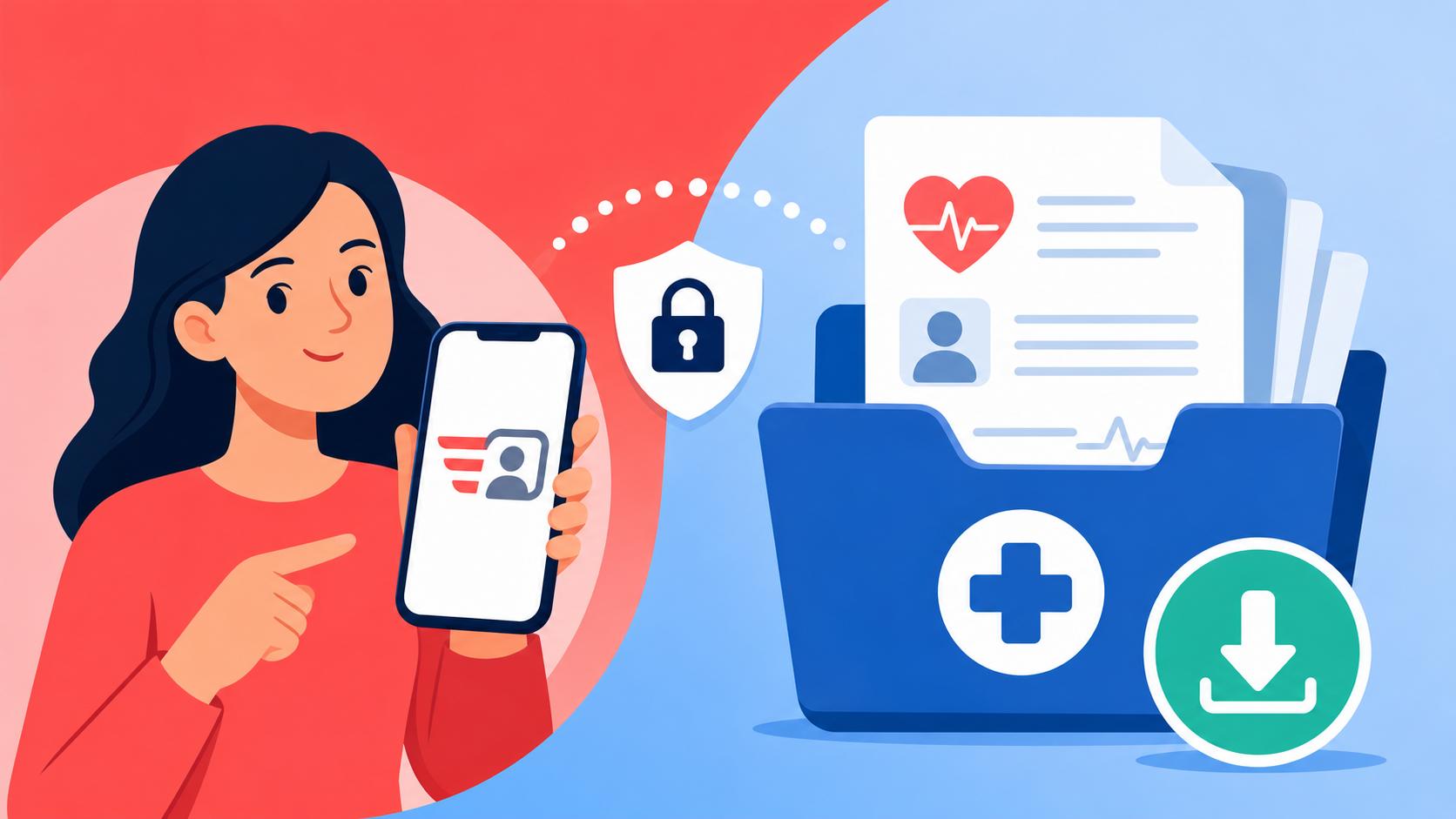
Once you have your ID Austria ready and your smartphone authenticated, the process of actually getting your hands on your records is relatively straightforward, though the interface is purely in German. First, navigate to the official public health portal. Look for the login button labeled "Login ELGA" or "Meine ELGA." You will be redirected to the secure ID Austria login page where you will likely use your fingerprint or FaceID on your phone to authorize the session.
Once inside, the dashboard can be a bit intimidating. You will see several tabs. The most important one for most expats is "Gesundheitsdaten" (Health Data). This is the repository for your documents. Within this section, you can filter by date, document type, or the institution that created the record. For example, if you are looking for your maternity records, you might see links related to The Digital Eltern-Kind-Pass 2026: What Changed for Parents. If you have recently visited a public clinic, the report should be filed under "Befunde" (Results).
To download a record, follow these steps:
- Locate the specific document (e.g., "Laborbefund" for lab results).
- Click on the document title to open a preview.
- Look for the "Herunterladen" (Download) button, usually located in the top right or bottom of the preview window.
- Choose the "PDF" format for a human-readable version. There is also an "XML" format option, which is meant for machine reading between different medical software systems, but for your personal files, the PDF is what you want.
- Save the file securely. Remember, these documents contain highly sensitive information like your social security number and detailed diagnoses.
| Document Type | German Term | Typical Availability | Useful For |
|---|---|---|---|
| Lab Results | Laborbefund | 2-5 Days | Chronic care, routine checkups |
| Discharge Summary | Entlassungsbrief | At discharge | Specialist follow-ups, insurance |
| Radiology Report | Radiologiebefund | 3-7 Days | Orthopedics, injury history |
| Medication List | Medikationsliste | Real-time | Avoiding drug interactions |
| Vaccination Record | Impfpass | Real-time | Travel, school registrations |
Managing Your Privacy and Participation
One of the most frequent questions I get from fellow expats is whether they have to be part of this system. Austria operates on an "opt-out" basis. This means that unless you explicitly stated otherwise when you moved here and received your first e-card, you are automatically enrolled in ELGA. For most people, this is a massive benefit because it ensures that in an emergency, a hospital can see your allergies or current medications via Emergency Services in Austria: 144, Hospitals, and Crisis Steps.
However, if you are someone who is deeply concerned about data privacy, you do have the right to partially or fully opt-out. You can choose to hide specific documents from view, or you can opt-out of the system entirely. This can be done digitally within the same portal where you view your records. If you decide to go this route, be aware that you will return to the world of paper. You will be responsible for collecting, storing, and carrying every single physical result to your appointments. If you lose a paper result from a Wahlarzt vs Kassenarzt, getting a duplicate can sometimes involve administrative fees and extra trips to the clinic.
There is also a "Log" feature (Protokoll) in your portal that I highly recommend checking once in a while. It shows exactly who has accessed your medical records and when. By law, only healthcare providers who are currently treating you are allowed to look at your data. If you see an entry from a doctor you haven't visited in years, you have the right to question it. This level of transparency was a major culture shock for me, but it actually made me feel much more secure about my data than the old system of faxing records between offices. You can find more details on how to manage these settings in our dedicated post on ELGA (Electronic Health Record): How to Opt-Out.
Practical Tips for the Tech Savvy Expat
While the web portal is the primary way to download your records, the mobile integration is getting better every year. Many people use the "Digitales Amt" app to manage their ID Austria, and from there, you can jump directly into health services. If you are frequently visiting doctors for Finding Medical Care in Austria: Clinics, Hospitals, and Referrals, I recommend creating a dedicated, encrypted folder on your computer or cloud storage specifically for these PDFs. Organizing them by year and "Document Type" will save you hours of searching later.
Another pro-tip: always check your "E-Medikation" tab before traveling. This section lists every prescription you have filled in the last year. If you are going abroad and need to prove that your medication was legally prescribed in Austria, having this list downloaded on your phone can prevent major headaches at customs. It is much more official than a crumpled receipt from an Apotheke.
Lastly, don't be afraid to ask your doctor if they have uploaded the report. While the system is mandatory for public hospitals and many "Kassenärzte" (contracted doctors), some private doctors might still be catching up with the digital workflow. If you don't see a result after two weeks, a quick email to the clinic asking them to "send the Befund to my ELGA" usually does the trick. Being proactive is the key to making The Austrian e-card: Registration, Photo Rules, and Usage Guide work for you rather than against you.
Summary of Access Points
Accessing your records is a three-pillar process: Identity (ID Austria), Insurance (e-card), and the Portal (gesundheit.gv.at). If any of these three are broken, the system fails. For example, if your e-card is blocked because you forgot to upload a photo, your ELGA access might remain intact, but doctors won't be able to upload new data to it. Always ensure your e-card photo registration is up to date to keep the data flowing.
Living in Austria means embracing a certain level of "Bürokratie," but the digital health system is one area where the bureaucracy actually works in your favor once you hurdle the initial setup. Being able to see your own medical data, understand your history, and have it ready at the touch of a button is a significant advantage of the Austrian healthcare system. It moves the power from the doctor's filing cabinet directly into your pocket.
Medical Disclaimer
The information provided in this guide is for informational and educational purposes only and does not constitute professional medical or legal advice. While we strive to keep the information up to date, healthcare regulations and digital portal interfaces in Austria can change. Always consult with a qualified healthcare provider or the official ELGA service line regarding your specific medical records, privacy settings, or health concerns. Accessing medical records via ID Austria involves handling sensitive personal data; ensure you are using secure devices and private internet connections when performing these actions.