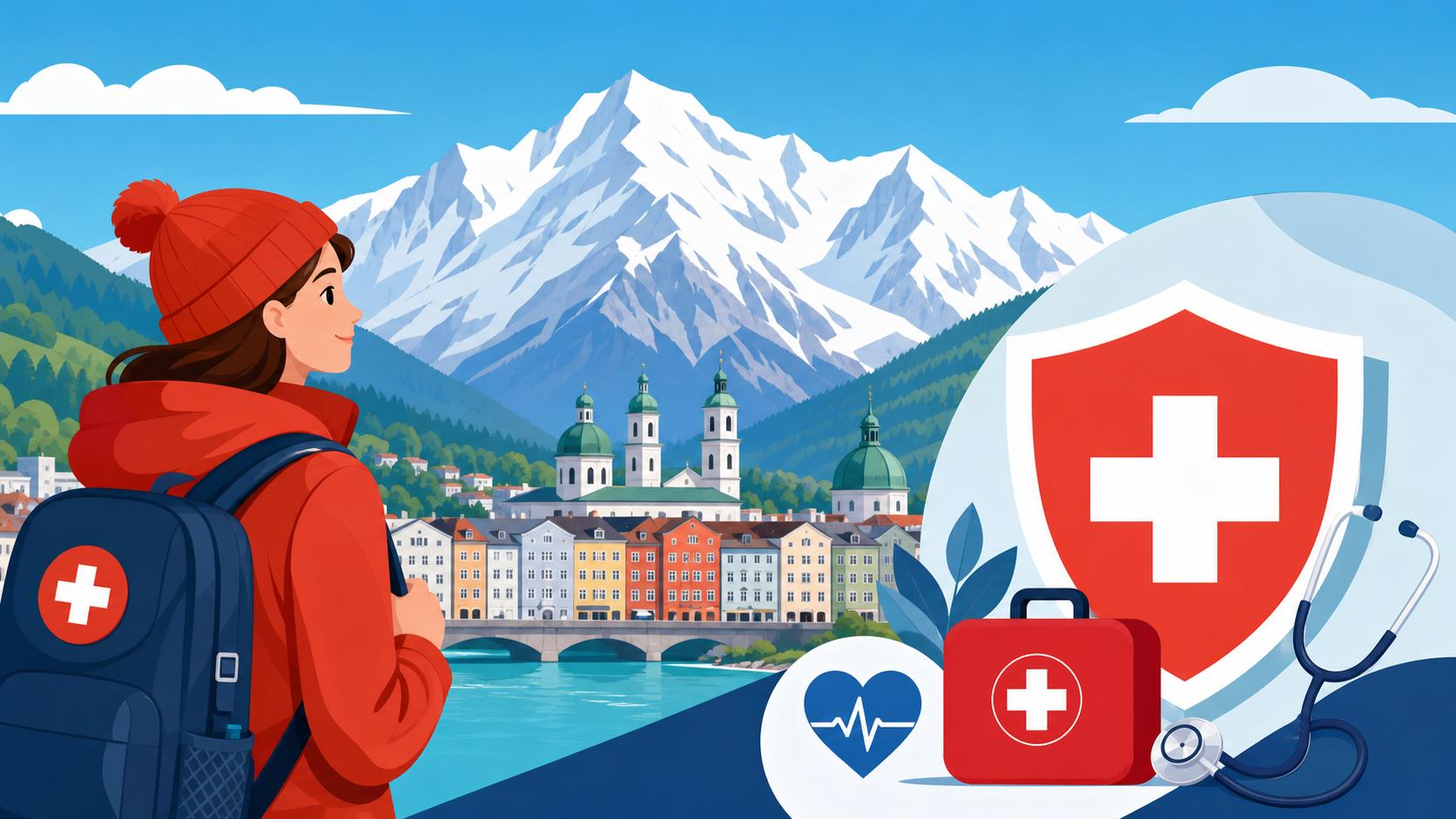
Innsbruck Healthcare Guide: Alpine Safety and Medical Care
Moving to the heart of the Alps is a dream until you realize your knee doesn't like the Nordkette as much as your eyes do. I remember my first winter here, staring at a confusing list of clinics while my ankle throbbed after a slushy patch on Maria-Theresien-Straße. This guide breaks down exactly how to navigate Innsbruck’s healthcare, from mountain rescues to finding English-speaking doctors.
The Infrastructure of Care in the Tyrolean Capital
Innsbruck is unique because it functions as both a cozy Alpine town and a high-tech medical hub for the entire state of Tyrol. Because of the high volume of skiing, hiking, and climbing accidents, the city’s medical infrastructure is world-class, particularly in trauma surgery and orthopedics. However, for a new resident, the system can feel like a labyrinth of different clinics and "Kassen" (insurance providers).
Finding Your Hausarzt in Innsbruck
Your primary point of contact in the city is the Hausarzt (General Practitioner). In Innsbruck, many GPs are located in residential districts like Pradl, Hötting, or Wilten. When you first arrive, do not wait until you are sick to find one. Many doctors in the city center have full patient lists and may turn away new patients unless it is an emergency.
When searching, you will see two main types of doctors: those who accept public insurance (Alle Kassen) and those who are private (Wahlarzt). If you are employed in Tyrol, you are likely covered by the Austria Healthcare System 2027: Complete Guide for Foreign Residents. Using a public doctor means you simply show your e-card, and the insurance handles the bill. If you choose a Wahlarzt, you pay upfront and then navigate the process of How to Submit a Wahlarzt Invoice to ÖGK for Refund. While the refund usually covers 80% of what a public doctor would have cost, the out-of-pocket difference in a city as expensive as Innsbruck can add up quickly.
Understanding the Klinik (Landeskrankenhaus)
Locals simply call the massive complex west of the city center "The Klinik." This is the Landeskrankenhaus Innsbruck, a university hospital where some of the world's best surgeons work. It is important to understand that the Klinik is divided into various specialized departments (Frauenklinik for women, Kinderklinik for children, etc.).
Unless you have a life-threatening emergency, you should generally visit a resident doctor first. The emergency room at the Klinik can have significant wait times for non-urgent issues. However, if you have a sports injury—something very common in the "Capital of the Alps"—the Unfallchirurgie (Trauma Surgery) department is where you will likely end up. They are experts at dealing with everything from "Skier's Thumb" to complex fractures sustained on the Patscherkofel.
Navigating Insurance Tiers in Tyrol
Most expats in Innsbruck are covered by the ÖGK (Österreichische Gesundheitskasse), but if you are a researcher at the University of Innsbruck or work in the public sector, you might be under the BVAEB. Understanding these nuances is key to knowing which specialists you can access.
For those who want a bit more comfort, such as a private room or the ability to choose a specific head surgeon at the Klinik, many residents opt for supplemental private insurance. This is particularly popular among the expat community who may want faster access to specialists without the long wait times often found in the public system. For a deeper dive into these options, see our guide on Public vs Private Health Insurance in Austria Explained.
Mountain Safety and Emergency Protocols
In Innsbruck, the mountains aren't just a backdrop; they are part of the daily commute. This proximity to the peaks means that emergency services are divided into "urban" and "Alpine" categories. Misunderstanding this distinction can be a multi-thousand-euro mistake.
The 140 vs 144 Dilemma
In the city, if you have a heart attack or a car accident, you call 144. This is the standard medical emergency number. However, if you are hiking the Goetheweg and twist your ankle, or if you get caught in an avalanche while backcountry skiing, you must call 140. This is the Bergrettung (Mountain Rescue).
The critical difference is that the standard Emergency Services in Austria: 144, Hospitals, and Crisis Steps are generally covered by your social insurance if it’s a medical necessity. Mountain rescue is a different story. If the Bergrettung has to send a helicopter (like the yellow Christophorus fleet you often see flying over the Inn river) to get you off a mountain, the cost can easily exceed €5,000.
Search and Rescue Costs
Public health insurance in Austria typically does not cover the cost of mountain recovery unless it was a life-or-death medical emergency, and even then, it’s a grey area. This is why every expat living in Innsbruck should have an Ambulance Fees and Mountain Rescue Costs (Alpinpolizze).
There are several ways to get this coverage. Many locals join the Alpenverein (Alpine Club). Your membership fee includes a comprehensive rescue insurance policy that covers helicopter costs and search-and-rescue operations. Alternatively, some high-end credit cards or private household insurances include it. Given how easy it is to get into trouble in the Karwendel mountains, this is the most important "healthcare" step you can take after registering your address.
Trauma Centers and Sport-Related Care
Innsbruck is arguably the world capital of sports medicine. If you are injured on the slopes or the trails, you will be in excellent hands. The city has numerous private clinics, like the Privatklinik Hochrum, which specializes in orthopedic surgery and rehabilitation for athletes.
Even if you are using the public system, you will find that the physical therapy (Physiotherapie) network in Innsbruck is robust. However, getting a spot with a therapist who is fully covered by the ÖGK can be difficult. Many residents pay for a "Wahlarzt" therapist and then claim a partial refund. If you find yourself needing long-term recovery, it is worth looking into Healthcare Costs: Kassenarzt vs Wahlarzt Differences Explained to budget for these sessions.
| Service Type | Phone Number | Coverage Note |
|---|---|---|
| Medical Emergency | 144 | Covered by ÖGK/BVAEB for medical necessity |
| Mountain Rescue | 140 | NOT covered by standard public insurance |
| Police | 133 | Public safety only |
| Fire Department | 122 | Emergency response |
| Health Advice Line | 1450 | Free 24/7 medical guidance |
| European Emergency | 112 | Works across all of Europe |
Living with Tyrolean Geography: Health Impacts
Living at 574 meters above sea level with peaks rising to over 2,000 meters around you changes how your body functions. Newcomers often struggle with two specific local health issues: the Föhn wind and altitude adjustment.
The Föhn Phenomenon
If you live in Innsbruck for more than a month, you will hear people complaining about the "Föhn." This is a warm, dry, southerly wind that plunges down the mountainsides into the valley. While it makes the sky incredibly clear and the temperatures unusually warm, it is infamous for causing "Föhnkrankheit" (Föhn sickness).
Symptoms include intense migraines, irritability, circulation problems, and fatigue. While it sounds like local folklore, many Austrian doctors take it very seriously. If you find yourself with a pounding headache when the wind picks up, don't worry—you're just becoming a local. Staying hydrated and avoiding heavy physical exertion during a strong Föhn period is the standard advice. If the symptoms are severe, you can consult a doctor about weather-sensitivity treatments.
Altitude and Respiratory Health
The air in Innsbruck is famously clean, but it is also thin and dry. In the winter, the valley can experience "Inversion," where cold air gets trapped under a layer of warm air, leading to a temporary buildup of particulates. If you have asthma or sensitive lungs, this is something to watch out for.
On the flip side, the Alpine climate is often used as a "Kur" (cure) for respiratory ailments. Many people move to Tyrol specifically for the health benefits of the mountain air. Just be aware that if you are heading up to the Top of Innsbruck (Hafelekar) at 2,256m, you might feel lightheaded or short of breath initially. Take it slow, and give your body a few weeks to adjust to the elevation before attempting major athletic feats.
Practical Healthcare Management for Expats
Navigating the administrative side of Austrian medicine is often more painful than the illness itself. In Innsbruck, you need to be proactive about your documentation to ensure you aren't stuck with unexpected bills.
Using Your e-card and Photo Registration
Your e-card is your golden ticket to the healthcare system. Since 2020, almost all e-cards must have a photo for security reasons. If you are an expat, your photo might not be automatically available from the passport registry. You may need to visit a specific registration office in Innsbruck—usually the Landespolizeidirektion or a designated ÖGK office—to have your photo linked to your card.
Failure to do this can result in your e-card being blocked, which is a nightmare when you’re standing in a pharmacy with a fever. Check the latest rules on The e-card Photo Requirement: How and Where to Register to make sure you are compliant. Also, remember that there is a small annual service fee for the e-card, which is usually deducted from your salary automatically every January.
Pharmacies and Night Shifts
Innsbruck has a high density of Apotheken (pharmacies), but they aren't like the drugstores you might find in the US or UK. You cannot buy simple things like high-dose ibuprofen or antibiotics over the counter; you need a prescription.
If you get sick at 2:00 AM on a Tuesday or on a Sunday when everything is closed, you need to find the Bereitschaftsdienst (On-call service). Every pharmacy in Innsbruck rotates night and weekend shifts. You can find which one is open by looking at the sign in the window of any pharmacy or by calling 1450. Note that there is a small "Nachtdienstgebühr" (night service fee) added to your purchase during these hours. For more on how to navigate these shops, see Apotheken in Austria: Prescription Workflow and Night Shifts.
Family and Preventative Medicine
If you are moving to Innsbruck with children, you will find the city is incredibly supportive of families. The Tyrolean healthcare system places a heavy emphasis on preventative care, starting from before birth.
Pediatric Care and Dentists
Finding an English-speaking pediatrician (Kinderarzt) in Innsbruck is relatively easy, as most medical professionals here have trained internationally. However, like GPs, the popular ones fill up fast. You will be issued a "Mutter-Kind-Pass" (Mother-Child-Pass), which outlines all the mandatory checkups and vaccinations your child needs to qualify for full family benefits.
Dentistry in Innsbruck is another area where you need to be careful with costs. The ÖGK covers basic fillings and extractions, but for anything "cosmetic" or high-end (like white composite fillings on back teeth or braces), you will likely pay a significant out-of-pocket fee. Many expats find it useful to check Finding a Dentist (Zahnarzt): What ÖGK Covers and What You Pay before booking an appointment at a clinic in the city center.
Mental Health and Counseling
Living as an expat in a mountain town can be isolating, especially during the dark winter months when the sun disappears behind the peaks by 3:30 PM. Innsbruck has a growing network of English-speaking therapists and counselors.
While the public insurance system does cover psychotherapy, the waiting lists for a fully funded spot are notoriously long. Most people in the international community pay privately and then apply for a partial "Kostenzuschuss" (refund) from their insurance provider. If you are feeling the "mountain blues," don't hesitate to use the Calling 1450: Austria's 24/7 Telephone Health Advice Line for immediate mental health resources and referrals to local specialists who speak your language.
Navigating Specialists and Referrals
In the Austrian system, you generally need a Überweisung (referral) from your GP to see a specialist like a dermatologist or a cardiologist if you want the insurance to cover it. In Innsbruck, specialists are scattered throughout the city, with a high concentration around the Klinik area and in the shopping districts.
If you decide to skip the referral and go straight to a private specialist, be prepared for the cost. However, the advantage in Innsbruck is speed. While a public dermatologist might have a three-month wait, a private one can often see you the next day. This is a trade-off many expats make, especially when dealing with the intense Alpine sun, which makes regular skin cancer screenings a must for anyone spending time on the glaciers.
Finding English-Speaking Support
One of the biggest anxieties for new residents is the language barrier during a medical crisis. In Innsbruck, you are in a good position. Because of the University and the massive tourism industry, almost all doctors under the age of 50 speak excellent English.
When you call a doctor's office, don't be discouraged if the receptionist speaks limited English. Usually, the medical staff and the doctors themselves are fluent. If you are heading to the Klinik for a major procedure and feel uncomfortable, you can request an interpreter in advance, or better yet, bring a German-speaking friend. Most medical terms in German are based on Latin anyway, which makes the "doctor-to-patient" communication surprisingly smooth even if your German is still at the "Guten Tag" level.
Health and Medical Disclaimer
The information provided in this guide is for educational and informational purposes only and does not constitute professional medical advice, diagnosis, or treatment. Always seek the advice of your physician or other qualified health provider with any questions you may have regarding a medical condition. Never disregard professional medical advice or delay in seeking it because of something you have read in this guide. The healthcare system in Austria is subject to change, and you should always verify current regulations with the official authorities such as the ÖGK or your local Tyrolean health department.