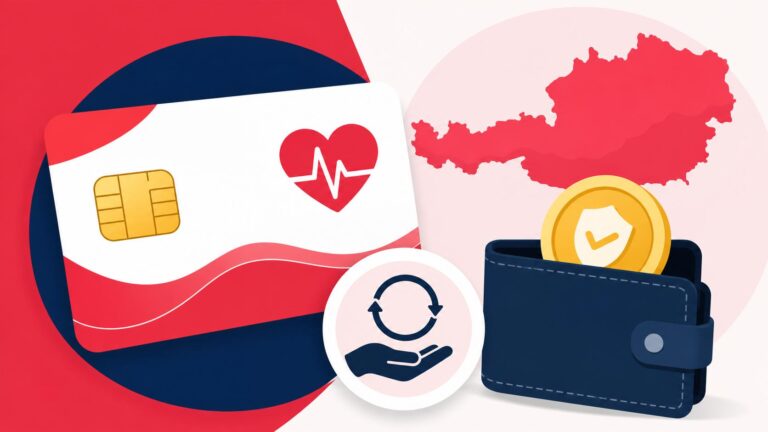
Austria Healthcare System 2027: Complete Guide for Foreign Residents
Moving to a new country involves a mountain of paperwork, but nothing feels more daunting than realizing you don’t know how the local hospitals work when you’re actually sick. I remember sitting on my floor in Vienna during my first flu season, clutching a social insurance number I didn't understand while staring at a closed pharmacy door. This guide breaks down the complexities of the Austrian healthcare system to ensure you never feel that helpless.
Understanding the Foundations of the Austrian Health System
The Austrian healthcare system is built on a principle of mandatory solidarity, which essentially means everyone contributes so that everyone is covered. It is often ranked among the best in the world, but for a newcomer, the decentralized nature of the insurance providers can feel like a maze. Unlike systems where you might choose a private provider from day one, Austria’s system is primarily public and tied directly to your employment or residency status.
The Principle of Solidarity and Mandatory Coverage
In Austria, healthcare is not a luxury; it is a legal requirement. If you are living and working here, you are part of the social insurance system. This is funded through social security contributions that are automatically deducted from your gross salary. I remember being shocked the first time I saw my Lohnzettel (payslip) and noticed how much was going toward insurance. However, that sting vanishes the moment you realize you can walk into a high-tech hospital and receive life-saving surgery without ever seeing a bill.
For those who are self-employed or students, the process is slightly different, but the goal remains the same: universal coverage. You cannot "opt out" of the public system just because you have a private plan from your home country. This mandatory nature ensures that the "risk" is spread across the entire population, allowing for a very high standard of care in public facilities that often rivals private clinics in other nations. For a deep dive into how these two worlds interact, you should read our guide on Public vs Private Health Insurance in Austria Explained.
Social Insurance Providers: ÖGK, SVS, and BVAEB
One of the first things you’ll need to figure out is which "Kasse" (insurance fund) you belong to. For the vast majority of employees in the private sector, the answer is the ÖGK (Österreichische Gesundheitskasse). If you are a freelancer or run your own business, you will likely be under the SVS (Sozialversicherung der Selbständigen). Public sector workers and those in the education sector often fall under the BVAEB.
Each of these providers has slightly different rules regarding deductibles and reimbursements. For example, SVS members often have a 20% co-payment for certain services, whereas ÖGK members generally pay nothing at the point of service for public doctors. This distinction is vital when budgeting for your monthly expenses. I spent my first two years under ÖGK and never paid a cent for a doctor's visit, but when I switched to freelancing, I had to learn the nuances of SVS billing. To get a better handle on these organizations, check out our Navigating Social Insurance: ÖGK, SVS, and BVAEB Overview.
The Role of Private Health Insurance
While the public system is excellent, many expats choose to "top up" with private insurance. This is known as "Sonderklasse" or "Zusatzversicherung." It doesn't replace your public insurance but offers perks like shorter waiting times for elective surgeries, access to private doctors (Wahlärzte), and, perhaps most importantly, a private or semi-private room in the hospital.
Having a private room might seem like a vanity, but after sharing a four-bed ward in a public hospital in Linz, I quickly saw the appeal of a quiet space for recovery. Private insurance also often covers the cost of "Wahlarzt" visits, which we will discuss later. It’s important to note that private insurance companies will do a health check before accepting you, and premiums can rise significantly with age or pre-existing conditions.
Navigating the e-card and Registration Process
Your e-card is the golden ticket to the Austrian healthcare system. It is a small, plastic card with a chip that contains your insurance data, but not your actual medical records (those are handled by a separate digital system). Without this card, visiting a doctor becomes a bureaucratic nightmare involving deposits and temporary certificates.
How to Get Your e-card and Your Social Security Number
When you start a job in Austria, your employer is legally required to register you with the social insurance provider within days. Once registered, you are assigned a ten-digit social security number (Sozialversicherungsnummer or SVNR). The first four digits are usually related to your birth date, and the last six are a unique identifier. This number stays with you for life, even if you leave and return to Austria years later.
Your physical e-card usually arrives in the mail a few weeks after your registration. If you are a student or someone who is voluntarily insuring themselves, you’ll have to initiate this process yourself at the nearest ÖGK office. Newcomers should keep a photo of their e-card on their phone; while most doctors want the physical card, having the number handy is a lifesaver if you lose your wallet. For more details on the logistics, see The Austrian e-card: Registration, Photo Rules, and Usage Guide.
The e-card Photo Requirement
Since 2020, Austria has implemented a strict photo requirement for the e-card to prevent fraud. If you are a non-EU citizen, your photo is often pulled automatically from the Fremdenregister (foreigners' register) if you've recently had a visa or residence permit issued. However, if you are an EU citizen or if the authorities don't have a recent photo of you, you must proactively provide one.
Many expats get their insurance blocked because they ignored the letter asking for a photo. You usually have to go to a specific registration office (often at a police station or a dedicated e-card photo point) with a passport-sized photo and your current e-card. It’s a bit of a "typical Austrian" bureaucratic step, but once it’s done, your card is valid for several years.
ELGA: The Electronic Health Record
ELGA is Austria’s digital health network. It allows doctors, hospitals, and pharmacies to access your health data, such as medication lists and discharge reports, regardless of where you are in the country. If you are in an accident in Tyrol but live in Vienna, the doctors in Innsbruck can see your allergies and current prescriptions via ELGA.
While this is incredibly efficient, some people have privacy concerns. You have the right to "opt out" of ELGA entirely or for specific documents through the online portal using your ID Austria (the digital signature system). Personally, I find ELGA a relief because I can never remember the exact names of the medications I was prescribed three years ago. The system also powers the "e-Rezept," meaning your prescriptions are loaded directly onto your e-card.
Primary Care: Finding and Visiting a Doctor
The cornerstone of your health in Austria is your "Hausarzt" (General Practitioner). This is the doctor who will handle your common illnesses, write your sick notes for work, and coordinate your care with specialists.
Choosing a Hausarzt in Your Neighborhood
In Austria, you have the freedom to choose your own GP, but there is a catch: they must have a contract with your insurance provider. You can find these by looking for the sign "Alle Kassen" on their door or website. If you live in a big city like Vienna or Graz, finding a doctor who speaks English is usually quite easy, but finding one who is currently accepting new patients can be a challenge.
I recommend using platforms like DocFinder to read reviews and check if a doctor speaks your language. Don't wait until you are sick to find a Hausarzt. Go for a routine checkup or simply drop in to see if you like the atmosphere. Having a relationship with a GP before a crisis hits makes the process of getting a "Krankenmeldung" (sick note) much smoother when you actually have a fever.
Kassenarzt vs. Wahlarzt: The Cost Difference
This is the most confusing part of the system for many foreigners. A "Kassenarzt" is a doctor who has a contract with the public insurance. You show your e-card, you pay nothing, and the doctor bills the insurance directly. A "Wahlarzt," however, is a private doctor. They do not have a contract with the public insurance, meaning you must pay their bill out of pocket.
You can submit that bill to your insurance (ÖGK/SVS) for a refund, but—and this is a big "but"—they will only refund you 80% of what a public doctor would have been paid for that same service. Since private doctors often charge much more than the public rate, your "80% refund" might only cover a small fraction of your total bill. We’ve broken this down in detail in our article Healthcare Costs: Kassenarzt vs Wahlarzt Differences Explained.
Referrals and the Specialist System
If you have a specific issue, like a skin rash or a heart palpitation, you might want to see a specialist (Facharzt). While you can technically book some specialists directly, it is standard practice to get a "Überweisung" (referral) from your Hausarzt. This ensures that the specialist has a baseline of your medical history and that the insurance company sees the visit as medically necessary.
Some specialists, like gynecologists and ophthalmologists, are frequently visited without a referral. However, for things like an MRI or a visit to an internal medicine specialist, the referral is key.
Specialized Care and Hospitalization
When things get serious, Austria’s hospital network is world-class. From the massive AKH in Vienna to smaller regional clinics, the quality of medical technology and surgical expertise is exceptionally high.
Visiting a Specialist (Facharzt)
Finding a specialist who takes your insurance can be even harder than finding a GP. Popular specialists like dermatologists or orthopedists often have waiting lists of several weeks or even months. This is one of the primary reasons people choose to visit a "Wahlarzt" (private specialist) or get private insurance.
If you are a member of the SVS, you might find the "Wahlarzt" route more common, as you are already used to a certain level of co-payment. For those under ÖGK, the shock of a private bill can be significant. If you choose to go the private route for speed, make sure you understand the reimbursement process. For more on this, read Using a Wahlarzt (Private Doctor) and Claiming 80% Refunds.
Hospital Stays: What to Expect
If you are admitted to a public hospital in Austria, you will generally be in the "General Class." This means a clean, modern room shared with two to four other patients. The medical care is identical regardless of whether you have private insurance or not; the difference is purely in the "comfort" level.
There is a small daily fee for hospital stays (usually around 10 to 15 Euros, depending on the province), which is capped at 28 days per calendar year. You don't pay for the surgeries, the medicine, or the food. I’ve had friends who were terrified of the "bill" after a week-long stay for a broken leg, only to find the total cost was less than a nice dinner out.
Mental Health Support and Counseling
For a long time, mental health was a bit of a "taboo" topic in the Austrian administrative system, but that has changed significantly in recent years. Today, your public insurance can cover a portion of psychotherapy costs, though finding a therapist with a "Kassenplatz" (a spot fully paid by insurance) is notoriously difficult and usually involves a long wait.
Most expats end up seeing a private therapist and applying for a partial refund (Kostenzuschuss). In 2026, the refund rates have increased slightly to reflect inflation, but it still rarely covers the full cost. If you are struggling, there are also crisis centers (Kriseninterventionszentrum) in major cities that offer immediate, free support. For a full guide on navigating these resources, see Mental Health in Austria: Counseling, Therapy, and Expat Support.
Pharmacies and Medications in Austria
The "Apotheke" system in Austria is strictly regulated. You won't find aspirin or cough syrup in a supermarket here; everything related to health must be purchased at a licensed pharmacy.
Apotheken and the Prescription System
Austrian pharmacies are easily spotted by the large red "A" sign. The pharmacists here are highly trained professionals who often provide medical advice for minor ailments. If you have a prescription (Rezept) from your doctor, it is likely an "e-Rezept" linked to your e-card. You simply hand over your card, the pharmacist scans it, and they see your prescribed medications.
For most people, there is a standard prescription fee (Rezeptgebühr) of currently around 7.10 Euros per item. Even if the medicine costs 100 Euros, you only pay the flat fee. If the medicine is cheaper than the fee, you pay the lower price. This "solidarity" in pricing is one of the best features of the system. For more on these rules, see Pharmacies (Apotheken) and Medication Rules in Austria.
Night and Weekend Services: The Bereitschaftsdienst
Illness doesn't follow a 9-to-5 schedule. In every district, there is always at least one pharmacy open 24/7 on a rotating basis. You can find the schedule on the door of any pharmacy or online. Be aware that if you visit a pharmacy during the night or on a Sunday, there is a small "Nachtdienstgebühr" (night service fee), usually around 1.30 to 3.80 Euros.
When you arrive at a pharmacy at 3:00 AM, the door will be locked. You’ll need to ring the bell (Nachtglocke), and a pharmacist will speak to you through a small window or intercom. It can feel a bit intimidating the first time, but it’s an incredibly reliable service.
Over-the-Counter vs. Prescription Drugs
Austria is very strict about antibiotics and certain pain medications. You cannot "talk your way into" getting antibiotics without a prescription here. The culture of medicine in Austria also leans slightly more toward homeopathic or herbal remedies for minor issues before jumping to heavy pharmaceuticals.
Don't be surprised if a pharmacist suggests a tea or a herbal syrup for a mild cough alongside your more standard medications. However, for chronic conditions, the system is robust. Once your Hausarzt has established your need for long-term medication, they can often issue "Dauerrezepte" (long-term prescriptions) so you don't have to visit the office every month.
Family Health and Preventive Care
Austria is a fantastic place to raise a family, partly because the healthcare support for parents and children is so extensive. The focus here is heavily on "Vorsorge" (prevention).
The Eltern-Kind-Pass 2026
If you are pregnant or have a young child in Austria, the "Eltern-Kind-Pass" (formerly the Mutter-Kind-Pass) is your roadmap. It is a series of mandatory examinations for both the mother (during pregnancy) and the child (up to age five). Completing these checks is linked to your eligibility for full childcare benefits (Kinderbetreuungsgeld).
The system has fully migrated to a digital version, making it much easier to track appointments and share data with pediatricians. These exams are entirely free and cover everything from ultrasounds to hearing tests for the baby. To understand the latest updates, check out The Digital Eltern-Kind-Pass 2026: What Changed for Parents.
Pediatric Care and Vaccinations
Finding a pediatrician (Kinderarzt) who accepts public insurance can be a race against time, especially in Vienna. Many parents register with a pediatrician as soon as they have a due date. Like the GP system, you have "Kassenärzte" and "Wahlärzte" for children.
Vaccinations in Austria follow a specific schedule (Impfplan). While vaccinations are not mandatory by law, they are highly recommended and provided free of charge for children for most standard diseases (like Measles, Mumps, Rubella). One specific local vaccine you should know about is the FSME vaccine for tick-borne encephalitis, which is very common in the Alpine region.
Annual Checkups: The Gesundenuntersuchung
Once a year, every resident over the age of 18 is entitled to a free comprehensive health checkup called the "Gesundenuntersuchung." This includes blood tests, a physical exam, and a consultation about your lifestyle and risk factors.
This is a great way to catch issues like high blood pressure or cholesterol early. The insurance companies love this program because it saves them money in the long run, and as a resident, it costs you nothing but an hour of your time. I highly recommend booking yours every January to start the year with a clean bill of health. You can find more details in our guide on Annual Free Health Checkup (Gesundenuntersuchung) Details.
Emergency Services and Urgent Situations
In a crisis, you need to know exactly who to call. The emergency infrastructure in Austria is exceptionally fast and efficient.
Emergency Numbers to Know
The most important number to memorize is 144 for an ambulance (Rettung). For general emergencies, the European standard 112 also works and will connect you to a dispatcher who usually speaks English. If you need the police, it's 133, and the fire department is 122.
When you call 144, stay calm and state your location clearly. If you are in a city, an ambulance is usually there in under 10 minutes. In the mountains, they might dispatch a helicopter, which brings us to an important point about insurance coverage. For a full list of protocols, see Emergency Services in Austria: 144, Hospitals, and Crisis Steps.
1450: The Health Hotline
If you are sick but it’s not a life-threatening emergency, call 1450. This is a 24/7 "Health Advice Line" staffed by qualified nurses. They will ask you a series of questions and tell you whether you should wait for your GP, go to an after-hours clinic, or head to the emergency room.
This service is a godsend for expats who are unsure how "sick" they really are or where to go on a Sunday. During the pandemic, it became the central hub for health advice, and it remains a cornerstone of the system today. Most operators speak English, and they can even tell you which specific pharmacy or doctor is open near you right now.
Ambulance Fees and Mountain Rescue
In a medical emergency, the cost of the ambulance is covered by your public insurance. However, there is a major exception: mountain rescue. If you are hiking in the Alps and get stranded or injured, the cost of a helicopter rescue can be thousands of Euros.
Public insurance generally does not cover "leisure-related" mountain rescues. This is why many expats join the "Alpenverein" (Alpine Club) or take out specific "mountain insurance." For a few dozen Euros a year, you are covered for these astronomical costs. It is a small price to pay for peace of mind if you enjoy the Austrian outdoors.
| Feature | Public Insurance (ÖGK/SVS) | Private Health Insurance (Zusatz) |
|---|---|---|
| Doctors | Kassenärzte (Free at point of use) | Wahlärzte (Access to private doctors) |
| Hospital Room | General Class (Shared ward) | Sonderklasse (Private/Semi-private) |
| Surgeries | Covered (Wait times for elective) | Covered (Shorter wait times) |
| Medication | Fixed fee (approx. €7.10) | Often reimbursed via private claim |
| Dental | Basic care covered | Higher-end treatments/implants covered |
| Mental Health | Limited subsidized spots | Higher reimbursement for therapy |
Costs, Deductibles, and Financial Realities
While the system is "free" at the point of delivery for many, it is important to understand the hidden costs and how your salary is affected.
Monthly Contributions and the "Green" Card Fee
Your healthcare contribution is roughly 7.65% of your gross income, usually split between you and your employer. For the self-employed, the SVS rate is similar but calculated differently based on your annual profit. There is also a small annual "e-card service fee" (around 13 Euros) that is automatically deducted from your salary or charged by your insurer once a year.
It's a "set it and forget it" system for employees, but if you are a freelancer, you must be diligent about your SVS payments. If you fall behind, your insurance can be "suspended," meaning you’ll have to pay for doctor visits out of pocket until you settle your debt.
Deductibles and Co-payments
If you are with the SVS or BVAEB, you will encounter "Selbstbehalt" (deductibles). This usually means you pay 10% to 20% of the cost for certain doctor visits or treatments. However, there are caps on these payments to ensure they don't become a financial burden for low-income earners or those with chronic illnesses.
For ÖGK members, co-payments are rare, mostly limited to the daily hospital fee or specific dental procedures (like white fillings instead of the standard amalgam). Always ask your doctor beforehand: "Ist das eine Kassenleistung?" (Is this covered by insurance?). If the answer is no, ask for a "Kostenvoranschlag" (price estimate).
Planning for the Future
The Austrian system is evolving. With an aging population, there is more focus on digital tools and home-based care. As a foreign resident, staying informed about these changes is key to getting the most out of the system. Whether it's utilizing the free yearly checkup or understanding how to claim a refund for a private specialist, being proactive is the best way to handle your health.
If you ever find yourself frustrated by the "Amtsweg" (the bureaucratic path), just remember that the person behind the desk is also part of this system. A little patience and a "Guten Tag" go a long way. Austria’s healthcare might have a lot of rules, but when you really need it, it’s there for you with some of the highest standards of care in the world.
Legal Disclaimer
The information provided in this guide is for general informational purposes only and does not constitute professional medical or legal advice. While we strive to keep the information up to date, healthcare laws and insurance rates in Austria are subject to change. Always consult with the official Austrian Social Insurance (Sozialversicherung) or a qualified legal advisor for specific concerns regarding your personal insurance status or medical rights.