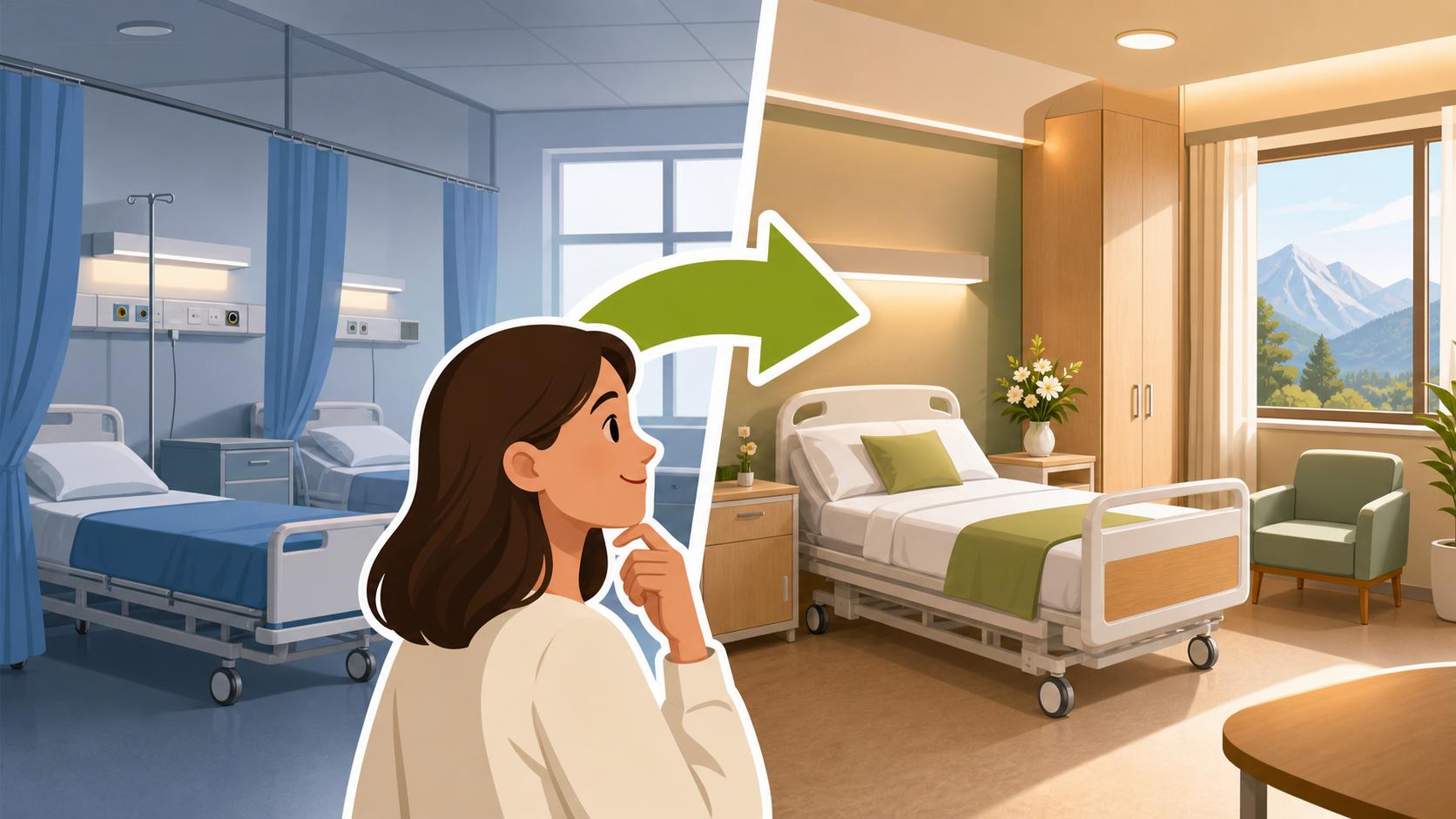
Upgrading to a Private Room in an Austrian Public Hospital
Waking up at 3:00 AM to the rhythmic snoring of three strangers and the harsh glow of a corridor light is the moment most expats realize the "standard" Austrian hospital experience is quite different from a hotel. A stay of several nights in a multi-bed ward in Vienna can be more draining than the procedure itself, simply because of the lack of privacy. This guide breaks down exactly how to navigate the system to secure a private or semi-private room in a public hospital.
The Reality of Austrian Public Hospital Accommodation
When you are admitted to an Austrian public hospital through the Austria Healthcare System 2027: Complete Guide for Foreign Residents, you are by default placed in what is known as the "Allgemeine Gebührenklasse" or the general fee class. This is the standard level of care covered by your mandatory social insurance, whether you are under Navigating Social Insurance: ÖGK, SVS, and BVAEB Overview or another provider. In this class, you are typically assigned to a room with three to six other patients.
While the medical care in Austria is world-class and arguably some of the best in Europe, the comfort level in the general class can be a shock to those coming from countries where semi-private rooms are the norm. You will share a bathroom, often located in the hallway or shared between two rooms, and your personal space is limited to a small bedside locker and a curtain. If you value silence, personal space, and the ability to control the room temperature or lighting, the general class can be a significant hurdle to your recovery.
Understanding the Sonderklasse Concept
The term you need to memorize is "Sonderklasse." This is the "Special Class" or private tier within the public hospital system. It does not mean you are in a different building or receiving better surgery; the doctors and nurses are the same. However, the Sonderklasse upgrade changes your "hotel" experience and often grants you the right to be treated personally by the head of the department (the Primarius).
Upgrading to Sonderklasse is essentially a way to bridge the gap between the public and private medical worlds. Even in a large public facility, Sonderklasse wards usually have their own dedicated wings or floors. These areas feel less like a sterile institution and more like a high-end clinic, with quieter hallways, better-furnished rooms, and more flexible visiting hours for your family and friends.
The Standard Multi-Bed Ward Experience
In a standard ward, your daily life is dictated by the collective needs of the room. Nurses perform rounds, vitals are checked, and meals are served on a strict schedule that might not align with your rest. Furthermore, the "Besuchszeiten" (visiting hours) in the general class are often strictly enforced to prevent the room from becoming overcrowded. If you have a large family or want your partner to stay late, the standard class will likely present a problem.
Comparing Single vs Semi-Private Rooms
Once you decide to move away from the general class, you generally have two choices for your upgrade: the "Einbettzimmer" (single-room) or the "Zweibettzimmer" (two-bed room). Your choice will largely depend on your budget or the specifics of your insurance policy, as the price difference between the two can be several hundred euros per day.
The Single Room Experience
The Einbettzimmer is the gold standard of hospital comfort in Austria. When you opt for this, you have total control over your environment. This is particularly beneficial if you have a condition that requires significant rest or if you need to continue working remotely from your bed—though I’d always advise focusing on recovery. You will have a private ensuite bathroom, a television that you don't have to share, and often a small seating area for guests.
In many modern Austrian hospitals, the single rooms in the Sonderklasse wing also include extra amenities like a minibar (stocked with non-alcoholic beverages), a high-quality bathrobe, and upgraded toiletries. The food service is also significantly improved; instead of the standard "Menü 1 or 2," you are often given an à la carte menu with multiple choices for breakfast, lunch, and dinner.
The Two-Bed Semi-Private Option
The Zweibettzimmer is the most common upgrade for expats who have Private Health Insurance: Hospital Class Coverage Upgrades. It strikes a balance between privacy and cost. You will share the room with only one other person, which drastically reduces the noise and traffic in the room. In most cases, these rooms are designed so that each bed has its own window and a reasonable amount of space between patients.
While you are still sharing a bathroom with one person, the experience is much more manageable than a six-person ward. Many people find that having one roommate provides a sense of security and a bit of social interaction without the overwhelming nature of a full ward. It is important to note that if you choose a two-bed room and the hospital is not full, you might end up having the room to yourself anyway, though you cannot count on this.
| Feature | General Class (Allgemeine Klasse) | Semi-Private (Zweibettzimmer) | Private (Einbettzimmer) |
|---|---|---|---|
| Occupancy | 3 to 6 patients | Max 2 patients | 1 patient |
| Bathroom | Shared (often in hall) | Private ensuite (shared with 1) | Private ensuite (exclusive) |
| Food | Standard hospital menu | Enhanced menu choices | Gourmet/A la carte menu |
| Doctor | On-call ward physician | Department Head (Primarius) | Department Head (Primarius) |
| Visiting Hours | Restricted | Extended/Flexible | Very Flexible |
| Cost Basis | Covered by The Austrian e-card: Registration, Photo Rules, and Usage Guide | Supplemental Insurance or Self-Pay | High Supplemental or Self-Pay |
How to Secure Your Upgrade
Securing a private room is not always as simple as asking for one upon arrival. The Austrian system is highly regulated, and the availability of Sonderklasse rooms is often limited. You need a clear strategy, whether you are planning an elective surgery or find yourself in an emergency situation.
Using Private Supplemental Insurance
The most seamless way to get a private room is through a supplemental insurance policy (Zusatzversicherung). Most veteran expats eventually invest in this because it covers the "Sonderklasse" costs that the Public vs Private Health Insurance in Austria Explained does not. If you have this insurance, you simply present your insurance card or "Polizzennummer" at the admissions desk (Aufnahme).
The hospital will then contact your insurance provider to get a "Kostengutsprache" (confirmation of cost coverage). If your policy covers a "Zweibettzimmer," but you want an "Einbettzimmer," you can often pay the "Aufzahlung" (the difference) out of pocket. It is vital to check if your policy is valid for all of Austria or just specific states, as costs can vary between a Vienna Healthcare Guide: Top Expat Clinics and Hospitals and a hospital in a smaller province.
Navigating the Self-Payer Route
If you do not have private insurance, you can still upgrade as a "Selbstzahler" (self-payer). This is a common path for those who are temporarily in Austria or those who chose not to take out private insurance but want comfort for a specific procedure. When you arrive for your "Stationäre Aufnahme" (inpatient admission), tell the administrator immediately that you wish to pay for a Sonderklasse room.
Be prepared: the hospital will likely ask for a significant "Kaution" (deposit) upfront. This can range from 1,000 to 5,000 euros depending on the expected length of your stay. The daily rate for a private room upgrade in a public hospital can be anywhere from 250 to 800 euros per day, on top of the medical costs. If you are pursuing this, always ask for a "Kostenvoranschlag" (cost estimate) in writing before you sign the admission papers.
The Role of Your e-card and Social Insurance
Even when you upgrade, your basic medical care remains covered by your social insurance. You must always bring your physical card as explained in The Austrian e-card: Registration, Photo Rules, and Usage Guide. The upgrade only covers the "extra" comforts and the private physician fee. It is a common misconception that if you pay for a private room, your social insurance no longer applies. In reality, the hospital bills the social insurer for the base rate and bills you or your private insurance for the "Sonderklasse" surcharge.
Timing and Availability Challenges
One thing I learned the hard way is that paying for an upgrade doesn't always guarantee you get it the moment you walk in. Public hospitals in Austria, especially in cities like Vienna or Graz, are often at peak capacity.
Elective Surgeries vs. Emergency Admissions
If you are scheduling an elective surgery, you have the best chance of securing your room. When your doctor schedules the procedure, they should note your preference for Sonderklasse. However, even then, the ward might be full on the day of your surgery. If this happens, you will be placed in the general class until a private room becomes available. You will only be charged for the days you actually spend in the upgraded room.
In the case of Emergency Services in Austria: 144, Hospitals, and Crisis Steps, securing an upgrade is much harder. Triage and medical stability come first. Once you are stabilized and moved from the Emergency Rooms in Austria: Triage, Waiting, and What to Bring to a standard ward, you can then request a transfer to the Sonderklasse wing. It may take 24 to 48 hours for a spot to open up.
Administrative Tips for the Admissions Desk
When you arrive at the hospital, the "Aufnahme" is your most important stop. The staff here are often under pressure, so being prepared is key. Have your passport, e-card, and insurance details ready. If your German is still a work in progress, simply say: "Ich möchte ein Upgrade auf die Sonderklasse, bitte. Einbettzimmer oder Zweibettzimmer."
They will check the "Bettenplan" (bed plan) and let you know if something is available. If they say no, don't be afraid to ask them to put you on a waiting list for the following day. Persistence, delivered with a polite "Bitte," often works wonders in the Austrian administrative system. You should also clarify if the Healthcare Costs: Kassenarzt vs Wahlarzt Differences Explained apply to any specialists who might visit you in your private room.
Is the Upgrade Worth the Cost?
Deciding whether to pay hundreds of euros for a room is a personal choice. For a one-night stay, it might feel like an unnecessary luxury. However, if you are facing a stay of a week or more, or if you are undergoing a procedure that requires high levels of hygiene and quiet, the value of a private room becomes clear.
The Benefit of the Chief Physician
One hidden benefit of the Sonderklasse upgrade that many expats overlook is the "Wahlarzt" or "Chefarztpflicht." In the general class, you are treated by whichever doctor is on shift. In Sonderklasse, you are technically under the care of the "Primarius" (Head of Department). While the junior doctors still do the daily checks, the most senior medical minds in the building are responsible for your treatment plan and often perform the surgery themselves. This peace of mind is often why people choose to upgrade, regardless of the room size.
Mental Health and Recovery Speed
Recovery is as much mental as it is physical. The stress of being in a room with five other people—all with different needs, visitors, and medical issues—can take a toll. In a private room, you can sleep when you want, keep the window open for "Lüften" (the Austrian obsession with fresh air), and have the privacy to process your situation. When you factor in the quality of sleep, the upgrade often pays for itself in the form of a faster, less stressful discharge from the hospital.
Healthcare Services Disclaimer
This guide is for informational purposes only and is based on personal experiences and general administrative practices in Austria. Hospital policies, insurance coverage, and costs can change frequently. Always consult with your insurance provider and the specific hospital's admissions office to confirm current rates and availability. This content does not constitute legal or professional medical advice. For any medical emergency, always dial 144 immediately.