Paracetamol vs Ibuprofen: What to Ask For at the Apotheke
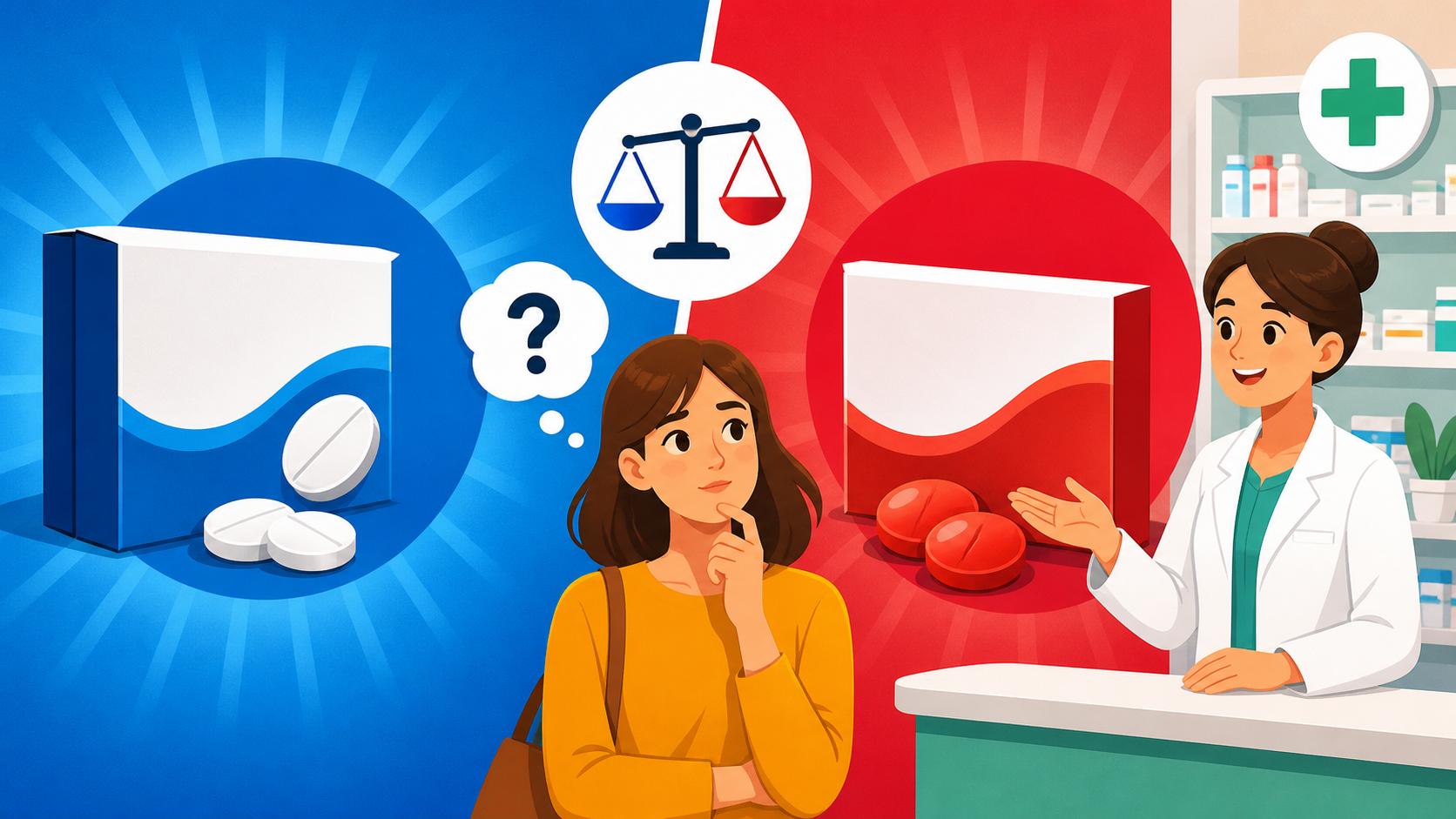
You are standing in front of a green neon cross on a Sunday afternoon, your head is throbbing, and the local Billa supermarket is closed. I remember the sheer panic of my first month in Vienna when I realized I couldn't just grab a bottle of Advil at the grocery store checkout. This guide settles the Paracetamol vs Ibuprofen debate once and for all, specifically within the unique context of the Austrian pharmaceutical system.
The Cultural Shock of the Austrian Apotheke
If you are coming from a country where you can buy a 500-count bottle of painkillers at a warehouse club or a gas station, the Austrian way will feel restrictive. In Austria, every single medicinal product, even a mild headache pill, must be sold within an Apotheke (pharmacy). There is no "over-the-counter" in the sense of self-service shelves; you must speak to a pharmacist across a counter.
This can be intimidating if your German is still a work in progress. You might feel like you are being interrogated when they ask, "Have you taken this before?" or "Are you on other medications?" but they are legally required to provide this consultation. Understanding the Austria Healthcare System 2027: Complete Guide for Foreign Residents helps you realize that pharmacists here are highly trained medical professionals, often acting as a first line of defense before you even see a doctor.
The second hurdle is the timing. Most pharmacies close by 6:00 PM on weekdays and early on Saturdays, with almost all of them shuttered on Sundays. If you find yourself in pain during off-hours, you need to know How to Find the Nearest Sunday Pharmacy (Nachtapotheke). These "night pharmacies" operate on a rotating schedule, and you will have to ring a small bell at a side window to be served. Be prepared to pay the Understanding the Apotheke Night Service Fee (Nachtdienstgebühr), which is a small surcharge for the convenience of after-hours service.
Paracetamol in Austria: The Gentle Baseline
Paracetamol is the active ingredient you might know as Tylenol or Panado. In Austria, the king of Paracetamol is a brand called Mexalen. If you walk into a pharmacy and ask for "something for a mild headache and a bit of a fever," the pharmacist will almost certainly hand you a box of Mexalen 500mg.
When to Choose Paracetamol (Mexalen)
Paracetamol is primarily a pain reliever and a fever reducer. It does not have significant anti-inflammatory properties. This makes it the "gentler" choice for many. If you have a sensitive stomach or a history of gastric ulcers, Paracetamol is your best friend. It doesn't irritate the stomach lining the way Ibuprofen can. It is also the standard recommendation for pregnant women and young children in the Austrian medical community, though you should always verify this with your doctor during a Family Health: Eltern-Kind-Pass 2026 and Maternity Care System checkup.
The Dangers of Overdosing
Because Paracetamol feels "gentle," people often underestimate it. In Austria, pharmacists are very strict about the daily limit. For a healthy adult, the maximum is usually 4 grams (eight 500mg tablets) in 24 hours. Exceeding this can lead to severe liver damage. The pharmacists will often remind you to stay well below this limit, especially if you are consuming alcohol. If you are ever unsure about what you can take without a prescription, check our guide on Over-the-Counter (OTC) Medicines: What You Can Buy Legally.
Common Austrian Paracetamol Brands
- Mexalen: The most ubiquitous brand.
- Parkemed: Note that Parkemed is not Paracetamol (it is Mefenamic Acid), but expats often confuse the names.
- Enantyum: Often suggested for stronger pain, but again, a different class of drug.
- Generic Paracetamol: You can simply ask for "Paracetamol Genericon" if you want a cheaper, non-branded version.
Ibuprofen in Austria: The Heavy Lifter for Inflammation
If your pain is caused by something structural—like a swollen ankle, a toothache, or intense menstrual cramps—Ibuprofen is usually the superior choice. Unlike Paracetamol, Ibuprofen is a Non-Steroidal Anti-Inflammatory Drug (NSAID). It doesn't just block the pain signal; it actively works to reduce the swelling and inflammation at the source.
When to Choose Ibuprofen
In the Austrian pharmacy, you will often find Ibuprofen under the brand names Advil, Aktren, or Seractil. It is the go-to for sports injuries, which is common if you are spending your weekends hiking or skiing. However, if you are injured on the slopes, make sure you understand the Emergency Services in Austria: 144, Hospitals, and Crisis Steps before you try to self-medicate a serious break.
Ibuprofen is also highly effective for "pounding" headaches or migraines where there might be a vascular inflammatory component. Many expats find that the 400mg dose is the standard "strong" pill available without a prescription.
The Stomach Factor
The biggest downside to Ibuprofen in Austria is how it treats your stomach. Pharmacists will often ask if you have "a sensitive stomach." If you do, they might recommend taking the pill with a meal or even suggest a "Magenschutz" (stomach protector) if you have to take it for several days. Never take Ibuprofen on an empty stomach if you can avoid it. If your pain persists for more than three days, you should stop self-medicating and focus on Finding Medical Care in Austria: Clinics, Hospitals, and Referrals to get a professional opinion.
Common Austrian Ibuprofen Brands
- Seractil: A very popular, fast-acting version of Ibuprofen (Dexibuprofen).
- Ibumetin: A standard reliable brand found in most cabinets.
- Nurofen: Commonly used for children’s fever syrups and adult capsules.
- Dysmenol: Specifically marketed for menstrual pain.
Comparing Your Options at a Glance
Choosing between the two depends heavily on the type of pain and your personal health history. The following table provides a quick reference for your next trip to the Apotheke.
| Feature | Paracetamol (e.g., Mexalen) | Ibuprofen (e.g., Seractil, Advil) |
|---|---|---|
| Primary Action | Pain relief and fever reduction | Pain relief, fever reduction, and anti-inflammatory |
| Best For | Mild headaches, flu-like fevers, sensitive stomachs | Muscle aches, toothaches, menstrual cramps, swelling |
| Stomach Impact | Very low; generally safe on an empty stomach | Can cause irritation; should be taken with food |
| Standard OTC Dose | 500mg | 200mg or 400mg |
| Max Daily Dose | 4000mg (4g) | 1200mg (OTC) to 2400mg (Prescription) |
| Pregnancy | Generally considered the safest option | Generally avoided, especially in the third trimester |
| Alcohol Interaction | High risk for liver toxicity | Increased risk of stomach bleeding |
The Role of the e-card and Prescriptions
While you can buy basic strengths of these drugs over the counter, stronger versions (like 600mg or 800mg Ibuprofen) require a prescription from a Hausarzt (General Practitioner). When you visit a doctor, they will swipe your The Austrian e-card: Registration, Photo Rules, and Usage Guide and send an electronic prescription to the system.
When you arrive at the pharmacy, you don't even need a paper slip; you just hand over your e-card. The pharmacist sees the "e-Rezept" on their screen and gives you the medication. This is also why you will find that Why You Cannot Buy Antibiotics Without a Prescription is a very strict rule here; the system tracks everything.
If you have a prescription, the cost of the medication is usually covered by your social insurance, minus a small flat-rate "prescription fee" (Rezeptgebühr). In 2026, this fee is around €7.10 per item. If the retail price of a pack of Paracetamol is lower than the prescription fee, the pharmacist will usually tell you and suggest you just buy it "privately" to save money. Always keep your receipts if you are using private insurance, as you may need them for a refund.
Essential German Phrases for the Pharmacist
To ensure you get exactly what you need, it helps to have a few phrases ready. Austrians appreciate directness, so don't be afraid to state your symptoms clearly.
- "Ich habe Kopfschmerzen." (I have a headache.)
- "Haben Sie etwas gegen Regelschmerzen?" (Do you have something for menstrual pain?)
- "Ich brauche etwas Entzündungshemmendes." (I need something anti-inflammatory.)
- "Darf man das auf nüchternen Magen einnehmen?" (Can I take this on an empty stomach?)
- "Haben Sie Mexalen oder eine günstigere Eigenmarke?" (Do you have Mexalen or a cheaper store brand?)
If you are struggling to communicate complex symptoms, many pharmacies in major cities have staff who speak excellent English. In Vienna, for example, you can look for pharmacies near tourist hubs or international districts for guaranteed English support. However, regardless of the language, the pharmacist will always check the validity of your request. They might even check how long ago you last filled a script if you are using your e-card frequently.
When Pain Relief Isn't Enough
It is tempting to just keep popping Ibuprofen when you have a lingering back issue or a chronic headache. However, the Austrian system is designed to catch chronic issues early. If you find yourself visiting the pharmacy every week for painkillers, it is time to use your Annual Free Health Checkup (Gesundenuntersuchung) Details. This is a free service for all residents and can help identify if your "headaches" are actually high blood pressure or if your "muscle pain" is something more serious.
Furthermore, if you are a freelancer or self-employed, managing your health is crucial for your income. Understanding SVS Health Insurance: Rules for Freelancers and Self-Employed ensures that you are covered for specialist visits if the over-the-counter options aren't cutting it. Remember that while Paracetamol and Ibuprofen are excellent for temporary relief, they are not cures for underlying conditions.
Disclaimer
The information provided in this guide is for educational and informational purposes only and does not constitute professional medical advice, diagnosis, or treatment. Always seek the advice of your physician, pharmacist, or other qualified health provider with any questions you may have regarding a medical condition or medication. Never disregard professional medical advice or delay in seeking it because of something you have read in this article. In case of a medical emergency, dial 144 immediately in Austria.