Vienna Healthcare Guide: Top Expat Clinics and Hospitals
You are lying in your Altbau apartment with a 39-degree fever, staring at a German-only website trying to figure out if you need a referral or an ambulance. I remember my first winter in Vienna, crying because I could not explain a simple "stabbing chest pain" in my then-shaky B1 German. This guide solves that panic by detailing exactly where to find English-speaking care, which hospitals to trust, and how to navigate the Viennese medical system without feeling like a helpless outsider.
The Vienna Medical Landscape Public versus Private
Navigating the healthcare system in Vienna requires understanding the fundamental divide between the public system (the "Kassen" system) and the private sector. In Vienna, your experience will differ wildly based on which of these paths you take. The city is home to some of the world’s leading medical researchers, particularly at the Medical University of Vienna, but accessing that expertise as a regular resident involves knowing the rules of the game.
The Public System and the ÖGK
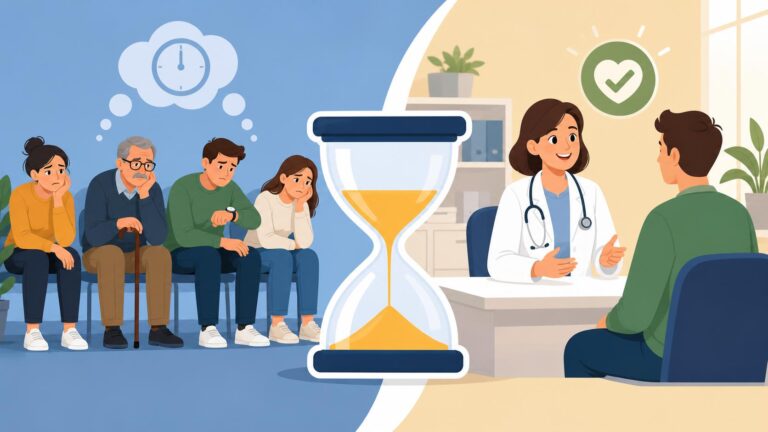
Most expats in Vienna are covered by the Österreichische Gesundheitskasse (ÖGK). When you go to a "Kassenarzt" (a doctor with a contract with the public insurer), you simply hand over your e-card at the reception, and you never see a bill. While this is financially convenient, the trade-off in Vienna is often time and environment. Because these doctors are in high demand, waiting rooms in districts like Favoriten or Ottakring can be packed, and you might only get five to seven minutes of the doctor’s time.
If you are just starting your journey, you should read Public vs Private Health Insurance in Austria Explained to understand what your mandatory contributions actually cover. The public system is excellent for emergencies and chronic conditions, but for routine "quality of life" care, many foreigners find the high-volume nature of public clinics a bit overwhelming. You will need to be assertive about your needs and prepared for a very direct, "no-nonsense" Austrian communication style from the staff.
The Private Route Why Expats Choose Wahlärzte
Many expats eventually gravitate toward a "Wahlarzt" (elective doctor). These are private practitioners who do not have a direct contract with the ÖGK. The main benefit is time. A Wahlarzt will often spend 30 to 45 minutes with you, and the clinics are generally much more modern and "expat-friendly," with fluent English spoken by the front-desk staff. You pay for the visit upfront and then submit the receipt for a partial refund.
The refund process is a common point of confusion. For a deep dive on how to get your money back, check How to Submit a Wahlarzt Invoice to ÖGK for Refund. Typically, the state will refund 80% of what they would have paid a public doctor for the same service—not 80% of what you actually paid. In Vienna, a private visit might cost 150 EUR, but the ÖGK might only refund 30 EUR. This is why most veterans here also carry private supplemental insurance to bridge that gap.
The Role of the Hausarzt as Your Gatekeeper
In Vienna, your "Hausarzt" (General Practitioner) is the center of your medical world. While you technically can go to many specialists without a referral, it is always better to have a central doctor who coordinates your files. Especially in a city with a complex hospital network, having a Hausarzt who knows your history is vital. When searching for one, look for those who specifically list "English" or "International" on their websites. Many younger doctors in the 1st, 7th, and 9th districts have trained abroad and are more than happy to conduct consultations in English.
Top Hospitals and Emergency Care in Vienna
Vienna’s hospital system is world-class, but it can be intimidating due to the sheer size of the institutions. Hospitals are generally categorized into large public teaching hospitals and smaller, more specialized private clinics. Depending on whether you are going in for a planned surgery or a late-night emergency, your destination will change.
The AKH (Allgemeines Krankenhaus)
The AKH is the crown jewel of Austrian medicine. It is a massive, concrete complex in the 9th district that serves as the university hospital. If you have a rare condition or a major trauma, this is where you want to be. The level of medical expertise here is staggering. However, because it is so large, it can feel like a factory. You might see a different doctor every time, and the bureaucracy can be thick.
If you end up here, remember that you are in one of Europe’s top-tier research facilities. For more on how to manage these types of visits, see Finding Medical Care in Austria: Clinics, Hospitals, and Referrals. The AKH handles everything from oncology to complex neurosurgery, but for minor issues, the waiting times in the outpatient clinics can be several hours.
Private Clinics for Comfort and Speed
If you have private insurance or are willing to pay out of pocket, Vienna has several "Privatkliniken" that feel more like five-star hotels than hospitals. The most famous among the expat community are Privatklinik Döbling and the Goldenes Kreuz.
These clinics offer private rooms, gourmet food, and most importantly, you can choose your specific surgeon. For many expats, the peace of mind of having a dedicated English-speaking team and a private room is worth the extra cost. If you are considering this route, you should look into Private Health Insurance: Hospital Class Coverage Upgrades to see how to make these facilities accessible.
Specialized Public Hospitals
Vienna also has several district-specific public hospitals (Klinik) that specialize in certain areas. For example:
- Klinik Landstraße: Known for its cardiology and dermatology departments.
- Klinik Ottakring: Features a large pediatric emergency department and a renowned pulmonology wing.
- Klinik Hietzing: Often praised for its neurological care.
If you have a non-life-threatening emergency, you should call 1450 first. This is a 24/7 health advice line where a nurse will tell you which hospital currently has the shortest wait time for your specific issue. This can save you from sitting for six hours in a crowded ER. For a full breakdown of these numbers, keep Emergency Services in Austria: 144, Hospitals, and Crisis Steps saved on your phone.
| Hospital Type | Key Examples | Best For | Payment Method |
|---|---|---|---|
| Public University | AKH Wien | Complex surgeries, rare diseases, major trauma | e-card (Free) |
| Public District | Klinik Landstraße, Klinik Ottakring | General emergencies, births, routine surgery | e-card (Free) |
| Private Clinic | Privatklinik Döbling, Goldenes Kreuz | Elective surgery, luxury birth experience, rapid diagnostics | Private Insurance / Cash |
| Specialized Center | Orthopädisches Spital Speising | Bone and joint issues, rehabilitation | e-card (Free) |
Specialized Care Finding English-Speaking General Practitioners
Finding a doctor who speaks English is relatively easy in Vienna, but finding one who is also a "Kassenarzt" (accepts the e-card) and is currently taking new patients is the real challenge. Many of the best English-speaking doctors are "overbooked" and will only take new patients if they live in the same district.
Expat-Focused Clinics
There are several clinics in Vienna that specifically cater to the international community. These centers usually have multi-lingual staff and understand the nuances of foreign insurance. Locations like the "FirstMed" or "Health Care First" groups are popular, though they are often private. When you visit these, you will notice a significant difference in the "customer service" aspect of the care compared to a standard public practice.
If you are looking for a doctor in a specific part of the city, I highly recommend checking Finding English-Speaking Doctors in Austria's Major Cities which provides more localized advice. In the 1st district (Innere Stadt) and the 7th district (Neubau), almost every doctor under the age of 50 will speak excellent English, but be prepared for "Wahlarzt" prices in these prime areas.
The Search Process Using DocFinder
Every expat in Vienna needs to bookmark DocFinder.at. It is the Yelp of the Austrian medical world. You can filter by language, specialty, and whether they take your insurance (ÖGK, SVS, etc.). When you see a doctor with a high rating and "English" listed under their languages, call them immediately.
Don't be discouraged if the receptionist speaks limited English—this is common. Simply say, "Sprechen Sie Englisch?" or have a sentence prepared: "Ich möchte einen Termin, bitte." Once you get past the front desk, the doctors themselves are almost always fluent. For more tips on the booking process, see Booking a Kassenarzt (Public Doctor): Wait Times and Tips.
What to Bring to Your First Appointment
When you finally secure that first appointment, you must bring your physical e-card. Since 2024, most e-cards require a photo. If yours is missing one, your doctor might not be able to process your insurance. You can find out the latest rules on this at The e-card Photo Requirement: How and Where to Register. Additionally, if you have medical records from your home country, try to have a basic German or English summary. While Viennese doctors are highly skilled, they appreciate a concise history rather than a 50-page folder of foreign documents.
Women's Health and Family Care in Vienna
Vienna is a wonderful place to have a family, but the administrative side of pregnancy and women’s health can be a "paperwork mountain." The system is designed to be thorough, but it requires you to be proactive.
Navigating the Frauenarzt System
In Austria, you should visit your gynecologist (Frauenarzt) at least once a year for a routine check-up. These screenings are covered by the ÖGK. If you are looking for birth control or fertility advice, be aware that while the consultation is covered, the actual contraceptives are usually out-of-pocket expenses.
For many expat women, finding a doctor who understands their cultural background is just as important as the language. There are many fantastic female practitioners in the 2nd and 9th districts who specialize in international care. You can find more details on screenings and costs in our guide to Women's Health (Frauenarzt): Screenings and Birth Control.
Pediatric Care and the Eltern-Kind-Pass
If you have children, your life will revolve around the "Eltern-Kind-Pass" (formerly the Mutter-Kind-Pass). This is a booklet (now increasingly digital) that tracks all necessary vaccinations and check-ups from pregnancy until the child is five years old. Completing these exams is mandatory if you want to receive the full amount of your childcare allowance (Kinderbetreuungsgeld).
Finding a "Kinderarzt" (pediatrician) who is accepting new patients can be tough in Vienna’s growing districts like Seestadt or Sonnwendviertel. My advice? Start looking for a pediatrician while you are still pregnant. Many of the most popular English-speaking pediatricians have waiting lists. For a step-by-step on this process, see Family Health: Eltern-Kind-Pass 2026 and Maternity Care System.
Giving Birth in Vienna
You have two main options: a public hospital birth or a private clinic birth. Public hospitals like St. Josef (known for its "natural" approach) or the Semmelweis clinic are excellent. You will be well-cared for, but you may share a room with two or three other mothers.
If you have private "Class" insurance, you can choose a private hospital where you stay in a single room and your husband can often stay with you. Regardless of which path you choose, you must register for a birth slot (Anmeldung) very early—usually by the 12th week of pregnancy. If you wait too long, you will be assigned to whatever hospital has space, which might not be your first choice.
Mental Health and Wellness Support for Expats
Living abroad is stressful. The "winter blues" in Vienna are real, with gray skies that can last for weeks. Fortunately, Vienna has a growing network of English-speaking therapists and mental health resources.
Counseling and English-Speaking Therapy
The challenge with mental health in Vienna is that "Psychotherapie" is expensive, and the public insurance (ÖGK) only covers a small portion of it unless you are in an acute crisis. Most private therapists charge between 100 EUR and 150 EUR per session.
However, there are organizations like the "English Speaking Conference" or various expat groups that can point you toward affordable counseling. If you are struggling with the transition to Austrian life, don't wait. Check Mental Health in Austria: Counseling, Therapy, and Expat Support for a list of resources that specifically help foreigners.
Navigating Insurance for Mental Health
If you want the ÖGK to pay for your therapy, you need to find a therapist who has a "Kassenplatz" (a subsidized spot). These are incredibly rare and often have year-long waiting lists. Most expats pay for therapy privately and then submit the invoices for a small subsidy (roughly 30-40 EUR per session).
It is also worth checking if your employer offers an Employee Assistance Program (EAP). Many international companies in Vienna (especially the UN or biotech firms) provide several free counseling sessions per year. For more on the logistical side of coverage, see Navigating Social Insurance: ÖGK, SVS, and BVAEB Overview.
Crisis Support in Vienna
If you or someone you know is in an immediate mental health crisis, you don't need to navigate the insurance bureaucracy. You can go directly to the "Sozialpsychiatrischer Notdienst" (Social Psychiatric Emergency Service) in the 3rd district. They provide 24/7 help regardless of your insurance status. Having this number in your phone is a safety net every expat should have.
Practical Tips for a Smooth Medical Visit
After years of living here, I have learned that a little preparation goes a long way in the Austrian medical system. The "rules" are often unwritten, but following them makes life much easier.
Understanding the e-card and Billing
Your e-card is your most important document. It is not just for the doctor; you also need it at the "Apotheke" (pharmacy) to pick up prescriptions. Since the introduction of the e-Rezept (electronic prescription), the doctor simply uploads your medicine to your card, and the pharmacist scans it.
Be aware that there is a "reception fee" or a small co-pay for most prescriptions (around 7 EUR). Also, remember that your e-card carries an annual service fee that is automatically deducted from your salary. To understand these costs better, read The Austrian e-card: Registration, Photo Rules, and Usage Guide.
Pharmacy Etiquette and Night Shifts
Pharmacies in Vienna are not like drugstores in the US or UK. You cannot buy Ibuprofen 600 or antibiotics off the shelf; you must talk to the pharmacist. On Sundays and at night, most pharmacies are closed, but there is always one in each district on "Nachtdienst" (night shift). You can find the nearest open pharmacy by looking at the sign on the door of any pharmacy or by using the "Apotheken-Notruf 1455." There is a small extra fee for purchases made during the night shift.
Communication and "Directness"
Finally, be prepared for the "Viennese Charm"—which can sometimes feel like rudeness. Doctors and medical staff are often very direct and may not use the polite "fluff" you are used to. This isn't personal; it's just the local culture of efficiency. If you are clear, concise, and have your e-card ready, you will find that the care you receive is among the best in the world. For a broader look at the national system, check out Austria Healthcare System 2027: Complete Guide for Foreign Residents.
Medical Disclaimer
The information provided in this guide is for educational and informational purposes only and does not constitute professional medical advice, diagnosis, or treatment. Always seek the advice of your physician or another qualified health provider with any questions you may have regarding a medical condition. Never disregard professional medical advice or delay in seeking it because of something you have read on this website. While we strive to keep our information up to date, healthcare regulations and provider availability in Vienna can change frequently.