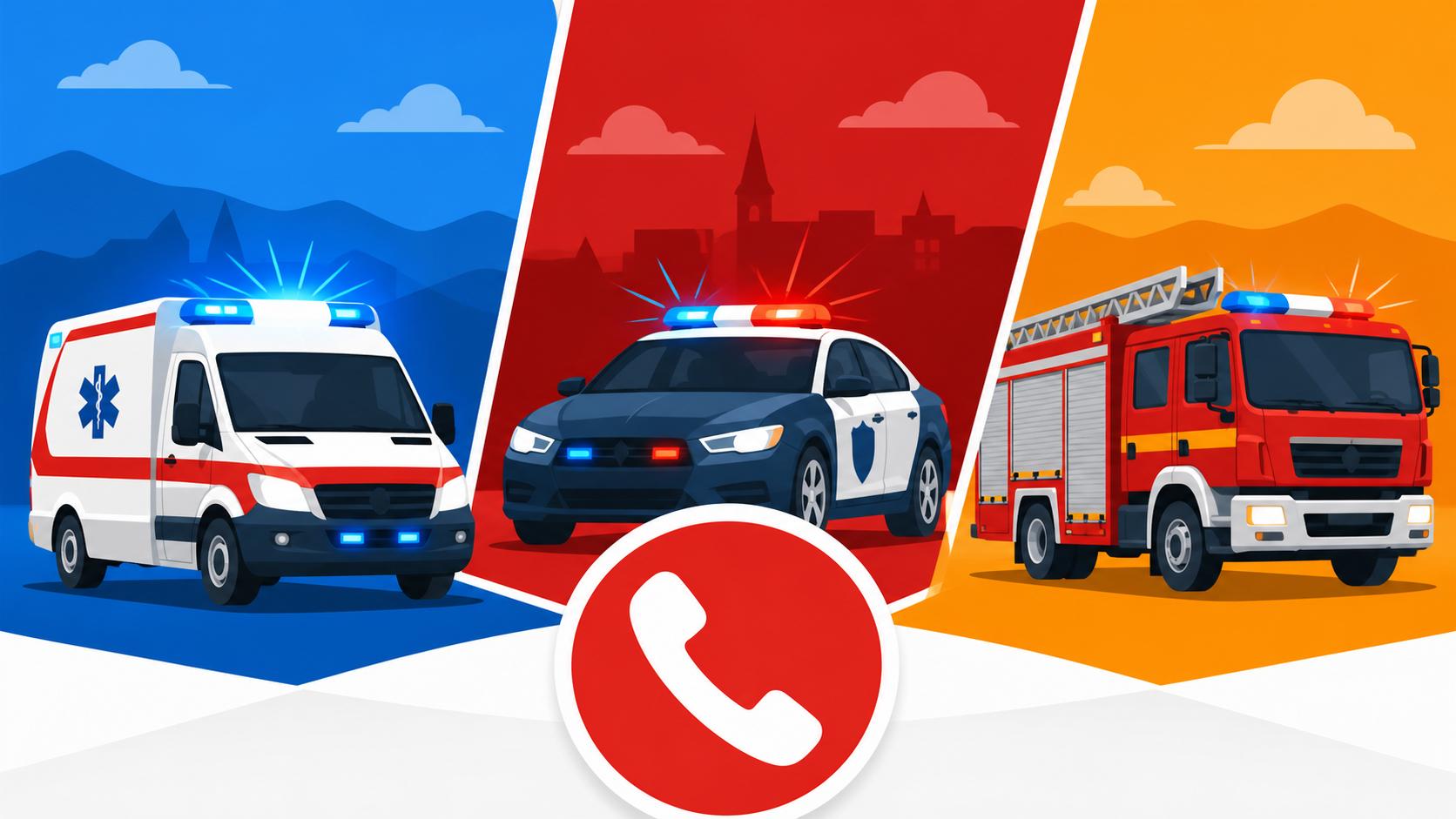
Emergency Numbers: 144 Ambulance, 133 Police, 122 Fire
Nothing spikes your cortisol levels faster than a medical or safety crisis in a country where you are still figuring out how to recycle your plastic. I vividly remember the night my daughter developed a high fever in our first month in Vienna; I froze, staring at my phone, realizing I didn't actually know the local equivalent of 911. This guide breaks down the essential emergency numbers and procedures in Austria to ensure you are never left guessing during a critical moment.
The Essential Austrian Emergency Number System
In many countries, a single number handles everything. In Austria, while there is a universal European number, we primarily use a decentralized system that routes you directly to the specific service you need. This might feel like extra mental homework, but it actually speeds up the response time because you aren't being transferred between departments during a life-or-death situation.
The Big Three: 144, 133, and 122
If you are in immediate danger or facing a life-threatening medical situation, these are the digits you must know by heart. They are free to call from any phone, including mobile phones without a local SIM card or those with no remaining credit.
- 144 (Ambulance/Rettung): This is for medical emergencies. Whether it is a suspected heart attack, a severe accident, or an unconscious person, this is the line to the professional paramedics.
- 133 (Police/Polizei): Use this for crimes in progress, dangerous traffic accidents, or any situation involving violence or immediate threat to public safety.
- 122 (Fire Department/Feuerwehr): Beyond just fires, the Feuerwehr handles chemical spills, person-trapped scenarios, and structural collapses. In many rural areas, they are also the first responders for technical rescues.
The Universal European Number 112
If you find yourself panicking and can only remember one number, make it 112. This is the Euro-Emergency number. In Austria, calling 112 usually routes you to the police dispatch, who can then coordinate with the ambulance or fire services. While it works perfectly well, calling the direct number (like 144 for a medical issue) is generally faster. It is particularly useful for tourists because 112 operators are more likely to have immediate access to multi-language support compared to a local rural fire station.
Language Barriers and Communication
One of the biggest fears for expats is not being able to explain the emergency in German. In major hubs like Vienna, Salzburg, or Innsbruck, dispatchers at 144 and 133 almost always speak excellent English. However, if you are in a remote village in Tyrol or Styria, you might encounter a dispatcher who is less comfortable with English. The key is to stay calm and use the "Five Ws" (Who, What, Where, When, Why). Even if your German is basic, being able to say "Notfall" (Emergency) and your address clearly will get help moving toward you.
Calling for an Ambulance: 144 and Medical Triage
When you dial 144, you aren't just talking to a receptionist; you are talking to a trained dispatcher who will guide you through the first steps of aid while the vehicle is en route. In Vienna, the Wiener Berufsrettung is world-class, often arriving in under eight to ten minutes.
What Happens During the Call
The dispatcher will ask specific questions to determine the severity of the case. They use a system called "triage." If the situation is critical, they will send a "Notarzt" (Emergency Doctor) in a separate car alongside the standard ambulance. This is a unique feature of the Austria Healthcare System 2027: Complete Guide for Foreign Residents that provides high-level medical intervention right on the sidewalk or in your living room.
Be prepared to provide:
- Where exactly are you? (Street name, house number, floor, and door number are crucial in Austrian apartment blocks).
- What happened? (A fall, chest pain, heavy bleeding).
- How many people are injured?
- Who is calling? (Your name and phone number for a callback).
The Role of the e-card in Emergencies
When the paramedics arrive, one of the first things they will ask for, if the patient is conscious, is the e-card. This is your proof of insurance. If you don't have it on you—perhaps you were out for a run—don't worry. They will still treat you. However, you will eventually need to provide your insurance details to the hospital to avoid being billed privately. For new arrivals, understanding The Austrian e-card: Registration, Photo Rules, and Usage Guide is essential before an emergency occurs, as it streamlines the administrative side of your care.
After-Hours Medical Advice: 1450
Not every medical issue requires a blue light and a siren. If you are sick at 2:00 AM and aren't sure if it’s an emergency, do not call 144. Instead, call 1450. This is Austria's 24/7 telephone health advice line. Specially trained nurses will talk you through your symptoms and tell you whether you should wait for a GP in the morning, visit an After-Hours Medical Care: Weekend Clinics and Night Doctors facility, or if they should actually trigger an ambulance for you. It’s a fantastic resource that prevents Emergency Rooms in Austria: Triage, Waiting, and What to Bring from becoming overcrowded with non-urgent cases.
The Police and Public Safety: Dialing 133
Calling the police in Austria is generally a very professional and efficient experience. However, there is a distinct difference between "I am being robbed" and "My neighbor is playing loud techno at midnight."
Emergency vs. Non-Emergency Police Contact
For immediate danger, always use 133. If you need to report a theft that happened yesterday, or you need to file paperwork for a lost passport, do not call 133. Instead, find the phone number for your local Polizeiinspektion (District Police Station). You can find these on Google Maps by searching for "Polizei" in your district. If you live in the capital, the Vienna Healthcare Guide: Top Expat Clinics and Hospitals often works in tandem with local precincts for incidents involving medical forensics or public disturbances.
Reporting Crimes as an Expat
If you have to call 133, be aware that the police will take a formal statement. If your German is not sufficient for a complex legal statement, you have the right to ask for an interpreter. For minor reports, they may ask you to come to the station. Always ask for a "Protokoll" (copy of the report), as you will need this for insurance claims or for Visa & Immigration purposes if your residence card was stolen.
| Service | Number | When to Call | English Support |
|---|---|---|---|
| Ambulance | 144 | Life-threatening illness or injury | High (in cities) |
| Police | 133 | Crimes in progress, immediate danger | High |
| Fire | 122 | Fire, gas smell, trapped persons | Moderate |
| Euro-Emergency | 112 | Any emergency (routes to Police) | Very High |
| Health Advice | 1450 | Non-urgent medical questions | Good |
| Mountain Rescue | 140 | Accidents in the Alps/Hiking | Moderate |
| Poison Control | 01 406 43 43 | Swallowing toxic substances | High |
Fire and Technical Rescues: 122
The Austrian Feuerwehr (Fire Department) is legendary for its efficiency. In many parts of the country, especially outside Vienna, these services are staffed by highly trained volunteers who leave their day jobs the moment the alarm sounds.
Carbon Monoxide and Gas Alarms
Many old Austrian apartments (Altbau) use gas heaters (Kombitherme) for hot water and heating. If you ever smell gas or your CO detector goes off, do not hesitate—get out of the building and call 122 immediately. They have specialized equipment to detect leaks and will coordinate with the gas company to shut off the supply. Dealing with gas safety is a standard part of Living in Austria 2027: The Expat Starter Guide, and the fire department is your primary contact for these "technical" emergencies.
Road Accidents and Entrapment
If you witness a car accident where someone is stuck in the vehicle, call 122. While 144 brings the medics, 122 brings the "heavy lifting" gear needed to cut open a car or stabilize a vehicle that has gone off the road. In mountainous regions, they often work with Innsbruck Healthcare Guide: Alpine Safety and Medical Care teams to manage complex roadside rescues during the winter months.
Mountain Rescue and Alpine Safety: 140
Austria is a land of mountains, and as an expat, you will likely find yourself hiking or skiing at some point. Standard emergency services (144) may not be able to reach you on a remote trail.
Calling 140 for the Bergrettung
If you have an accident on a mountain, dial 140. This alerts the Bergrettung (Mountain Rescue). These are specialists who can navigate difficult terrain and, if necessary, call in a helicopter rescue (Christophorus). It is important to know that while medical treatment in a hospital is covered by your public insurance, the actual rescue from a mountain is not always covered.
The Cost of Alpine Rescues
A helicopter flight from a mountain can cost several thousand Euros. To avoid a financial disaster, most veterans of Austrian life carry an "Alpinpolizze" or are members of the Alpenverein (Alpine Club). We cover this in detail in our guide on Ambulance Fees and Mountain Rescue Costs (Alpinpolizze). Without this extra coverage, you could be left with a massive bill that the Public vs Private Health Insurance in Austria Explained framework doesn't fully handle.
Mental Health and Crisis Support
Emergencies aren't always physical. If you or someone you know is experiencing a severe mental health crisis, there are specific numbers that provide immediate support without the "intensity" of a police or fire response.
Die Berater (Crisis Intervention)
For psychological emergencies, the Kriseninterventionszentrum in Vienna (01 406 95 95) is a vital resource. They provide immediate help for people in life crises or at risk of suicide. If you are struggling with the isolation that sometimes comes with moving abroad, looking into Mental Health in Austria: Counseling, Therapy, and Expat Support can help you find long-term resources before a situation becomes an emergency.
Poison Control (Vergiftungsinformationszentrale)
If a child swallows a cleaning product or you accidentally ingest the wrong medication, call 01 406 43 43. This is the national poison control center. They are available 24/7 and can tell you exactly what to do (e.g., whether to induce vomiting or head straight to the hospital). This number should be saved on your fridge right next to the Pediatricians (Kinderarzt): Required Vaccines and Checkups contact info.
Practical Steps to Take Right Now
It is easy to read this guide and think, "I'll remember that," but in a moment of panic, your brain often reverts to your home country's numbers.
- Program your phone: Create a contact named "AA EMERGENCY" so it stays at the top of your list. Include 144, 133, 122, 1450, and 140.
- Teach your children: Ensure they know the numbers 144, 133, and 122. Even if their German is limited, they can be taught to say "Hilfe" (Help) and their address.
- Learn your address in German: Practice saying your street name and house number clearly. If you live in an apartment, knowing how to say "Stiege" (Staircase) and "Tür" (Door) is essential.
- Download the "Rettung" App: There are apps like "Rettet Leben" that can send your GPS coordinates directly to the dispatch center when you trigger an emergency call. This is incredibly helpful if you are in a park or an unfamiliar part of town.
Navigating a crisis in a foreign language is a rite of passage for many of us living here. While the system is different from what you might be used to, it is incredibly reliable. By knowing who to call and when, you’re already halfway to solving the problem. For more on how to handle the follow-up care after an emergency, check out our guide on Finding Medical Care in Austria: Clinics, Hospitals, and Referrals.
Disclaimer
This guide is for informational purposes only and does not constitute legal or medical advice. In a real emergency, always prioritize calling official emergency services (144, 133, 122, or 112) immediately. While every effort has been made to ensure accuracy for 2026, protocols and numbers may change; always consult official government sources for the most current information.