How to Request a Free KSV1870 Credit Report Annually
You are standing in a beautiful Altbau apartment in the 7th district, ready to sign the lease, when the landlord asks for your KSV report. I remember that sinking feeling when I first arrived in Vienna; I had no idea what a KSV was, let alone how to get one without paying a fortune. This guide solves the mystery of the KSV1870 and shows you exactly how to claim your free annual report.
Understanding the KSV1870 and Why It Rules Your Life in Austria
The Kreditschutzverband von 1870, or KSV1870, is Austria’s largest credit monitoring agency. Think of it as the guardian of your financial reputation. In many ways, it functions similarly to Schufa in Germany or Experian in the UK and USA. It collects data on your payment history, bank accounts, loans, and even mobile phone contracts to create a profile of your creditworthiness. For an expat, this agency is often the invisible gatekeeper between you and your new life, as nearly every major service provider will "ping" your KSV file before saying yes to your application.
One of the most frustrating aspects for newcomers is the "blank slate" dilemma. When you first move here, you don't exist in their system. While having no debt sounds like a good thing, in the eyes of a credit agency, having no history can sometimes be just as risky as having a bad one. This is why it is vital to understand the KSV1870 Credit Score: How It Affects Loans and Rentals before you start applying for high-stakes items like an apartment or a car.
The KSV doesn't just track when you fail to pay; it tracks the positive stuff too. Having a local bank account and a steady history of paying your utilities helps build a profile. However, mistakes happen. Without checking my report, I never would have known why my application for a new credit card was being rejected.
The Invisible Gatekeeper of Austrian Infrastructure
In Austria, your KSV score is checked for almost everything that involves a recurring payment. If you are trying to set up Home Internet Options: Magenta, A1, and 5G Routers, the provider will almost certainly run a background check on your financial health. If you have a poor score, they might demand a high security deposit or simply refuse the contract. This can be incredibly isolating when you are just trying to get your home office functional.
Beyond internet and phones, the KSV is central to the rental market. Because of the Bestellerprinzip 2026: Landlords Pay the Agent Fee regulations, landlords are even more selective about who they let into their properties. They want to ensure that the tenant has a "clean" KSV report to minimize the risk of rent defaults. If you cannot produce a positive report, you might find yourself losing out on every competitive apartment you visit.
Finally, the banking sector relies heavily on this data. When you are Applying for Credit Cards in Austria: Approval Odds can vary wildly based on the data KSV provides to the bank. Even if you have a high salary, a small unpaid bill from three years ago that you forgot about could result in an automatic rejection by the bank's algorithm.
Who Actually Looks at Your Score
It’s not just big banks and landlords. Utility companies, insurance firms, and even some online retailers using "buy now, pay later" schemes like Klarna will check your creditworthiness. When you are looking into Insurance Essentials: What's Mandatory vs Optional, you might find that some private insurers offer better rates or "premium" tiers only to those with top-tier credit scores.
Even the automotive world is tied into this system. If you are Buying a Car vs Using Car-sharing (ShareNow, Miles), and you opt for a lease or a loan, the KSV report is the first thing the dealership will ask for. They need to see that you are a reliable borrower. If you have moved around a lot within Austria without updating your Meldezettel Process: Registering Your Address Legally, it can sometimes create duplicate or confusing entries in the KSV database, which makes you look like a higher risk than you actually are.
Why You Shouldn't Pay for the InfoPass Right Away
If you go to the KSV1870 website, the first thing they will try to sell you is the "InfoPass for Landlords." It usually costs around 35 Euros. For many expats, this feels like an "expat tax" because we are told we need it "now" to secure a flat. However, under European law (GDPR, or DSGVO in German), you are entitled to a free copy of your data once per year.
The paid InfoPass is essentially a prettified, condensed version of the data designed specifically for third parties. It hides certain sensitive details while highlighting your "score" in a way that landlords find easy to read. However, the free "Self-Disclosure" (Auskunft gemäß Art. 15 DSGVO) contains all the same core data. In many cases, especially for smaller landlords or for your own personal review, the free version is more than sufficient.
Step-by-Step: How to Claim Your Free Annual Credit Report
Claiming your free report is your right under Article 15 of the GDPR. However, the KSV1870 doesn't exactly make the link easy to find. They would much rather you click the big, shiny button for the paid InfoPass. To get the free version, you need to look for the section labeled "Kostenlose Selbstauskunft" or "Information according to Art. 15 GDPR." Once you find the portal, the process is relatively straightforward but requires precise identification.
I recommend doing this at least once a year, even if you aren't planning a big move. It allows you to catch errors early. Keeping your data clean is part of Money in Austria 2027: Banking, Payments, and Financial Setup management that every savvy expat should master.
Navigating the Website Maze
The KSV website is a bit of a labyrinth. You want to avoid any page that asks for a credit card number upfront. Look for the "Service for Private Persons" section. Within that, there is a sub-menu for data protection (Datenschutz). This is where the legal requirement for the free report is buried. You will usually have to fill out an online form with your full name, birth date, and all Austrian addresses where you have lived in the last few years.
Be very careful with your address history. The KSV matches data based on your "Meldezettel" history. If you omit an address, they might not find all the data associated with you, leading to an incomplete (and potentially misleading) report. If you have recently moved, make sure you have already completed Changing Your Address Online via the Central Register (ZMR) so that the KSV system has a chance to sync with official records.
Identity Verification Requirements
Because this report contains highly sensitive financial data, the KSV must verify that you are who you say you are. You cannot simply "log in" with an email address. You generally have two options: uploading a high-quality scan of your passport or residence permit, or using the much faster ID Austria system. I highly suggest Logging into FinanzOnline with the ID Austria App as your primary method of verification because it is instant and significantly reduces the processing time.
If you choose the manual upload method, ensure the photos are clear and no parts of the document are obscured. If the KSV staff cannot read your date of birth or your signature on the ID, they will reject the application, and you will have to start the process over again. This can be a major headache if you are in a rush to prove your creditworthiness to a potential landlord.
The Waiting Game
Unlike the paid InfoPass, which is often delivered digitally within minutes or hours, the free GDPR report takes time. Legally, they have up to 30 days to provide the data, though in my experience, it usually arrives in about two weeks. It is often sent as a physical letter to your registered address to ensure maximum security. This is why you cannot wait until the day of your apartment viewing to request the free version.
If you are currently in a temporary living situation, make sure you have Setting Up Mail Forwarding (Nachsendeauftrag) with Post.at active. If the KSV letter is returned to the sender because your name isn't on the mailbox, they will flag your file, and getting it resolved becomes a much larger administrative hurdle. Planning ahead is the only way to make the "free" route work for you.
Understanding the Different Reports: Free vs. Paid InfoPass
It is important to know exactly what you are getting with each version so you don't get caught off guard during an interview with a landlord or a bank manager. The free report is a "data dump." It lists every single company that has ever asked for your data and every piece of information the KSV holds on you. It is long, technical, and formatted for a lawyer rather than a real estate agent.
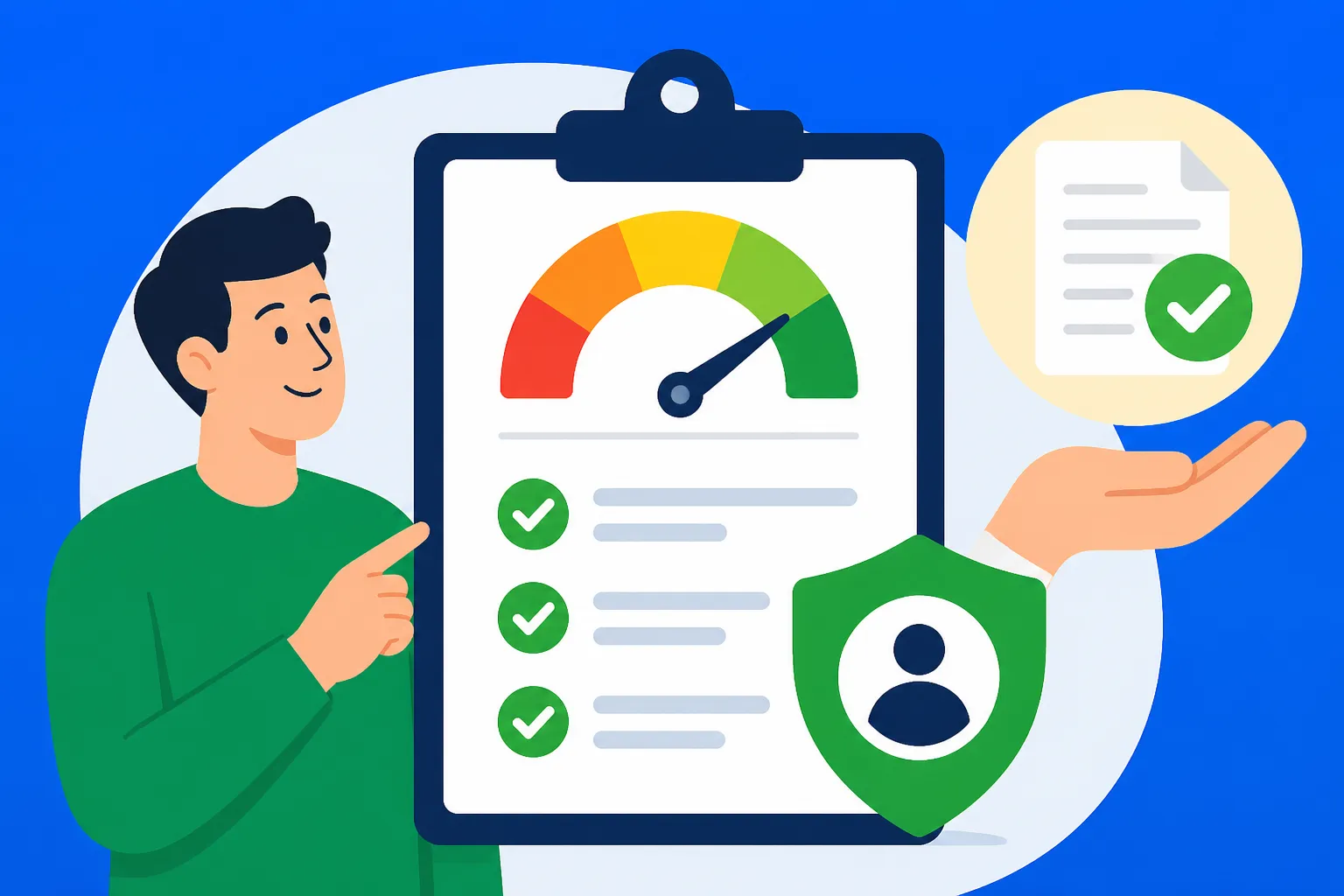
The paid InfoPass, on the other hand, is a one-to-two-page document. It provides a simple "Green/Yellow/Red" indicator of your creditworthiness. Most professional real estate agencies in Vienna prefer this because it doesn't force them to dig through pages of your personal history—they just want to know if you are "Green."
| Feature | Free GDPR Disclosure | Paid InfoPass for Landlords |
|---|---|---|
| Cost | 0 EUR (Once per year) | ~35 EUR |
| Delivery Time | Up to 30 days (usually via post) | Instant to 24 hours (Digital) |
| Content | Full data history and all inquiries | Summary of creditworthiness |
| Purpose | Personal review and error checking | Showing to third parties (Landlords) |
| Format | Multi-page technical document | 1-2 page summary with "traffic light" score |
What the Free Report Includes
The free report is incredibly detailed. It will show you the "Score Value," which is a numerical representation of how likely you are to default on a payment. It will also show "Inquiries" (Anfragen). Every time you applied for a phone plan or a loan, that company's name will be there. Seeing this can be a bit of an eye-opener.
It also includes "Negative Features" (Negativmerkmale). These are the red flags: unpaid bills that went to debt collection, bankruptcies, or court orders. If your report is "clean," this section will be empty or state "No negative entries found." If you see something here that you recognize as a mistake, you must act quickly. It is your best tool for Fast Ways to Improve a Damaged KSV Score because you can't fix what you can't see.
Why Landlords Love the InfoPass
Landlords in Austria are often traditional and risk-averse. They like the InfoPass because it is "verified" by KSV and easy to understand. Some landlords might even refuse the free GDPR printout, claiming it’s "too much information" or that they can't verify its authenticity. While they technically cannot force you to buy the paid version, in a competitive market, being "difficult" about the KSV report can unfortunately lead to your application being tossed to the bottom of the pile.
If you are looking for a flat in a high-demand area, it is usually wise to use the free report for your own check-up three months before you start looking. If everything is clean, and you can afford the 35 Euros, getting the InfoPass right when you start your search can save you a lot of stress. However, if you are on a tight budget, try submitting the free version first; many private landlords are perfectly happy with it.
Managing Your Financial Reputation and Fixing Errors
Finding an error on your KSV report can feel like a personal attack, but it’s usually just a clerical mishap. Perhaps a utility company didn't update their records after you paid a final bill, or a bank reported a "missed" payment that was actually a technical error on their end. Because the system is automated, these errors can sit on your file for years, quietly damaging your ability to live your life in Austria.
When you find an error, you have a legal right to have it corrected. This is why the free report is so valuable. It gives you the "Reference Number" for each entry, which you need to start a dispute. I’ve had to do this once, and while it took a few weeks of emailing back and forth, seeing my score jump back up after the correction was a huge relief.
The Formal Dispute Process
To fix an error, you shouldn't just call the KSV; you need to write to them. Send an email or a registered letter to their data protection department. You must provide evidence that the entry is incorrect. For example, if it's an unpaid bill, send a PDF of the bank transfer showing the payment. If it's an account that should have been closed, send the confirmation of cancellation you received from the company.
The KSV is then required to investigate. They will contact the company that reported the data. During this time, they may "block" the entry so it doesn't count against your score while the investigation is ongoing. Once the company confirms the error, the KSV will delete or update the entry and send you a confirmation. This is a crucial step if you are preparing for a major financial milestone like Securing a Mortgage in Austria Without Permanent Residency.
What Happens When You Leave
If you ever decide to move on from Austria, your KSV file doesn't just disappear. It remains in their archives for several years. This is important if you plan to return or if you have outstanding financial obligations. Before you go, make sure you are Closing Bank Accounts and Contracts When Leaving Austria properly. If you just stop paying a gym membership or a phone bill and leave the country, the KSV will record a default.
Years later, if you come back to Austria for a new job, that old "forgotten" bill will still be there, and it will be much harder to fix from abroad. A clean exit is just as important as a clean entry. Always request one final free KSV report a month after you've closed all your accounts to ensure your Austrian financial "exit" is as smooth as your time living here.
Disclaimer
The information provided in this guide is for educational and informational purposes only and does not constitute legal or financial advice. Credit reporting laws and KSV1870 internal policies are subject to change. While we strive to keep this information up to date for 2026, always consult with the official KSV1870 website or a qualified legal professional regarding your specific situation or any disputes regarding your personal data.