KSV1870 Credit Score: How It Affects Loans and Rentals
You finally found the perfect Altbau apartment in a trendy district, your deposit is ready, and your references are solid, but the landlord suddenly asks for a "KSV Auszug" and your heart sinks. When I first moved to Vienna, I had no idea that a three-digit number held so much power over my ability to simply sign a phone contract or rent a home. This guide breaks down exactly what the KSV1870 is, why it matters for your life in Austria, and how to ensure your credit reputation remains spotless.
Understanding the KSV1870 and Why It Matters
The Kreditschutzverband von 1870, commonly known as the KSV, is Austria's leading credit monitoring agency. Unlike in some countries where credit bureaus are government-run, the KSV is a private association that protects creditors from potential defaults. For an expat, this is often the first major administrative wall you hit after your initial registration. You might have a perfect credit history in London, New York, or Berlin, but in the eyes of the Austrian system, you start as a blank slate—which isn't always a good thing.
The Hidden Gatekeeper of Austrian Life
The KSV acts as a silent background player in almost every significant contract you sign. Whether you are Opening an Austrian Bank Account: Requirements and Top Banks or trying to get a high-end smartphone on a monthly plan, the provider will likely "ping" the KSV database. They are looking for your "Rating 2.0," a scoring model that predicts the probability of you defaulting on a payment within the next 12 months.
I remember being rejected for a simple internet installation early on because the system couldn't find enough data on me. It felt incredibly personal, but it was just the algorithm being cautious. Understanding that the KSV isn't "out to get you" but is simply a data aggregator is the first step toward managing your financial reputation here. It is less about how much money you have and more about your history of honoring obligations.
How the KSV Collects and Uses Your Data
The KSV doesn't just guess your score; it pulls data from various sources, including public records, banks, and utility companies. If you have ever taken out a loan, missed a payment on a Klarna installment, or had a legal judgment against you, it’s in there. However, they also track "positive" data, such as the fact that you have held a bank account for several years without any issues.
One thing that surprises many foreigners is that the KSV also notes your residence history. If you move every six months, the algorithm might flag this as a lack of stability. This is why The Meldezettel Process: Registering Your Address Legally is so critical; it’s the primary way your physical presence is verified in the country. Your score is essentially a reflection of your "stability" in the eyes of Austrian institutions.
Decoding the Scoring System Rating 2.0
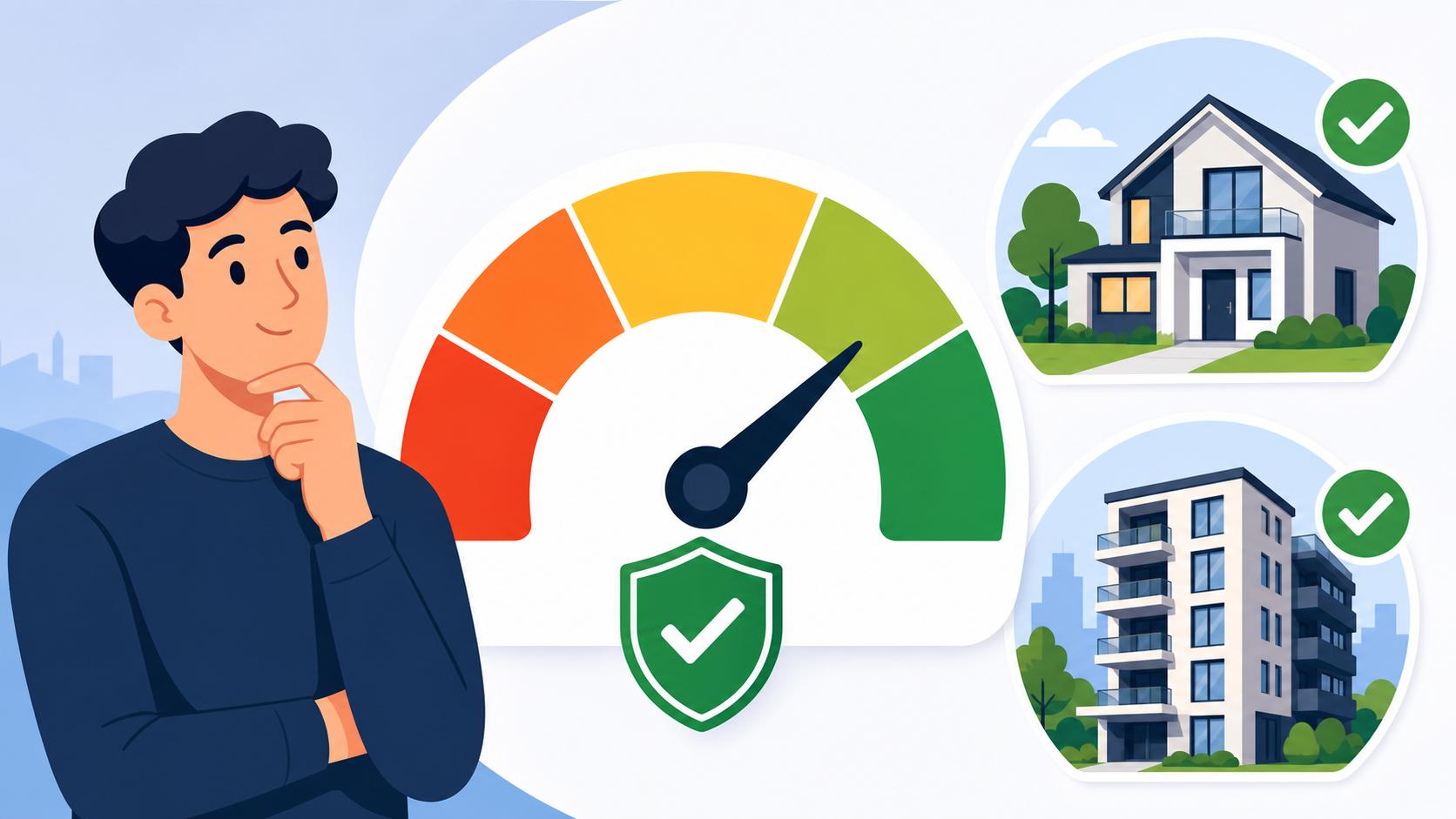
The KSV uses a scoring range typically from 100 to 700. In this system, a lower number is actually better, representing a lower risk of default. If you have a score in the 200s, you are considered "Very Good" to "Excellently" reliable. As the number climbs toward 400 or 500, lenders start to get nervous. If you hit the 600s, you are likely already in a legal dispute or have significant unpaid debts.
Understanding this range is vital when you are preparing for a major life event, like Securing a Mortgage in Austria Without Permanent Residency. Banks will look at this number first before they even consider your Lohnzettel Breakdown: Gross vs Net Salary Explained. If the score isn't where it needs to be, the interest rates offered to you will skyrocket, or the application will be denied outright.
The Impact of Your KSV Score on the Rental Market
In the competitive world of Austrian real estate, especially in cities like Vienna and Salzburg, a KSV report is no longer optional. It has become a standard part of the "Bewerbungsunterlagen" (application documents) for any desirable flat. Landlords want to see that you aren't just earning enough to pay the rent, but that you have a history of actually paying your bills on time.
Why Landlords Demand a KSV InfoPass
The "InfoPass für Mieter" is a specific product sold by the KSV. It is a truncated version of your credit report that shows only what a landlord needs to know—essentially, a "green light" or "red light" regarding your reliability. It protects your privacy by not showing every single bank loan you have, but it confirms you are not in insolvency.
When I was hunting for my second apartment, I realized that having this document ready to hand over during the viewing put me at the top of the pile. With the implementation of the Bestellerprinzip 2026: Landlords Pay the Agent Fee, the market has become even more competitive. Landlords are now pickier than ever because they are paying the broker fees themselves, so they want the "safest" possible tenant. A clean KSV report is your ticket to being that safe choice.
The Competition and the Bestellerprinzip
Since tenants no longer pay the broker's commission in most cases, the volume of applicants for a single apartment has doubled. If ten people apply for a flat and nine of them have a KSV InfoPass ready, the landlord won't even call the tenth person. It’s a harsh reality of the current market. You need to be proactive.
Before you even start browsing Willhaben, you should ensure your credit profile is accurate. If you are dealing with Renting in Austria: MRG Laws, Leases, and Bestellerprinzip, you'll find that landlords in regulated buildings (Altbau) are particularly strict. They want long-term tenants who won't cause administrative headaches. Proving your financial reliability upfront helps bridge the trust gap that often exists between local landlords and foreign residents.
Alternatives for Newcomers Without a Credit History
What if you just arrived and the KSV says "No data found"? This is a common pain point. Many landlords will accept a "Bürgschaft" (guarantor) or a higher Understanding Kaution (Deposit) and Provision (Commission). In some cases, showing an employment contract or a letter from your employer can suffice.
However, the best strategy is to start building your Austrian footprint immediately. Open your bank account, register your address, and perhaps sign up for a small, regular utility contract in your name. Over 6-12 months, this builds the "data trail" the KSV needs to generate a score. If you are a student, check our guide on Student Bank Accounts: Perks, Age Limits, and Free Fees to see how to get started with your first financial footprint.
Navigating Loans and Financial Products
Beyond housing, your KSV score is the gatekeeper for any form of credit. This includes everything from the "Disporahmen" (overdraft) on your checking account to a full-blown car lease or personal loan. In Austria, the culture is generally "debt-averse," so the requirements for borrowing money can feel much stricter than in the US or the UK.
Personal Loans and Credit Cards
In many countries, you are encouraged to use credit cards to "build a score." In Austria, it works differently. Having five credit cards can actually lower your score because it represents a high "potential" debt load. When Applying for Credit Cards in Austria: Approval Odds, the bank will check the KSV to see how many other lines of credit you have open.
If you want a high limit on your card, the bank needs to see a stable history. Some expats get rejected for a simple Visa card because they had too many small "Pay Later" obligations with online retailers. Every time you use a service like Klarna or Riverty, it can be noted in your file. While these aren't bad if paid on time, a high frequency of "mini-loans" can signal a lack of cash flow to the KSV algorithm.
Securing a Mortgage as an Expat
Taking out a mortgage is the ultimate test of your KSV score. When you move from Financial Comparison: Renting vs Buying Property in Austria to actually making an offer, the bank's "Risk Management" department will tear your KSV report apart. They aren't just looking for missed payments; they are looking at your "geographical risk" (where you live) and your "employer risk" (how stable your company is).
For non-EU citizens, this is even more complex. The bank needs to see a "Daueraufenthalt" or a very stable Red-White-Red card status combined with a flawless KSV score. If there is even one "Mahnung" (formal warning) from a mobile provider from three years ago that went to a collection agency, it can halt a million-euro mortgage application. This is why regular monitoring is essential.
Installment Plans and the Klarna Trap
The rise of "Buy Now, Pay Later" (BNPL) has created a new category of KSV issues. Many people don't realize that missing a single payment on a pair of sneakers ordered online can end up as a negative entry in their credit file. In Austria, the transition from a "late payment" to a "KSV entry" happens faster than you might think.
Once a debt is handed over to an "Inkassobüro" (collection agency), they are legally obligated to report it to the KSV in many instances. This can haunt you for years. If you are struggling with a payment, it is always better to contact the provider and arrange a "Ratenzahlung" (installment plan) directly rather than letting it go to collections. Being proactive shows financial maturity, which is a trait highly valued in the Austrian system.
How to Access and Improve Your Credit Profile
The good news is that you have a legal right to know what the KSV is saying about you. Under the GDPR (known as DSGVO in German), you are entitled to see your data. Many people don't realize there is a difference between the paid "InfoPass" and the free "Self-Disclosure."
Requesting Your Free Annual Credit Report
Under European law, you can request a "Datenbegründet Auskunft" for free once per year. This takes longer to arrive (usually a few weeks by post) and is much more detailed than the version you show a landlord. It lists every company that has "pinged" your data in the last six months and every entry currently on your file.
I recommend everyone follow the steps in How to Request a Free KSV1870 Credit Report Annually to check for errors. Correcting this was as simple as sending a scan of my current Meldezettel to the KSV support team.
Correcting Errors and Outdated Information
Errors happen more often than they should, especially with foreign names that have special characters or multiple middle names. If your name is "John Michael Smith" on your passport but the bank registered you as "Michael Smith," the KSV might create two different, incomplete profiles for you. This splits your "positive" data and can lower your score.
If you find an error, you must act. You have the right to demand the deletion of incorrect data or the correction of outdated entries. For example, if a debt was paid off three years ago but is still listed as "Open," you should provide the "Erledigungsschreiben" (confirmation of payment) to the KSV. Check out Fast Ways to Improve a Damaged KSV Score for a checklist on how to scrub your record clean.
Long-term Strategies for a Stellar Score
Building a great KSV score is a marathon, not a sprint. The best thing you can do is stay in the same apartment for a few years, keep the same bank account, and ensure all your "Lastschrift" (direct debit) payments are covered. Avoid jumping between mobile providers every six months and try to keep your total number of open bank accounts to a minimum.
Another tip: Use Using ID Austria for E-Banking and FinanzOnline Access to keep your official government data up to date. The more "verified" you are in the digital ecosystem of Austria, the more "trustworthy" you appear to the algorithms. Stability is the currency of the KSV.
| Product Type | Cost | Purpose | Best For |
|---|---|---|---|
| InfoPass for Tenants | ~€35-€40 | Proof of reliability for landlords | Apartment hunting |
| Consumer Information | ~€30 | Summary of your creditworthiness | Personal loans / Leasing |
| Free Self-Disclosure | €0 | Complete list of all stored data | Checking for errors once a year |
| KSV Premium Monitoring | Monthly Fee | Real-time alerts on data changes | Identity theft protection |
Critical Financial Integration Tips
To truly master the KSV system, you need to understand how it integrates with the rest of your Austrian life. It is not an isolated bubble; it is connected to your employment, your residency status, and even your social insurance.
Connecting Your Bank Account and ID Austria
The integration between banks and the KSV has become almost instantaneous. When you apply for a loan, the bank often asks for "Account Access" via PSD2 interfaces. This allows them to verify your income directly. While this can bypass some KSV hurdles, the KSV score remains the "first filter."
Using ID Austria to manage your financial life is a huge advantage. It allows you to quickly pull the documents you need to prove your identity and residence to the KSV if you ever need to dispute a claim. The more "connected" your digital identity is, the fewer "data gaps" there are for the KSV to fill with negative assumptions.
The Role of Social Insurance and Employment
While the KSV doesn't directly see your medical records, they do know if you are employed and for how long. Consistent social security contributions, which you can see on your Lohnzettel Breakdown: Gross vs Net Salary Explained, are a proxy for stability. If you are self-employed, the KSV may look for your "Gewerberegister" (trade registry) entries to verify that your business is legitimate and active.
If you are a freelancer, your KSV profile is even more important because you don't have a monthly "guaranteed" paycheck to show a landlord. In this case, your KSV score serves as your primary "character reference." It tells the world that even though your income fluctuates, your commitment to paying your obligations does not.
Disclaimer
This guide is for informational purposes only and does not constitute legal or financial advice. Credit scoring models and KSV1870 policies may change; always consult with a certified financial advisor or legal professional regarding specific disputes or loan applications.