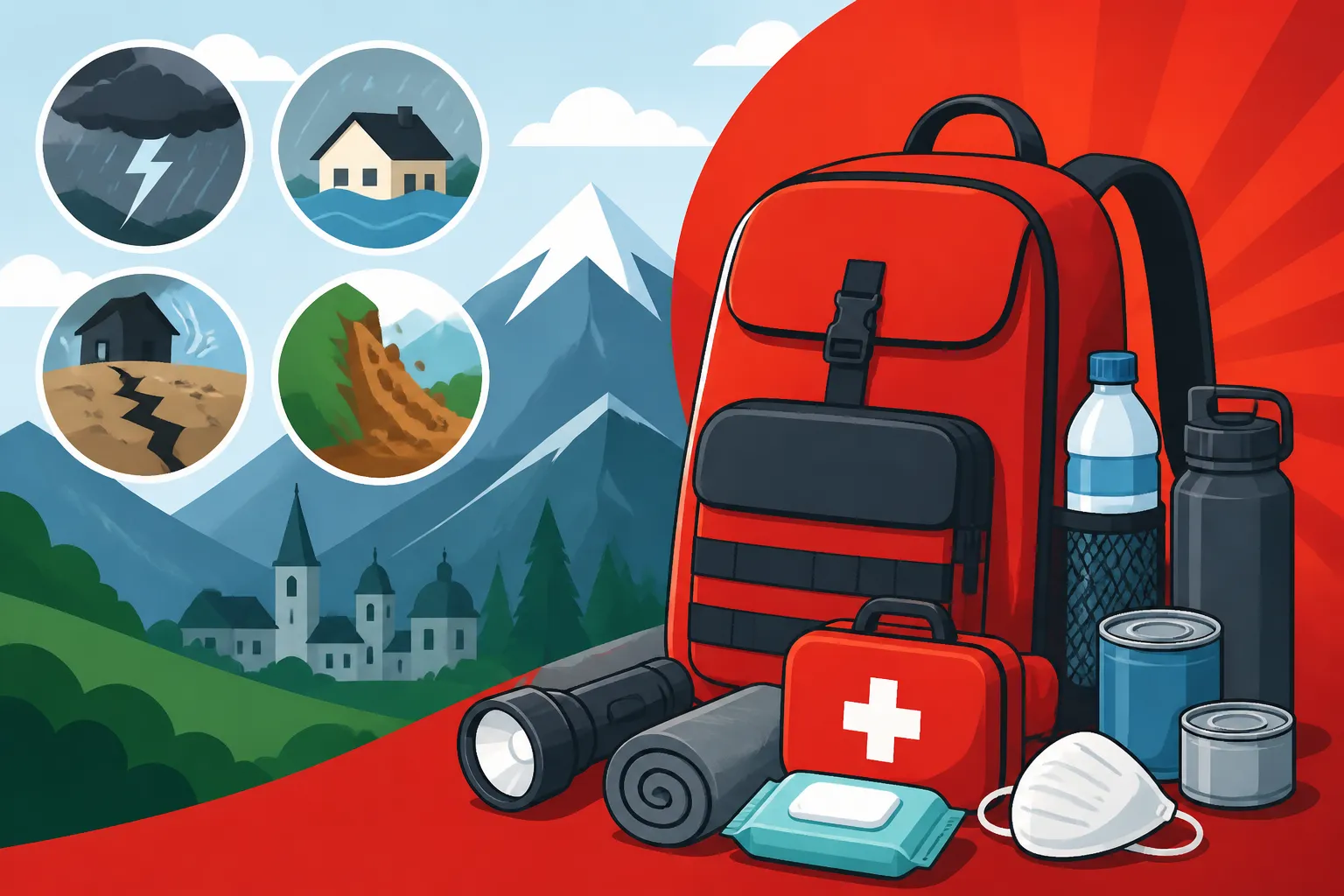
Building an Emergency Go-Bag for Natural Disasters
When the sirens first blared across my district during a flash flood warning, I realized my only emergency plan was a half-charged phone and a bag of pasta. I’ve lived through the stress of Alpine storms where the power flickers and the streets turn into rivers, and I know how overwhelming it feels to prepare for the unexpected in a foreign country. This guide solves that anxiety by providing a meticulous, localized checklist for building a "Go-Bag" specifically tailored to life in Austria.
Understanding Austria’s Natural Disaster Landscape
While Austria is often seen as a safe haven, our beautiful Alpine geography and the Danube basin bring specific risks that every resident needs to acknowledge. We aren't dealing with hurricanes, but we are dealing with high-velocity weather events that can catch you off guard. If you are living in a ground-floor Altbau apartment or a house near a river, flooding is your primary concern. In the mountains, avalanches and mudslides are the reality. Across the entire country, the concept of a "Blackout" (a long-term power grid failure) is something the Austrian Civil Protection Association (Zivilschutzverband) takes very seriously.
In the city of Vienna, for example, the risk of the Danube overflowing is mitigated by the Donauinsel, but flash floods from heavy summer rains can still overwhelm local drainage systems. I remember a summer where the cellar of my building flooded in under twenty minutes. If I had needed to leave, I wouldn't have known which documents to grab. Beyond water, severe winter storms can lead to localized isolation, especially in provinces like Tyrol or Vorarlberg. Before you even pack a bag, you should be Checking Flooding Risk Areas Before Renting Ground Floors to understand the specific vulnerability of your home.
The Austrian government is incredibly proactive about testing. Every first Saturday in October, you will hear the sirens across the whole country for the "Zivilschutz-Probealarm." This isn't just a drill for them; it’s a reminder for us. A Go-Bag (or Notgepäck) isn't just for a permanent evacuation; it’s for those 48 to 72 hours where you might be displaced to a local gymnasium or a friend's house in a safer district.
The Essential Checklist for Your Austrian Go-Bag
Building a kit in Austria requires a mix of standard survival gear and items that are specific to the administrative reality of living here. You cannot simply rely on a generic list from another country because the way our services and documentation work is unique. Your bag should be a sturdy backpack, ideally waterproof, kept in an easily accessible spot near your front door.
Documents and Administrative Essentials
The most critical part of your Go-Bag isn't a knife or a flashlight; it’s your paperwork. In Austria, your legal status is tied to specific documents that are a nightmare to replace if lost in a disaster. You need a waterproof folder containing copies of your passport, your residence permit (whether that’s an RWR card or an Article 50 card), and your The Meldezettel Process: Registering Your Address Legally confirmation.
I always tell new arrivals to keep a copy of their The Austrian e-card: Registration, Photo Rules, and Usage Guide or at least a printout of their social insurance number. If you are displaced and need medical attention, having this number ready speeds up everything. Additionally, include copies of your Household Insurance (Haushaltsversicherung) Explained policy and the contact details for your insurance agent. If your apartment is damaged by a natural disaster, you will need to initiate a claim immediately.
| Category | Essential Item | Why It Matters in Austria |
|---|---|---|
| Documentation | Meldezettel & Passport | Essential for proving residency at emergency shelters. |
| Health | e-card / Insurance Info | Required for non-emergency medical treatment at clinics. |
| Communication | Emergency Numbers List | Focus on local numbers like 144 and 122. |
| Financial | Cash (Euros) | Essential during power outages when cards fail. |
| Legal | Residence Permit | Crucial for non-EU citizens to prove legal status. |
Survival Gear Adapted for Central Europe
When selecting gear, think about the Austrian climate. It can be humid and hot in the summer but dangerously cold in the winter. A space blanket is a must, but I also recommend a high-quality, compact rain poncho. Our storms often come with high winds that make umbrellas useless.
A portable power bank is non-negotiable. Ensure it is kept at 100% charge and has the correct cables for your phone. In a disaster, your primary source of information will likely be the "Stadt Wien" app or local radio. A small, battery-operated radio is actually recommended by the Zivilschutzverband because, in a total blackout, cellular towers may only have a few hours of backup power. You should also pack a physical map of your city or region. We are so used to GPS, but if the network is down, finding your way to a designated "Zivilschutz-Sammelstelle" (civil protection meeting point) requires a paper map.
Medical Supplies and the Apotheke Factor
Your first aid kit needs to be more than just bandages. It should reflect the medications commonly used and regulated here. Because of the Apotheken in Austria: Prescription Workflow and Night Shifts system, you cannot always get what you need after hours without a trek to a "Nachtapotheke." Your bag should contain a three-day supply of any prescription medications you take.
Include basic over-the-counter relief like Paracetamol or Ibuprofen. It is also wise to pack a small bottle of disinfectant and some electrolyte powder—extremely helpful if you are dealing with heatstroke during a summer evacuation. If you have children, ensure you have a copy of their The Digital Eltern-Kind-Pass 2026: What Changed for Parents or at least the vaccination records. In a chaotic evacuation scenario, having those records on hand ensures they receive the correct care if they need to be treated by a Finding Medical Care in Austria: Clinics, Hospitals, and Referrals professional who doesn't know their history.
Tailoring Your Bag for Local Logistics and Communication
Communication and money work differently in a crisis. You might be used to a world where everything is digital, but Austria’s infrastructure has specific quirks that you must account for in your emergency planning.
Cash, Cards, and the Austrian Payment Ecosystem
One of the biggest mistakes expats make is assuming their Visa or Mastercard will work during a localized disaster. If the power is out or the internet is down, card terminals in supermarkets and gas stations will be useless. Austria already has a very strong cash culture, and in an emergency, this becomes even more pronounced. You should keep at least €200 to €500 in small bills (€5, €10, and €20) inside your Go-Bag.
This cash is for essentials like water, food, or even a taxi if the public transport system fails. Relying on Cashless Payments vs Cash Culture in Austria Today is a risk when the "Bankomat" network is offline. Small coins are also useful for older vending machines or public payphones, which sometimes still exist in transit hubs. If you are a student, ensure you have your ID handy, as Student Bank Accounts: Perks, Age Limits, and Free Fees often come with specific insurance or emergency assistance perks you might have forgotten about.
Digital Preparedness: ID Austria and Emergency Apps
While physical items are the core of a Go-Bag, your digital setup is the "invisible" part of your kit. You should have Using ID Austria for E-Banking and FinanzOnline Access fully set up on your phone. This digital identity allows you to access government services even if you’ve lost your physical documents. Upload scans of all your important papers to a secure cloud storage service that you can access from any device.
Download the "KATWARN" app and the "UNIQA Unwetter-Warnservice" (if you have their insurance). These apps provide real-time alerts for severe weather and civil emergencies in Austria. Also, save the most important Emergency Numbers: 144 Ambulance, 133 Police, 122 Fire as "ICE" (In Case of Emergency) contacts in your phone. If you are injured, first responders are trained to look for these. If you are in a situation where you can't speak much German, knowing that Calling 1450: Austria's 24/7 Telephone Health Advice Line exists can be a lifesaver for non-life-threatening health guidance during a crisis.
Maintaining and Storing Your Kit in an Austrian Apartment
Living in a European city often means dealing with limited space. You might not have a giant garage to store a "prepper" level of supplies, but you can be smart about how you integrate your Go-Bag into your home.
Space-Saving Tips for Altbau Living
Most apartments in Vienna or Graz come with a "Kellerabteil" (basement storage), but I strongly advise against keeping your Go-Bag there. Basements are the first things to flood, and they are often damp, which can ruin electronics and paperwork. Keep your bag in the "Vorzimmer" (entryway) or at the top of a wardrobe.
Use multi-purpose items to save space. A high-quality power bank that you use for travel can double as your emergency battery. A lightweight down jacket that compresses into a small pouch is better than a bulky wool coat. If you have pets, don't forget a "Go-Kit" for them too. This should include a collapsible water bowl, a small bag of food, and a copy of their Dog Tax (Hundeabgabe) and Mandatory Registration Costs paperwork, which often includes their chip number.
Seasonal Updates: Winter vs. Summer Prep
An emergency bag is not a "set it and forget it" project. In Austria, the gear you need in July is vastly different from what you need in January. I make it a habit to check my bag twice a year—usually when the clocks change.
In the winter, you must account for the cold. If your heating fails during a storm, you need thermal underwear and chemical hand warmers. You should also review your Winterizing Your Austrian Apartment Against Drafts strategies, as these can help you stay warm if you are sheltering in place. In the summer, the focus shifts to hydration and sun protection. High-altitude sun can be brutal, and if you are evacuated to an outdoor staging area, you will need sunscreen and a hat. Always check the expiration dates on your emergency food (high-calorie bars are best) and any water bottles you’ve packed.
Building an emergency Go-Bag isn't about being paranoid; it's about being a responsible resident in a country that values order and preparedness. Having lived through a few "unprecedented" weather events here, I can tell you that the peace of mind you get from knowing your Meldezettel and a bit of cash are ready to go is worth every Euro and every minute of packing.
Disclaimer
This guide is for informational purposes only and does not replace professional advice from civil protection authorities. Always follow the instructions of local Austrian emergency services during a crisis. The author is not responsible for any personal injury or property damage resulting from the use of this information.