Best Areas in Graz for Families with Young Children
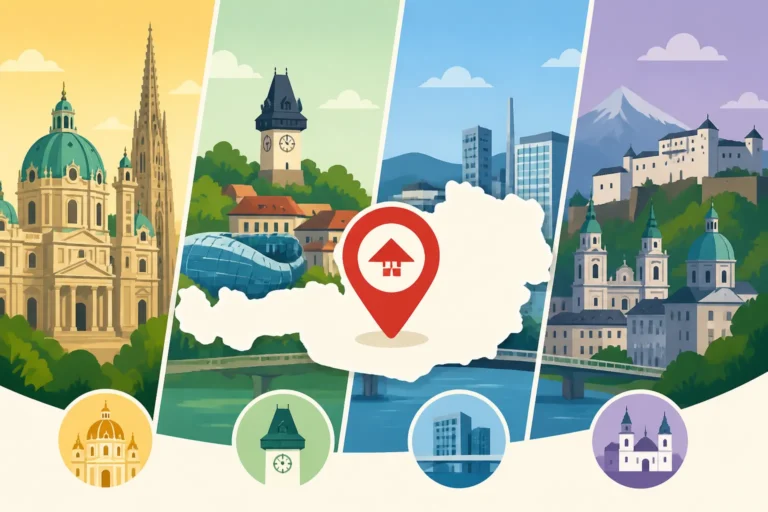
Choosing a neighborhood in a new city is a high-stakes puzzle, especially when you are balancing school runs, grocery access, and the need for a quiet night's sleep. I remember the paralyzing anxiety of staring at a map of Styria, wondering if I was accidentally signing a three-year lease in a student party zone or a concrete desert. This guide solves that uncertainty by breaking down the most family-friendly districts in Graz through the lens of a parent who has lived the "search and rescue" mission of Austrian house hunting.
Why Graz is Often a Better Family Choice Than Vienna
While the capital gets all the international glory, Graz offers a pace of life that many expats find far more sustainable once children enter the picture. It is the "Garden City" for a reason; you are never more than a fifteen-minute tram ride or bike journey from a dense forest or a sprawling park. The logistical hurdles of moving here can be daunting, but the reward is a city where your children can grow up with a sense of independence that is rare in larger metropolises.
One of the first things you will notice is the architectural divide. When browsing listings, you will constantly see the terms Altbau and Neubau. Deciding between a high-ceilinged, 19th-century flat and a modern complex with an elevator is your first major hurdle. To understand the thermal and financial implications of these choices, you should read about Altbau vs Neubau: Differences in Rent, Charm, and Heating before you start booking viewings. In Graz, the Altbau charm is concentrated in the inner districts, while the newer, family-oriented complexes are pushing out into the green fringes.
The city is divided into 17 districts, but for a family with young children, only about five or six truly hit the sweet spot of safety, school quality, and "green lung" access. The competition for these spots is fierce, and local landlords can be traditional. You will need to be prepared with a thick folder of documents to even get a callback. Knowing the Proof of Income Documents Landlords Require from Expats will save you from being ghosted by the city's most popular property managers.
Geidorf: The Academic Heart with a Family Soul
Geidorf (District 3) is widely considered the crown jewel of Graz for international families. Because it houses the University of Graz, it has a cosmopolitan, intellectual vibe that feels very welcoming to foreigners. It is common to hear three or four languages being spoken at the local playground near the Hilmteich. The streets are lined with villas and meticulously maintained apartment blocks, and the traffic is generally calmer than in the neighboring city center.
The proximity to the Stadtpark is a game-changer. Imagine having 22 hectares of manicured lawns, duck ponds, and high-end playgrounds as your extended backyard. For parents of toddlers, the safety of Geidorf is unparalleled. However, this prestige comes with a price tag. Rents here are among the highest in the city, and you will likely encounter a Makler (agent). Make sure you are clear on the current laws regarding who pays the commission by looking into Understanding Kaution (Deposit) and Provision (Commission) before handing over any cash.
Beyond the aesthetics, Geidorf is a hub for education. Many of the city's top-rated primary schools (Volksschule) are located here. While some expats look for international options, the local public system is robust. If you are comparing the costs and benefits of different school types across the country, you might find the breakdown of Cost Differences: Public vs Private Schools in Austria helpful for your long-term financial planning. Geidorf allows you to live in a "bubble" of safety while still being a ten-minute walk from the clock tower.
St. Peter: The Suburban Dream Within Reach
If Geidorf feels a bit too "stiff" or expensive, St. Peter (District 10) is the most logical alternative. Located in the southeast, this district has seen massive development over the last decade. It has transitioned from a quiet suburb into a vibrant family hub. It is the land of the Neubau—modern apartment buildings with underground parking, strollers in every hallway, and integrated sandboxes in the courtyards.
The connectivity in St. Peter is fantastic. The Number 6 tram line runs like a heartbeat through the district, whisking you into the city center in about 15 minutes. This is crucial for parents who work in the center but want their kids to play in a yard. Many residents here opt for the annual transit pass to save money. If you are debating whether to rely on a car or the rails, checking if Is the Klimaticket Worth It? Cost and Benefit Analysis applies to your family's lifestyle is a smart move.
The "vibe" in St. Peter is decidedly middle-class and relaxed. You’ll find all the major supermarkets (Spar, Billa, Hofer) within walking distance, often with larger aisles and better parking than their downtown counterparts. It is an area where people actually know their neighbors. However, living in such a communal environment means you have to respect local norms. Austrians take their "quiet time" very seriously. To avoid a frosty relationship with your new neighbors, familiarize yourself with Everyday Etiquette: Garbage Sorting, Noise, and Ruhezeit early on.
Mariatrost: Living in the Green Belt
For families who prioritize nature above all else, Mariatrost (District 11) is the ultimate destination. It feels less like a city district and more like a high-end village that happens to be connected by a tram line. It is famous for its stunning Basilica, but for parents, the real draw is the Rettenbachklamm and the endless hiking trails that start right outside your door.
Living here means your children will grow up with muddy boots and a deep appreciation for the outdoors. On weekends, instead of hitting a mall, you’ll likely be Reading Red-White-Red Hiking Trail Markers in Austria as you navigate the local hills. The air is noticeably fresher here, and the summer heatwaves that occasionally bake the city center are much milder in the shaded valleys of Mariatrost.
The downside to Mariatrost is the "isolated" feel. If you miss the last tram or don't have a car, you are quite far from the action. The housing stock is a mix of expensive detached houses and high-end low-rise apartments. Because it is so desirable, landlords are very picky. They will expect you to have your paperwork in order immediately upon arrival. Don't forget that you must complete The Meldezettel Process: Registering Your Address Legally within three days of moving into your Mariatrost home, or you could face bureaucratic headaches later.
Eggenberg: Culture, Sports, and Affordability
Moving to the west side of the Mur river, Eggenberg (District 14) offers a fantastic balance for families who want more space for their money. The district is dominated by the UNESCO World Heritage site, Schloss Eggenberg. The palace grounds are a paradise for children, featuring roaming peacocks and massive lawns where kids can run free while parents admire the Baroque architecture.
Eggenberg is also the "sporty" district. It is home to the Auster, a massive indoor and outdoor swimming complex that is a staple for local families during both the freezing winters and the humid summers. The infrastructure here is geared toward active living. For families Moving to Austria with Family: Schools and Logistics becomes much easier when you have such high-quality recreational facilities within a five-minute bike ride.
One thing to keep in mind about Eggenberg is that it is a "mixed" district. Some streets are incredibly quiet and leafy, while others are closer to industrial zones or busier thoroughfares. It is essential to visit the specific street at different times of the day. As an expat, you might find the registration process for local services slightly different here than in the more "international" Geidorf. Make sure you don't overlook the Consequence of Missing the 3-Day Address Registration Window, as the local authorities in these districts can be very sticklers for the rules.
Comparing the Top Districts for Families
To help you visualize the trade-offs, I’ve put together a quick comparison of these top contenders. Every family has different priorities—some need the tram at their doorstep, while others need a forest path.
| District | Primary Housing Type | Greenery Level | Price Bracket | Best For… |
|---|---|---|---|---|
| Geidorf | Altbau / Villas | High (Parks) | Premium | Academics & Downtown lovers |
| St. Peter | Neubau / Modern | Medium | Mid-Range | Commuters & Young toddlers |
| Mariatrost | Houses / Low-rise | Very High (Forest) | High | Nature lovers & Hikers |
| Eggenberg | Mixed / Altbau | High (Palace) | Affordable | Sporty families & Culture buffs |
| St. Leonhard | Altbau | Medium | High | Urban families who want quiet |
Practical Advice for Your Graz Housing Search
When you start your search, don't rely solely on international sites. Use local platforms like Willhaben or ImmobilienScout24. Be prepared to send messages in German—even a Google-translated intro is better than nothing, as it shows you are trying to integrate. Many expats lose out on great flats because they waited too long to reply or sent an inquiry in English that the older landlord didn't understand.
If you are coming from a country with very different schooling standards, you might be nervous about the local options. While this guide focuses on Graz, much of the registration logic is similar across Austria. You can look at Enrolling Your Child in a Public Kindergarten in Vienna to get an idea of the timeline and documents required, as the Styrian system follows a very similar bureaucratic rhythm. Getting your child a spot (Kinderbetreuungsplatz) is often harder than finding the apartment itself, so start that search the moment you have your lease signed.
Lastly, remember that Graz is a city of "districts," but it is also a city of "neighborhoods." A street in District 5 (Gries) might be noisy and chaotic, but three blocks away, you might find a hidden courtyard that is a silent oasis. Never sign a lease without walking the neighborhood at 6:00 PM on a weekday to see the real traffic and noise levels.
Important Disclaimer
The information provided in this guide is for informational purposes only and is based on personal experience and local research. Real estate laws, rental prices, and district characteristics in Austria can change. Always consult with a legal professional or a licensed real estate agent before signing any binding contracts or making significant financial commitments.