Addressing Safety Concerns in Vienna’s 10th District (Favoriten)
Stepping out of the U1 station at Reumannplatz for the first time, I couldn't help but feel the weight of every tabloid headline I’d read about Vienna’s 10th district. My first month in Austria was filled with locals telling me to be careful in Favoriten. This guide breaks down the actual safety risks versus the urban myths, helping you navigate the 10th with confidence.
The Reputation vs. Reality of Vienna's 10th District
When you first start researching where to live, you’ll likely stumble upon the Vienna Neighborhood Guide: Best Districts for Expats. In those lists, Favoriten often gets a mixed review. It is Vienna’s most populous district, home to over 200,000 people. To put that in perspective, if Favoriten were its own city, it would be the third-largest in Austria. This sheer density is the primary driver of its reputation. Where there are more people, there is more visible friction, more police activity, and more noise.
I remember my first view of the district was the bustling Victor-Adler-Markt. It felt worlds away from the pristine, quiet streets of the 1st or 19th districts. It was loud, colorful, and smelled of grilled kebabs and fresh produce. For many newcomers, this "unfiltered" urban environment can be mistaken for danger. The tabloid press in Austria often highlights Favoriten because "Man stabbed at Reumannplatz" sells more papers than a quiet night in Hietzing. However, the reality is a bit more nuanced.
Most of the crime reported in the 10th is concentrated in very specific "hotspots" and often involves disputes within specific social groups rather than random attacks on residents or tourists. If you are Living in Austria 2027: The Expat Starter Guide suggests, you’ll find that "danger" in Vienna is a relative term. Even the most "dangerous" part of Vienna is statistically safer than many neighborhoods in London, Paris, or New York. The 10th is a working-class district with a proud history of "Red Vienna" social housing, and while it has rough edges, it is also a place of incredible community resilience.
The Impact of Social Media and Tabloids
The way Favoriten is portrayed on TikTok or in the Krone Zeitung often creates a "perception gap." You might see a video of a police helicopter over the 10th and assume the worst. In reality, the police in Vienna are highly proactive. They often use high-visibility patrols in Favoriten not because a crime is happening, but as a preventative measure. This can be jarring for expats from countries where a heavy police presence always signifies an active emergency.
In the 10th, you are seeing the byproduct of a rapidly growing, diverse urban center. It’s where the Cost of Living in Vienna: Singles vs Families remains somewhat accessible, attracting students, young families, and immigrants. This mix creates a vibrant energy that some find intimidating and others find authentic. Understanding this distinction is the first step to feeling at home here.
Navigating the Safety Hotspots and Weapon Ban Zones
If you’ve spent any time reading the local news, you’ve likely heard of the Waffenverbotszone (Weapon Ban Zone). As of 2024 and continuing into 2026, the city has implemented specific zones around Reumannplatz and Keplerplatz where the police have increased powers to search individuals for weapons, including knives and even heavy blunt objects.
Understanding the Reumannplatz and Keplerplatz Dynamics
These two squares are the heart of the district’s transport hub. The U1 line runs directly through them, bringing thousands of people into the area every hour. Because these are major transit points, they naturally attract "hangout" culture. You will see groups of young men standing around, which can be intimidating if you are walking alone at night.
In my experience, the vast majority of these groups are simply socializing because their apartments are small or overcrowded. However, these areas have seen an uptick in petty theft and localized scuffles. The weapon ban was introduced precisely to prevent these scuffles from escalating. For the average resident, these bans actually make the area safer. It means the police are actively filtering out high-risk individuals before any trouble starts. If you ever feel truly uncomfortable, it is essential to know your Emergency Numbers: 144 Ambulance, 133 Police, 122 Fire. The response time in the 10th is remarkably fast due to the high density of stations nearby.
Specific Safety Comparison Table
| Feature | Reumannplatz/Keplerplatz | Oberlaa / Sonnwendviertel |
|---|---|---|
| Vibe | High energy, chaotic, transit-heavy | Quiet, modern, family-oriented |
| Police Presence | Very High (Waffenverbotszone) | Standard / Occasional |
| Safety Concern | Petty theft, verbal harassment | General urban awareness |
| Best For | Cheap eats, quick transit, shopping | Families, parks, new apartments |
| Night Safety | Exercise caution, stay on main paths | Very safe, well-lit |
While the headlines focus on the squares, just ten minutes away in the Sonnwendviertel, the atmosphere is completely different. This is the beauty and the frustration of the 10th; it changes block by block.
Verbal Harassment and Street Etiquette
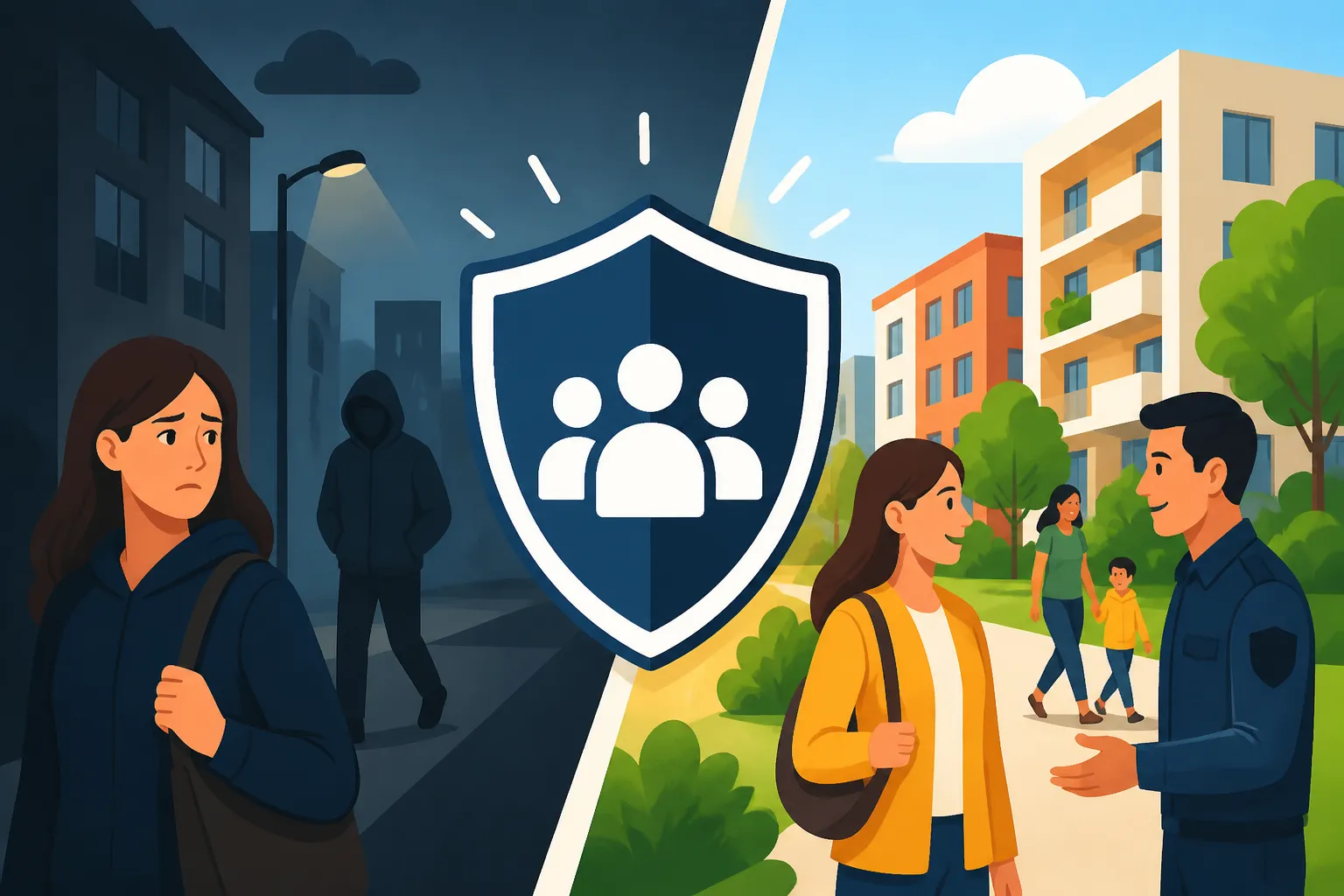
A common concern, particularly for those looking into the Safest Neighborhoods in Vienna for Single Female Expats, is catcalling or verbal harassment. It is a reality that in the more crowded parts of Favoriten, women may experience more unwanted attention than in the suburban districts. While this rarely escalates into physical danger, it is a significant quality-of-life issue.
My advice is to adopt the "Viennese gaze"—a neutral, slightly bored expression that signals you are moving with purpose. Avoiding eye contact with loiterers and staying on the well-lit Quellenstraße or Favoritenstraße (the pedestrian zone) at night usually mitigates most issues. If you are ever followed or feel unsafe, ducking into a busy "Apotheke" (pharmacy) or a supermarket is a standard local safety move.
Living in Favoriten: Practical Tips for Peace of Mind
If you decide to call the 10th home, perhaps because you found a great deal on Altbau vs Neubau: Differences in Rent, Charm, and Heating, you need a strategy. The 10th is massive, and your experience will depend entirely on which "Grätzel" (neighborhood) you choose.
Choosing Your Grätzel Wisely
If safety and quiet are your top priorities, look toward the edges of the district.
- Oberlaa: This is technically the 10th, but it feels like a village. It’s home to the Therme Wien (the thermal baths) and vast vineyards. It’s incredibly safe and peaceful.
- Sonnwendviertel: This is a brand-new urban development behind the Hauptbahnhof. It’s filled with young professionals and families. It’s modern, has great parks, and feels very secure.
- The "Quellenviertel": This is the heart of the "old" 10th. It’s more chaotic, but it’s also where the best rent deals are. If you live here, just be prepared for the Everyday Etiquette: Garbage Sorting, Noise, and Ruhezeit rules to be a bit more "relaxed" than in the 1st district.
Secure Housing and Apartment Safety
In many parts of the 10th, older apartment buildings might not have the most modern security systems. When viewing a flat, check the "Hauseingang" (main entrance). Is the door sturdy? Does it lock automatically? Does the "Gegensprechanlage" (intercom) work? Most crime in Favoriten is opportunistic, so having a secure front door and not leaving windows open on the "Erdgeschoss" (ground floor) is vital.
I made it a habit to close it every time I walked past. It’s these small, communal acts of vigilance that keep a neighborhood safe. Also, ensure you have the contact details for Emergency Services in Austria: 144, Hospitals, and Crisis Steps saved in your phone, just in case of a domestic incident in the building—noise complaints are more common here than anywhere else in the city.
Transportation Safety at Night
The U-Bahn is generally very safe, but the 10th is also served by several night buses and tram lines like the 6 and 11. The line 6 tram has a bit of a "wild" reputation late at night. If you’re traveling home late, try to sit in the first carriage near the driver. If you have your Public Transport Passes: Weekly, Monthly, and Annual Options, you can also use the "Nightline" buses which drop you closer to your door.
For those who are particularly nervous, the "Frauentaxi" (women's taxi) service or apps like Bolt and Uber are very active in the 10th. Sometimes spending that extra 10 Euros for a door-to-door ride after a late shift is worth the peace of mind.
The Benefits of the 10th: Why People Stay
Despite the safety concerns, thousands of expats love living in Favoriten. Why? Because the district offers a level of convenience and "real life" that you won't find in the tourist centers.
Infrastructure and Accessibility
You are perfectly connected. From Reumannplatz, the U1 takes you to Stephansplatz (the city center) in just 7 minutes. The Hauptbahnhof (Main Station) is right on the border of the 10th, making international travel incredibly easy. If you are a student or a digital nomad who had to Finding Affordable Study Abroad Health Insurance, the lower rents in the 10th allow you to spend your money on experiences rather than just four walls.
Culinary and Cultural Diversity
The 10th is the culinary capital of "real" Vienna. The Victor-Adler-Markt offers the cheapest and freshest produce in the city. You’ll find authentic Turkish bakeries, Balkan grill houses, and even traditional Viennese "Wirtshäuser" that haven't changed in fifty years. There is a sense of "living and let live" here. As long as you respect the basic Everyday Etiquette: Garbage Sorting, Noise, and Ruhezeit, people generally leave you to your own devices.
Green Spaces
People often forget that the 10th contains the Wienerberg, a massive recreational area with a swimming pond, forest paths, and running tracks. It is one of the best-hidden gems in the city. On a Sunday afternoon, seeing families from every conceivable background barbecuing and playing football together at Wienerberg is a reminder that the "danger" of the 10th is often just a symptom of a misunderstood, diverse community.
Living in Favoriten requires a bit more "street smarts" than living in the greener suburbs, but it rewards you with a central location, great food, and a front-row seat to the most dynamic part of Vienna. Don't let the headlines scare you off—just choose your street carefully and keep your wits about you.
Disclaimer
The information provided in this guide is based on personal experiences and general safety trends in Vienna as of 2026. Safety is subjective, and crime statistics can change. Always follow the advice of local authorities and the Austrian Federal Police. This guide is for informational purposes only and does not constitute legal or professional security advice.