Cost Differences: Public vs Private Schools in Austria
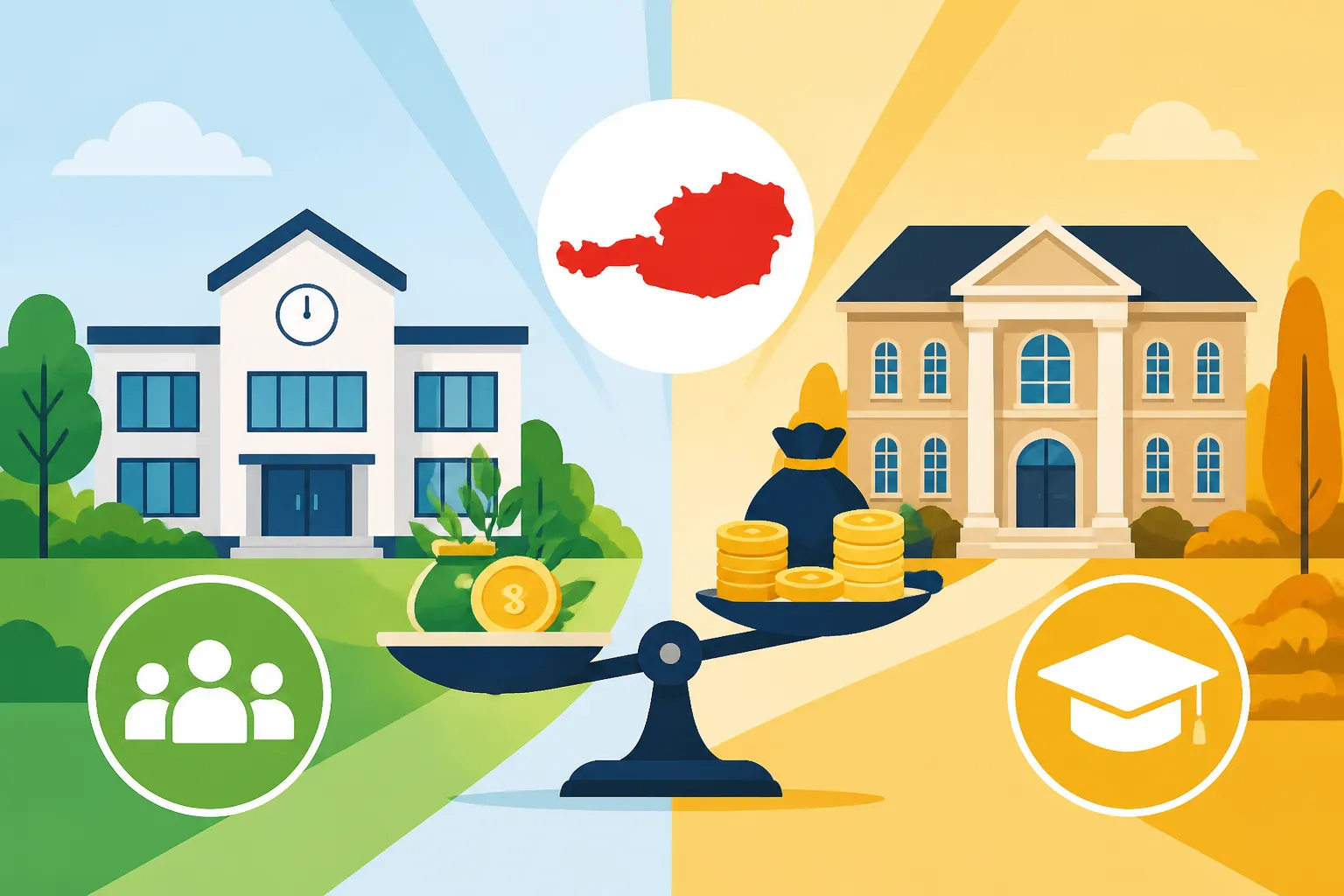
Choosing between the public school system and private education is one of the most stressful financial decisions you will face as an expat parent in Austria. I still remember the intense pressure of weighing a "free" local Volksschule against an international school that cost as much as a luxury SUV per year. This guide breaks down the granular cost differences, hidden fees, and financial trade-offs of the Austrian schooling landscape to help you budget with confidence.
The Financial Reality of Austrian Public Education
Many newcomers arrive under the impression that public school in Austria is entirely free. While it is true that there is no tuition fee for state-run schools, the term "free" is a bit of a misnomer when you factor in the operational costs of a child's daily life. If you are following a Living in Austria 2027: The Expat Starter Guide, you likely already know that Austria’s social safety net is robust, but education still requires a dedicated line item in your monthly budget.
Hidden Costs in the Public System
The first thing you will encounter in the public system is the school supply list. In Austria, this is taken very seriously. Before the first day of school, you will receive a list of specific notebooks (Hefte), fountain pens (Füllfeder), and craft materials. Depending on the grade level, this initial "Schulstart" can easily cost between 150 EUR and 300 EUR.
Beyond supplies, there are ongoing costs for "Schulveranstaltungen" (school events). These include mandatory excursions, theater visits, and the famous Austrian "Schikurs" (ski week). A week-long ski trip in the Alps can cost anywhere from 400 EUR to 600 EUR, including rental gear and lift passes. While these are culturally vital, they are not optional and can be a significant hit to your Cost of Living Benchmarks for Singles, Couples, and Families.
After-School Care and the Hort System
The biggest expense for public school parents is often the After-School Care Programs (Hort) Registration Process. Most public primary schools (Volksschule) end their formal instruction between 12:00 PM and 1:00 PM. If both parents work, you will need to enroll your child in a Hort.
The cost of a Hort is usually income-linked in cities like Vienna, but in other provinces, it may be a flat fee. You should budget approximately 150 EUR to 350 EUR per month for after-school care, which usually includes a hot lunch. This lunch fee, known as "Essensbeitrag," is roughly 4 EUR to 6 EUR per day. If you are Enrolling Your Child in a Public Kindergarten in Vienna, you may already be familiar with these meal fees, as they carry over into the primary school years.
Private and International School Tuition Fees
If your child does not yet speak German, or if you are only in Austria for a short-term assignment, you might look toward International vs Bilingual Schools in Vienna and Beyond. The cost jump here is astronomical compared to the public sector. Private schools in Austria generally fall into two categories: denominational (church-run) schools and independent international schools.
Denominational and Subsidized Private Schools
Many private schools in Austria are "Privatschulen mit Öffentlichkeitsrecht," meaning they follow the national curriculum and receive some state subsidies for teacher salaries. These schools are surprisingly affordable compared to the UK or US systems. You might find tuition for a Catholic Gymnasium ranging from 250 EUR to 500 EUR per month. These schools often offer a more traditional environment and smaller class sizes than the public equivalent. However, they usually require a high level of German proficiency for admission.
International School Pricing Structures
Independent international schools, such as the Vienna International School (VIS) or the American International School (AIS), operate on a completely different financial plane. These institutions do not receive significant state subsidies and rely almost entirely on tuition. For 2026, you can expect the following fee structures:
- Registration/Application Fee: A one-time, non-refundable fee ranging from 500 EUR to 1,000 EUR.
- Capital Levy/Admission Fee: Many schools charge a one-time "capital fee" of 3,000 EUR to 6,000 EUR to fund building maintenance and upgrades.
- Annual Tuition: This varies by grade level. Primary years typically start around 18,000 EUR, while the IB Diploma years (grades 11 and 12) can exceed 26,000 EUR per year.
When moving, check your Vienna Neighborhood Guide: Best Districts for Expats to see which schools are nearby, as commuting costs or private school bus fees can add another 1,500 EUR to 2,500 EUR to your annual bill.
Comparing the Total Annual Cost
To give you a clearer picture, let's look at a side-by-side comparison of the estimated annual costs for a 7-year-old child in a public school versus a top-tier international school.
| Expense Category | Public School (State) | Private International School |
|---|---|---|
| Annual Tuition | 0 EUR | 18,000 EUR – 22,000 EUR |
| Registration/Capital Fee | 0 EUR | 4,000 EUR (one-time) |
| After-School Care (Hort) | 2,500 EUR – 3,500 EUR | Included (often) |
| School Supplies/Books | 250 EUR | 500 EUR |
| Mandatory Lunch Fees | 800 EUR – 1,200 EUR | 1,000 EUR – 1,500 EUR |
| Excursions & Ski Weeks | 600 EUR | 800 EUR – 1,500 EUR |
| School Bus/Transport | 0 EUR (Klimaticket) | 2,000 EUR |
| Total Estimated Year 1 | ~4,000 EUR – 5,500 EUR | ~26,000 EUR – 31,500 EUR |
It is important to note that the public school estimate includes the cost of full-time after-school care. If one parent stays at home and picks the child up at noon, the public school cost drops significantly, essentially becoming the cost of supplies and the occasional field trip.
Financial Support and Tax Deductions for Parents
The Austrian government provides several mechanisms to offset the costs of raising and educating children. Regardless of whether you choose public or private, you should be Applying for the Familienbeihilfe (Child Benefit) Allowance as soon as you have your residency papers in order. This is a monthly payment that increases slightly as the child gets older and helps cover basic school needs.
Tax Benefits and the Familienbonus Plus
One of the most powerful tools for expat parents is Calculating the Familienbonus Plus per Child. This is a direct tax credit that reduces your income tax liability by up to 2,000 EUR per child per year (for children under 18). If you are a high-earner, this effectively "refunds" a portion of your school-related expenses. Additionally, certain childcare costs (Kinderbetreuungskosten) for children under the age of 10 are tax-deductible up to a certain limit, provided the facility is a qualified pedagogical institution (like a Hort).
Corporate Education Allowances
Many expats moving to Austria on executive contracts negotiate an "Education Allowance." If your employer is paying your tuition, be aware of the tax implications. In Austria, if an employer pays for a child's private schooling, it is often treated as a "benefit in kind" (Sachbezug) and is subject to income tax. You should factor this into your net salary calculations, especially when considering your 13th and 14th Salary Explained: Holiday and Christmas Pay, as these bonuses are taxed at a lower rate but do not typically include the value of your education allowance.
Subsidies for School Trips
For families in the public system who might struggle with the cost of mandatory ski weeks or language trips, there are provincial subsidies available. In Vienna, for example, the MA 13 (Youth Department) offers "Schulveranstaltungshilfe" for families whose income falls below a certain threshold. It is always worth asking the school's "Elternverein" (Parents' Association) about available support if a specific trip is stretching your budget. This is a normal part of the Austrian system and there is no stigma attached to seeking these subsidies.
When you are planning your move, make sure to review your Family Financial Benefits: Wochengeld and Kinderbetreuungsgeld if you have younger children, as these payments can help build a "school fund" before your child even reaches school age. The transition from the subsidized kindergarten system to the school system is a major financial milestone, and understanding these layers of cost will prevent any "September surprises" during your first year in Austria.
Disclaimer
The information provided in this guide is for educational and informational purposes only and does not constitute financial, legal, or professional advice. School fees, government subsidies, and tax laws in Austria are subject to frequent changes. While we strive to keep the data current for 2026, you should always verify specific tuition rates and eligibility for benefits with the relevant schools, the Austrian Ministry of Education, or a qualified tax advisor before making financial commitments.