Tattoo Policies in Public Swimming Pools and Thermen
Moving to a new country often involves a constant internal monologue of "is this allowed here?" and for those of us with significant ink, the fear of being turned away from a pristine Austrian spa is very real. I remember standing outside a high-end Therme in Styria for ten minutes, nervously tugging at my sleeves and wondering if my traditional tattoos would be seen as a breach of their legendary decorum. This guide solves the mystery of tattoo policies in Austrian public pools and spas, ensuring you can soak in peace without fearing a tap on the shoulder from the Bademeister.
The Cultural Landscape of Tattoos in Austrian Wellness Spaces
Austria is a country where tradition and modernity live in a delicate, sometimes confusing, dance. When you first arrive, you might notice that the older generation maintains a very formal exterior, leading many expats to believe that body art is still a taboo. However, the reality on the ground is much more progressive. In cities like Vienna, Graz, and Linz, tattoos have become almost a standard accessory for young professionals and families alike.
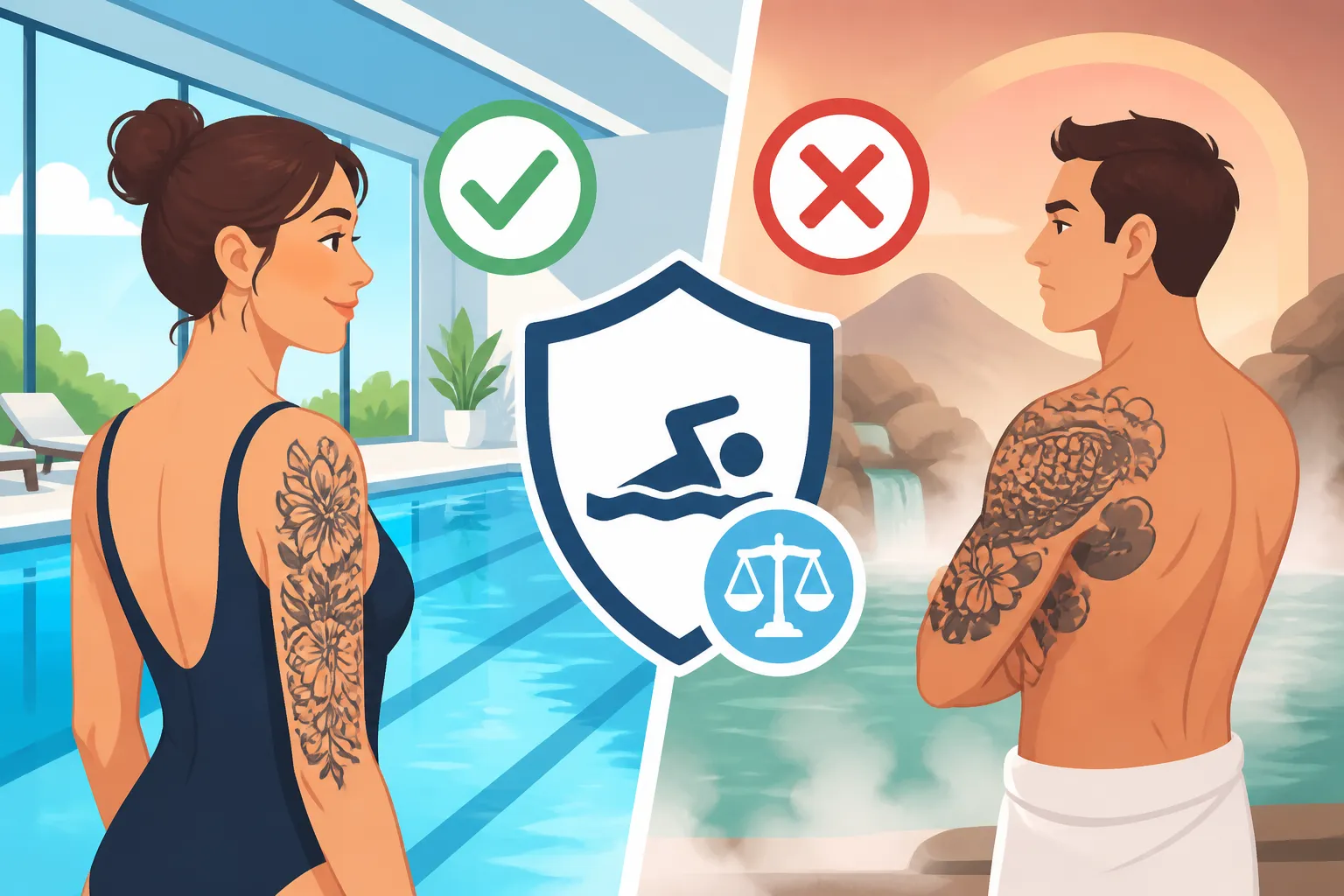
Despite this shift, the "wellness" culture in Austria is deeply rooted in a sense of purity and hygiene. Public swimming pools (Freibäder in summer and Hallenbäder in winter) and the sprawling thermal complexes known as Thermen are considered communal sanctuaries. Because of this, the rules you encounter aren't usually about the aesthetics of your tattoos, but rather about the legalities and the physical state of your skin.
You will find that the Everyday Etiquette: Garbage Sorting, Noise, and Ruhezeit that governs apartment living also extends to the pool. There is a high level of social monitoring, but it is rarely focused on your ink unless it crosses a specific legal or hygienic line. Most Austrians in a spa setting are focused on their own relaxation, and as long as you follow the house rules regarding showering and silence, your tattoos will likely be a non-issue.
Public vs. Private Facilities
The rules can vary slightly depending on whether you are visiting a municipal pool run by the city or a high-end, privately owned thermal resort. Municipal pools are generally the most relaxed. You will see people from all walks of life, and the staff is primarily concerned with safety and basic hygiene. In these settings, you could have a full bodysuit, and as long as you aren't breaking the peace, no one will blink an eye.
Private Thermen, however, often market themselves as luxury retreats. While they do not have "no tattoo" policies—which would be a death knell for business in 2026—they do maintain a "prestige" atmosphere. In these locations, the only time tattoos might draw attention is if they are combined with loud or disruptive behavior. If you are staying at a spa hotel, you might want to check the Vienna Healthcare Guide: Top Expat Clinics and Hospitals if you happen to experience any skin irritation from the high mineral content of the water on your tattooed areas.
The Generational Divide
It is worth noting that you might still encounter a lingering look from a "Pensionist" (senior citizen) in the sauna. In the traditional Austrian mindset, particularly in more conservative rural areas, tattoos were historically associated with sailors or the incarcerated. This stigma has faded significantly, but it hasn't vanished entirely. If you find yourself in a small-town pool in Tyrol or Lower Austria, you are more likely to be a curiosity than a persona non grata. The key is to remain polite; Culture Shock: Adapting to Direct Austrian Communication is a real thing, and often a direct look from a local is just curiosity rather than judgment.
Specific Rules for Public Swimming Pools
When you enter a municipal Hallenbad or Freibad, you are entering a space governed by the "Badeordnung" (house rules). These are usually posted near the entrance and are legally binding. While these documents are lengthy and written in dense German, they almost never mention tattoos specifically. Instead, they focus on "Hautveränderungen" (skin changes) and "Anstand" (decency).
Hygiene Regulations and Fresh Ink
The most important rule regarding tattoos in any Austrian pool is the state of the tattoo itself. Hygiene is the absolute priority for the "Bademeister" (the pool supervisor, who often has a near-mythical level of authority). If your tattoo is still in the healing phase—meaning it is scabbing, peeling, or has open skin—you are technically in violation of hygiene regulations.
Pool water in Austria is strictly monitored, but open wounds (which a fresh tattoo is) are a risk both to you and the water quality. If a Bademeister sees you entering the water with a clearly fresh, shiny, or peeling tattoo, they have the right to ask you to leave the water. This isn't a "tattoo policy" but a health policy. If you have recently had work done, it is best to consult with your artist or look into Finding Medical Care in Austria: Clinics, Hospitals, and Referrals if you aren't sure if your skin is fully closed.
Symbolism and Legal Restrictions
There is one area where Austria has zero tolerance: the "Verbotsgesetz" (Prohibition Act). Austria has very strict laws against the display of National Socialist (Nazi) symbols or any imagery that glorifies the Third Reich. If you have tattoos that include such symbols, not only will you be banned from the facility, but the staff is legally obligated to call the police. This is not a matter of "spa policy" but federal law.
For the average expat, this isn't an issue, but it is important to be aware that symbols which might be interpreted as extremist (including certain runes or numbers associated with hate groups) will be scrutinized heavily. If your ink is purely artistic, tribal, traditional, or illustrative, you are perfectly safe. If you have questions about what is considered offensive in the local context, engaging with Community Integration: Making Friends and Adapting can help you understand the local sensitivities.
Navigating the Austrian Therme and Sauna Culture
The Therme is the pinnacle of Austrian relaxation, and the rules here are a bit more nuanced, especially once you enter the "Sauna World." In most Austrian Thermen, the sauna area is a "textile-free" zone, meaning nudity is mandatory. This can be an intimidating prospect for anyone, but even more so if you feel your tattoos make you stand out.
The Naked Truth: Tattoos in the Nudity Zone
In the sauna, everyone is equal, and everyone is naked. Because you aren't wearing a swimsuit to cover parts of your work, your tattoos will be fully visible. The good news? The sauna culture in Austria is incredibly body-positive and non-judgmental. People of all ages, shapes, and sizes are there, and Nudity Rules in Austrian Saunas and Wellness Centers are followed strictly to ensure a professional and relaxed environment.
Tattoos are treated as just another part of the body. You will see plenty of other people with ink, ranging from small hidden pieces to full back pieces. The only breach of etiquette would be to stare at someone else’s tattoos. If you are worried about the heat affecting your ink, don't be—once a tattoo is healed, the sauna is perfectly safe, though you should always stay hydrated. For families, ensuring your children are aware of the environment is key; you might want to look into Pediatricians (Kinderarzt): Required Vaccines and Checkups for general health advice before a big spa weekend.
High-End Spas and Aesthetic Expectations
In some of the more "boutique" spas, there is a certain aesthetic expectation. However, this rarely translates to a ban on tattoos. Instead, it might manifest as a request to keep certain imagery covered in communal dining areas (by wearing a bathrobe). Most Thermen provide bathrobes as part of their entry fee or for a small rental price.
If you are planning a trip to a specific city, such as a Salzburg Healthcare Guide: Clinics and English Support or a Linz Healthcare Guide: Hospitals and Emergency Contacts, you can usually check the specific "AGB" (Terms and Conditions) of the local Therme online. Use a browser translator to look for words like "Tätowierung" or "Erscheinungsbild," but 99% of the time, you will find no restrictions.
Practical Tips for Tattooed Expats and Tourists
To ensure your experience is as smooth as possible, there are a few practical steps you can take. These are based on years of navigating these waters and seeing what actually triggers a reaction from staff or locals.
| Facility Type | Tattoo Acceptance Level | Key Rule to Remember |
|---|---|---|
| Municipal Hallenbad | High | Must be fully healed; no political symbols. |
| Summer Freibad | Very High | Use waterproof sunscreen to protect your ink. |
| Luxury Therme | High | Maintain silence and decorum; use a robe in cafes. |
| Sauna World | High | Nudity is the norm; ink is viewed as part of the skin. |
| Hotel Spas | Medium/High | Check if there is a specific dress code for the pool bar. |
Best Practices for New Tattoos
If you have just moved and decided to celebrate with some new ink from one of Austria's world-class artists, wait at least four to six weeks before hitting the Therme. The combination of chlorine, high mineral content in thermal water, and intense heat in the sauna can lead to infections or fading of the pigment.
If you do go to a pool with a semi-fresh tattoo, do not try to cover it with a standard bandage. These often fall off in the water, which is a major faux pas in the eyes of the Bademeister. If you absolutely must protect a sensitive area, use a pharmacy-grade waterproof medical film, but be prepared for a staff member to ask you what it is covering. If you need advice on skin care, Pharmacies (Apotheken) and Medication Rules in Austria will help you find the right ointments.
How to Handle Unwanted Attention
In the rare event that someone makes a comment or stares excessively, the best approach is the "Austrian approach": polite but direct. A simple "Guten Tag" or a nod is usually enough to break the stare. If a staff member approaches you, it is almost certainly about something else—perhaps you forgot to shower before entering the pool or are wearing the wrong type of footwear.
If you genuinely feel you are being discriminated against because of your tattoos, you can ask for the "Betriebsleiter" (manager). However, in modern Austria, this is extremely unlikely. The country is much more concerned with Mandatory Coverage: Who Must Register for Public Health Insurance and other administrative hurdles than the art on your skin.
Summary of Expectations and Final Thoughts
Ultimately, Austria is a very safe and welcoming place for tattooed individuals. The "rules" you might fear are largely myths or relics of a bygone era. As long as your ink is healed, legal, and you follow the standard Living in Austria 2027: The Expat Starter Guide protocols for public behavior, you will have a fantastic time.
Whether you are sliding down the flumes at Lutzmannsburg or sweating it out in a mountain sauna in Bad Gastein, your tattoos are just another part of your story. The Bademeister is there to keep you safe, the water is there to heal you, and the culture is far more interested in whether you showered properly than whether you have a sleeve. So pack your towel, grab your flip-flops, and enjoy the world-class wellness that Austria has to offer.
If you find yourself needing a doctor for any reason during your travels, remember that Finding English-Speaking Doctors in Austria's Major Cities is easier than you think, even if you are in a more remote spa town. Enjoy the soak!
Disclaimer
The information provided in this guide is for informational purposes only and does not constitute legal advice. While tattoo acceptance is high in Austria, individual private establishments reserve the right to set their own house rules (Hausrecht). Always check the specific regulations of a facility before visiting, especially regarding fresh tattoos and hygiene standards. Compliance with the Austrian Verbotsgesetz is mandatory and carries criminal penalties.