Move-in Inspections (Übergabeprotokoll): Documenting Damage
You finally found an apartment in Vienna, but if you do not document that tiny scratch on the parquet floor today, it could cost you five hundred euros from your deposit in three years. I spent my first move-in day in Austria frantically googling German plumbing terms while a landlord hovered over me, and I do not want you to feel that same panic. This guide ensures your move-in inspection is watertight.
Understanding the Übergabeprotokoll in the Austrian Legal Context
In Austria, the move-in inspection, known as the Übergabeprotokoll, is the single most important document you will sign aside from the lease itself. It is a formal record of the apartment's condition at the exact moment the keys are handed over. While the Mietrechtsgesetz (MRG) provides a robust framework for tenant rights, the burden of proof often falls on the tenant to show that a defect existed before they moved in. Without a detailed protocol, the legal assumption is often that the property was handed over in "good condition."
Many expats skip the details because they are overwhelmed by the move or feel pressured by a busy Makler. However, in the Austrian rental market, precision is your best friend. The protocol serves as a baseline for the eventual move-out inspection. If you cannot prove that a cracked tile or a stained window sill was there on day one, the landlord has a legal path to deduct repair costs from your Kaution (security deposit).
Is the Protocol Legally Mandatory
Technically, Austrian law does not strictly mandate a written Übergabeprotokoll, but skipping it is a massive risk. Most standard contracts for Renting in Austria: MRG Laws, Leases, and Bestellerprinzip will include a clause stating the apartment is in good condition unless otherwise noted. By signing the protocol, you are effectively creating an amendment to that statement. It is a mutual agreement that protects both parties, but it primarily serves the tenant who is trying to protect their capital.
If a landlord suggests that a protocol is "not necessary" because they are "fair people," consider that a major red flag. In my decade here, I have learned that even the friendliest landlords become very detail-oriented when it comes time to return several thousand euros of deposit money. Insist on a written document that includes the date, the names of everyone present, and specific descriptions of every room.
How the Protocol Protects Your Kaution
Your security deposit, or Kaution, is typically equivalent to three months of rent. In Austria, this money must be held in a separate, interest-bearing account. When you move out, the landlord is entitled to use this money to fix damages that go beyond "normal wear and tear." The definition of normal wear and tear can be quite subjective, which is why the Übergabeprotokoll is so vital. It defines the starting line of the apartment's condition.
Detailed documentation prevents "double-dipping" by landlords who might try to charge multiple tenants for the same pre-existing scratch. When you are performing your Healthcare Checklist for Your First 30 Days in Austria or setting up your new life, don't let the administrative weight of the move-in process distract you from this financial safeguard. A well-executed protocol is essentially insurance for your deposit.
The Role of the MRG and Legal Nuances
The Mietrechtsgesetz (MRG) is the primary body of law governing rentals in Austria, and it distinguishes between Altbau (older buildings, usually pre-1945) and Neubau (newer constructions). In an Altbau, you might find more "character" defects like uneven floors or old window frames. The protocol needs to reflect these age-related quirks specifically. For example, if the windows do not close perfectly, that needs to be noted to avoid being charged for "broken" mechanisms later.
Understanding Rent Control (Altbau Richtwert): Calculating Fair Rent 2026 can also help you understand what level of maintenance you should expect. If you are paying a regulated rent, the landlord still has an obligation to provide a habitable space, and the Übergabeprotokoll is where you document any failures in that obligation, such as mold or non-functioning heating.
Preparing for Your Inspection Appointment
Preparation is everything when it comes to a successful move-in. You should never show up to an inspection empty-handed or in a rush. It is advisable to schedule the Übergabe during daylight hours. Trying to spot scuffs on walls or cracks in the ceiling using only a smartphone flashlight or dim evening light is a recipe for missed details. Give yourself at least 60 to 90 minutes for the walkthrough, depending on the size of the apartment.
You should also verify who will be representing the landlord. Sometimes it is the landlord themselves, but often it is a property manager (Hausverwaltung) or a real estate agent. Under the Bestellerprinzip 2026: Landlords Pay the Agent Fee rules, the agent is technically working for the landlord, but they are still responsible for the accuracy of the protocol. Do not let them rush you through the rooms; you have every right to take your time.
Essential Tools for a Thorough Inspection
Do not rely on the landlord to bring everything. You should bring a high-quality camera (your phone is fine, but ensure the lens is clean), a physical notepad or a tablet with a checklist, and a small electrical device like a phone charger to test the outlets. A marble or a small ball can also be useful for checking if the floors are significantly unlevel, which is common in older Viennese apartments.
I also recommend bringing a bright flashlight. Some areas, like the back of kitchen cabinets or the space under the sink, are notoriously dark and are prime spots for discovering water damage or pests. If you are moving into a furnished place, bring a copy of the inventory list to check off items as you go. This level of preparation shows the landlord that you are a serious and diligent tenant, which sets a professional tone for your residency.
Who Should Be Present
Ideally, every adult who is listed on the lease should be present for the inspection. This ensures everyone is aware of the apartment's condition and can spot different things. If you are moving as a couple or with roommates, one person can take photos while the other takes notes. If your German is still at a basic level, consider bringing a friend who is fluent or hiring a professional.
Language barriers are common, and you don't want to sign a document you don't fully understand. If you need to find someone to help, you can look into Medical Translation Services: Interpreters for Hospital Visits as many of these professionals also handle administrative translations. Having a witness is also beneficial if a dispute arises later regarding what was said during the walkthrough.
Timing and Environment
Schedule the inspection a few days before your actual move-in if possible. This gives you time to address any major issues, like a non-functioning stove or a leak, before your furniture arrives and blocks access. Ensure the apartment has been cleaned according to the contract. If the previous tenant left a mess, this must be noted in the protocol, as it may entitle you to a cleaning fee credit or at least ensure you aren't held to a "professional cleaning" standard when you leave.
Check if the electricity and gas are already turned on. You cannot properly test the appliances or the heating system if the utilities are off. If you are unsure how to handle this, refer to the guide on Utilities Setup: Electricity, Gas, Water, and Internet to ensure you are ready for the big day.
Room-by-Room Checklist: What to Look For
When you enter each room, start from the ceiling and work your way down to the floor. This systematic approach ensures you don't overlook anything. In Austria, many apartments are handed over "besenrein" (broom-clean), but you should look deeper than surface dust. Check for "Schimmel" (mold), especially in the corners of rooms or behind radiators. Mold is a common issue in Altbau vs Neubau: Differences in Rent, Charm, and Heating and can lead to health problems and legal battles.
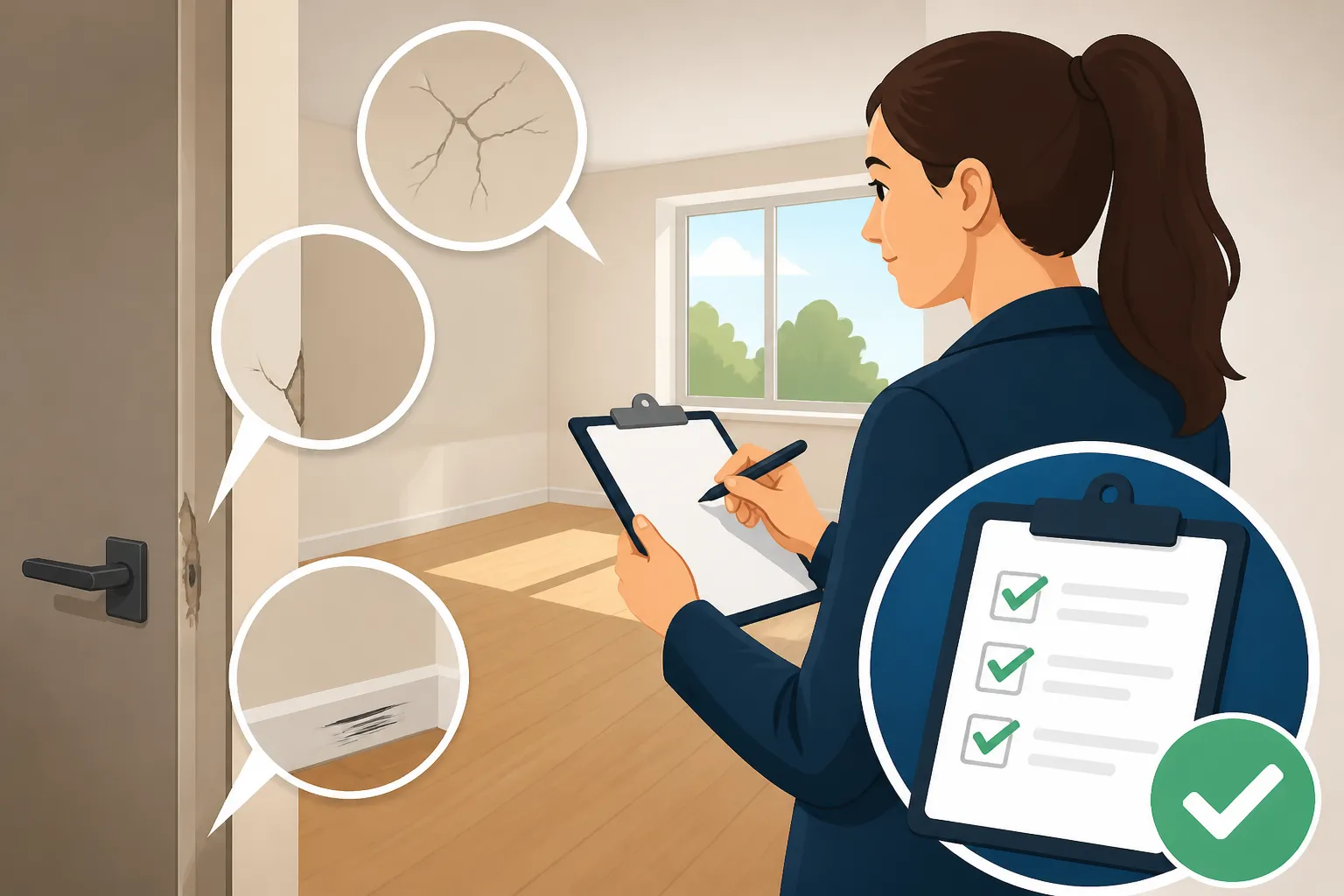
Documentation should be descriptive. Instead of writing "scratched floor," write "15cm scratch on parquet floor in the back left corner of the living room." Attach photos to the digital protocol or reference them clearly in the paper version. I cannot stress enough how much a clear photo with a date stamp is worth in a legal dispute.
Kitchen and Appliances
In Austria, it is common for apartments to be rented without a kitchen (the "leer" apartment). If yours comes with a kitchen, it is a significant asset that needs careful inspection. Open every cabinet and drawer. Look for signs of "Ungeziefer" (pests) like cockroaches or moths. Test every burner on the stove and ensure the oven heats up.
| Item | What to Check | Common Defect in Austria |
|---|---|---|
| Stove/Oven | All rings heat up, oven light works | Burnt-out elements, broken knobs |
| Refrigerator | Seals are tight, no ice buildup | Cracked plastic drawers, failing seals |
| Sink/Taps | Water pressure, no leaks under sink | Limescale buildup (Kalk), slow drainage |
| Cabinets | Hinges work, no grease buildup | Swollen wood from water damage |
| Dishwasher | Runs a cycle, no standing water | Clogged filters, broken spray arms |
If you find that the appliances are old or poorly maintained, document their brand and age if possible. This helps determine their "Zeitwert" (current value) if they break later. You might also want to check the Apotheken in Austria: Prescription Workflow and Night Shifts for cleaning supplies that are effective against the heavy limescale found in Austrian water.
Bathrooms and Plumbing
The bathroom is often where the most expensive damages hide. Flush the toilet and check for leaks at the base. Turn on the shower and the sink simultaneously to test water pressure. Look closely at the "Fugen" (grout and silicone seals). If the silicone is peeling or has black spots, it needs to be noted, as this can lead to water seeping into the walls, a repair cost you do not want to be responsible for.
Check the mirror and any cabinetry for "Spiegelfraß" (mirror rot) caused by humidity. If there is a washing machine connection, ensure it is not blocked. If you are unfamiliar with the plumbing standards here, you might find it helpful to look for Finding English-Speaking Plumbers and Electricians just in case you need a professional opinion during your first week.
Floors, Walls, and Windows
Austrian apartments often feature beautiful parquet or laminate floors. These are very sensitive to water and scratches from furniture. Walk across the floors to check for loose boards or significant creaking. For walls, look for "Dübellöcher" (drill holes) from the previous tenant. If the landlord expects the apartment to be painted when you leave, the current state of the paint must be documented—whether it is freshly painted, has scuff marks, or is a non-neutral color.
Windows in Austria are usually "Dreh-Kipp" (they can turn open or tilt from the top). Test both functions on every window. Check the seals for drafts, which is crucial for Winterizing Your Austrian Apartment Against Drafts. Broken window mechanisms are expensive to fix and are a common point of contention during move-outs.
Documenting Technical Installations and Utility Meters
The Übergabeprotokoll is not just about damage; it is also about data. You must record the exact readings of all utility meters. This ensures you only pay for the electricity, gas, and water that you actually use. In many Austrian buildings, the meters might be located in the hallway or the basement, so ask the landlord to show them to you.
Taking a clear, focused photo of the meter face is the best way to document this. Make sure the serial number of the meter is visible in the photo so it can be matched to your utility contract. This is a critical step before you go through The Meldezettel Process: Registering Your Address Legally and finalize your local registration.
Electricity and Gas Meters
Look for the "Zählernummer" (meter number) and the "Zählerstand" (meter reading). If there are multiple meters for different zones, record them all. For gas, which is common for heating in Vienna, the reading is usually in cubic meters. If you are moving into a building with District Heating (Fernwärme) vs Gas Heating Costs, you may have a heat meter on each radiator or a central one for the unit.
Double-check these numbers against the "Abmeldebestätigung" of the previous tenant if available. If there is a significant discrepancy, raise it immediately with the landlord. This will prevent you from being billed for the previous tenant's final weeks of heavy heating or cooling.
Heating Systems and Thermenwartung
If your apartment has an individual gas boiler (Kombitherme), check the service sticker on the side. In Austria, the tenant is responsible for the annual "Thermenwartung" (boiler maintenance), but the landlord must provide a boiler that is currently serviced and in working order. If the last service was more than a year ago, insist that the landlord has it serviced before you take over.
Documentation of the boiler's condition is vital. If the boiler fails because of a lack of maintenance by the previous tenant, you should not be the one to pay for the repair. For more on this, read about Gas Boiler Maintenance (Thermenwartung): Tenant Responsibility to understand the specific costs and schedules involved.
Keys and Security Systems
The protocol must list every key handed over to you. This includes house keys, apartment keys, mailbox keys, cellar keys, and any electronic fobs. In Austria, many apartment keys are part of a central "Sperranlage" (locking system), meaning they are high-security and very expensive to replace—often costing hundreds of euros if lost because the entire building's locks might need to be changed.
Test every key in its respective lock. If a key is bent or difficult to turn, note it. If you have an intercom system with a camera or a smart home setup, test these as well. Knowing you have a secure home is a great first step as you begin Making Friends in Austria: Expat Groups and Local Clubs and settling into your new neighborhood.
Common Pitfalls and How to Handle Disputes
Even with the best intentions, disputes can happen during the inspection. A landlord might disagree that a scuff is "damage" or might try to gloss over a non-working outlet. Stay firm but polite. Remember, you are the one who will be living there and the one whose money is on the line. If a landlord is being particularly difficult, do not be afraid to take extra photos and videos as independent evidence.
One common pitfall is the "hidden" damage—things you only notice after you have lived in the apartment for a few days, like a dishwasher that leaks mid-cycle or a heater that makes a strange noise. Most Austrian contracts allow a short window (usually 3 to 14 days) to report "verdeckte Mängel" (hidden defects) that were not visible during the initial inspection.
When the Landlord Refuses to Sign
If the landlord or agent refuses to sign the protocol because you have listed too many damages, do not panic. Do not sign a "clean" version that you know is inaccurate. Instead, take your photos, write your own detailed list, and send it to the landlord via "Einschreiben" (registered mail) immediately after the meeting. This creates a legal paper trail that you attempted to document the condition.
You can also seek help from the Arbeiterkammer (AK) or the Mietervereinigung (Tenants' Association). These organizations provide excellent legal support for renters in Austria. They can review your protocol and advise if the landlord's behavior is infringing on your rights under the MRG.
Discovering Damage After the Fact
If you find something broken on day three, take a photo immediately and email the landlord. Reference the fact that it was not possible to see this during the walkthrough. For example, you might only notice a crack in the bathtub once it is filled with water. As long as you report it promptly, it is generally accepted as part of the move-in condition.
Keep all communication in writing. If you have a phone call, follow it up with an email saying, "As discussed on the phone, I found a leak under the sink…" This is a standard practice in Austrian Work Culture: 14 Salaries, Meetings, and Etiquette and it applies to your personal life as well. Documentation is the cultural currency of Austria.
Language Barriers and Professional Help
If your German is not yet at a level where you can discuss "Feuchtigkeitsschäden" (moisture damage) or "Verschleißerscheinungen" (signs of wear), do not wing it. Using a translation app is a start, but nuance is lost. If you are moving for a high-level job, your relocation agent should handle this. If you are on your own, consider hiring a professional "Immobiliengutachter" (property appraiser) for an hour if the apartment is high-value.
You can also check Finding English-Speaking Doctors in Austria's Major Cities if the stress of the move is getting to you—mental health is just as important as your housing! Seriously though, having a fluent speaker with you can prevent the landlord from "overlooking" details that they assume an expat wouldn't know to check.
Transitioning from Inspection to Living
Once the protocol is signed and the keys are in your hand, you have officially started your journey as a resident. But the work isn't quite over. You need to keep the signed Übergabeprotokoll in a very safe place—both a physical copy and a digital scan. I recommend uploading the photos and the document to a cloud drive immediately so you can't lose them over the next few years.
This document will be your "Get Out of Jail Free" card when you eventually decide to move on. Whether you are moving to a different district or leaving the country, the move-out inspection (Rückgabe) will be a mirror of this move-in process. Having your original protocol ready will make the return of your Kaution much smoother.
Registering Your Meldezettel
Now that you have the keys and the lease, you have three days to register your address. This is a mandatory step in Austria. You will take your signed "Meldezettel" form (which the landlord must also sign) to the "Meldeservice" at a district office. This registration is required for everything from opening a bank account to getting your Austrian e-card: Registration, Photo Rules, and Usage Guide.
If you are in Vienna, you can often book an appointment online, but many offices also take walk-ins for registrations. For a step-by-step on this, see The Meldezettel Process: Registration, Deadlines, and Forms. Do not delay this, as fines for late registration can be steep.
Finalizing Utility Transfers
With your meter readings from the protocol, you can now officially sign up with providers for electricity and gas. You are free to choose your provider in Austria; you do not have to stay with the one the previous tenant used. Use a comparison site to find the best rates, and make sure to use your exact move-in readings so your first bill is accurate.
This is also the time to set up your internet. Whether you choose Home Internet Options: Magenta, A1, and 5G Routers or a smaller local provider, they will often ask for your "Stiege" (staircase) and "Tür" (door) number, which you can find on your protocol or lease. Welcome to your new home in Austria—take a deep breath, you've handled the hardest part!
Disclaimer
The information provided in this guide is for informational purposes only and does not constitute legal advice. While every effort has been made to ensure the accuracy of the details regarding Austrian rental laws and move-in procedures as of 2026, individual cases may vary. We strongly recommend consulting with a legal professional, the Mietervereinigung, or the Arbeiterkammer for specific advice concerning your rental contract or disputes with a landlord. Use of the information in this article is at the reader's own risk.