The Pickerl (Car Inspection): Frequency and Cost
Few things in Austria trigger as much anxiety for a new expat as that small, colored sticker on the top right of your car’s windshield. I remember my first year in Vienna, staring at the numbers on my sticker and realizing I had no idea if they meant the start or the end of my "safe" window. This guide demystifies the §57a inspection, known locally as the Pickerl, so you stay legal and safe.
What is the Pickerl? Understanding the §57a Inspection
The Pickerl is much more than a simple registration tag; it is a mandatory technical inspection designed to ensure every vehicle on the Austrian road is safe for the driver and the environment. In official terms, this is the §57a KFG inspection. If you are caught driving without a valid one, the fines can be staggering, often reaching several thousand euros if the vehicle is deemed a safety hazard. Beyond the fines, your insurance may refuse to cover you in the event of an accident if your inspection is out of date.
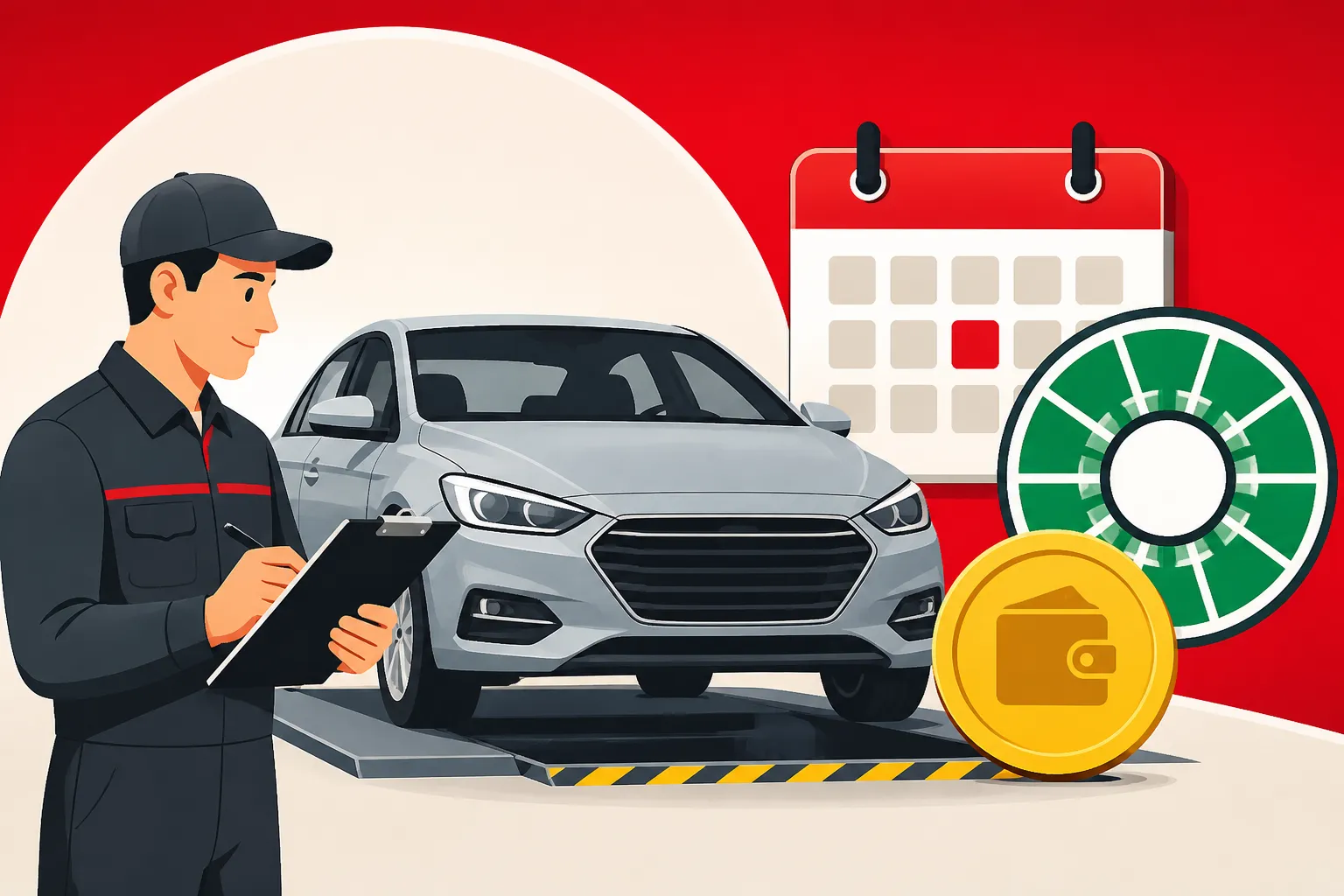
When you look at the sticker, you will notice it has a hole punched in a specific month and year. This indicates when your next inspection is due. For most passenger cars, the sticker is white. However, you might see green stickers on older vehicles or specialized transport. The digital integration of these records is tighter than ever, and the police can check your status instantly via your license plate. This is why keeping your vehicle in top shape is not just a suggestion—it is a survival skill for living in Austria.
I’ve spent many mornings in the industrial zones of the 23rd district, waiting for a mechanic to tell me if my brakes would pass. The stress is real because the Austrian standards are notoriously high. Unlike some countries where a "handshake" might get you through, the Austrian system is rigorous and digitized. If your car fails, the deficiency is logged, and you have a limited window to fix it and return for a re-test. This transparency is part of the broader commitment to safety that you will also see in the Mandatory winter tires rule: November 1 to April 15.
The Frequency of Inspections: The 3-2-1 Rule
Austria uses a specific rhythm for new cars often referred to as the 3-2-1 rule. This is a blessing for those who buy brand-new vehicles from a dealership. Your first inspection is required three years after the initial registration. The second inspection happens two years after that, and from the sixth year onwards, the car must be inspected every single year. If you are buying a used car, you need to be extremely diligent about checking the previous owner's records to see exactly where you fall in this cycle.
For expats who decide that the cost and bureaucracy of car ownership are too high, there are always alternatives. You might find that Buying a car vs using car-sharing (ShareNow, Miles) is a much more flexible way to navigate cities like Vienna or Graz without worrying about the annual Pickerl deadline. However, if you live in the countryside or need a vehicle for mountain trips, understanding this 3-2-1 rhythm is essential for your long-term budgeting.
There is also a "Grace Period" known as the Toleranzfrist. In Austria, you are generally allowed to have your car inspected one month before the month punched on the sticker and up to four months after. However, I strongly advise against waiting until that fourth month. If you plan on driving abroad—for instance, a weekend trip to Germany or Italy—this grace period is often not recognized by foreign police. You could find yourself facing a heavy fine at the border simply because you relied on an Austrian internal rule that doesn't apply elsewhere.
Where to Get Your Pickerl: Clubs vs. Independent Workshops
One of the first things you should do when you move here is join a motoring club. The two giants are ÖAMTC and ARBÖ. Think of them as the Austrian version of AAA or the AA. They are non-profit clubs that offer the §57a inspection at a very fair, transparent price. For many of us, these clubs are the "gold standard" because they don't have a financial incentive to find "fake" problems with your car; they don't do major repairs themselves, so they just tell you what's actually wrong.
If you prefer a more personal touch, almost every authorized car dealership and independent mechanic (Werkstatt) in Austria is certified to perform the Pickerl. Many expats prefer this because if the car fails for something small, like a burnt-out bulb or a worn wiper blade, the mechanic can usually fix it on the spot and give you the sticker immediately. If you go to a club and fail, you have to drive to a mechanic, get the fix, and then return to the club for a re-check.
When choosing a location, consider your language skills. In larger cities, ÖAMTC centers usually have at least one person who speaks decent English. If you are still Learning German for Life and Career Success in Austria, having a technical report explained to you in English is worth its weight in gold. I remember struggling to understand what "Bremsschläuche" meant during my first inspection in Linz; now, I know that checking your brake hoses is a standard part of the process.
The Cost of the Inspection in 2026
The cost of the Pickerl is split into two parts: the labor fee for the inspection itself and the cost of the physical sticker. As of 2026, the sticker itself is quite cheap, usually under 5 euros. The labor fee, however, varies depending on where you go and whether you are a member of a club. Members of ÖAMTC or ARBÖ can expect to pay between 45 and 65 euros. If you are not a member and go to a high-end dealership (like BMW or Mercedes), the price can easily climb to 100 euros or more just for the inspection.
It is important to remember that the inspection fee does not include repairs. This is where the real "cost" of the Pickerl lies. If your car has a "heavy defect" (Schwerer Mangel), you will not get your sticker until it is fixed. This is why many people combine their annual service with the Pickerl inspection. If you are trying to manage your Cost of Living Benchmarks for Singles, Couples, and Families, I recommend setting aside a "car fund" of at least 300-500 euros every year to cover the inspection and the inevitable minor repairs that come with it.
Below is a comparative look at what you can expect in terms of pricing and service levels:
| Provider Type | Estimated Cost (2026) | Pros | Cons |
|---|---|---|---|
| ÖAMTC / ARBÖ | €45 – €65 | Objective, no sales pressure, reliable | Membership fee required (~€90/year) |
| Independent Mechanic | €60 – €90 | Can fix minor issues immediately | Potential for "upselling" repairs |
| Brand Dealership | €90 – €130 | Expert knowledge of your specific model | Most expensive option |
| Discount Chains | €50 – €80 | Fast, often easy to book online | Varying quality of service |
Documentation and the Inspection Process
When you show up for your appointment, you must have your vehicle registration document (Zulassungsschein) with you. Without this, the technician cannot legally start the test. Many of us have switched to using ID Austria and E-Government Tools for Foreign Residents to manage our documents, but for the Pickerl, a physical or a very clear digital version of the registration is mandatory. If you have a modified car—perhaps you’ve added non-standard rims or a spoiler—you must also bring the "Typenschein" or the approval documents for those parts.
The inspection itself usually takes about 45 to 60 minutes. The technician will check the "big four": Safety, Braking, Steering, and Environment (emissions). They will put your car on a lift to check for rust on the chassis, which is a major issue in Austria due to the heavy salt used on the roads in winter. They will also test the alignment of your headlights and the health of your battery. If everything passes, you receive the "Prüfbericht"—a detailed paper report that you should keep in your glove box.
If you fail, don't panic. You will receive a report with "Mängel" (defects) categorized as minor, heavy, or "danger in delay." Minor defects allow you to get the sticker, but you are legally obligated to fix them soon. Heavy defects mean no sticker until a repair and a re-test (usually at a lower cost if done within a few weeks). "Danger in delay" means you aren't even allowed to drive the car out of the shop. This is why keeping an eye on your vehicle throughout the year is better than waiting for the Pickerl to find a disaster.
Bringing a Foreign Car to Austria
If you are moving to Austria and bringing your car with you, the Pickerl process is a bit more complicated. You cannot simply use your previous country's inspection. Once you complete The Meldezettel Process: Registering Your Address Legally, you have a limited time to register your car in Austria. This involves paying the NoVA (a fuel consumption tax) and getting an initial §57a inspection to prove the car meets Austrian standards.
Sometimes, cars from outside the EU need a "full individual approval" (Einzelgenehmigung) before they can even get a Pickerl. This can be expensive and frustrating. If you are still in the planning stages of your move, check if Converting a foreign driver's license in Austria and selling your car back home might be easier than importing a vehicle that might not pass the strict emissions tests here. Many expats find that the high quality of Public Transport Passes: Weekly, Monthly, and Annual Options or the country-wide Is the Klimaticket Worth It? Cost and Benefit Analysis makes owning a car in the city unnecessary.
If you do bring your car, make sure you have the full service history. Having the original COC (Certificate of Conformity) paper will make the initial Pickerl and registration much smoother. Austrian inspectors are very particular about tire sizes and headlight aim, so having a pre-inspection at a local shop before the "real" one can save you from a "failed" status on your permanent record.
Staying Legal: Tolls and Other Requirements
The Pickerl proves your car is safe, but it doesn't mean you're fully legal to drive. Once you have that sticker, you also need to ensure you have paid the appropriate road taxes. For anyone using the motorways, this means Buying the Autobahn Vignette Toll Sticker Digitally 2026. The police often run checks where they look for the Pickerl, the Vignette, and your winter tires all at once. Missing any one of these can result in a fine that ruins your month.
Furthermore, remember that the Pickerl is tied to your license plate and your insurance. If you change your insurance provider or move to a different district, you might need to get a new physical sticker even if your inspection hasn't expired, as the sticker contains the license plate number. This is a common "gotcha" for expats who move from Vienna to the surrounding Lower Austria area and forget that their plates (and thus their stickers) need updating.
Driving in the Alps is a joy, but the Austrian state takes the safety of its mountain roads very seriously. By staying on top of your Pickerl frequency and costs, you aren't just following a bureaucratic rule; you are ensuring that when you're driving down a 12% grade in Tyrol, your brakes will actually do their job. It’s a system built on trust and rigor—two things you’ll quickly learn define much of life in Austria.
Disclaimer
The information provided in this guide is for informational purposes only and does not constitute legal or professional advice. Requirements for vehicle inspections and associated costs in Austria are subject to change by government authorities. Always verify the latest regulations with official sources such as the Ministry of Climate Action, Environment, Energy, Mobility, Innovation and Technology (BMK) or authorized motoring clubs like ÖAMTC or ARBÖ.