Converting a Foreign Driver’s License in Austria
Navigating the Austrian bureaucracy often feels like a full-time job where nobody gave you the manual. I remember the frantic scramble to find a certified translator while the six-month clock on my old license was ticking down, feeling completely overwhelmed by the conflicting advice online. This guide breaks down the conversion process so you can stay mobile without the legal stress.
Understanding the Legal Timeframes for License Conversion
When you first arrive in Austria, your foreign driver's license is generally valid for a limited period. The most critical thing to understand is that the clock starts ticking the moment you establish your primary residence. This is legally defined by the date on your first registration document. If you haven't done this yet, you should prioritize The Meldezettel Process: Registering Your Address Legally as it is the foundation for almost every other administrative task in the country.
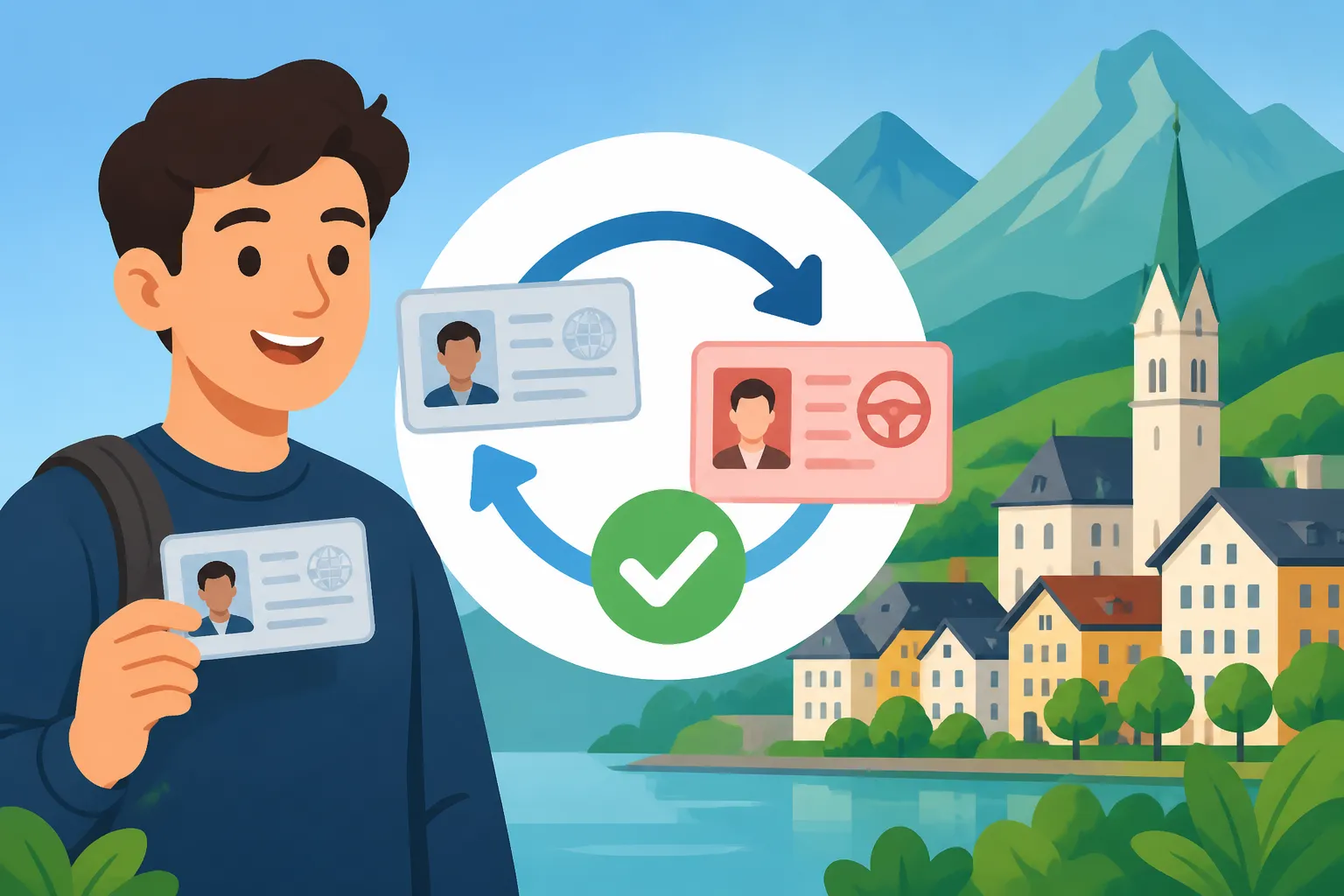
For most non-EU citizens, you are permitted to drive with your original foreign license for exactly six months from the date of your registration. During this window, you are expected to initiate the "Umschreibung" or conversion process. It is a common mistake to wait until the fifth month to start; however, the administrative gears in Austria move at their own pace, and a delay could leave you unable to drive to work or the supermarket while you wait for your new plastic card to arrive.
If you are moving from another EU or EEA member state, the rules are significantly more relaxed. Your license is generally recognized until its expiration date. However, many expats choose to convert their EU license to an Austrian one anyway to simplify things like Personal Liability Insurance (Privathaftpflicht): A Must-Have or to have a local form of photo ID that is universally recognized by Austrian authorities and banks.
The Step-by-Step Process for Non-EU License Conversion
If you are a "Third-Country National," meaning you come from a country outside the EU/EEA, the process is more rigorous. The first step is identifying which authority handles your application. In Vienna, this is the Verkehrsamt (Traffic Office) located in the 3rd district. If you live outside the capital, you will need to visit your local Bezirkshauptmannschaft (BH) or the Magistrate in cities like Graz or Linz.
The document gathering phase is where most people feel the "bureaucracy burn." You cannot simply show up with your license and a smile. You will need your passport, your current Meldezettel, a recent passport-sized photo that meets strict EU biometric standards, and your original foreign license. Most importantly, if your license is not in German or does not follow a specific international format, you must provide a translation. Ensure you are Certified Translations of Documents: What the Rules Demand compliant, as the Verkehrsamt will reject translations from non-certified sources or family members.
One of the more unique requirements in Austria is the mandatory medical examination. This isn't a deep dive into your medical history but a focused check on your eyesight, hearing, and general physical mobility. You must visit a specially certified doctor (Sächverständiger Arzt). Keep in mind that this doctor cannot be your regular family physician. This is a separate administrative check designed to ensure you aren't a liability on the Autobahn. It's much like the Preventive Care: Gesundenuntersuchung and Routine Checkups but strictly tailored for driving safety.
| Expense Item | Estimated Cost (2026) | Notes |
|---|---|---|
| Administrative Fee | €60.50 | Standard fee for the license card |
| Medical Examination | €35.00 – €50.00 | Paid directly to the certified doctor |
| Certified Translation | €40.00 – €80.00 | Varies by language and translator |
| Biometric Photo | €10.00 – €15.00 | Must be recent (last 6 months) |
| Driving Test (if required) | €150.00+ | Includes school fees and examiner fees |
Navigating the Practical Driving Test and Theory Requirements
Whether you need to take a driving test depends entirely on which country issued your original license. Austria has "reciprocity agreements" with several nations, including Australia, Canada, Israel, Japan, South Korea, and parts of the USA. If your country is on this list, you generally skip the tests and proceed straight to the document exchange. You simply hand over your old license (which is sent back to your home country) and receive a temporary paper license until your Austrian one arrives in the mail.
However, if your country does not have a reciprocity agreement—which is the case for many expats from developing nations or specific US states—you will be required to take a practical driving test. The good news is that you usually don't have to retake the full theory exam or the mandatory first-aid course if you already hold a valid foreign license. But do not underestimate the practical test. Austrian examiners are notoriously strict about "Rechts vor Links" (prioritizing traffic coming from the right) and the "Schulterblick" (the over-the-shoulder blind spot check).
Seasoned drivers with twenty years of experience can fail the Austrian practical test because they drove with one hand on the wheel or forgot to check their mirrors every ten seconds. It is highly recommended to book 2 or 3 "refreshment lessons" at a local Fahrschule (driving school). They will take you on the actual test routes and point out the "traps" like hidden stop signs or 30km/h zones that end abruptly. This small investment can save you from the lengthy MA 35 Application Timeline: From Submission to Approval style delays that occur if you have to re-book a failed exam.
Costs Timelines and Administrative Fees
The financial aspect of converting a license is relatively straightforward, but the hidden costs of "readiness" can add up. The basic administrative fee for the license itself is around €60, but when you factor in the medical exam, the translation, and the photos, you are looking at a total closer to €150 to €200. If you are required to take the practical test, the costs can easily climb above €400 once you pay the driving school for the use of their car and the examiner’s fee.
Timing is the next hurdle. Once you submit your application at the Verkehrsamt or BH, the background checks begin. The authorities will verify the authenticity of your foreign license with the issuing country. Depending on how communicative your home country’s DMV is, this can take anywhere from two weeks to three months. During this time, you can usually keep your foreign license to drive, provided you are still within that initial six-month grace period.
Once approved, you will be asked to surrender your foreign license. Austria does not allow residents to hold two different driver's licenses simultaneously. Your foreign license will be stored by the Austrian authorities or returned to the issuing body abroad. In exchange, you get a "Vorläufiger Führerschein" (temporary paper license). This paper is valid for four weeks and only within Austria. Your permanent, credit-card-sized license will arrive at your registered address via the post within about 5 to 10 working days.
Driving in Austria Beyond the License
Having the plastic card in your wallet is only half the battle; the actual "driving" culture in Austria has its own set of rigid rules. For instance, the safety equipment you are required to carry in your car is non-negotiable. You must have a first-aid kit (unopened and within its expiry date), a warning triangle, and a high-visibility reflective vest for every passenger in the vehicle. If you are preparing your vehicle, consider Building a Standard First Aid Kit for an Austrian Home principles to ensure you aren't caught off guard during a police check.
Then there is the matter of the seasons. Austria takes winter driving very seriously. From November 1 to April 15, your car must be equipped with winter tires if weather conditions are "wintery" (snow, slush, or ice). In practice, almost every resident swaps their tires on November 1st regardless of the sun. Failing to follow the Mandatory Winter Tires Rule: November 1 to April 15 can result in massive fines and, more importantly, your insurance company may refuse to cover you in the event of an accident during these months.
If you plan on using the highway network, you also need a "Vignette." This is a toll sticker that allows you to use the Autobahns and S-roads. While you can still buy the physical sticker at gas stations, most expats find it easier to buy the digital version. Just be aware that the digital vignette has an 18-day waiting period for "consumer protection" reasons unless you buy it as a business. For the latest updates, check out how to go about Buying the Autobahn Vignette Toll Sticker Digitally 2026 to avoid unnecessary fines.
Managing Local Transportation Without a Car
While having a car is great for trips to the Alps or IKEA, many expats living in major cities eventually realize that a personal vehicle can be more of a burden than a benefit. Parking in Vienna, for example, is expensive and strictly regulated by district-wide short-term parking zones. If you are struggling with the license conversion process, remember that Austria has one of the best public transport networks in the world.
The "Klimaticket" has been a game-changer for international residents. For one fixed annual price, you get unlimited access to almost all public transport across the entire country, including regional trains, city trams, and buses. Before you commit thousands of Euros to a car and the conversion of your license, it is worth doing a Is the Klimaticket Worth It? Cost and Benefit Analysis to see if you can save money and stress by sticking to the rails.
For those times when you absolutely need a car—like moving furniture or a weekend getaway to a remote cabin—car-sharing is a fantastic middle ground. Services like ShareNow and Miles are ubiquitous in cities. These platforms allow you to drive without worrying about maintenance, insurance, or the annual "Pickerl" (safety inspection). You can find more details on Buying a Car vs Using Car-sharing (ShareNow, Miles) to help decide which lifestyle fits your specific needs in Austria.
Practical Tips for the Day of Your Appointment
When your appointment date finally arrives, there are a few "pro-tips" that can make the difference between a successful application and a wasted afternoon. First, arrive at least 15 minutes early. Punctuality is a virtue in Austria, and being late is often seen as a sign of disrespect toward the official's time. Second, bring cash. While many offices are moving toward card payments, some smaller BH offices or the doctors performing the medical exams still prefer or exclusively accept cash.
Language can also be a barrier. While many younger officials speak excellent English, the "official" language of the administration is German. If your German is still at the A1 level, consider bringing a friend who can help translate. It shows effort and ensures that no details about your application are lost in translation. This is especially true if there are complications with your foreign license's categories (e.g., if you are trying to convert a motorcycle or truck license alongside your standard B-category license).
Finally, keep a folder with copies of everything. If the authorities lose a document or claim you never submitted it, having a dated copy can save you weeks of back-and-forth. Dealing with the Verkehrsamt is much like dealing with any other major office; patience and preparation are your best tools. Once you have that Austrian license in your hand, you'll feel a significant weight lifted off your shoulders, marking another major milestone in your integration journey.
Disclaimer
This guide is provided for informational purposes only and does not constitute legal advice. Driving laws and license conversion requirements in Austria are subject to change, and specific rules may apply based on your individual circumstances or country of origin. Always verify current regulations with the official Austrian authorities, such as the Verkehrsamt or your local Bezirkshauptmannschaft, before making financial or legal decisions.