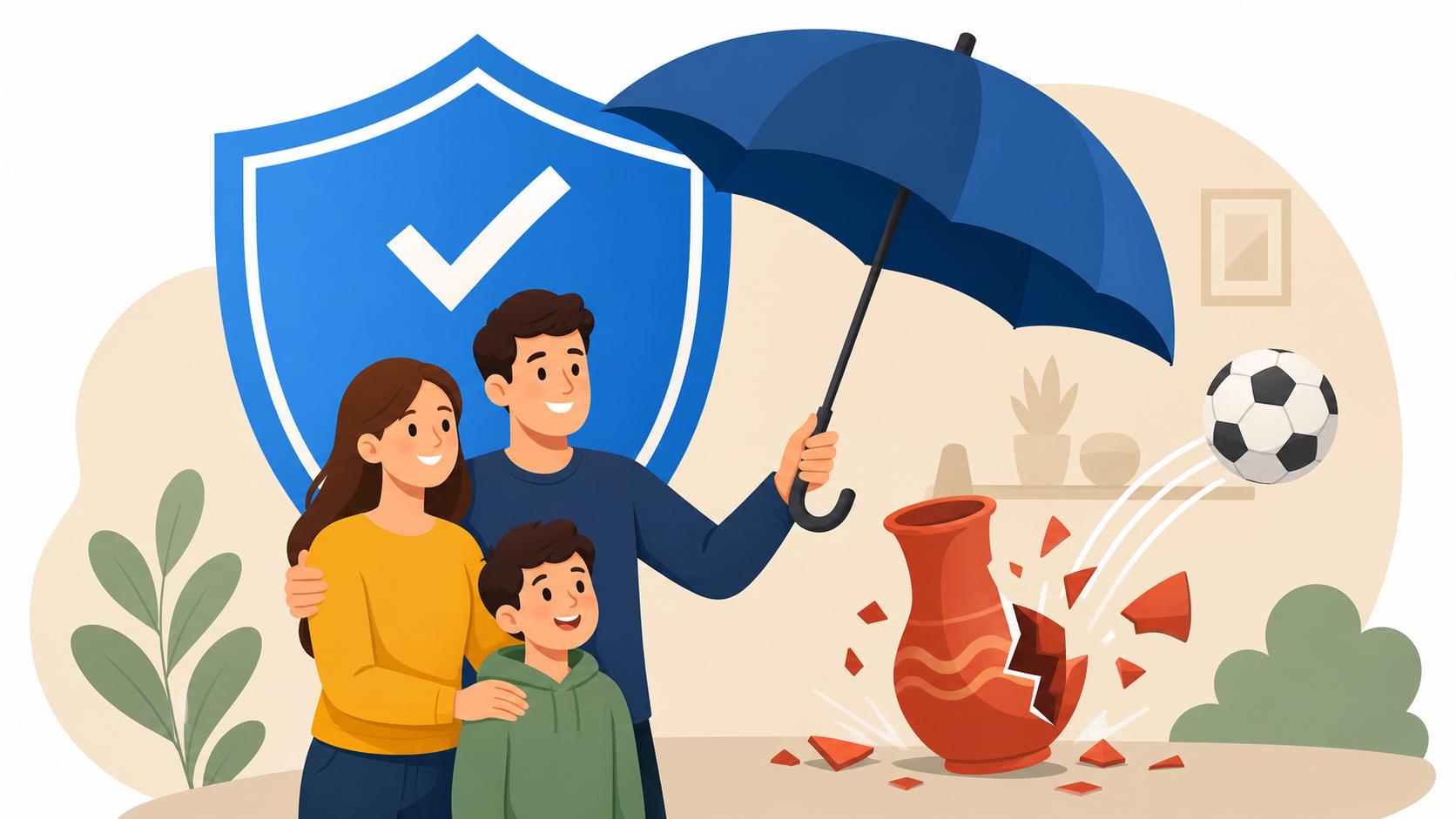
Personal Liability Insurance (Privathaftpflicht): A Must-Have
Imagine walking through a crowded Christmas market in Vienna, accidentally bumping into a stranger, and watching their brand-new smartphone shatter on the cobblestones. My first year in Salzburg, I lived in constant fear of these small accidents turning into financial ruins because, in Austria, you are legally responsible for damages with your entire current and future assets. This guide explains why Personal Liability Insurance, or Privathaftpflicht, is the most critical safety net for every expat settling into Austrian life.
What is Privathaftpflicht and Why Do Austrians Obsess Over It
In many countries, personal liability insurance is an afterthought, something tucked away in a larger homeowner's policy that you rarely think about. In Austria, however, it is a cultural and legal cornerstone. The concept of "Haftung" (liability) is taken very seriously here. Under the Austrian Civil Code (ABGB), if you cause damage to a third party—whether it is physical injury or property damage—you are liable for the costs. This isn't just limited to what you have in your bank account today; it can extend to your future earnings and even your pension if the damages are severe enough.
I remember sitting in a local cafe when a friend explained that almost 90% of Austrian households carry this insurance. It isn't just about being "insured"; it’s about the peace of mind that a simple mistake won't haunt you for the next thirty years. Because the legal system in Austria is quite efficient at processing claims, the likelihood of being held accountable for even minor mishaps is much higher than many expats are used to in their home countries.
Furthermore, Privathaftpflicht acts as a "passive legal protection." This means your insurance company doesn't just pay out valid claims; they also defend you against unjustified ones. If someone accuses you of breaking their expensive e-bike but you were nowhere near the scene, your liability insurer will hire the lawyers to fight the claim on your behalf. This dual role of "payer" and "defender" is why most locals consider it the first thing you set up after getting your Money in Austria 2027: Banking, Payments, and Financial Setup in order.
The Concept of Unlimited Liability
The most terrifying word for an expat in Austrian law is "unbegrenzt" (unlimited). Unlike a corporation that can declare bankruptcy to shield its owners, an individual in Austria faces unlimited private liability for damages caused to others. If you accidentally cause a fire in your apartment building that results in millions of euros in structural damage, the law says you owe that money. Without insurance, the state can garnish your wages for decades to settle that debt.
This is why the coverage amounts for Privathaftpflicht in Austria are so high. While a few thousand euros might cover a broken window, it won't touch a long-term medical bill for someone who can no longer work because you accidentally collided with them on a ski slope. Understanding this risk is vital for anyone Moving to Austria with Family: Schools and Logistics, as children (depending on their age) can also be sources of significant liability.
Many foreigners assume their standard travel insurance covers these risks, but travel policies are usually limited in scope and duration. A proper Austrian policy is designed for long-term residency and covers the specific nuances of local law. It is the ultimate "I’ve-been-there" advice: do not skip this, even if you are on a tight budget.
Why Your Landlord Might Demand It
If you are currently Renting in Austria: MRG Laws, Leases, and Bestellerprinzip, you might notice a clause in your lease agreement requiring you to have "Haushaltsversicherung" (household insurance). In the Austrian market, Privathaftpflicht is almost always bundled into this household insurance. Landlords insist on this because they want to ensure that if you cause water damage or a fire that affects the building or other tenants, there is a deep-pocketed insurance company ready to pay for the repairs.
When I signed my first lease in the 7th district of Vienna, my landlord wouldn't even hand over the keys until I showed proof of a policy. They aren't just being difficult; they are protecting their investment. For an expat, this bundle is actually a great deal because it covers both your personal belongings inside the flat and your personal liability outside of it.
Even if your landlord doesn't explicitly ask for it, having this coverage is essential for navigating disputes with neighbors. In a culture that values order and "Ruhezeit," accidents can sometimes lead to friction. Having an insurance company to mediate the financial side of an accident can prevent a neighborly dispute from turning into a long-term grudge when Dealing with Noisy Apartment Neighbors or other communal living issues.
Real-Life Ouch Moments
To put this into perspective, consider the "coffee spill" scenario. You are working in a co-working space and trip over a cable, sending your latte into someone else's high-end Macbook Pro. Without insurance, that’s a €2,500 mistake out of your pocket. With Privathaftpflicht, you fill out a form, provide a few photos, and the insurance handles the replacement cost.
Another classic Austrian example is the "winter slip." If you are responsible for clearing snow in front of your house (a common rule for those renting houses or ground-floor units) and you forget, and a passerby slips and breaks their hip, you are liable for their medical costs and pain and suffering. Even if you are covered by the Austria Healthcare System 2027: Complete Guide for Foreign Residents, the injured person's insurance company will come after you to recoup their costs.
Expats can get hit with claims for "Mietsachschäden"—damage to rented property. This could be something as simple as deep scratches on a parquet floor or a cracked ceramic stovetop. These aren't just "wear and tear"; they are damages that can cost thousands to fix when you move out. A good liability policy often covers these specific tenant-related damages, saving your security deposit.
How Personal Liability Insurance Works in the Austrian System
The Austrian insurance market is highly regulated, which is a double-edged sword. On one hand, the policies are robust and reliable; on the other, the German terminology can be a nightmare to navigate. When you look at a policy, you will see terms like "Deckungssumme" (coverage amount) and "Selbstbehalt" (deductible). In 2026, the standard for a "good" policy has shifted toward higher coverage amounts due to inflation and rising medical costs.
Most policies in Austria are "Vorschussversicherungen," meaning they provide help quickly, but the process is very formal. You cannot just call up and say "I broke something." You need to provide a written statement, often called a "Schadenmeldung." It is also worth noting that Austrian insurance companies are very strict about timelines. If you wait three weeks to report an incident, they may have grounds to deny the claim.
What many expats don't realize is that these policies often cover "passive legal defense." If someone sues you for €10,000 but the insurance company believes the damage is only worth €2,000, they will fight the case in court for you. They are essentially protecting their own money, but in doing so, they protect your reputation and your stress levels.
Coverage Limits and the 1.5 Million Euro Baseline
In 2026, you should never accept a policy with a coverage limit (Deckungssumme) lower than 1.5 million euros. While that sounds like an astronomical amount for a single person, it is designed to cover "Personenschäden" (personal injuries). If you are involved in a bicycle accident and the other person is permanently disabled, the costs for their lifetime care, loss of income, and home modifications can easily exceed a million euros.
Most modern Austrian policies actually offer between 5 million and 10 million euros as a standard. The price difference between 1.5 million and 10 million is usually only a few euros per year, so it is always worth opting for the higher limit. When I first moved here, I thought 1 million was plenty—until an insurance broker showed me the cost of a multi-car pileup on the A1 motorway.
The coverage is generally split into three categories: property damage, personal injury, and financial loss resulting from the first two. It is important to check if there are "sub-limits." For example, some cheaper policies might cover 5 million total but only €50,000 for damages to rented property. Always read the fine print regarding "Mietsachschäden" to ensure you are fully protected in your flat.
The Difference Between Haushaltsversicherung and Standalone Policies
In Austria, it is rare to buy "Privathaftpflicht" as a completely separate product. Most people get it as part of their Household Insurance (Haushaltsversicherung) Explained. This bundle is usually more cost-effective. The household portion covers your "stuff" (TV, furniture, clothes) against fire, theft, and water damage, while the liability portion covers "you" when you are out in the world.
However, if you are a student living in a dorm or someone who doesn't own much furniture, you can find standalone liability policies. These are incredibly cheap, sometimes as low as €3 to €5 per month. The catch is that they might not cover everything a "bundled" policy would, such as damage to the apartment's built-in kitchen.
One crucial detail for expats: if you move in with a partner, you don't both need separate policies. Most Austrian household policies cover everyone living in the "gemeinsamer Haushalt" (shared household), including children and even domestic partners, as long as they are registered at that address. This can save you a significant amount of money over time.
Understanding Grobe Fahrlässigkeit
This is the most important term you will learn: "Grobe Fahrlässigkeit" (gross negligence). Standard insurance policies often have a clause saying they won't pay if you were "grossly negligent." In Austria, this could mean leaving a candle burning while you go to the grocery store or leaving your front door unlocked.
Almost all high-quality Austrian policies now include a waiver for gross negligence (Verzicht auf Einwand der groben Fahrlässigkeit). You want this. It means that even if you did something a bit "stupid" that caused the damage, the insurance will still pay. Without this waiver, the insurance company could argue that your mistake was so obvious that they shouldn't have to cover you.
New arrivals are advised to check their policy for this specific phrase. If it’s not there, switch providers. It’s the difference between being covered when you accidentally leave the sink running and being left with a €20,000 bill for your downstairs neighbor's new ceiling.
What Exactly is Covered? (The Nitty Gritty)
It’s easy to say "everything" is covered, but that’s not quite true in the world of Austrian insurance. Privathaftpflicht covers you as a "private person." This means it covers you while you are walking, cycling, skiing, or just hanging out. It does not cover you while you are driving a car (that’s what car insurance is for) or while you are performing professional work (that requires professional liability insurance).
The scope of coverage is surprisingly broad. It includes things like "Sportausübung." If you are playing football in the Prater and you accidentally kick the ball through a car window, you’re covered. It also covers you as a pedestrian. If you step into the street without looking and cause a tram to slam on its brakes, injuring passengers, your liability insurance is your best friend.
One area that surprises many expats is "Verlust von fremden Schlüsseln"—the loss of keys that don't belong to you. If you lose the key to your apartment building and the landlord decides the entire building needs a new locking system (which can cost €5,000+), a good Privathaftpflicht policy will cover that cost. This alone makes the insurance worth the annual fee.
| Feature | Standard Policy (Basic) | Premium Policy (Recommended) |
|---|---|---|
| Coverage Limit | €1.5 Million | €10 Million+ |
| Gross Negligence | Often Excluded | Always Included |
| Rented Property Damage | Limited to €10k – €50k | Full Coverage |
| Loss of Keys | Up to €1,000 | Up to €10,000+ |
| World-Wide Coverage | 6 Months | 2 Years or Unlimited |
| Damage by Children | Only if "Aufsichtspflicht" breached | Included regardless of age |
Property Damage vs. Personal Injury
Property damage (Sachschäden) is the most common type of claim. Think of breaking a friend’s vase, staining a hotel carpet, or damaging a rental bike. These are usually straightforward. The insurance company assesses the "Zeitwert" (current value) of the item—not the "Neuwert" (replacement cost). This is a common point of frustration for expats, but it is standard practice in Austria.
Personal injury (Personenschäden) is rarer but much more dangerous. This covers medical bills, "Schmerzensgeld" (pain and suffering), and even loss of future earnings if you injure someone. Because the Austria Healthcare System 2027: Complete Guide for Foreign Residents is so comprehensive, the "costs" often involve the social insurance carrier (like ÖGK) suing you to get their money back after they've treated the person you injured.
There are reports of cyclists colliding on the Donaukanal path. If one person is an architect who can no longer use their hands because of the crash, the "loss of income" claim can be millions. This is why we emphasize the high coverage limits. It’s not for the broken phone; it’s for the life-altering accident.
Coverage for Family Members and Pets
As mentioned, a standard "Haushaltsversicherung" with liability usually covers the "Versicherungsnehmer" (policyholder) and their family living in the same home. This is great for those Moving to Austria with Family: Schools and Logistics, as it covers the chaotic energy of children. However, there is a legal quirk in Austria regarding children under the age of 7 (or 14 in some cases). Legally, they cannot be held liable because they don't understand their actions.
This can lead to a "coverage gap" where your child breaks something, but your insurance refuses to pay because you didn't "breach your duty of supervision" (Aufsichtspflicht). Premium policies in 2026 often include a clause that pays out for damages caused by "deliktunfähige Kinder" (children not legally liable) regardless of the legal situation, just to keep the peace with your neighbors.
When it comes to pets, the rules are specific. Small animals like cats, hamsters, and birds are usually covered by your personal liability insurance. However, dogs and horses are not. If you own a dog, you must pay the Dog Tax (Hundeabgabe) and Mandatory Registration Costs and, in almost all Austrian states, you are legally required to have a separate "Hundehaftpflichtversicherung" (dog liability insurance).
Using Your Insurance Abroad
One of the best perks of an Austrian Privathaftpflicht policy is that it usually has "Weltgeltung" (world-wide validity). This means if you are on vacation in Italy and you accidentally break a sink in your hotel, your Austrian insurance will cover it. For many expats who travel frequently, this is a huge benefit.
Most policies cover you for stays abroad for up to 6 or 12 months. This is perfect for those who go back home for the summer or take extended trips. However, be careful with the USA and Canada; because the legal costs there are so high, some cheaper Austrian policies exclude them or charge an extra premium.
Her Austrian insurance handled everything, communicating with the museum’s lawyers and settling the bill. It saved her from a massive headache in a foreign country where she didn't know the legal system.
Choosing the Right Policy: Factors and Costs
The Austrian insurance market is quite competitive, which is good news for your wallet. You can find basic coverage for less than the cost of a "Melange" and a "Sachertorte" per month. However, price shouldn't be your only factor. You need to look at the "Kleingedrucktes" (small print).
When comparing policies, I recommend using platforms like Durchblicker or Check24.at. They allow you to filter for things like "Grobfahrlässigkeit" and high coverage limits. Also, look at the reputation of the provider. Companies like Wiener Städtische, Uniqa, and Generali are the "big three" in Austria, but newer digital providers like Luko or Nexible can be cheaper and offer apps in English.
Another factor is the duration of the contract. In Austria, it was common to have 3-year or even 10-year contracts. Avoid these if possible. Look for "täglich kündbar" (can be cancelled daily) or annual contracts. As an expat, your life can change quickly, and you don't want to be stuck paying for insurance if you decide to leave the country.
The Cost of Peace of Mind in 2026
How much should you actually pay? For a single person with a 10-million-euro limit and a waiver for gross negligence, you are looking at roughly €40 to €70 per year. If you bundle this into a household policy, the total cost for a 60sqm apartment might be around €120 to €180 per year.
Compared to other costs in Austria—like the Understanding the Apotheke Night Service Fee (Nachtdienstgebühr) or high energy bills—this is one of the cheapest ways to protect yourself. Many banks will even offer you a "free" year of insurance when you open an account, but be careful: these "free" policies are often very basic and might not include the essential gross negligence waiver.
It is often described as a "security deposit for your life." You pay a small amount every month so that you never have to worry about a mistake ruining your financial future. It is a foundational part of your strategy for Money in Austria 2027: Banking, Payments, and Financial Setup.
Deductibles (Selbstbehalt)
A "Selbstbehalt" is the amount you pay out of pocket before the insurance kicks in. In Austria, common deductibles are €0, €100, or €250. Choosing a €250 deductible will lower your monthly premium, but it means you can't claim for "small" things like a broken €150 window.
Personally, I prefer a small deductible (€100) or none at all. The reason is that many of the most common accidents in an Austrian apartment—like a cracked induction hob or a broken toilet bowl—cost between €200 and €500 to fix. If your deductible is €250, the insurance isn't helping much with these frequent, annoying costs.
However, if you are strictly looking for "catastrophe protection" (the million-euro accident), a high deductible is a great way to keep your annual costs extremely low. It all depends on your risk tolerance and how much you have in your emergency savings.
How to Compare Providers Without Losing Your Mind
Don't just look at the price. Look at the "Schadenabwicklung" (claims processing) reviews. Some companies are famous for being "billig" (cheap) but will fight you on every claim. In Austria, the "traditional" companies often have local offices (Kundenmagazin) where you can actually talk to a human being, which can be very helpful if your German isn't perfect.
Check if they offer an English-speaking hotline or an app where you can upload photos of the damage. Many of the more modern insurers have realized that the expat market is huge and are finally providing documents in English. This is a massive "win" for us compared to five years ago.
Finally, check for "Bündelbonus." If you already have your car insurance or a life insurance policy with one company, they will often give you a 10-20% discount on your liability or household insurance. It's always worth asking for a "Rabatt" before you sign.
The Claims Process: What to Do When Disaster Strikes
So, the worst has happened: you broke something or hurt someone. The first thing to do is stay calm. Do not sign anything at the scene that admits full legal fault. In Austria, your insurance company has the "Recht zur Regulierung," meaning they decide who is at fault. If you admit fault on the spot, you might accidentally void your coverage.
Exchange contact information with the other person. Take many photos of the damage and the surrounding area. If it is a serious accident (like a bike crash with injuries), call the police. An official police report is the best evidence you can provide to your insurance company. This is also why having a Legal Protection Insurance (Rechtsschutzversicherung) Overview is a good idea to supplement your liability policy.
Once you are home, notify your insurance company immediately. Most have an online portal. You will need to fill out a "Schadensanzeige" (damage report). Be honest and detailed. If you have the "gross negligence" waiver, don't be afraid to say you made a mistake—that's what the insurance is for.
Immediate Steps After an Accident
- Document: Take clear photos of the damage and the victim’s ID if possible.
- No Promises: Do not promise to pay a specific amount of money out of pocket.
- Report: Contact your insurance via their app or website within 48 hours.
- Save Everything: Keep the broken item if possible, as the insurance company might want to inspect it or have it repaired.
In Austria, the process can feel slow. You might get a letter in the mail asking for more details weeks later. This is normal. The insurance company will usually communicate directly with the "Geschädigter" (the victim) once you have filed the initial report. You can step back and let the professionals handle it.
Documenting the Damage (The Austrian Way)
Austrians love paperwork. To get a claim approved quickly, you need to provide what I call the "Evidence Trinity": a clear description of how it happened, photos of the damage, and an estimate of the repair cost or the original receipt for the item.
If you damaged something in your rented apartment, like the floor, you might need to get an estimate from a professional "Handwerker." Be aware that if you are Winterizing Your Austrian Apartment Against Drafts and accidentally break a window frame, the insurance will want to see that you were taking reasonable care.
If the damage is small (under €500), many companies will just pay out based on photos. If it’s large, they will send a "Sachverständiger" (adjuster) to look at the damage. Be polite, show them everything, and have your lease or original receipts ready.
Dealing with Denial of Claims
If your claim is denied, it is usually for one of three reasons: it was a "professional" activity, you acted with "Vorsatz" (intent—you meant to break it), or it’s an excluded category like "Eigenschaden" (you broke your own stuff). Personal liability insurance never covers your own belongings; that’s what the household portion of the policy is for.
If you think the denial is unfair, this is where having a "Rechtsschutzversicherung" (legal insurance) comes in. You can have a lawyer review the denial. Sometimes, insurance companies deny claims hoping you won't fight back. A simple letter from a lawyer can often change their minds.
I’ve also seen claims denied because the expat didn't understand the "Aufsichtspflicht" rules for their children. If this happens, check if your policy has that "deliktunfähige Kinder" clause I mentioned earlier. If it does, you can point that out and demand a re-evaluation.
Specialized Liability: When You Need Extra Protection
While Privathaftpflicht covers most of your daily life, there are "danger zones" in Austria that require specialized add-ons or separate policies. Austria is a land of mountains and traditions, and the legal system has evolved to cover the risks associated with these activities.
If you are an active person, you might find that "standard" liability isn't enough. For example, if you are a member of the "Alpenverein," you get a specialized insurance package included in your membership that covers mountain rescues. This is vital because a helicopter rescue in the Alps can cost €5,000 to €10,000, and standard health insurance or personal liability usually won't cover it.
Similarly, if you are a drone pilot, the laws in Austria (and the EU) are extremely strict. You cannot fly a drone with a camera without specific drone liability insurance and registration with Austro Control. Using a standard Privathaftpflicht for a drone accident will likely result in a denied claim and a very heavy fine.
Dog Owners and the Mandatory Liability Rule
If you are a "Hundebesitzer" (dog owner) in Vienna, Linz, or Graz, liability insurance is not optional—it is the law. When you register your dog and pay the Dog Tax (Hundeabgabe) and Mandatory Registration Costs, you must prove you have a "Hundehaftpflichtversicherung" with a minimum coverage (usually €725,000 or more).
Dogs can cause massive liability. Imagine your dog runs into the street, causing a car to swerve and hit a lamp post. You are responsible for the car, the post, and any injuries. Standard personal liability excludes dogs because the risk is considered "Tiergefahr" (animal danger), which has a stricter liability standard in Austrian law.
The good news is that adding a dog to your existing household policy is usually very easy and costs about €30 to €60 per year per dog. It’s a small price to pay to ensure your furry friend doesn't bark you into bankruptcy.
Mountain Safety and Alpinpolizze
Austria is famous for skiing, hiking, and climbing. However, many expats don't realize that "Search and Rescue" (Such- und Bergekosten) are not covered by the Austria Healthcare System 2027: Complete Guide for Foreign Residents. If you get lost while hiking and they send a mountain rescue team to find you, you will get the bill.
A standard Privathaftpflicht might cover the damage you cause to others on the slopes (like colliding with another skier), but it won't cover your own rescue costs. This is why it is wise to get an "Alpinpolizze" or joining the Alpenverein.
The bill was nearly €8,000. Because he didn't have the right mountain-specific insurance, he had to pay it out of pocket. Don't let that be you—check if your liability policy has an "Alpin" add-on.
Liability for Drone Pilots and Hobbyists
As of 2026, drone regulations are tighter than ever. If you have a drone over 250g (and even many under that weight if they have a camera), you are part of the "Open Category." You must have specific liability insurance that meets the requirements of the Air Traffic Act (Luftfahrtgesetz).
Hobbyists often make the mistake of thinking their "household insurance" covers their drone. It almost never does. You need a policy that specifically mentions "unmanned aerial vehicles" (uLFZ).
The fines for flying without insurance are massive, often starting at €500 and going up to several thousand if you are caught near an airport or over a crowd. If you're a photographer or tech enthusiast, get the dedicated drone insurance—it’s about €40 a year and saves you from a legal nightmare with Austro Control.
Important Disclaimer
This guide is provided for informational purposes only and is based on the author's personal experiences as an expat and a review of the insurance landscape in Austria for 2026. Insurance laws and policy terms can change frequently. This article does not constitute legal or financial advice. Always consult with a licensed insurance broker (Versicherungsmakler) or a legal professional before signing any contracts or making decisions about your insurance coverage. Your specific needs may vary based on your residency status, occupation, and family situation.