Gluten-Free (Zöliakie) Shopping Options in Austria
Finding a safe loaf of bread in the land of Schnitzel and Strudel can feel like an impossible task when you first arrive. I remember standing in the middle of a crowded Billa during my first week in Vienna, blinking back tears because I couldn't decipher if "Dinkel" was a safe alternative or just another word for wheat. This guide will navigate the complexities of Austrian grocery aisles, labeling laws, and dining etiquette to ensure your gluten-free life here is as delicious as it is safe.
The Reality of Living Gluten Free in Austria
Austria is deeply rooted in a traditional bakery culture. Every morning, the scent of fresh Semmeln (rolls) wafts through the streets, and almost every social gathering involves some form of cake or pastry. For those of us with Celiac disease or gluten intolerance, this can feel incredibly isolating. However, the good news is that Austria is highly regulated and exceptionally aware of allergens. Once you learn the local landscape, you will find that the options here are actually among the best in Europe.
Understanding the Zöliakie Labeling Standards
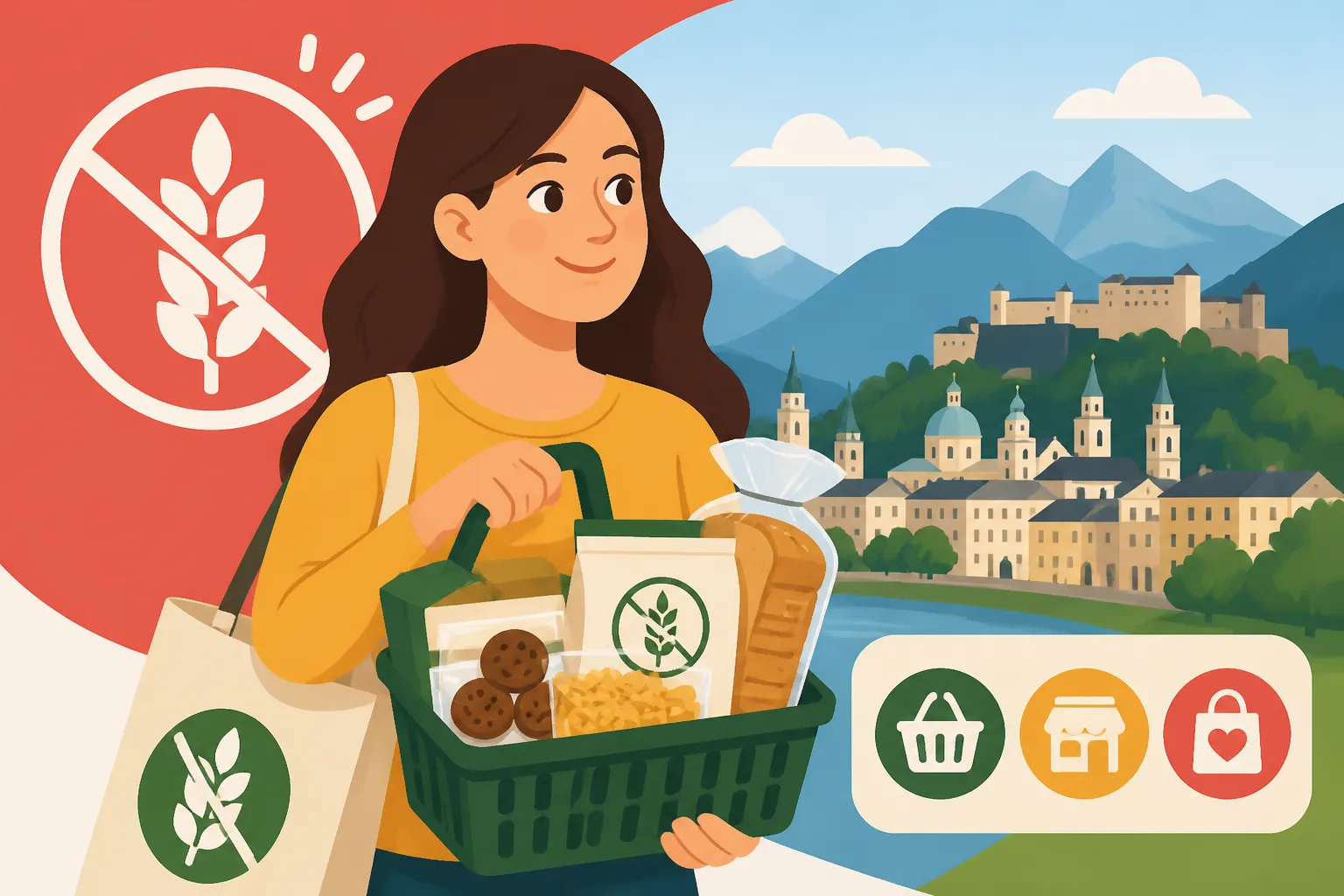
The first thing you need to look for is the "Durchgestrichene Ähre," the international symbol of the crossed-out ear of wheat. Products bearing this symbol have met rigorous testing standards. In Austria, the term for Celiac disease is "Zöliakie." When you are scanning labels, the law requires that the 14 most common allergens be clearly highlighted in the ingredients list—usually in bold or capital letters.
Even if a product doesn't have the official symbol, you can often trust the ingredients list due to strict EU labeling laws. However, a major trap for expats is "Spuren von…" (Traces of…). Unlike some countries where this is a voluntary "may contain" statement, Austrian manufacturers are quite diligent about this. If you see "Kann Spuren von Gluten enthalten," it means the product was processed on shared equipment. Depending on your sensitivity, this is a crucial phrase to memorize.
The Dinkel Trap for New Arrivals
One of the most frequent mistakes I see newcomers make is assuming that Dinkel (spelt) is gluten-free. In Austria, Dinkel is marketed as a health food and is found in everything from bread to pasta and crackers. While it is an ancient grain, it is a subspecies of wheat and is absolutely not safe for those with Zöliakie. I learned this the hard way after a very uncomfortable dinner at a friend's house who thought they were being helpful by serving Dinkel-nudeln. Always double-check, as Dinkel is ubiquitous in the organic sections of Austrian stores.
Where to Buy Gluten Free Groceries in Austria
You don't need to visit a specialty pharmacy to find food. Most standard supermarkets have dedicated "Free From" sections. The selection has expanded massively in the last few years, making it much easier to manage your budget while staying healthy.
Supermarket Giants and Their Private Labels
Spar is arguably the leader in gluten-free retail in Austria. Their "Free From" brand covers everything from frozen pizza and puff pastry to sliced bread and cookies. These products are usually clustered together in a specific aisle, often near the organic (Bio) or health food sections. Comparing Grocery Prices: Billa vs Spar vs Hofer is a great way to see how Spar stacks up against its competitors.
Billa and Billa Plus (formerly Merkur) also offer a robust selection under their "Genuss ohne Gluten" label. Billa Plus stores are larger and generally have a wider variety of international brands like Schär, which is the gold standard for many expats. Hofer, the Austrian version of Aldi, is the place to go for budget-friendly basics. Their "Enjoy Free" line is seasonal, so you might find amazing gluten-free Christmas cookies in December that disappear by February.
Specialized Health Stores and Reformhäuser
If you are looking for specific flours like teff, sorghum, or high-quality buckwheat (Buchweizen), the standard supermarket might let you down. This is where the "Reformhaus" comes in. Stores like Reformhaus Martin or the organic chain Denns BioMarkt carry extensive gluten-free ranges that cater to multiple allergies. These stores are more expensive, but the quality of the bread—often found in the vacuum-sealed or fresh-baked sections—is significantly higher.
When shopping at these high-end organic stores, keep an eye on your spending. Cost of Living Benchmarks for Singles, Couples, and Families can help you understand how these premium grocery trips fit into your overall monthly budget in Austria.
Drugstores as a Surprising Food Source
In Austria, drugstores (Drogeriemärkte) like dm and Müller are not just for shampoo and toothpaste. They have massive food sections dedicated to "Bio" and "Free From" products. The dm brand "dmBio" has an incredible range of gluten-free pasta, flour mixes, and snacks that are often cheaper than the name-brand equivalents in supermarkets. I often do a "dm run" specifically for my pantry staples because the quality-to-price ratio is unbeatable.
Comparison of Gluten Free Options by Retailer
| Retailer | Private Label | Availability | Best For | Price Point |
|---|---|---|---|---|
| Spar | Free From | High | Fresh bread and frozen meals | Mid-range |
| Billa Plus | Genuss ohne Gluten | High | International brands (Schär) | High |
| Hofer | Enjoy Free | Moderate | Pantry staples and seasonal snacks | Low |
| dm | dmBio | High | Flour mixes and pasta | Low |
| Denns BioMarkt | Various Bio | Moderate | Artisanal bread and niche grains | Premium |
Essential Vocabulary for Gluten Free Shopping
Navigating the aisles requires a bit of German "label-literacy." While many expats rely on translation apps, knowing these core terms will save you a lot of time and prevent accidental "glutening."
Hidden Ingredients to Watch Out For
- Weizen: Wheat (The most common enemy).
- Gerste: Barley (Often found in malt flavorings/Gerstenmalzextrakt).
- Roggen: Rye (Common in Austrian dark breads).
- Hafer: Oats (In Austria, you must look for "Zertifizierter glutenfreier Hafer" to ensure no cross-contamination).
- Einkorn/Emmer: Other forms of ancient wheat that are not safe.
- Weizenstärke: Wheat starch (Only safe if labeled "glutenfrei," as the protein has been removed).
If you are ever unsure about a word, don't be afraid to ask a staff member. While Culture Shock: Adapting to Direct Austrian Communication might make store clerks seem a bit blunt, they are generally very well-trained regarding allergen questions and will give you a straight answer.
Understanding the A Code on Menus
When you transition from shopping to dining out, you will notice letters next to dishes on the menu. This is a standardized allergen coding system used throughout the country. The letter A always stands for Gluten. If you see an "A" next to a dish, it contains gluten. However, be careful—sometimes the menu lists what is in the dish, and other times it's a guide to what can be removed. Always confirm with the waiter by saying, "Ich habe eine Glutenunverträglichkeit" or "Ich habe Zöliakie."
Dining Out Safely as a Celiac Expat
Eating out in Austria is surprisingly manageable if you know where to go. While traditional Gasthäuser are heavy on breading, many modern restaurants and international spots are very accommodating.
Identifying Safe Restaurants in Major Cities
Vienna is a haven for gluten-free dining. You can find everything from 100% gluten-free bakeries to pizzerias that use separate ovens for their GF dough. When choosing where to live, consider the proximity to these amenities. The Vienna Neighborhood Guide: Best Districts for Expats highlights areas like the 7th and 9th districts, which are hubs for health-conscious and allergy-friendly cafes.
In other cities, the search might be slightly harder but still fruitful. The Salzburg Neighborhood Guide: Altstadt vs Affordable Suburbs can guide you toward the more tourist-friendly areas where English is widely spoken and dietary restrictions are treated with professional care. Always check apps like "Find Me Gluten Free" or the local Austrian Celiac Society (ÖGZ) website for verified restaurant recommendations.
Communicating Your Needs Effectively
Austrians value directness. When you sit down, don't bury your request in polite fluff. Clearly state your needs. Using Austrian Greetings: Grüss Gott, Servus, and Handshakes correctly can help build rapport with your server before you make your request. A simple "Grüss Gott! Ich habe Zöliakie. Können Sie mir sagen, welche Speisen glutenfrei sind?" is usually all it takes.
If you are at a traditional bakery, be extremely cautious. Cross-contamination is a high risk because flour remains airborne for hours. Unless they have a separate glass display or pre-packaged goods, it is often safer to skip the local Bäckerei and head to a Spar for your morning rolls.
Living Costs and Budgeting for a Gluten Free Lifestyle
It is no secret that gluten-free products in Austria carry a "tax" of sorts. Bread can be three times the price of a standard wheat loaf. However, there are ways to mitigate these costs.
Managing the Price Premium
One of the best strategies is to lean into naturally gluten-free local foods. Potatoes (Erdäpfel) are a staple of the Austrian diet and are incredibly cheap and versatile. Risotto rice and polenta are also widely available. By basing your meals around these rather than expensive replacement products, you can keep your grocery bill under control.
Also, keep in mind that Sunday Shopping Laws: Why Everything is Closed means you need to plan your specialty shopping trips carefully. You don't want to run out of your specific GF flour on a Saturday evening, as you'll be stuck waiting until Monday morning unless you want to pay premium prices at a "travel shop" in a train station.
Seeking Medical Recognition for Costs
If you are a resident and have a formal diagnosis of Celiac disease, you may be eligible for certain tax benefits or a "Mehrbedarf" (additional requirement) allowance if you are on social support. The Austrian health system is robust, and while it involves some paperwork, the recognition of Zöliakie as a medical condition can sometimes provide a small financial cushion. To understand how the medical side of this works, check out Healthcare Costs: Kassenarzt vs Wahlarzt Differences Explained.
Social Integration and Gluten Free Living
The biggest challenge isn't the food itself; it's the social aspect. Austria is a country of "Jause" (snacks) and "Kaffee und Kuchen" (coffee and cake).
Dealing with Traditional Food Culture
When invited to an Austrian home, be proactive. Don't expect your host to know the intricacies of cross-contamination. I usually offer to bring a gluten-free cake or dessert to share. This ensures I have something to eat and introduces my local friends to the fact that gluten-free food can actually taste good. It’s a great way of Making Friends in Austria: Expat Groups and Local Clubs while educating your new circle about your needs.
Navigating Work Events and Festivals
At festivals like the Donauinselfest or Christmas markets, your options will be limited to things like roasted chestnuts (Maroni), baked potatoes, or certain types of sausages (without the roll). Always ask about the "Senf" (mustard), as some cheap brands use wheat flour as a thickener. Living in an apartment with good neighbors helps too; once you've settled in and understood Everyday Etiquette: Garbage Sorting, Noise, and Ruhezeit, you'll find that Austrians are very helpful neighbors who might even keep an eye out for GF deals for you at the local market.
Important Medical Note
While the information provided here is based on extensive personal experience living in Austria and current retail trends, it is not medical advice. Always consult with a healthcare professional regarding your specific dietary needs. Manufacturers in Austria frequently change recipes, so the "always read the label" rule remains your most important safety tool.
Disclaimer
This guide is for informational purposes only. While I strive to provide the most up-to-date details on shopping and dining in Austria, business owners may change their policies, and supermarket stock can vary by region. Always verify allergen information directly with producers or restaurant staff to ensure your safety.