Skiing Etiquette and Lift Line Rules in the Austrian Alps
Nothing humbles you faster than an elderly Austrian grandmother effortlessly carving past you while you struggle to navigate a crowded lift line in St. Anton. I’ve spent my fair share of winters feeling like a bull in a china shop on the slopes, and I quickly realized that knowing how to ski is only half the battle. This guide decodes the rigid, often unwritten skiing etiquette and lift line rules in the Austrian Alps so you can navigate the mountains with confidence.
Mastering the Austrian Lift Line Culture
The lift line, or Liftspur, is where most newcomers feel the most friction. Unlike the polite, orderly queues you might find in North America or the UK, Austrian lift lines can feel like a survival-of-the-fittest scrum. However, there is a distinct method to the madness that locals respect, and understanding it will save you from being the target of a stern German lecture.
The Art of the Merging Funnel
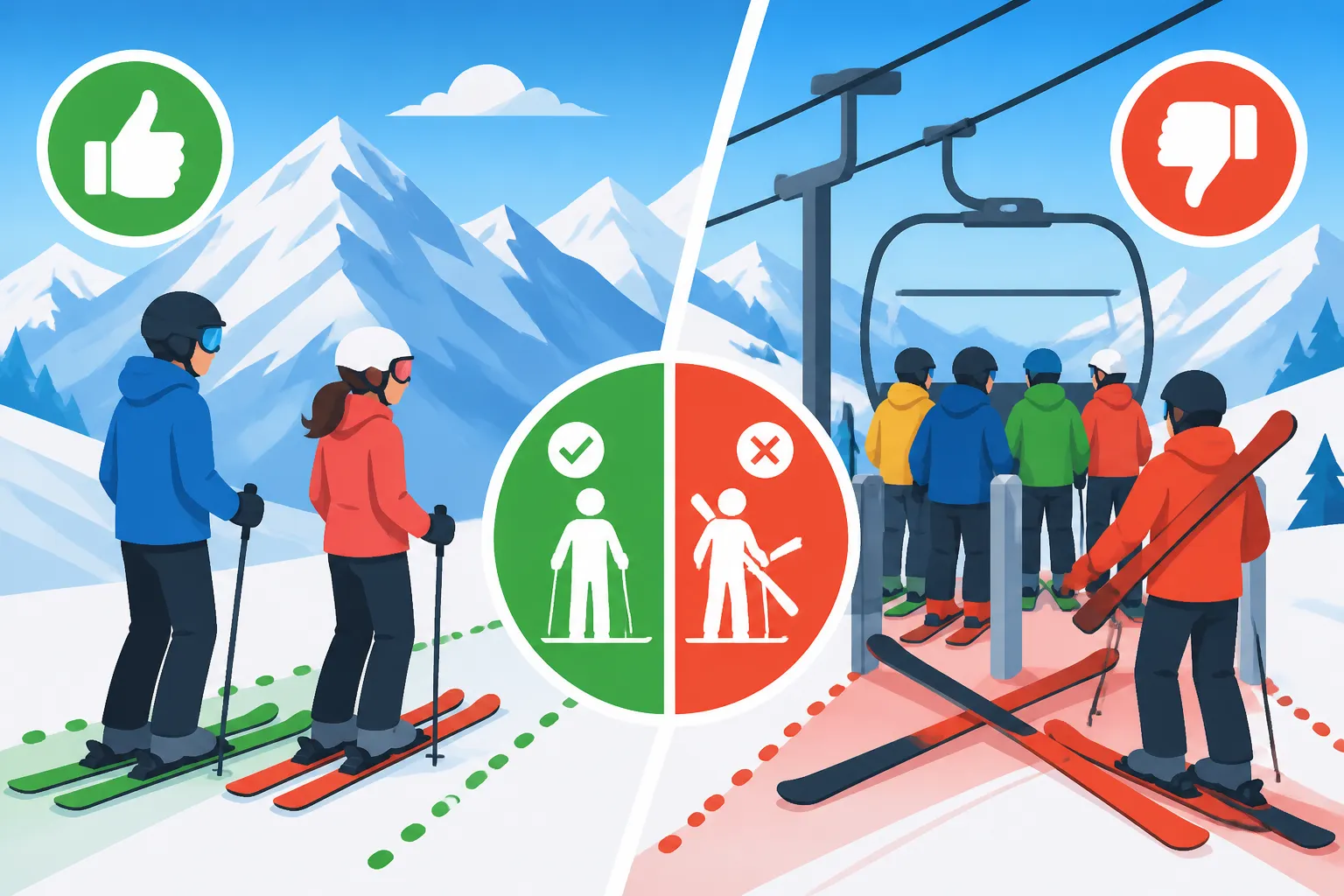
In most Austrian resorts, lift lines aren't structured with ropes and barriers for hundreds of meters. Instead, they usually start as a wide, open area that funnels into the turnstiles. The golden rule here is the "zipper principle." As the crowd narrows, you are expected to merge one-by-one with the person next to you. If you try to force your way ahead of someone who has clearly reached the narrowing point first, you will likely get a sharp tap on your skis or a verbal "Hallo?" to signal your breach of etiquette.
When you are in this funnel, do not be surprised by the lack of personal space. In Austria, it is perfectly normal for skis to be touching or overlapping slightly in a crowded line. While you should avoid actively stepping on someone's expensive Volkls, don't take it personally if someone nudges your skis while the line moves. It isn't an act of aggression; it’s just the alpine way of maximizing space.
The Single Rider and Group Dynamics
If you are skiing solo, look for the "Single Rider" lane, which is becoming more common in 2026 across major resorts in Tyrol and Salzburg. Using this lane means you agree to fill any empty seat on a chairlift or gondola. If you are with a group and the lift attendant (the Liftler) shouts a number—for example, "Noch zwei!" (Two more!)—and you are a pair, speak up and move forward. Efficiency is a cultural priority here.
When boarding a large gondola, such as those found in the Zillertal Arena, move all the way to the center or the back to let others in. Keeping your skis vertical and tucked close to your body is essential. If you’re struggling with the logistics of moving to a new area, check out the Living in Austria 2027: The Expat Starter Guide for more on the general pace of life here.
Electronic Pass Etiquette
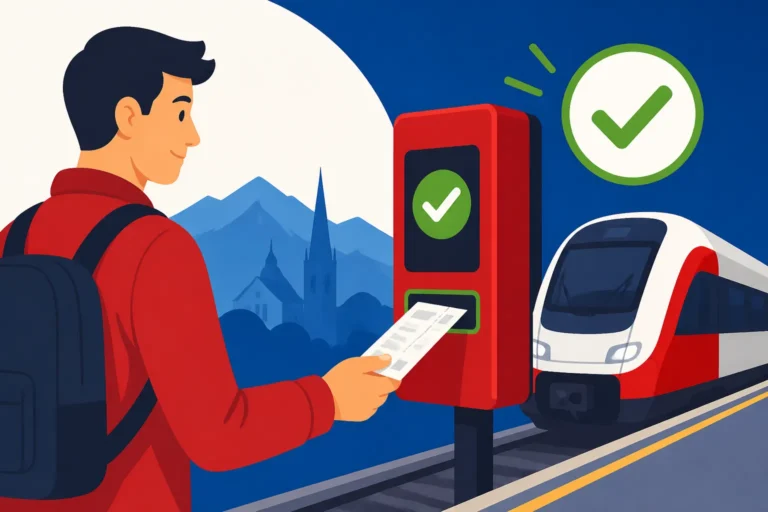
By 2026, almost every resort uses hands-free RFID chips. Always keep your lift pass in a pocket on your left sleeve. Most turnstiles are positioned on the left, and if you have your pass in a chest pocket or on your right side, you’ll end up doing a frantic "alpine dance" at the gate, blocking everyone behind you. If your pass doesn't scan, step out of the line immediately to resolve it with the staff rather than holding up the flow for five minutes.
The 10 FIS Rules of Conduct
The International Ski Federation (FIS) rules are not just "suggestions" in Austria; they are the legal framework for slope safety. If an accident occurs, these rules are used to determine liability. Knowing them is as important as knowing the rules of the road.
Respect for Others and Speed Control
Rule 1 states that every skier must behave in such a way that they do not endanger or prejudice others. This is the foundation of mountain safety. Rule 2 focuses on "mastery of speed." You must adapt your speed and manner of skiing to your ability, the condition of the terrain, the snow, and the weather.
In the afternoon, Austrian slopes often develop "buckles" or moguls (Buckelpiste) and icy patches. Locals expect you to slow down significantly in these conditions. If you are flying down a crowded blue run at Mach speed, you are considered a "Pistenrowdy" (piste hooligan), and the mountain patrol may confiscate your pass. If you ever find yourself needing medical attention due to a collision, refer to Emergency Services in Austria: 144, Hospitals, and Crisis Steps for immediate protocols.
The Right of Way and Overtaking
Rule 3 is the most frequently misunderstood: The skier in front has priority. As the person coming from behind, it is entirely your responsibility to choose a route that does not endanger the person below you. It doesn't matter if they are making unpredictable, wide turns; they have the right of way.
Rule 4 covers overtaking. You can overtake from above, below, the left, or the right, but you must leave enough space for the other person to make any voluntary or involuntary movement. In the tight valleys of the Innsbruck Healthcare Guide: Alpine Safety and Medical Care region, this rule is vital because the runs can narrow quickly.
| Rule Category | Description | Local Tip |
|---|---|---|
| Priority | The skier in front always has the right of way. | Don't assume they see you coming; they don't have eyes in the back of their heads. |
| Overtaking | Leave at least 2-3 meters of space when passing. | In Austria, give a wider berth than you think is necessary. |
| Stopping | Only stop at the edge of the piste or where visible. | Never stop behind a "blind" crest or in a narrow section. |
| Climbing | Walk only at the very edge of the slope. | If you lost a ski, hike up the side, not the middle. |
| Signage | Respect all closures and warning signs. | "Lawinengefahr" (Avalanche Danger) is a literal warning, not a suggestion. |
Piste Safety and Local Norms
Beyond the legal FIS rules, there are cultural norms that keep the Austrian mountains friendly and functional. These often revolve around the transition between skiing and socializing.
Entering, Starting, and Moving Upwards
Rule 5 dictates that whenever you enter a marked run, start again after stopping, or move upwards on the slopes, you must look up and down the piste to ensure that you can do so without danger to yourself or others. Many expats get into "fender benders" because they simply started skiing after a break without checking behind them. Treat the slope like a highway merge.
If you have to walk up or down a slope on foot—perhaps to retrieve a lost pole or because the terrain became too steep—Rule 7 requires you to stay at the extreme edge of the piste. Footprints in the middle of a groomed run create dangerous "death holes" for other skiers once they freeze over.
Respecting the Environment and Closures
Austria takes environmental protection seriously. If a run is marked with ropes or "Gesperrt" (Closed) signs, do not cross them. Often, these closures are due to avalanche blasting or to protect local wildlife like the capercaillie. If you are caught in a closed area, not only is your pass gone, but you could face heavy fines. For those living in the city and heading to the mountains, remember that Salzburg Healthcare Guide: Clinics and English Support provides specialized orthopedic care if you ignore these warnings and end up injured.
If you are planning your season, remember Booking Ski Holidays: Why You Must Plan Months in Advance because the best instructors and guided off-piste tours fill up by October. Taking a guide is the only way you should ever venture off the marked "Piste" in the Alps.
The Etiquette of the Mountain Hut (Die Hütte)
The Austrian ski experience is 50% skiing and 50% Hüttenkultur. The mountain huts are where the most rigid social rules apply, particularly regarding your equipment.
Equipment Storage and Security
When you arrive at a hut like the famous Hospiz Alm in St. Christoph, you’ll see hundreds of pairs of skis outside. Etiquette dictates that you "split" your skis. Place one ski in one rack and the other ski a few meters away. This discourages "accidental" theft or someone mistakenly taking your identical rental skis. Never lean your poles against the wooden walls of the hut; use the designated racks.
Inside the hut, personal space returns to being a priority, but seating is often communal. If you see a large table with two people and four empty spots, it is perfectly acceptable to ask, "Ist hier noch frei?" (Is this spot free?). Once you sit, a polite "Mahlzeit" when your food arrives is the standard greeting to your tablemates.
Alcohol and Responsibility
While Après-ski is legendary in places like Ischgl or Saalbach, the rules for "skiing under the influence" are getting stricter in 2026. If you cause an accident and have a high blood-alcohol level, your insurance—specifically your Do I Need Alpinpolizze (Skiing Accident Insurance?)—may refuse to pay out. The mountain rescue service, known as the Bergrettung, is a private organization, and their bills are astronomical. Ensure you have the right coverage through Ambulance Fees and Mountain Rescue Costs (Alpinpolizze) (Almanac Fees and Mountain Rescue Costs (Alpinpolizze)) before you order that third Schnapps.
Getting to the Slopes: Transport Etiquette
Most Austrian resorts are connected by excellent public transport. If you are staying in a town and taking a ski bus or a train, there are specific rules for your gear.
The Ski Bus Shuffle
Ski buses are free for anyone with a valid lift pass or in ski gear. However, they get incredibly crowded. When the bus arrives, take your skis and poles out of their bags or velcro straps so you can hold them vertically. Never swing your skis horizontally onto your shoulder in a crowd; you will hit someone in the head. Once on the bus, hold your gear firmly between your legs. For those using the wider network, check Is the Klimaticket Worth It? Cost and Benefit Analysis to see if your national rail pass covers your ski transit.
Train Travel with Skis
If you are taking an ÖBB Railjet to the mountains, use the designated "Ski and Bike" racks. Do not leave your wet skis in the overhead luggage bins where they will drip on other passengers. Austrians value cleanliness and order, so keeping your gear contained is a sign of respect.
Emergency Protocols and Identification
Rule 10 of the FIS code states that every skier and snowboarder, whether a witness or a participant, must exchange names and addresses following an accident. Fleeing the scene of a ski accident (Fahrerflucht) is a criminal offense in Austria, similar to a hit-and-run on the road.
If you encounter an injured person:
- Secure the site: Cross your skis in an "X" uphill from the injured person to warn others.
- Provide first aid: Within your level of ability.
- Call for help: Dial 144 (Mountain Rescue) or use the "SOS" feature on the official resort apps. For more details on these numbers, see Emergency Numbers: 144 Ambulance, 133 Police, 122 Fire.
Always carry a form of ID and your insurance card (e-card) in a secure pocket. If you are an expat, ensure your social insurance is active; you can find more on this in Navigating Social Insurance: ÖGK, SVS, and BVAEB Overview. Knowing these procedures ensures that a bad day on the mountain doesn't turn into a legal or financial nightmare.
Disclaimer
This guide is provided for informational purposes only and does not constitute legal or professional safety advice. Skiing and snowboarding are inherently risky activities. Always follow the specific instructions of local mountain patrol, ski instructors, and resort signage. Regulations and insurance requirements in Austria may change, so verify all details with official sources before heading onto the slopes.