Cash vs Card: Surviving in Austria’s Payment Ecosystem
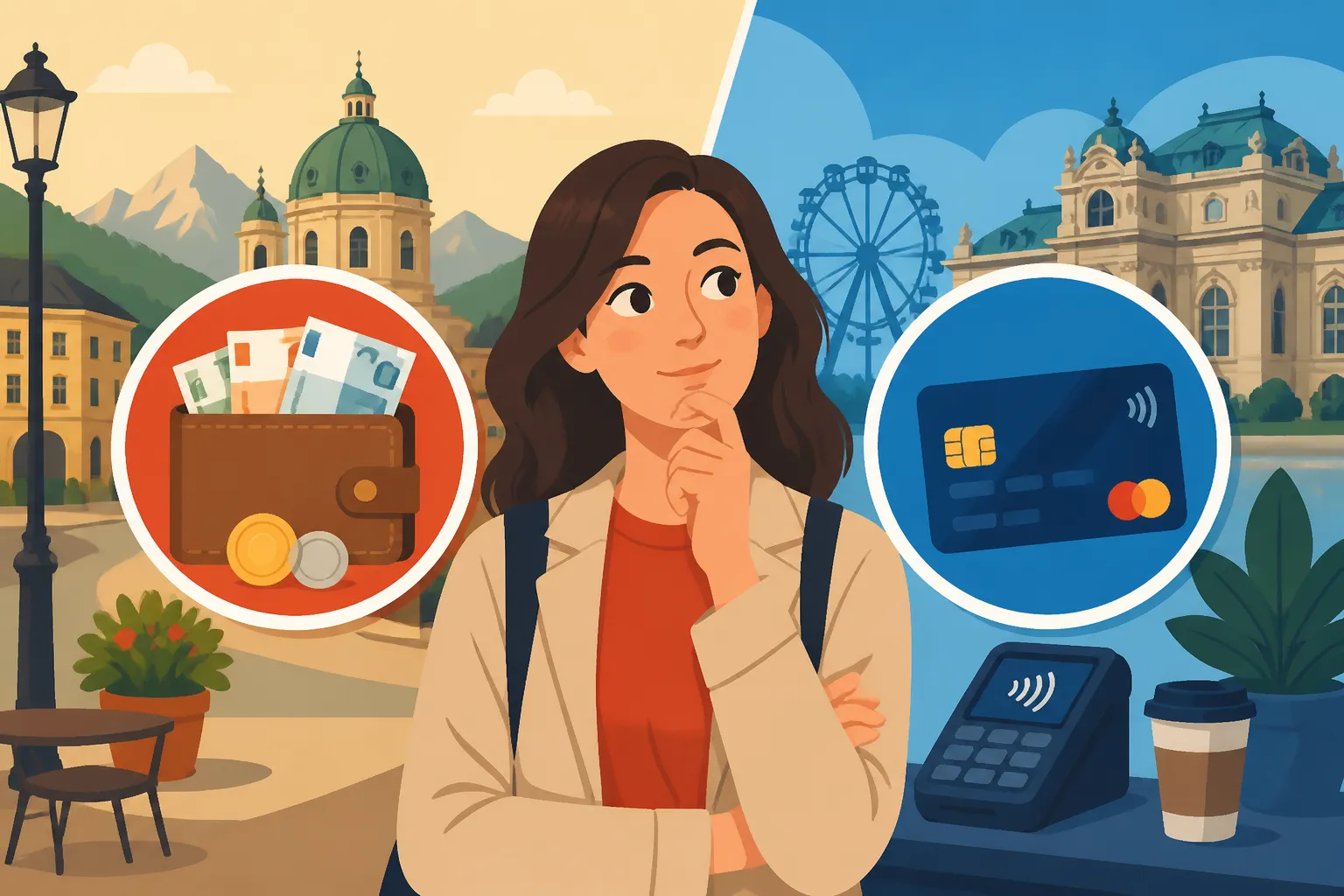
You stand at the counter of a charming, wood-paneled bakery in Vienna, the scent of fresh Kaisersemmeln filling the air, only to have your contactless payment rejected with a stern "Nur Bar" and a pointed finger at a small, handwritten sign. I remember the burning embarrassment of having to leave my tray of pastries behind to hunt for an ATM three blocks away during my first week here. This guide solves the riddle of the Austrian payment landscape, helping you balance digital convenience with the country’s deep-seated love for physical currency.
The Cultural Weight of Cash in Austria
To understand why a highly developed nation still clings to paper bills, you have to look past the technology and into the Austrian psyche. For many locals, cash is not just a medium of exchange; it is a symbol of freedom, privacy, and personal sovereignty. There is a common saying here, "Nur Bares ist Wahres" (Only cash is true), which encapsulates the belief that money you cannot hold in your hand is not entirely yours.
The Tradition of Nur Bar and Why Small Businesses Stick to It
The "Nur Bar" (Cash Only) culture is most prevalent in small, independent businesses. Many traditional Gasthäuser, mountain huts in the Alps, and family-owned boutiques view card terminals as an unnecessary expense and a bridge to corporate surveillance. Transaction fees, though decreasing, still eat into the thin margins of a local Würstelstand or a neighborhood cafe.
When you enter a traditional establishment, look at the door or the menu immediately. If you do not see the logos for Visa or Mastercard, assume they only take cash. Many tourists finish a three-course meal only to realize they cannot pay with their platinum credit card. To avoid this, always carry at least 50 Euros in physical currency. This cultural preference is a core part of Cashless Payments vs Cash Culture in Austria Today, where the old world and new world often collide at the cash register.
Privacy and the State the Psychology of Physical Currency
Austrians are notoriously protective of their data. In a world where every digital transaction creates a footprint, cash is the last bastion of anonymity. This is not about hiding illegal activity; it is about the fundamental right to spend your money without a bank or the state tracking your location and preferences. This mindset is even reflected in how locals approach Money in Austria 2027: Banking, Payments, and Financial Setup, where privacy features are often a top priority when choosing a financial provider.
You will notice that even younger generations, who are tech-savvy, often use cash for social outings. It simplifies the process of "splitting the bill" among friends and ensures that a fun night out doesn't end with a digital audit. This commitment to privacy is why the "death of cash" predicted in other European countries has largely bypassed the Austrian heartland.
Navigating Cash Only Zones from Heurigers to Alpine Huts
There are specific environments where cards are virtually useless. The first is the "Heuriger" or wine tavern. These rustic spots often operate on a semi-informal basis, and the infrastructure for digital payments is frequently absent. Similarly, if you are hiking in the stunning mountains of Tyrol or Styria, do not expect the remote "Hütte" at the summit to have a stable internet connection for your Apple Watch payment.
Another common cash-only trap is the local "Flohmarkt" (flea market) or the beautiful Christmas markets that pop up in November. While some larger stalls are modernizing, the majority of craftsmen and antique sellers will only accept Euro notes. Being prepared with smaller denominations like 5s and 10s will make these interactions much smoother and earn you a smile from the vendor.
The Rise of Digital Payments and Card Acceptance
Despite the traditionalist streak, the Austrian payment ecosystem has evolved significantly over the last few years. The push toward digitalization was accelerated by global events, leading to a hybrid system where major retailers and transit hubs are now fully equipped for the 21st century.
Contactless and Mobile Pay the Post 2020 Shift
If you are in a major city like Vienna, Graz, or Linz, you will find that "Kontaktlos" (contactless) is now the default for most chain stores. NFC technology is integrated into almost every terminal at supermarkets, pharmacies, and clothing retailers. You can tap your card, phone, or wearable device just as you would in London or New York.
However, there is a technical quirk you should know. Some terminals are programmed to only accept "Bankomatkarten" (debit cards) and will decline international credit cards. This is why understanding the nuances of Bankomatkarte (Debit) vs Credit Card Usage in Austria is vital for any resident. Always have your local debit card as your primary digital backup, as it has a much higher acceptance rate than a foreign-issued Visa or American Express.
Major Supermarkets and Chain Stores Where Plastic is King
In large supermarket chains like Billa, Spar, and Hofer, card payments are not just accepted; they are encouraged to keep the checkout lines moving. These stores are the best places to use your credit cards to rack up points or rewards, as they rarely have "Bankomat-only" restrictions. You will also find that these retailers are part of the broader Everyday Etiquette: Garbage Sorting, Noise, and Ruhezeit ecosystem where efficiency is highly valued.
One thing that often shocks newcomers is the speed of the Austrian checkout. You are expected to have your payment method ready and bag your groceries at lightning speed. Fumbling for your wallet or trying to find the right app on your phone while a line of locals glares at you is a stressor many newcomers commonly face. Have your card or phone out before the cashier finishes scanning your first item.
Public Transport and Digital Tickets Using Apps and Terminals
The public transport system is perhaps the most digitized sector in the country. Whether you are using the Wien Mobil app in the capital or the ÖBB app for national travel, you can buy and store tickets entirely on your smartphone. The days of hunting for a functioning ticket machine on a cold platform are largely over.
For those living here long-term, managing your Public Transport Passes: Weekly, Monthly, and Annual Options through digital portals is the most cost-effective way to navigate. Most ticket inspectors will simply scan a QR code on your phone. Even the ticket machines themselves now accept almost all forms of card and mobile payment, including those from international providers, making it one of the few places where you can truly rely on your foreign credit card.
Essential Banking Tools for Expats
To survive the Austrian payment ecosystem long-term, you cannot rely solely on foreign accounts. You need a local financial footprint to handle everything from rent to insurance and, most importantly, to have a card that works in those "debit-only" shops.
The Bankomatkarte Your Most Important Card
In Austria, your debit card is universally referred to as a "Bankomatkarte." It is usually a co-branded card (Debit Mastercard or Visa Debit) linked directly to your Austrian current account. This is the Swiss Army knife of Austrian finance. It allows you to withdraw cash at any ATM, pay at almost all terminals, and even use the "Quick" payment function for small amounts.
When you receive your Lohnzettel Breakdown: Gross vs Net Salary Explained, your net pay will be deposited into this account. Having this card eliminates the "transaction declined" anxiety at local shops. It is also the key to setting up recurring payments for utilities or gym memberships, which are typically handled via SEPA Direct Debit rather than credit card billing.
Neobanks vs Traditional Austrian Banks
You have a choice between the "old guard" and the "new wave." Traditional institutions like Erste Bank or Raiffeisen offer physical branches and a sense of stability, which can be helpful when you are navigating complex tasks like Comparing Erste Bank, Raiffeisen, and Bank Austria. They provide a dedicated "Berater" (advisor) who can help you with loans or specialized savings products.
On the other hand, Neobanks like N26 or Revolut are popular among the expat community for their English-language interfaces and easy sign-up processes. However, be aware that some very traditional Austrian companies might still be hesitant about non-Austrian IBANs, even though IBAN discrimination is technically illegal in the EU. If you choose a Neobank, ensure it offers a proper debit card that functions as a Bankomatkarte within the local network.
ID Austria and E-Banking Security
Security in Austrian e-banking is rigorous. You will likely use a "s-ID" app or a similar secondary authentication tool for every transaction. This is increasingly being integrated with the national digital identity system. Using ID Austria for E-Banking and FinanzOnline Access is becoming mandatory for many administrative tasks.
Once you have your ID Austria set up, your banking experience becomes much smoother. You can authorize large transfers or change your daily spending limits with a thumbprint on your phone. It is a far cry from the old days of paper "TAN" lists that we used to have to keep in our desk drawers. This high level of security is one reason why Austrians have slowly become more comfortable with digital banking, even if they still love their physical cash.
Understanding ATM Culture and Fees
If you are going to use cash, you need to know how to get it without losing money to unnecessary fees. The Austrian ATM network is dense, but not all machines are created equal.
Finding an ATM The Blue and Green Logo
The universal sign for an ATM in Austria is a blue and green backlit sign that says "Bankomat." You will find them outside banks, inside foyers, and increasingly as standalone kiosks in high-traffic areas. Most bank foyers are open 24/7, allowing you to use your card to unlock the door after hours to access the machines in a safe, heated environment.
When using these machines, the default language is German, but they almost all offer an English option. I’ve found that the machines located inside the major banks are the most reliable and least likely to have "out of service" issues during a busy weekend.
Avoiding Fees Independent ATMs vs Bank Affiliated Machines
Here is where it gets tricky for expats. Machines belonging to major banks like Sparkasse, Bank Austria, or Raiffeisen generally do not charge a fee for withdrawals using an Austrian or EU-based card. However, you will often see yellow and blue machines branded as "Euronet." These are independent ATMs and are notorious for high transaction fees and poor exchange rates.
If you have a specialized account, you should look into How to Avoid ATM Withdrawal Fees with Sparkasse or your specific provider's partner network. Using an out-of-network ATM can cost you anywhere from 2 to 5 Euros per transaction, which adds up quickly if you are making frequent small withdrawals to cover your "Nur Bar" coffees.
| Payment Method | Acceptance Level | Best For | Typical Fees |
|---|---|---|---|
| Cash (Bargeld) | 100% | Bakeries, Cafes, Markets, Tips | None (at bank ATMs) |
| Bankomatkarte | 90% | Supermarkets, Most Shops, Rent | Account monthly fee |
| Credit Card | 60% | Hotels, Big Retailers, Online | Possible FX fees |
| Apple/Google Pay | 70% | Modern Shops, Transport Apps | None |
Cash at the Checkout The Cash Back Phenomenon
A relatively new feature in Austria is the ability to get cash back at the supermarket checkout. Retailers like Billa and Penny allow you to withdraw up to 200 Euros when you make a purchase with your Bankomatkarte. This is an excellent way to skip the ATM hunt entirely.
You simply tell the cashier "Einhundert Euro Bar dazu, bitte" before you pay. They will add the amount to your total, and you get the cash directly from the till. There is usually no fee for this service, making it a favorite "life hack" for those of us who always forget to stop at the bank on the way to dinner.
Tipping and Splitting Bills in the Payment Ecosystem
The way you pay in a restaurant is a delicate dance of cultural etiquette. It is one of the most common areas where expats feel "out of sync" with the local flow.
Tipping Etiquette Rounding Up and Paying with Card
In Austria, you do not leave money on the table. When the waiter brings the bill, you tell them the total amount you want to pay, including the tip, as you hand over your money or card. For example, if the bill is 17.40 Euros, you might say "Neunzehn, bitte" (Nineteen, please).
If you are paying by card, you must tell them the total before they tap the card on the machine. Most modern terminals do not have a "tip" prompt on the screen like they do in North America. Learning the nuances of Tipping Etiquette: How Much to Tip in Restaurants will save you from the awkwardness of trying to hand a waiter a 2-Euro coin after you’ve already processed a card payment for the exact bill amount.
Getrennt Zahlen The Art of Splitting the Bill
Austrians are masters of splitting the bill to the exact cent. When the waiter asks "Zusammen oder getrennt?" (Together or separate?), do not be afraid to say "Getrennt." The waiter will then go around the table, asking each person what they had, and calculating their individual total on a handheld device.
This is a standard practice and is not considered rude, even for large groups. It is another reason why ‘Getrennt zahlen’: How to Split Bills at an Austrian Cafe is a phrase you should memorize early on. It ensures that everyone pays for exactly what they consumed, avoiding the "let's just divide by six" headache that often leads to someone overpaying.
Practical Strategies for Daily Life
After years of living here, I have developed a hybrid strategy that ensures I am never stuck without a way to pay, regardless of where my day takes me.
The Hybrid Approach Why You Still Need a Physical Wallet
Even if you are a digital minimalist, Austria requires a physical wallet. You need a place to store your Bankomatkarte, your e-card (health insurance), and, of course, your cash. I’ve tried going "phone only" and it inevitably fails at the most inconvenient moment—usually at a parking meter or a small pharmacy.
A good expat wallet should have a dedicated coin pouch. Unlike in some countries where coins are treated as "change" to be tossed aside, in Austria, 1 and 2 Euro coins are valuable. You will need them for supermarket trolley deposits, public toilets (which often cost 50 cents to 1 Euro), and small tips.
Online Payments and the EPS Standard
When shopping online on Austrian websites, you will often see an option called "EPS" (Electronic Payment Standard). This is a secure online payment method developed by Austrian banks. It allows you to pay directly via your bank's login portal without sharing your card details with the merchant.
Using Paying Online with EPS (Electronic Payment Standard) is often faster and more secure than entering credit card numbers. It is the gold standard for domestic e-commerce, including paying for government fees or settling invoices from local service providers. Most major Austrian banks support it, and the transaction is processed in real-time.
Emergency Cash Reserves What is the Safe Amount?
New arrivals are wise to keep an "emergency 20" tucked behind their phone case or in a hidden compartment of their bag. There will be a day when the card network goes down, or you find yourself at a remote train station where the machine only takes coins or small bills.
A safe amount to carry for daily life in a city is between 40 and 60 Euros. This covers a standard dinner or a taxi ride if your phone dies. In a country that values preparation and "Ordnung," having a cash backup isn't just practical—it's a sign that you’ve finally started to understand the Austrian way of life.
Disclaimer
This guide is provided for informational purposes only and does not constitute financial or legal advice. Payment regulations, bank fees, and merchant policies in Austria can change frequently. While we strive to provide the most up-to-date information for 2026, always verify current terms with your financial institution and check for "Nur Bar" signs before ordering at any establishment. The author and publisher are not responsible for any financial loss or inconvenience incurred as a result of following the advice in this article.