Cost of the Fine for Schwarzfahren (Riding Without a Ticket)
We have all had that heart-stopping moment when the subway doors close, and you suddenly realize your phone battery is at 1% or your paper ticket is sitting on the kitchen counter. I remember my first month in Vienna, staring blankly at a "Schwarzkappler" while realizing I hadn't validated my strip-ticket; the embarrassment was worse than the fine itself. This guide breaks down the exact costs, legal procedures, and survival tips for navigating ticket inspections in Austria without losing your cool or your cash.
Understanding the Concept of Schwarzfahren in Austria
In Austria, the public transportation system operates largely on an "honor system." There are no turnstiles or gates blocking your path to the platforms in most cities. While this makes for a seamless commute, it also creates a psychological trap for newcomers who might assume that if no one is checking at the entrance, the ride is free. This practice of riding without a valid ticket is known locally as Schwarzfahren, which literally translates to "black riding." It is not just a breach of policy; it is a contractual violation that carries immediate financial penalties.
Why the Honor System Can Be a Trap for Expats
When you first arrive and navigate the Public Transport Passes: Weekly, Monthly, and Annual Options available, the lack of physical barriers can be disorienting. In many countries, you cannot even reach the train without scanning a card. In Austria, the responsibility lies entirely on you to ensure you are "valid." Many expats fall into the trap of thinking, "I'll just buy a ticket on the app if I see an inspector." This rarely works because the inspectors are often in plain clothes and move with incredible speed once the doors close.
The Austrian authorities view the honor system as a pillar of social trust. Breaking that trust by Schwarzfahren is seen as a significant faux pas. Many passengers try to argue that they were "just about to buy a ticket," but the rules are rigid: you must possess a valid, validated ticket the moment you step onto the vehicle or past the blue validation machines (Entwerter) at the station entrance. If you are still figuring out the basics of your new home, checking a Healthcare Checklist for Your First 30 Days in Austria might be your priority, but understanding transit rules should be a close second.
Random Inspections and the Schwarzkappler
Ticket inspectors in Austria, particularly in Vienna, are colloquially known as "Schwarzkappler." Historically, they wore black caps, but today they are more likely to be wearing jeans and a hoodie to blend in with the crowd. They usually work in teams of three to five. Once the train or bus is between stations, they will suddenly pull out their official badges and announce "Die Fahrausweise, bitte" (Tickets, please).
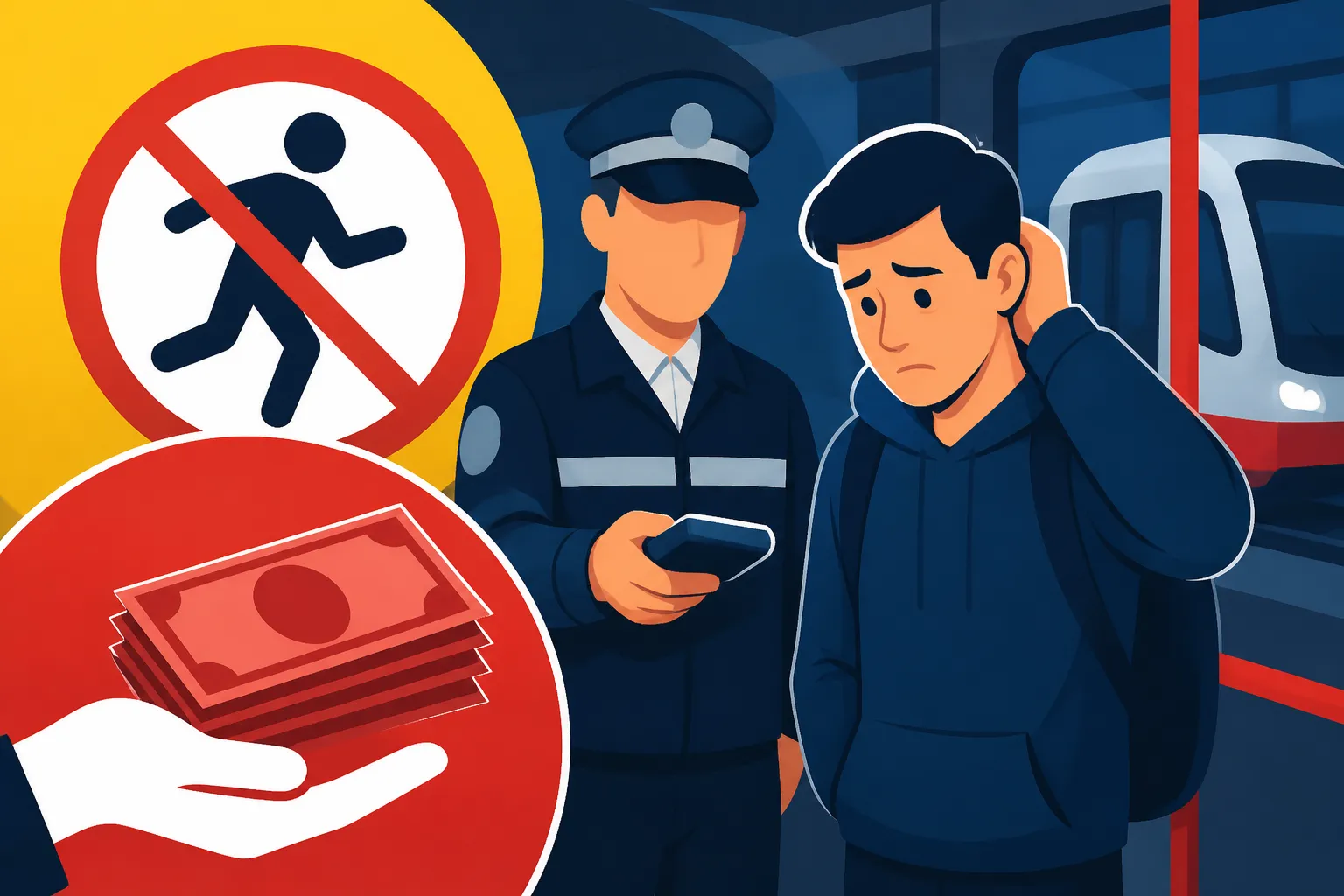
The efficiency of these teams is legendary. They are trained to spot the "panic tell"—the person who suddenly starts digging frantically through their bag or looking for an exit as soon as the announcement is made. If you find yourself in this situation without a ticket, the best course of action is honesty. Trying to run or provide fake information often leads to the police being called, which escalates a simple fine into a potential legal issue involving your Meldezettel Process: Registering Your Address Legally.
The Current Cost of the Fine for Schwarzfahren
As we move through 2026, the costs of being caught without a ticket have seen a slight increase to keep pace with inflation and operational costs. These fines are officially called a "Mehrgebietszuschlag" or an "Erhöhtes Beförderungsentgelt" (increased carriage fee). The cost is not uniform across the country; each regional transport authority sets its own rates, though they generally hover within a similar range.
Breaking Down the Costs by City
In Vienna, the Wiener Linien are particularly strict. If you are caught without a ticket and pay on the spot (or take an invoice to pay within a few days), the fine is significantly lower than if you delay payment. If you are caught on a train operated by the ÖBB (Austrian Federal Railways), the rules and fines can differ slightly, especially on long-distance routes where you might be able to buy a ticket from the conductor—but only if you seek them out immediately upon boarding.
| City/Provider | Fine (Paid on Spot/Early) | Fine (If Invoiced/Delayed) | Additional Notes |
|---|---|---|---|
| Vienna (Wiener Linien) | €105.00 | €115.00+ | Includes the cost of a single trip. |
| Graz (Holding Graz) | €100.00 | €120.00 | Price increases after 14 days. |
| Linz (Linz AG) | €95.00 | €110.00 | Strict on validation of paper tickets. |
| Salzburg (Salzburg AG) | €90.00 | €115.00 | Often includes a 24-hour ticket. |
| ÖBB (National Trains) | €105.00 | €135.00 | Can involve processing fees. |
It is worth noting that Is the Klimaticket Worth It? Cost and Benefit Analysis becomes very clear when you realize that one single fine costs more than an entire month of nationwide unlimited travel for some age groups.
Immediate Payment vs. Later Invoicing
When the inspector catches you, they will offer you two choices: pay the fine immediately via credit card or cash (in some cases), or provide your ID so they can issue an invoice. If you pay immediately, the process is over, and you usually receive a receipt that acts as a valid ticket for the remainder of that specific journey.
However, if you do not have the funds on you, they will ask for your ID. This is where your ID Austria and E-Government Tools for Foreign Residents might come in handy to prove your identity, although a physical passport or residence card is preferred. Choosing the invoice route typically adds a processing fee of €10 to €30. If you fail to pay the invoice within the stipulated timeframe (usually 14 days), the case is handed over to a debt collection agency, and the costs can spiral toward €200 or more.
What Happens if You Get Caught Without a Ticket?
The experience of getting caught is intentionally designed to be uncomfortable to discourage repeat offenses. Understanding the step-by-step process can help you stay calm and avoid making the situation worse. The inspectors have the legal right to detain you until the police arrive if you refuse to show ID or attempt to flee the vehicle.
Identifying Yourself to Inspectors
The moment an inspector approaches you, they will show their badge. You are legally required to show a valid ticket or, failing that, an official photo ID. For expats, this is often a point of friction. Some people argue that they don't have their passport on them. In Austria, while you aren't always required to carry your passport, you must be able to prove who you are.
If you are a resident, showing your residence permit (Aufenthaltstitel) is the gold standard. If you are still waiting for your permit and only have the Standard Meldezettel Registration After Arrival, you should ideally carry a copy of your passport. If you cannot provide ID, the inspectors will call for a "Polizeiliche Identitätsfeststellung," meaning you will be met at the next station by police officers to verify your identity. This is time-consuming and highly stressful, so always have a digital or physical copy of your ID.
Dealing with Valid Tickets You Forgot at Home
There is one major "get out of jail cheap" card: the forgotten personalized pass. If you have an annual pass (Jahreskarte) or a Klimaticket but simply forgot it at home or your phone died, the inspector will still issue a fine notice. However, you do not have to pay the full €105.
You usually have a window of a few days to visit a service center (like the Wiener Linien center at Erdberg or Westbahnhof) and show your valid personalized pass. In this case, the fine is typically reduced to a small "administrative fee" of around €5 to €10. This only works if the ticket is personalized to your name; it does not work for transferable tickets (übertragbare Karten). If you are a student, ensuring you have your Student Self-Insurance Requirements and Monthly Costs 2026 sorted is important, but so is keeping your student Semesterticket on you at all times.
The Consequences of Non-Payment
Ignoring a fine for Schwarzfahren is a terrible idea in Austria. The transport authorities are linked into the broader administrative system. Unpaid fines can lead to a negative entry in your KSV1870 Credit Score: How It Affects Loans and Rentals, which can make it nearly impossible to rent a new apartment or get a mobile phone contract later.
Furthermore, if you are on a path toward permanent residency, you want to keep your record clean. While a single administrative fine for a bus ticket isn't a criminal record, repeated offenses can be classified as "Erschleichung von Leistungen" (obtaining services by deception), which is a criminal offense. If you are currently navigating the Permanent Residency (Daueraufenthalt-EU) Timeline, the last thing you want is a history of legal disputes with state-owned companies like the Wiener Linien or ÖBB.
How to Avoid Schwarzfahren and Stay Compliant
The best way to avoid the Cost of the Fine for Schwarzfahren (Riding Without a Ticket) is to build a "transit routine." The system in Austria is very logical, but it has specific quirks that can trip up those used to different systems.
The Importance of Validating (Entwerten)
In many Austrian cities, buying a paper ticket is only step one. Step two is "validating" it. If you buy a ticket from a tobacconist (Tabak-Trafik) or a machine that doesn't have a date pre-printed on it, you must stick it into the blue or orange validation boxes to get a timestamp. A ticket without a timestamp is considered invalid, and the inspector will treat you as if you have no ticket at all.
Tourists are sometimes fined for buying a 24-hour ticket without validating it, assuming the purchase time is enough. It is not. Always look for the word "Entwerten" on the ticket or the machine. If you are traveling with family, make sure you understand the Family Health: Eltern-Kind-Pass 2026 and Maternity Care System for their well-being, but also check the age limits for free travel for children—usually, kids under six ride free, and those under 15 ride free during school holidays and Sundays in Vienna.
Digital Solutions and Annual Passes
To eliminate the risk of forgetting to validate, I highly recommend moving to digital tickets or an annual pass as soon as possible. Using the "WienMobil" app or the ÖBB app allows you to buy tickets that are automatically validated from the moment of purchase or a selected time.
- Annual Passes: If you live here, the €365 annual pass for Vienna is a no-brainer. It is linked to your name and can be displayed on your phone.
- Klimaticket: If you travel between cities like Linz and Graz frequently, the Klimaticket is the ultimate peace of mind.
- EasyRide / SimplyGo: Some apps now offer a "Check-in/Check-out" feature that tracks your movement and charges you the cheapest possible fare at the end of the day.
If you are a student, look into the Student Bank Accounts: Perks, Age Limits, and Free Fees which sometimes offer discounts or integrated payment solutions for transit. By automating your ticket, you remove the human error that leads to those expensive "Black Cap" encounters.
Special Rules for Night Buses and Trains
Be aware that some regional trains or special night lines might have different requirements. In Vienna, the night buses are included in your standard tickets and annual passes. However, in some rural areas, a small surcharge might be required. Always check the display at the bus stop. If you are heading out for After-Work Drinks Culture: Do You Have to Attend?, remember that your ability to navigate the ticket machine might be impaired later—buy your return ticket or have your app ready before the first "Prost!"
Summary of Best Practices for Expats
- Carry ID: Always have a form of photo identification that matches the name on your digital or annual ticket.
- Check the Stamp: If using paper, ensure the timestamp is visible and legible.
- Charge Your Phone: If you rely on digital tickets, a dead battery is not a legal excuse for not having a ticket. You will be fined and will have to appeal it later if you can prove you had a valid pass.
- Don't Run: If caught, be polite. The inspectors are just doing their jobs, and being aggressive will only result in a police intervention.
- Pay Quickly: If you get a fine, pay it within the first week to avoid the "late payment" surcharges which can be substantial.
Disclaimer
This guide is for informational purposes only and reflects the typical costs and procedures as of 2026. Transport regulations and fine amounts can be changed by local authorities (such as Wiener Linien, ÖBB, or Holding Graz) at any time. Always check the official website of your local transport provider for the most current terms of carriage and fee schedules. This article does not constitute legal advice.