How Auto-Renewal Works for the Klimaticket Payment
Navigating the transition from your first year of Austrian public transport to your second can be a bureaucratic minefield if you aren't prepared for the automatic nature of the system. It is easy to miss a small notification buried in a physical mailbox and end up paying for a national ticket that is no longer needed because the commute has stopped. This guide explains the mechanics of auto-renewal so you can manage your budget and mobility without surprises.
Understanding the Klimaticket Subscription Lifecycle
The Klimaticket is not a one-off purchase; it is legally structured as an "Abo" or subscription. When you first sign up, you are entering into a twelve-month contract that, by default, is designed to roll over into a subsequent year unless you take proactive steps. This is a standard practice in Austrian consumer law for services like gym memberships or insurance, but for expats used to "pay-as-you-go" models, it can be a shock. While Living in Austria 2027: The Expat Starter Guide provides a broader overview of settling in, the Klimaticket requires a specific focus on its contractual anniversary.
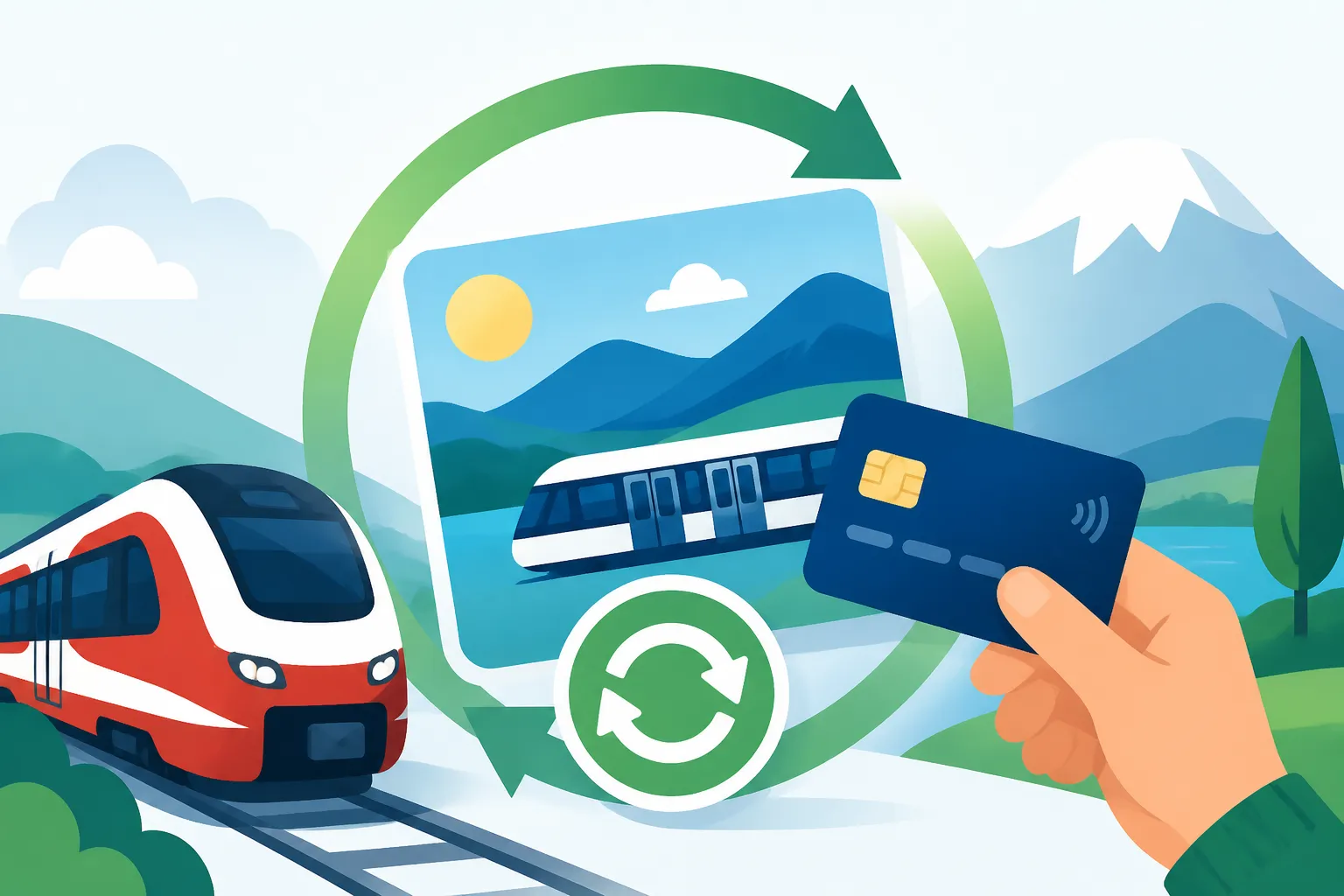
Your contract period begins on the first day of the month you selected during the initial application. For example, if your ticket became valid on October 1, 2025, your "contract year" ends on September 30, 2026. The system is designed to trigger a renewal process approximately two to three months before this expiration date. This ensures that your new physical card arrives in your mailbox before the old one expires, preventing any gap in your ability to travel legally across the country.
One of the most important things to realize is that the "auto" in auto-renewal applies to both the extension of the contract and the payment itself if you have authorized a SEPA direct debit. If you are also managing other subscriptions, such as the ORF-Beitrag 2026: The New Broadcasting Household Levy Guide, you likely already understand how the Austrian system prefers automated bank pulls. However, with the Klimaticket, the high price tag makes it essential to know exactly when that pull will happen.
The Notification Phase and Month Nine
Around the beginning of your ninth month of membership, the Klimaticket Service Center is legally obligated to contact you regarding the upcoming renewal. This is usually done via the email address you provided or a physical letter sent to the address on your Meldezettel Registration. The digital-first approach means you should keep a close eye on your "Spam" folder. This notification will detail the price for the upcoming year, which may be subject to inflation adjustments, and the deadline by which you must cancel if you do not want to continue.
If you ignore this notification, the "Silent Renewal" kicks in. The service provider assumes you are satisfied and will proceed with the issuance of a new card. For those who have changed their living situation or are Leaving Austria: Financial Exits, Pension Refunds, and Accounts, missing this window can be expensive. The cancellation period is strictly enforced; typically, you must provide notice by the end of the 10th or 11th month of your current term to prevent the second year from starting.
Regional vs National Renewal Nuances
It is crucial to distinguish between the "Klimaticket Österreich" (the national ticket) and regional versions like the Klimaticket VOR (Vienna, Lower Austria, Burgenland) or the Klimaticket Salzburg. While the national version is managed by a central service center, regional versions are often handled by local transport authorities. This means the renewal emails might look different, come from different senders, or have slightly different cancellation windows.
If you are using the Transportation: The Klimaticket, Trains, and Wiener Linien networks, you might find that the regional tickets offer more flexibility for mid-year changes, but the national ticket remains the most rigid in its 12-month commitment. Always check the specific terms on your "Kundenkonto" (customer account) on the Klimaticket website to see which entity is managing your specific renewal.
The Financial Mechanics of Automatic Payments
How you pay for your first year dictates how the auto-renewal payment will behave. There are two primary paths: the one-time upfront payment and the monthly installment plan. Both have pros and cons, especially when integrated with your broader Money in Austria 2027: Banking, Payments, and Financial Setup. If you paid the full amount upfront for your first year via credit card or bank transfer, the renewal system will still attempt to renew your contract, but it may require you to manually authorize the second year's payment if your card has expired.
However, the vast majority of residents opt for the SEPA Direct Debit (Lastschrift) because it allows for monthly installments. In this scenario, the transition is seamless—and potentially dangerous for those not tracking their bank balance. The 13th month's payment will simply be pulled from your account just like the 12th. If you are struggling with Budgeting in Austria: Accurate Cost of Living Benchmarks, remember that the monthly installment plan often carries a small surcharge (around 2% to 5%) compared to the one-time annual payment.
| Payment Feature | One-time Annual Payment | Monthly SEPA Installments |
|---|---|---|
| Renewal Trigger | Contractual notification sent in Month 9 | Automatic continuation of monthly pulls |
| Surcharge | None (Base Price) | Usually a small processing fee included |
| Failed Payment Risk | Ticket may not be issued until paid | Immediate dunning fees if account is empty |
| Ease of Cancellation | Requires active stop before Month 11 | Requires active stop before Month 11 |
Managing SEPA Direct Debit for Year Two
If you chose the SEPA method, your bank details are stored in the Klimaticket system. When the auto-renewal occurs, the system automatically creates a new "Dauerauftrag" equivalent for the next twelve months. It is your responsibility to ensure that the bank account linked to the ticket remains active. If you have moved banks or are Setting Up a Dauerauftrag (Standing Order) for Rent Payments with a new institution, you must update your Klimaticket profile at least 30 days before the renewal date.
Failure to provide valid bank details during an auto-renewal does not cancel the contract. Instead, it creates a "Zahlungsverzug" (payment delay). The service center will send reminders, and if unpaid, they can hand the debt over to a collection agency (Inkasso). This can negatively impact your KSV1870 Credit Score: How It Affects Loans and Rentals, making it harder to rent apartments or get loans in the future. Always update your "Zahlungsmittel" (payment method) in the online portal as soon as you change banks.
Credit Card Expiration and Renewal Failures
For those who used a credit card for the initial purchase, the auto-renewal often hits a snag if the card has expired in the intervening year. Unlike the SEPA method, which is linked to a bank account number that rarely changes, credit cards have 3-year or 5-year lifespans. If the auto-renewal fails because of an expired card, you will typically receive an "Action Required" email.
In this case, the system will pause the issuance of your new physical card. This is a common point of frustration for expats who assume the renewal is "automatic" and then find themselves with an expired card at a train station. If you prefer using cards over SEPA Transfers, Dauerauftrag, and Paying Rent, make it a habit to check your card's validity date against your Klimaticket's anniversary.
Managing the Digital-Physical Hybrid Renewal
One of the quirks of the Austrian system is the reliance on a physical plastic card despite the availability of apps like "ÖBB Tickets" or "WienMobil." The auto-renewal process is what triggers the production of your next year's physical card. In 2026, the "Digitaler Klimaticket" has become the standard for most users, but the physical card remains the legal backup required for many ticket inspections, especially on private rail lines like Westbahn or regional bus routes in rural areas.
When the auto-renewal is processed successfully, the new card is sent via Post.at to your registered address. This usually happens about two to three weeks before your old card expires. If you have moved and haven't updated your address in the central system, the card will be returned to the sender, and your digital version might not activate correctly. Using ID Austria and E-Government Tools for Foreign Residents is the most efficient way to ensure your address is updated across all official platforms, including the Klimaticket database.
Using the Online Portal for Renewal Tracking
The official Klimaticket website provides a "Kundenbereich" (customer area) where you can see the exact status of your renewal. I highly recommend logging in around Month 8 to verify your details. Here, you can see if the "Auto-Extension" toggle is active. In some cases, depending on how you purchased the ticket (e.g., through a specific employer program), the auto-renewal might be disabled by default, and you would need to manually "Opt-In" to continue the service.
Within the portal, you can also download your "Invoices" (Rechnungen). This is particularly useful if you are self-employed and need to deduct travel expenses from your taxes. If you are Filing Income Tax (Einkommensteuer) as a Freelancer, ensure you have the invoices for both the old and new contract years. The portal will also show you if you are eligible for any "Renewal Discounts" which are occasionally offered to long-term members to encourage them to stay in the system.
The Physical Card Delivery and Photo Rules
Every renewal involves a check of your photo on file. If your appearance has changed significantly or if the photo you uploaded years ago no longer meets the biometric-adjacent standards of the Austrian authorities, you might be asked to provide a new one. This is similar to The Austrian e-card: Registration, Photo Rules, and Usage Guide requirements. If the system prompts you for a new photo during the renewal window, do not ignore it, as it will stall the printing of your new card.
If your new card doesn't arrive by the last week of your current term, you should contact the service line immediately. They can issue a "Provisorisches Ticket" (provisional ticket) as a PDF. This is a life-saver if you are caught in a transition period and need to commute. Remember that "I'm waiting for my renewal card" is not a valid excuse for a ticket inspector; you must have either the old (valid) card, the new (valid) card, or a provisional document.
Terminating the Auto-Renewal Without Penalties
There are times when auto-renewal is exactly what you don't want. Perhaps you are Is the Klimaticket Worth It? Cost and Benefit Analysising your lifestyle and realizing you'd rather cycle, or maybe you are moving to a city where the regional ticket is sufficient. To stop the renewal, you must navigate the "Kündigung" (cancellation) process correctly.
The standard rule is that you can cancel without any "Justification" at the end of the 12th month, provided you do so within the notice period (usually by the end of Month 10). If you miss this window, you are legally tied into the second year. However, Austrian law provides "Special Rights of Termination" (Sonderkündigungsrecht) for specific life events.
Special Termination: Moving Abroad or Illness
If you are moving out of Austria, you can cancel your Klimaticket renewal (or even your current active year) regardless of the notice period. You will need to provide proof of your "Abmeldung" (deregistration) from the residence register. This is a similar process to Deregistering from the ORF-Beitrag When Moving Abroad. Once the proof is submitted, the contract is terminated at the end of the current month, and any prepaid months are refunded to your bank account.
Similarly, if you suffer a long-term illness or disability that prevents you from using public transport for more than three months, you can terminate the contract early. This requires a "Ärztliches Attest" (doctor's note). If you are navigating Finding Medical Care in Austria: Clinics, Hospitals, and Referrals, ensure your doctor understands that the note is for a contractual termination, as specific wording may be required to satisfy the Klimaticket Service Center.
What Happens if You Do Nothing?
If you do nothing—you don't cancel, you don't update your bank details, and you don't pick up your mail—the contract remains legally active. This is the "Expat Trap." newcomers often ignore letters, thinking that since they didn't "sign anything new," the service would just stop. It won't. You will continue to be billed, and eventually, the matter will go to collections.
If you decide you no longer want the ticket, even if you missed the deadline, the best course of action is to call the service center. Sometimes, they offer a "Kulanz" (goodwill) cancellation if you have a compelling reason, though this is rare. Alternatively, you might be able to switch to a cheaper regional ticket if your move was within Austria. If you are also dealing with other Austrian institutions, like How to Officially Deregister from Church Tax (Kirchenaustritt), you know that being proactive and having your paperwork in order is the only way to avoid unnecessary fees.
Disclaimer
This guide is provided for informational purposes only and reflects the rules and procedures for the Klimaticket in Austria as of 2026. While every effort has been made to ensure accuracy, transport laws and contractual terms can change. Always verify the current terms and conditions on the official Klimaticket.at website or contact their service center directly before making financial decisions or attempting to cancel your subscription.