Transportation: The Klimaticket, Trains, and Wiener Linien
Standing at a ticket machine in the bowels of Stephansplatz while a line of impatient commuters huffs behind you is a rite of passage every expat in Austria eventually faces. I remember my first week in Vienna, paralyzed by the choice between a "Kernzone" supplement and a standard fare, ending up with a ticket I didn't even need. This guide solves the complex puzzle of Austrian public transit, ensuring you never overpay or face a fine again.
Navigating Public Transport in Austria: An Overview
The first thing you notice when you move here is that the Austrian transport system functions with a precision that borders on the obsessive. It is a multi-layered ecosystem where local city networks, regional bus lines, and national rail services interlock like the gears of a luxury watch. For a newcomer, however, the sheer number of acronyms—ÖBB, WL, VOR, IVB—can feel like alphabet soup.
The Integrated System: One Ticket to Rule Them All
Austria operates under a system of "Verbund" networks. This means that within a specific region, a single ticket is valid for all modes of transport, whether it is a sleek U-Bahn train, a rattling vintage tram, or a regional bus. For example, if you are in the eastern region (Vienna, Lower Austria, and Burgenland), you are under the VOR (Verkehrsverbund Ost-Region). If you buy a ticket from a village in Lower Austria to a district in Vienna, that one ticket covers the regional train and the subway once you arrive.
This integration is one of the greatest perks of living here, but it requires understanding where one zone ends and another begins. Many expats get caught because they assumed their Vienna city ticket covered the entire trip to the airport (it doesn't, as the airport is in a different zone). Knowing these boundaries is essential to staying legal and saving money. This logic is part of the broader Austria Healthcare System 2027: Complete Guide for Foreign Residents mindset—everything is interconnected, and you are expected to know the rules.
Punctuality and Reliability: What to Really Expect
The stereotype of Austrian punctuality is mostly true, but it comes with caveats. In Vienna, a three-minute delay on the U4 line is considered a minor catastrophe. However, if you are relying on the regional ÖBB trains during a heavy Alpine winter, you need to build in a buffer. The system is incredibly resilient, but heavy snow or maintenance on the "Stammstrecke" (the main artery through Vienna) can cause ripples.
One thing you’ll quickly learn is that the digital displays on the platforms are your best friends. They provide real-time updates that are surprisingly accurate. If the display says the 43 tram is coming in 2 minutes, start moving toward the platform edge. The doors wait for no one, and there is nothing quite as humbling as having a tram driver pull away just as your hand touches the button. It’s a lesson in the Austrian value of efficiency that you’ll also encounter when Coping with Supermarket Checkout Speeds in Austria.
Understanding the Zones and Transport Verbund Networks
Each province has its own transport authority. While the VOR covers the east, the OÖVV covers Upper Austria (Linz), and the SVV covers Salzburg. If you are living in a border area between provinces, you might find yourself switching between networks. This is where apps like WienMobil or the ÖBB Scotty app become indispensable. They don't just show you the route; they tell you exactly which "Verbund" rules apply to your journey.
The concept of the "Kernzone" (core zone) is particularly important for those in Vienna. The city limits define the core zone, and almost all standard city passes cover everything within these boundaries. If you are traveling outside the city, you must purchase a "point-to-point" ticket or a supplement. Many expats make the mistake of not realizing their annual city pass counts as a "down payment" for regional trips, meaning you only need to pay for the portion of the journey outside the city limits.
The Wiener Linien Experience: Living in Vienna without a Car
Vienna is consistently ranked as one of the most livable cities in the world, and a huge part of that is the Wiener Linien. The network is so dense that it is often faster to take public transport than to drive, especially given the nightmare of finding parking in the 1st or 7th districts. For most expats, the first few months are spent marveling at the fact that they no longer need a car.
The U-Bahn, Bim, and Autobus Ecosystem
The system is divided into three main pillars: the U-Bahn (subway), the "Bim" (the local nickname for the tram, derived from the sound of its bell), and the Autobus. The U-Bahn is the skeletal structure of the city, with five lines (U1, U2, U3, U4, and U6—the U5 is currently under construction and will be fully automated). Each line has its own personality. The U6 is notorious for its lack of air conditioning in older cars and its "interesting" characters, while the U3 is the clean, efficient artery for shoppers and office workers.
The trams, or Bims, are where you get the best views of the city. Taking the Line 1 or 2 around the Ringstrasse is essentially a high-end sightseeing tour for the price of a single ticket. The buses fill in the gaps, especially in the hilly outer districts like the 13th or 19th. Unlike some cities where buses feel like an afterthought, Vienna's bus drivers are remarkably consistent, and the vehicles are clean and modern. Before you start your daily commute, make sure you have your Healthcare Checklist for Your First 30 Days in Austria in order, as you'll likely be visiting various offices across these lines.
Buying the Annual Ticket: The 365 Euro Pass
The crown jewel of Vienna’s transport system is the "Jahreskarte." For exactly one euro a day—365 euros a year—you get unlimited access to every tram, bus, and subway within the city. This is more than just a ticket; it's a social contract. The city wants you out of your car, and they make it financially irresistible to comply.
Applying for the Jahreskarte is one of the first things you should do after getting your Meldezettel Registration Process finished. You can pay the 365 euros upfront or have it deducted monthly from your bank account for a tiny surcharge. The card even comes with perks, like bringing a dog or a bike for free on certain lines, or getting discounts at museums. If you lose your card, it’s easily replaced for a small fee, unlike a lost paper ticket which is as good as gone.
Night Services and the Nightline Network
One of the most impressive feats of the Wiener Linien is that the city never truly stops. On Friday and Saturday nights, the U-Bahn runs 24 hours a day, usually with a 15-minute interval between trains. On weeknights, when the subway sleeps from roughly 12:30 AM to 5:00 AM, the "Nightline" bus network takes over.
The Nightline buses are indicated by an "N" before the number. They radiate out from the city center (Schwedenplatz is a major hub) and cover almost the entire city. While the night buses can be a bit rowdy after a holiday or a major festival, they are generally safe and incredibly reliable. It’s a lifesaver when you’ve stayed out too late at a "Heuriger" in the 19th district and realize the last tram has long since departed.
The Klimaticket: Austria’s Revolutionary Travel Revolution
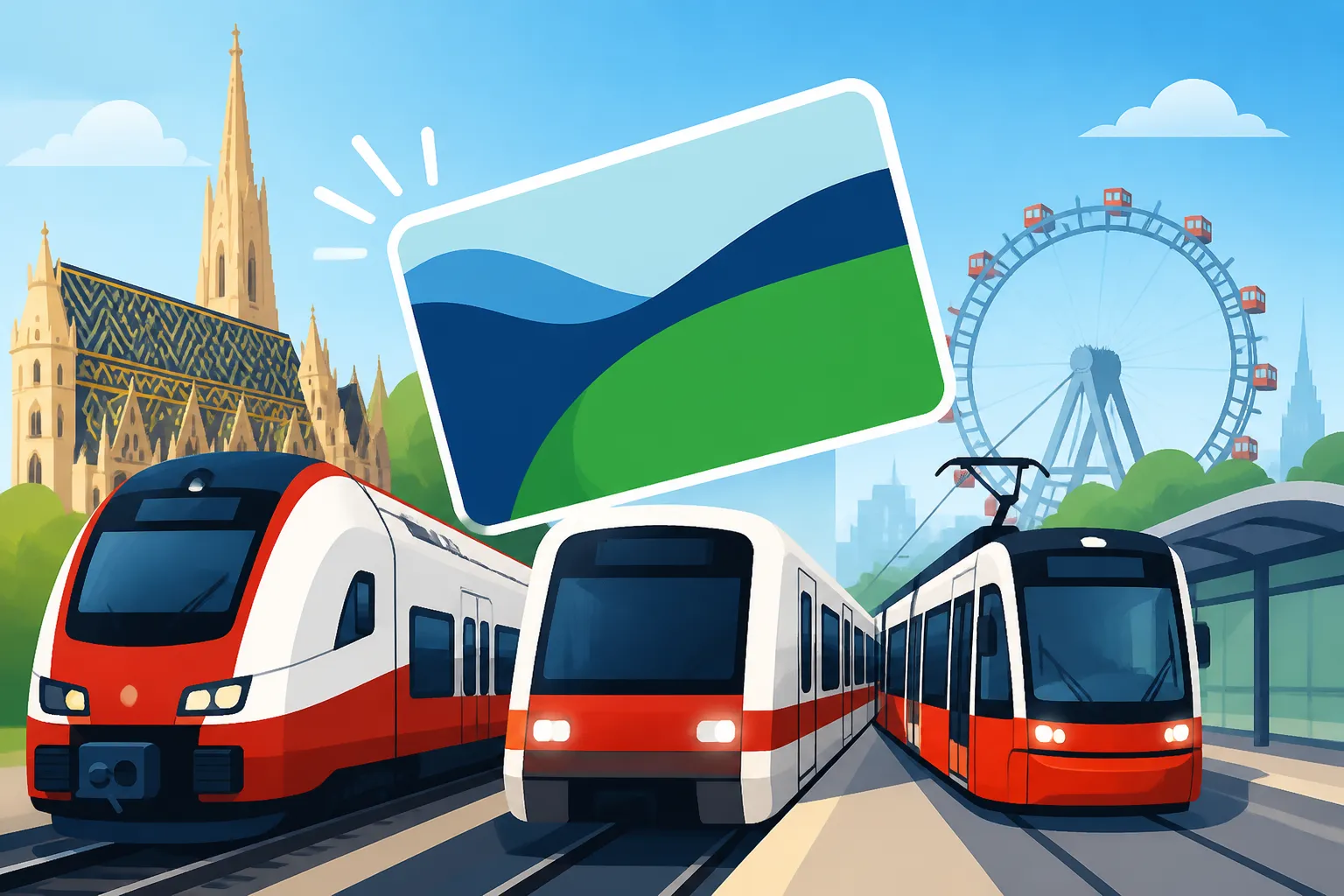
If the 365-euro Vienna pass changed the city, the Klimaticket has changed the entire country. Launched as part of Austria’s commitment to the Paris Climate Agreement, this "climate ticket" allows for unlimited travel on all public and private rail and bus services across the nation. It is, quite simply, the best deal in Europe for anyone who travels between cities.
Is the Klimaticket Worth It? A Cost-Benefit Analysis
The national Klimaticket costs roughly 1,095 euros per year (though prices are adjusted for inflation and there are significant discounts for youth, seniors, and people with disabilities). At first glance, 1,095 euros feels like a lot of money. However, if you are an expat living in Linz but working in Vienna, or if you enjoy weekend trips to the Alps for skiing or hiking, the ticket pays for itself in just a few months.
Consider this: a round-trip ticket from Vienna to Salzburg without any discount cards can easily cost 100 euros. If you make that trip once a month, you've already spent the cost of a Klimaticket. When you factor in that the Klimaticket also covers your city transport in Vienna, Graz, Innsbruck, and every other town, the math becomes a no-brainer. It removes the "friction" of travel. You no longer have to check prices or book in advance; you just hop on the next train. For many, this freedom is a key part of Managing Household Waste: Strict Recycling Rules Explained—it's about a holistic, sustainable lifestyle.
Regional vs. National Klimaticket Options
Not everyone needs to travel from Lake Constance to the Neusiedler See. If your life is centered in one or two provinces, you can opt for a regional Klimaticket. Each province offers its own version. For example, the Klimaticket VOR (for Vienna, Lower Austria, and Burgenland) is significantly cheaper than the national one.
When choosing between them, look at your "center of life." If you rarely leave the eastern region, the regional pass is your best bet. But if you have a "wanderlust" spirit and want to explore the Salzburg Neighborhood Guide: Altstadt vs Affordable Suburbs or go hiking in Tyrol every other weekend, the national version is indispensable. The peace of mind of knowing you can step onto any bus in the middle of nowhere and just show your card is worth the extra few hundred euros.
How to Purchase and Renew Your Klimaticket
Purchasing the ticket is a straightforward process that can be done online or at any major ÖBB service center (like the one at Wien Hauptbahnhof). You will need a photo and a valid ID. The ticket is a sturdy plastic card, but you can also load it into the "Klimaticket" app or the ÖBB app so you always have a digital backup.
Renewal is usually automatic if you set up a SEPA debit, but they will send you a reminder several weeks in advance. If you are planning to leave Austria, you can cancel the ticket after six months of use, though you will lose the "early bird" pricing if you decide to buy it again later. It’s a long-term commitment to public transit that matches the Permanent Residency (Daueraufenthalt-EU) Timeline in its sense of stability.
Mastering the Austrian Federal Railways (ÖBB)
While the Klimaticket covers the cost, you still need to understand the machinery of the ÖBB (Österreichische Bundesbahnen). The red trains of the ÖBB are the lifeblood of the country’s infrastructure, connecting the smallest mountain villages to the grandest European capitals.
Railjet, Nightjet, and Regional Express (REX) Trains
The flagship of the fleet is the Railjet (RJ). These are high-speed, modern trains equipped with Wi-Fi, a restaurant car (the "Bordrestaurant"), and distinct zones for silence or families. If you are traveling between major hubs like Vienna, Linz, Salzburg, or Graz, you will likely be on a Railjet. They are clean, fast, and remarkably comfortable even in second class.
For regional travel, you will encounter the REX (Regional Express) and S-Bahn trains. The REX is the workhorse of the commuter world, stopping at larger regional stations but skipping the tiny ones. The S-Bahn is the local "stopping train." In Vienna, the S-Bahn is integrated into the city network and is vital for crossing the city quickly. Finally, there is the Nightjet. Austria has become the pioneer of sleeper trains in Europe. From Vienna, you can wake up in Paris, Amsterdam, Rome, or Berlin. It’s an incredible way to travel, though you must book weeks (if not months) in advance, as they are incredibly popular.
The Vorteilscard: Why You Should Never Pay Full Price
If you decide the Klimaticket is too expensive for your needs, the next best thing is the ÖBB Vorteilscard. This card gives you a 50% discount on all standard ÖBB tickets. There are several versions: the Vorteilscard 66 (available to everyone online), the Vorteilscard Jugend (for those under 26), and the Vorteilscard Family.
Even if you only take the train four or five times a year, the Vorteilscard usually pays for itself. Many new arrivals are told that buying a full-price train ticket in Austria is a "tourist tax" that residents should never pay. Just remember that the discount only applies to the "Standardpreis." If you find a "Sparschiene" (budget) ticket, the Vorteilscard won't give you an extra discount, as those tickets are already heavily subsidized. This is a common point of confusion, much like Understanding the Apotheke Night Service Fee (Nachtdienstgebühr)—small rules that make a big difference.
Booking Tips and Seat Reservations
In Austria, a ticket does not guarantee a seat. It only guarantees transport. On busy Friday afternoons or Sunday evenings, Railjets can be packed to the rafters. If you are traveling for more than an hour, I highly recommend paying the 3 euros for a seat reservation. There is nothing worse than standing in the gangway of a train for three hours while traveling to Innsbruck Healthcare Guide: Alpine Safety and Medical Care.
When booking through the ÖBB app, look for the "capacity" icon. If it shows three little people in red, the train is expected to be very full. Also, keep an eye out for the "Ruhezone" (Quiet Zone). In these carriages, talking on the phone or listening to loud music is strictly forbidden. Austrians take this very seriously. If you start a loud Zoom call in the Ruhezone, expect a stern "G'schaut" (the famous Austrian stare) or a direct verbal reprimand from your fellow passengers.
| Ticket Type | Best For | Typical Cost (Approx.) |
|---|---|---|
| Single City Ticket | One-off trips within a city | €2.40 – €2.60 |
| 24-Hour Pass | Tourists or busy errand days | €8.00 |
| Vienna Annual Pass | Residents of Vienna | €365.00 |
| Klimaticket National | Frequent inter-city travelers | €1,095.00 |
| Vorteilscard 66 | Occasional train travelers | €66.00 |
Regional Transportation: Beyond the Capital
While Vienna gets most of the attention, the provincial capitals have their own distinct systems that are equally efficient, though they operate on a smaller scale. If you are moving to Graz, Linz, or Salzburg, you’ll find that the "local flavor" extends to the transport.
Graz, Linz, and Salzburg: Local Networks Explained
In Graz, the tram network is the heart of the city. The "Altstadtbim" is a fantastic feature where travel within the historic city center is completely free. Graz also has the Schlossbergbahn, a funicular that takes you up to the iconic clock tower. It’s part of the public transport network, meaning your standard pass covers it. The Graz Neighborhood Guide: Family Areas vs Student Hubs often highlights how well-connected the university districts are via these trams.
Linz relies on its "Linz AG" network, which features some of the longest trams I’ve ever seen. The city is industrial but the transport is incredibly clean. Salzburg, meanwhile, is famous for its "Obus" (trolleybus) system. Because of the city’s compact nature and historic preservation, the electric buses with overhead wires are the primary way to get around. They are silent and environmentally friendly, fitting the pristine image of the city.
Postbus and Alpine Connectivity
When you get out into the "Dorf" (village) life, the big red trains are replaced by the bright yellow Postbuses. The Postbus system is legendary for reaching the most remote corners of the Alps. If there is a paved road, there is likely a Postbus that goes there.
The scheduling can be sparse—sometimes only two or three buses a day in remote valleys—but they are timed to coordinate with train arrivals at the nearest station. This "intermodal" connectivity is what makes it possible to live in the countryside without a car. If you’re heading out for a hike, always check the last bus time. Missing the last Postbus can result in a very expensive taxi ride or an unplanned night in a mountain hut, which might require you to dip into your Emergency Services in Austria: 144, Hospitals, and Crisis Steps knowledge.
Cross-Border Travel to Neighboring Countries
Austria is the "bridge" of Europe, sharing borders with eight countries. This makes international rail travel incredibly easy. From Vienna, you can be in Bratislava in an hour, Budapest in two and a half, and Prague in four.
The ÖBB operates many of these routes in partnership with neighboring national railways like ČD (Czech Republic) or MÁV (Hungary). If you are traveling to Germany, the "Westbahn" is a private competitor to the ÖBB that offers high-quality service between Vienna, Salzburg, and Munich. Often, the Westbahn is cheaper if you book last minute, though it doesn't accept the Vorteilscard (it does, however, accept the Klimaticket).
Alternatives to Public Transit: Cycling and Car-Sharing
Even with a world-class transit system, sometimes you want more flexibility. Austria has embraced the "mobility mix," where public transit is supplemented by robust cycling infrastructure and modern car-sharing schemes.
The Bike Culture: Citybikes and Cycle Lanes
Vienna and Salzburg are incredibly bike-friendly. In Vienna, the city has spent years building separated bike lanes that allow you to traverse the city without ever competing with car traffic. The "WienMobil Rad" is the city’s bike-sharing system, with stations scattered every few hundred meters.
Cycling is not just for the summer. You will see Austrians pedaling through snow and rain, usually with impressive waterproof gear. If you decide to buy your own bike, invest in a very high-quality lock. While violent crime is low, bike theft is a common annoyance in the bigger cities. Also, be aware that there are strict Mandatory Bicycle Registration and Equipment in Austria rules, including specific requirements for reflectors and lights that the police do occasionally check.
Car-Sharing in Austria: ShareNow and Miles
If you occasionally need a car to pick up furniture from XXXLutz or to head into the mountains where the Postbus doesn't go, car-sharing is the answer. Companies like ShareNow and Miles have hundreds of cars parked on the streets of Vienna. You unlock them with an app, drive where you need to go, and park them anywhere within the "home area."
This "free-floating" model is perfect for expats. It avoids the costs of insurance, maintenance, and the dreaded "Pickerl" (annual car inspection). If you have a foreign license, you can usually register with these services easily, though you should check the rules for Converting a Foreign Driver's License in Austria if you plan to stay long-term, as your original license may only be valid for six months.
Taxis and Ridesharing Apps in Major Cities
Uber and Bolt operate in Vienna, but they are regulated differently than in the US or UK. They essentially function as "limousine services" and must follow many of the same rules as traditional taxis. This means prices are relatively consistent and the cars are generally high-end.
Traditional taxis are still very common and can be hailed at "Taxistandplätze" (taxi stands) or called via phone. In smaller towns, taxis are often the only way to get home after the buses stop running. Most taxis now accept cards, but it is always polite (and safer) to ask "Kann ich mit Karte zahlen?" before you get in. Tipping is appreciated but not mandatory; usually, rounding up to the nearest euro or adding one or two euros is sufficient.
Practical Tips for Stress-Free Travel
To truly travel like a local, you need to know the unwritten rules and the technical "gotchas" that can ruin a perfectly good morning.
Dealing with Ticket Inspections and Fines
In Vienna, the transport system operates on an "honor system." There are no turnstiles or barriers. You just walk onto the train. However, "Schwarzkappler" (undercover inspectors) roam the network constantly. They usually work in groups of three or four, wearing plain clothes, and they will suddenly whip out a badge and announce "Die Fahrscheine, bitte."
If you are caught "Schwarzfahren" (riding black/without a ticket), the fine is roughly 105 euros on the spot. They do not care if you are a tourist or if you "didn't understand the machine." It is a strict liability system. Always ensure your ticket is validated (stamped in the little blue or orange machines) before you board a train or tram. If you have a digital ticket on your phone, make sure your battery isn't about to die. A dead phone is not an excuse for not having a ticket.
Accessibility and Traveling with Strollers or Pets
Austria has made massive strides in accessibility. Almost every U-Bahn station has an elevator, and "low-floor" trams and buses are now the standard. If you are traveling with a stroller, there are designated areas on the trains. It is common courtesy to help someone lift a stroller onto an older tram if there is a step—just ask "Darf ich helfen?"
As for pets, Austrians love their dogs, and they are welcome on all public transport. However, there are two strict rules: the dog must be on a leash and must wear a muzzle ("Beißkorb"). Small dogs in a carrying case can travel for free, but larger dogs require a half-price ticket (unless you have a Jahreskarte that includes a pet). You'll find that Pet Ownership: Dog Registration, Taxes, and Leash Laws are quite detailed here, and transport is no exception.
Useful Apps for Every Expat’s Phone
Your smartphone is your most important travel document. Here are the apps you should download on day one:
- ÖBB Scotty: The gold standard for train travel and regional connections. It’s the most reliable for real-time data.
- WienMobil: The official app for Vienna. It allows you to buy tickets, find the nearest bike-share, and even book a taxi.
- Klimaticket App: Essential if you have the national pass.
- Google Maps: Surprisingly good for walking directions and basic bus routes, but less reliable for real-time delays than Scotty.
Mastering these tools will make your transition to Austrian life significantly smoother. Whether you are commuting to work or heading out to explore the Vienna Neighborhood Guide: Best Districts for Expats, the transport system is your ticket to a successful life in this beautiful country.
Disclaimer
The information provided in this guide is for informational purposes only and based on personal experience and public transport regulations as of 2026. While we strive to keep facts up to date, transport prices, zones, and legal requirements in Austria can change. Always verify specific ticket rules and fines with the official providers like ÖBB or Wiener Linien before traveling. This guide does not constitute legal or professional advice.