Finding an English-Speaking Electrician in an Emergency
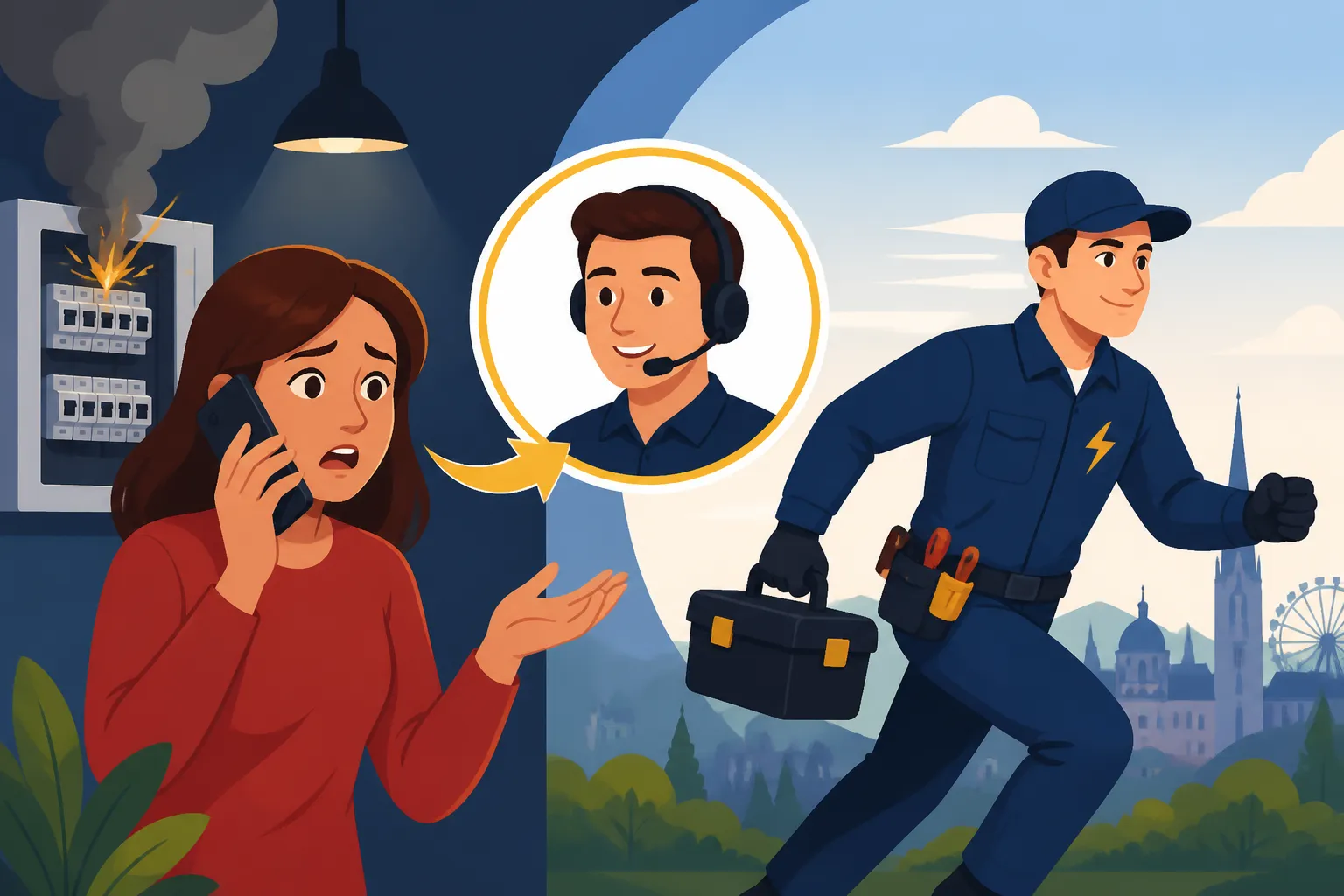
The lights flicker, a loud pop echoes from the hallway, and suddenly you are plunged into total darkness while your dinner is half-cooked on the stove. I remember my first winter in Vienna, standing in a freezing kitchen with a dead fuse box, trying to explain "short circuit" to a dispatcher who only spoke thick Viennese dialect. This guide solves the immediate panic by showing you exactly how to find a reliable English-speaking electrician in an emergency and how to navigate the Austrian repair system without being overcharged.
Assessing the Electrical Emergency in Your Austrian Apartment
Before you pick up the phone and start searching for an emergency contact, it is vital to determine if the problem is localized to your apartment or if it is a wider grid issue. In many cases, what feels like a catastrophic failure is simply a sensitive circuit breaker doing its job. If you live in an older building, which is common when navigating the Altbau vs Neubau: Differences in Rent, Charm, and Heating landscape, your wiring might be significantly older than what you are used to in your home country.
Check your fuse box, known locally as the Sicherungskasten. Most modern Austrian apartments are equipped with a Residual Current Device (RCD), or FI-Schalter. If this switch has flipped down, try to flip it back up. If it immediately snaps back down, you have a "ground fault" or a short circuit in one of your appliances. Unplug everything in the room that lost power and try again. If the power stays on, you don't need an emergency electrician; you just need to identify which toaster or kettle is broken.
However, if you see sparks, smell burning plastic, or if your main breaker keeps tripping even with everything unplugged, you are facing a genuine emergency. This is particularly stressful if you have just finished your Utility Setup: Electricity, Gas, Water, and Internet and aren't yet familiar with the quirks of your building's infrastructure. If the entire street is dark, the problem lies with the grid operator, such as Wiener Netze in Vienna or Energie AG in Upper Austria. In that case, you must call the "Störungsdienst" (fault service) of the grid provider, which is a free service, rather than a private electrician.
How to Find a Reliable English-Speaking Electrician Fast
Finding a tradesman who speaks English in a moment of crisis can feel like looking for a needle in a haystack, but the "Notdienst" (emergency service) culture in Austria is quite robust. While many companies advertise 24/7 service, not all of them will have an English speaker on the dispatch line. As you get settled and follow your Living in Austria 2027: The Expat Starter Guide, it is a smart move to save at least two emergency numbers in your phone before you actually need them.
Start your search on the WKO (Austrian Federal Economic Chamber) website using their "Firmen A-Z" tool. You can filter by "Elektrotechniker" and your district. While the interface is in German, many modern firms list "Englisch" under their language skills. Another highly effective method is using platforms like Willhaben or MyHammer. Many independent electricians, often younger professionals who are very comfortable in English, list their emergency services there.
If you are residing in a popular area like the Vienna Neighborhood Guide: Best Districts for Expats, you might find specialized "Expat Service" companies that act as intermediaries. These agencies coordinate with local tradespeople and provide the English-speaking interface you need. Be aware, however, that these services often come with an additional coordination fee. Always ask specifically: "Do you have a technician who speaks English?" before they dispatch someone to your home.
Understanding the Costs and Notdienst Surcharges
One of the biggest shocks for foreigners in Austria isn't the electrical fault itself, but the bill that follows an emergency call-out. The cost of a "Notdienst" visit is significantly higher than a standard appointment. Under the Renting in Austria: MRG Laws, Leases, and Bestellerprinzip regulations, tenants are often responsible for minor repairs, but the definition of "minor" can be a legal grey area when it involves the building's permanent wiring.
You should expect to pay a "Pauschalpreis" (flat fee) for the call-out itself, plus an hourly rate that is often doubled or tripled for nights, Sundays, or public holidays. In Austria, the "Anfahrt" (travel time) is almost always billed. Unlike some countries where the first hour is included in the call-out fee, Austrian electricians usually bill the travel and then every 15 or 30 minutes of labor starting from the moment they walk through your door.
| Charge Type | Standard Hours (08:00 – 17:00) | Emergency/Night/Weekend |
|---|---|---|
| Call-out Fee (Anfahrt) | €40 – €70 | €90 – €180 |
| Hourly Rate | €80 – €120 | €160 – €250 |
| Materials Markup | 10% – 20% | 20% – 30% |
| Small Parts (Fuses, etc.) | €5 – €15 | €5 – €15 |
When the technician arrives, it is common to feel pressured to sign a work order immediately. Even in the dark, take a moment to look at the "Stundensatz" (hourly rate) written on the form. If you are worried about Money in Austria 2027: Banking, Payments, and Financial Setup, you can ask for a rough estimate before they begin. Most reputable electricians will be able to tell you if it's a simple fuse replacement or a complex wiring issue within the first fifteen minutes.
Essential German Vocabulary for Electrical Repairs
Even if you find an English-speaking electrician, the paperwork and the technical terms they use with their office might still be in German. Knowing a few key words can prevent misunderstandings and ensure you are billed correctly. If you have been focused on Finding English-Speaking Plumbers and Electricians, you likely know that language barriers are the primary source of overcharging in the trades.
- Stromausfall: Power outage.
- Kurzschluss: Short circuit.
- Sicherung: Fuse/Circuit breaker.
- FI-Schalter: The main safety switch (RCD).
- Steckdose: Power outlet/Socket.
- Kabelbrand: Cable fire (a very serious emergency).
- Störungsdienst: Emergency/Fault service.
- Kostenvoranschlag: Cost estimate.
If the electrician informs you that the problem is not inside your apartment but in the "Steigeleitung" (the main power line of the building), stop the work immediately and call your landlord or the "Hausverwaltung" (property management). This is a structural issue, and you should not be paying for this repair out of pocket. In such cases, the liability rules are quite similar to those discussed in Plumbing Leaks: Landlord vs Tenant Repair Responsibilities, where the building's owner is responsible for the main infrastructure.
Landlord Responsibilities and Insurance Coverage
A common question for expats is: "Who pays for this?" If the fault was caused by your own faulty appliance (like a cheap travel adapter), you are responsible for the bill. This is why having Personal Liability Insurance (Privathaftpflicht): A Must-Have is so important in Austria; it may cover damages to the building's electrical system if you accidentally caused a surge.
If the wiring simply failed due to age, the landlord generally must cover the costs. However, in an emergency at 2 AM, you will likely have to pay the electrician upfront and then claim the money back. Always ensure you receive a "Detaillierte Rechnung" (detailed invoice) that breaks down the labor and the parts used. Without this, your landlord or your insurance provider will likely reject your reimbursement claim.
Before you pay, check your Household Insurance (Haushaltsversicherung) Explained policy. Many Austrian home insurance packages include an "Assistance" feature. This is a hidden gem that many expats overlook. If your policy includes this, you call the insurance company's 24-hour hotline instead of searching for an electrician yourself. They will dispatch a vetted, professional electrician to your home and often cover the first €150 to €300 of the bill automatically. This is by far the safest way to avoid scams and ensure you are dealing with a legitimate professional who won't disappear after the job is done.
Finally, keep in mind that Emergency Services in Austria: 144, Hospitals, and Crisis Steps are for life-threatening situations. A power outage is a major inconvenience, but unless there is an active fire or someone in the home depends on electrical medical equipment, do not call the police or fire department for a blown fuse. They will charge you a significant fee for a "Fehleinsatz" (unnecessary call-out) if the situation could have been handled by a private contractor.
Checklist for When the Electrician Arrives
Once you have secured an English-speaking technician, follow these steps to ensure the process goes smoothly:
- Clear the area: Ensure the technician has easy access to the fuse box and any suspected outlets.
- Document everything: Take photos of any visible damage or burnt components before they are replaced.
- Ask for the old parts: In Austria, it is your right to keep the replaced parts. This serves as proof if you need to show your landlord what went wrong.
- Verify the ID: Reputable firms will have branded clothing or a vehicle with their company logo.
- Check the final form: Ensure the start and end times are recorded accurately on the work sheet before you sign.
Dealing with an electrical failure in a foreign country is a rite of passage for many residents. While it feels overwhelming in the moment, the Austrian system is designed to be efficient. By understanding your Estimating Average Utility Costs (Electricity/Gas) in Winter and knowing the difference between a grid failure and a household fault, you can manage the situation with the confidence of a veteran expat.
Disclaimer
This guide is for informational purposes only and does not constitute legal or professional engineering advice. Electrical work in Austria must be performed by certified professionals to comply with safety regulations and insurance requirements. Always prioritize your physical safety and the safety of others in the event of a suspected electrical fire or hazardous wiring.