Bio-Waste (Biotonne) Rules: What Goes in the Brown Bin?
Staring at a pile of wilted spinach and eggshells shouldn't feel like a high-stakes logic puzzle, but in an Austrian apartment block, the wrong choice can lead to a sternly worded note from the Hausmeister. I remember my first week in Graz, hovering over the brown bin with a "biodegradable" plastic bag, only to have a neighbor gently—but firmly—inform me I was doing it all wrong. This guide solves the mystery of the Biotonne once and for all, ensuring you sort your organic waste like a pro and stay on everyone's good side.
The Cultural Significance of the Brown Bin in Austria
To understand the Biotonne, you have to understand the Austrian relationship with the environment. Waste isn't just something to be gotten rid of; it is a resource to be managed. When you move into your first apartment, often discussed in our Living in Austria 2027: The Expat Starter Guide, you will quickly notice that the garbage room is the heart of the building's social contract. If you sort correctly, you are a respected member of the community. If you don't, you are a source of "Betriebskosten" (operating cost) increases for everyone.
The Biotonne, or the organic waste bin, is specifically designed to collect materials that can be turned into high-quality compost or used for biogas production. This process is highly sensitive to "Störstoffe" or contaminants. A single plastic bag in a truckload of organic waste can ruin the entire batch of compost. This is why Austrians are so meticulous. It isn't just about being neat; it is about industrial efficiency and ecological responsibility. As you navigate Everyday Etiquette: Garbage Sorting, Noise, and Ruhezeit, you will realize that proper waste disposal is perhaps the most frequent way you will interact with Austrian rules on a daily basis.
In many cities, the cost of garbage collection is included in your rent or building fees. However, if the city's waste management service finds "Restmüll" (general waste) in the Biotonne, they may refuse to empty it or charge the building a heavy fine to have it sorted manually. This cost is then passed down to all tenants. This is why your neighbors might seem "nosy" about what you are carrying to the bin; they are literally protecting their own wallets.
What Actually Goes Inside the Biotonne
The rules for what qualifies as "bio" can be surprisingly specific. Generally, if it grew out of the ground and hasn't been heavily processed or mixed with chemicals, it belongs in the brown bin. However, let's break this down into the categories you will actually deal with in your kitchen and garden to avoid any confusion.
Kitchen Scraps and Food Waste
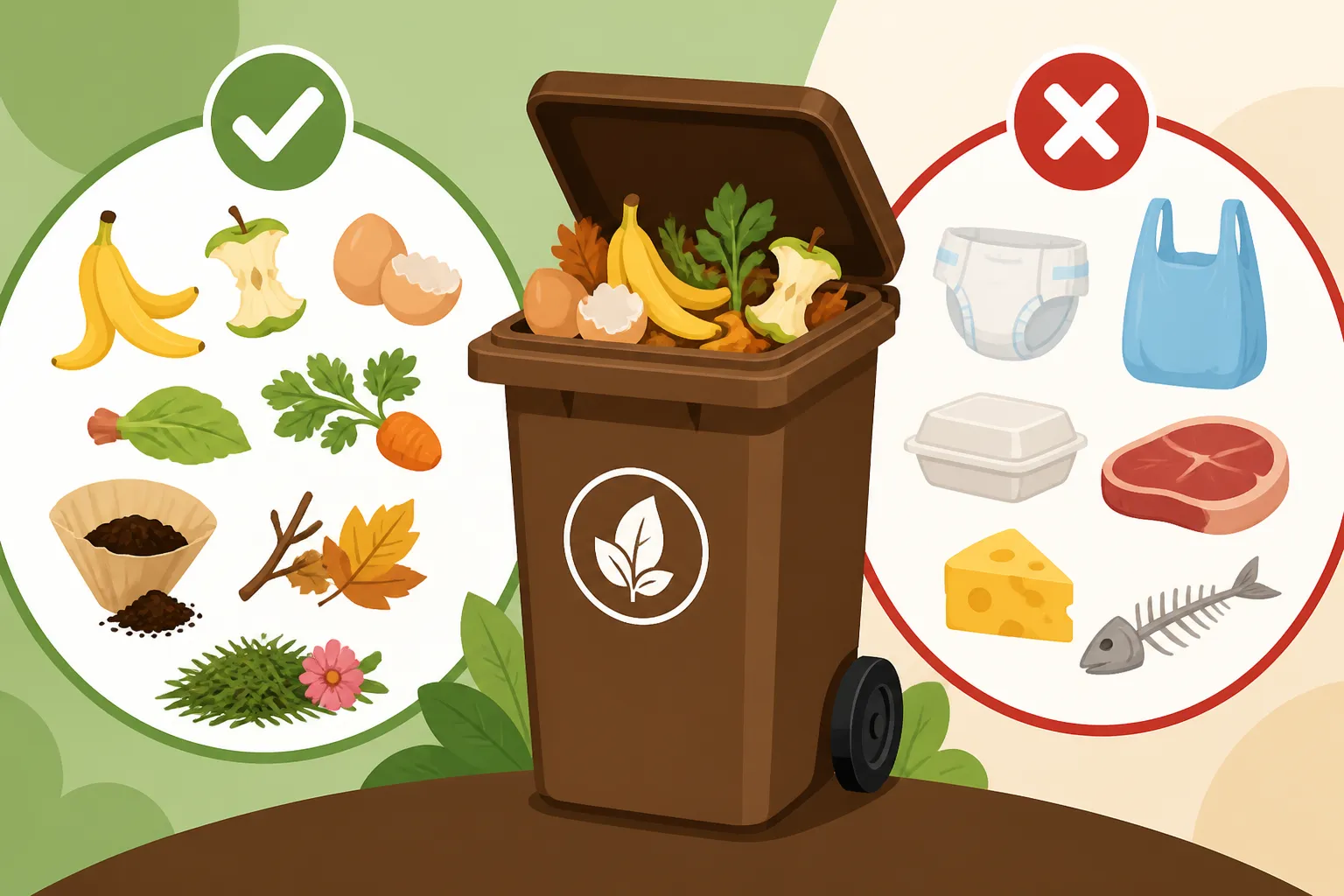
In your kitchen, the Biotonne is your best friend for raw prep waste. This includes fruit and vegetable peels, cores, and pits. Think of potato skins, onion ends, apple cores, and the tops of carrots. Even things that seem tough, like nut shells (walnuts, peanuts, but not large quantities of coconut shells) and the pits from cherries or plums, are perfectly acceptable.
Coffee grounds and tea leaves are also highly encouraged. If you use paper coffee filters, you can throw the entire filter into the bin, provided it is not bleached with heavy chemicals (most standard brown filters in Austria are fine). The same goes for tea bags, though you must be careful: check if the tea bag has a staple or a plastic-coated string. If it does, it is better to rip the bag open, dump the leaves in the bio-waste, and put the bag and string in the Restmüll.
Old bread and pastries can also go in the brown bin, but only if they are free of any plastic wrapping. If you have a half-eaten Semmel that has gone rock hard, toss it in. However, if that bread has a thick layer of plastic-wrapped cheese on it, you should probably put it in the general waste to avoid contaminating the organic stream with dairy fats and plastics.
Garden and Household Plants
If you have a balcony garden or a small yard, the Biotonne is where your green thumb’s leftovers go. This includes wilted flowers, old potting soil (in small amounts), grass clippings, and small twigs. If you are pruning your houseplants, the leaves and stems are perfect for the brown bin.
One real-world scenario to watch out for is when you receive a bouquet of flowers. Once they die, the flowers themselves go in the Biotonne. However, the plastic wrap they came in goes in the yellow bin, and the little packet of "flower food" (which is usually a mix of sugar and chemicals) should have its wrapper put in the Restmüll. It is these small details that separate the veterans from the newcomers. For more on these distinctions, see Managing Household Waste: Strict Recycling Rules Explained.
The Forbidden Items: Common Expat Mistakes
The biggest hurdle for foreigners is often the "it looks organic" trap. Just because something is a natural material doesn't mean the municipal composting system can handle it. In Austria, the systems are tuned for fast-acting decomposition, and certain items can throw a wrench in the gears.
The Great Compostable Plastic Bag Myth
This is the most common mistake I see. You go to the supermarket and buy bags labeled "compostable" or "biodegradable" made from cornstarch. You think you are doing the right thing. However, many Austrian municipalities—including Vienna—explicitly forbid these bags in the Biotonne. Why? Because while they will break down eventually, they don't break down fast enough for the industrial composting cycle, which often takes only 6 to 12 weeks.
When the sorters see a green-tinted plastic bag, they can't tell if it is "bio-plastic" or just regular plastic, so they often pull it out as a contaminant anyway. The best practice is to use paper bags specifically sold for bio-waste or to line your small kitchen bin with old newspaper. If you are curious about where to find these, you can check our guide on Comparing Grocery Prices: Billa vs Spar vs Hofer to see which shops offer the sturdiest paper bio-bags.
Meat, Dairy, and Bones
In a home compost pile, you might avoid meat because it attracts rats. In the Austrian Biotonne, the rules vary by city, but generally, you should avoid putting large amounts of meat scraps, bones, or dairy products in the brown bin. These items can create significant odor problems and attract vermin to the communal garbage area.
In some regions, small amounts of cooked food leftovers are okay, but as a rule of thumb for an expat trying to avoid trouble, keep meat and bones in the Restmüll. This is especially true in an Altbau vs Neubau: Differences in Rent, Charm, and Heating context; older buildings often have less ventilated garbage rooms where the smell of rotting meat can become a localized disaster very quickly.
Pet Waste and Litter
Even if your cat litter claims to be "100% natural wood fibers" and "flushable" or "compostable," do not put it in the Biotonne. Animal feces can contain pathogens that the municipal composting process isn't always hot enough to kill. All pet waste, including the "bio" litters, must go in the Restmüll. The same applies to the contents of your vacuum cleaner bag. Even if you only vacuumed up "dust and hair," that dust often contains synthetic fibers from carpets and clothing.
| Item Category | Biotonne (Yes) | Restmüll (No) | Special Note |
|---|---|---|---|
| Fruit & Veg Scraps | Yes | No | Remove stickers first! |
| Coffee & Tea | Yes | No | Watch out for staples/plastic strings. |
| Meat & Bones | No | Yes | Attracts pests and creates odors. |
| Bio-Plastic Bags | Generally No | Yes | Use paper bags or newspaper instead. |
| Eggshells | Yes | No | Crushing them helps decomposition. |
| Pet Litter | No | Yes | Even if labeled "natural" or "compostable." |
| Garden Waste | Yes | No | Only small branches and leaves. |
Managing Your Bio-Waste Without the Smell
One of the reasons people hesitate to use the Biotonne is the "ick" factor. In the summer, a bin full of wet potato peels can become a breeding ground for fruit flies (Essigfliegen) and unpleasant odors. However, there are veteran tricks to keep your kitchen smelling fresh.
First, moisture is the enemy. Always let your coffee grounds cool and dry slightly before tossing them in. If you have particularly wet waste, like melon rinds, wrap them in a sheet of newspaper before putting them in your bio-bag. The paper absorbs the excess liquid and prevents the bottom of the bag from rotting through. This is a life-saver when you have to carry the bag down three flights of stairs in a building with no elevator.
Second, consider the "Bio-Eimerchen" (small bio-bucket). Don't use a massive bin for your organic waste. Use a small, 3-liter to 5-liter container with a tight-fitting lid that you can empty every 2-3 days. If you leave it longer than that, especially in July or August, you are inviting a fruit fly colony to move in. Some people even keep their small bio-waste container in the freezer or fridge during heatwaves to stop decomposition entirely until they are ready to take it to the main bin.
If you are dealing with Budgeting in Austria: Accurate Cost of Living Benchmarks, you will find that spending a few Euros on a proper, ventilated bio-bin for your counter can save you a lot of money on cleaning supplies and "pest control" later.
Rules, Neighbors, and the Law
In Austria, waste sorting isn't just a suggestion; it is often backed by local ordinances. While the "garbage police" aren't going to break down your door for putting a banana peel in the wrong bin, the social consequences are real.
The Watchful Eyes of the Community
In many apartment complexes, the communal bins are located in a shared courtyard. If you are seen dumping a plastic bag full of mixed trash into the Biotonne during Quiet Hours (Ruhezeit): Can I Vacuum on a Sunday? or any other time, someone will likely say something. It isn't just about being "correct"; it is about the fact that if the bin is contaminated, the garbage collectors will leave it behind. A full, rotting Biotonne that doesn't get picked up for two weeks is a nightmare for every resident in the building.
If a bin is repeatedly contaminated, the building management (Hausverwaltung) may send out a circular letter to all residents threatening to increase the trash collection fees. This often leads to a tense atmosphere. If you ever find yourself on the receiving end of a dispute, it helps to know your rights, as outlined in Filing a Formal Complaint About Noisy Apartment Neighbors, which also covers general neighborly disputes.
Seasonal Changes and Pick-up Schedules
In the winter, bio-waste can freeze to the bottom of the bins. Most municipal services recommend lining the bottom of the large brown bin with cardboard or a thick layer of dry leaves to prevent this. In the summer, pick-up frequencies often increase to deal with the smell. You can usually find the "Abfuhrkalender" (collection calendar) on your city’s waste management website or app (like the "Licht ins Dunkel" or "Mistabc" apps in some regions).
If you are Moving to Austria with Family: Schools and Logistics, making garbage sorting a "game" for the kids is a great way to integrate them into Austrian life. My own children can now identify which bin a juice carton goes into (it's the yellow one, or the blue one depending on the city!) faster than I can. It is a core part of the "Socialization" process here.
Summary of the "Golden Rules" for the Biotonne
To keep your life simple and your neighbors happy, follow these four golden rules:
- No Plastic: Not even the "compostable" kind. Use paper or newspaper.
- Keep it Dry: Wrap wet scraps in newspaper to prevent smells and mold.
- Keep it "Green": If it didn't come from a plant (or isn't an eggshell/coffee ground), think twice before tossing it in.
- When in Doubt, Leave it Out: If you aren't sure if something is "bio" enough, it is better to put it in the Restmüll. A slightly larger general waste bag is better than a contaminated bio-compost stream.
Sorting your waste might feel like a chore at first, but once you get into the rhythm, it becomes second nature. It is a small price to pay for the incredibly clean streets and beautiful public parks that make living in Austria so special. Plus, you’ll avoid those awkward hallway encounters with the Hausmeister, which is a reward in itself.
Disclaimer
This guide provides general information regarding waste management practices in Austria as of 2026. However, waste sorting rules (Abfallwirtschaftsgesetz) can vary significantly between different federal states (Bundesländer) and even between individual municipalities or private building managements. Always check the specific guidelines provided by your local city council (Magistrat or Gemeindeamt) or your building’s Hausordnung. The author is not responsible for any fines or disputes arising from the misinterpretation of local garbage rules. For specific legal advice regarding rental contracts and building fees, please consult a legal professional or the Arbeiterkammer.