Yellow Bin vs Blue Bin: Sorting Plastics and Metals
Standing in front of your apartment's recycling station with an empty yogurt pot in one hand and a tuna can in the other can feel like a high-stakes exam you didn't study for. I remember my first week in Vienna, paralyzed by indecision while a neighbor watched me from her balcony, ready to correct my every move. This guide solves the confusion once and for all, explaining exactly how to navigate the rules for the Yellow Bin and the Blue Bin.
The Great Unification of 2026: Why the Rules Changed
If you have been in Austria for a few years, you likely remember the days when the Blue Bin was the dedicated home for metals and the Yellow Bin (or Yellow Bag in rural areas) was strictly for plastics and composite materials like milk cartons. However, as of 2025 and moving into 2026, Austria has moved toward a nationwide "unification" of the collection system. In many districts, the Blue Bin has actually been phased out or combined into the Yellow Bin.
This change wasn't just to make our lives easier—though it certainly helps. Modern sorting facilities in Austria are now sophisticated enough to separate metals from plastics using high-tech magnets and sensors. By combining these materials into one stream, the country reduces the number of truck trips needed for collection, which fits into the broader sustainability goals you will notice throughout the Living in Austria 2027: The Expat Starter Guide. For many of us living in older buildings, where space is at a premium, having one less bin to worry about in the courtyard is a massive relief.
Despite this unification, the "Yellow Bin" remains the primary point of confusion for newcomers. It is not a "catch-all" for everything that feels like plastic. It is specifically designed for packaging. Understanding the difference between "packaging plastic" and "product plastic" is the secret to avoiding the dreaded "Fehlwurf" (incorrect throw) and keeping your neighbors happy. This is a core part of Everyday Etiquette: Garbage Sorting, Noise, and Ruhezeit, as your sorting habits are often seen as a reflection of your respect for the community.
Navigating the Yellow Bin: What Truly Belongs Inside
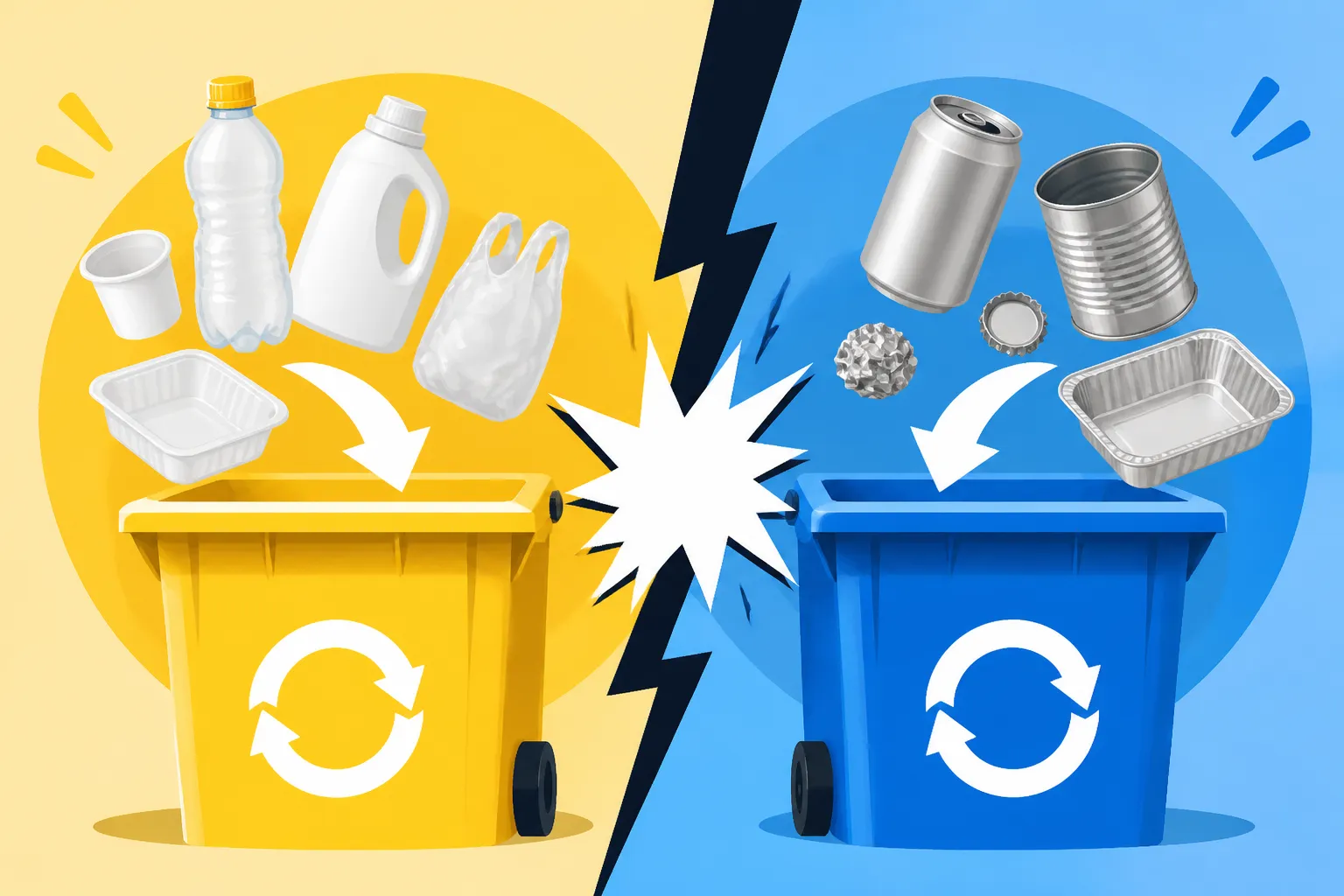
The Yellow Bin (Gelbe Tonne) is the workhorse of Austrian recycling. The rule of thumb is: if it wrapped something you bought at the supermarket, it probably goes here. This includes plastic bottles (PET), plastic films, cleaning agent bottles, and even those annoying plastic trays that hold your blueberries.
A significant part of Managing Household Waste: Strict Recycling Rules Explained involves the concept of "Löffelrein" or "spoon-clean." You do not need to run your plastic through the dishwasher—in fact, doing so wastes water and energy. However, you should ensure that containers are empty and scraped out. A half-full yogurt tub can contaminate an entire batch of recycling, leading to the whole bin being diverted to the incinerator instead of the recycling plant.
In the unified system, the Yellow Bin also welcomes:
- Composite Packaging: These are items made of multiple materials, like TetraPaks (milk and juice cartons). These are particularly valuable for recycling because they contain high-quality paper fibers and aluminum layers.
- Small Metals: If your district has unified its bins, your soda cans, tin cans, and even the aluminum foil from your chocolate bars now live here.
- Plastic Caps: Keep them on the bottles! Modern sorting machines actually prefer the caps to be attached to the bottles so they don't fall through the machinery as "micro-plastics" during the initial phase.
If you are living in a smaller space, such as a studio in the city center, you might find that your Cost of Living in Vienna: Singles vs Families is impacted by how often you have to buy trash bags. To save space, always crush your PET bottles and flatten your milk cartons. An uncrushed bottle is basically just a container for expensive Austrian air, and it will fill your bin in a single afternoon.
The Blue Bin: Does It Still Exist in Your District?
While the trend is toward the Yellow Bin absorbing the Blue Bin's duties, the transition is not 100% complete in every single corner of the country. In some specific regions or industrial districts, you may still see the Blue Bin (Blaue Tonne) standing solo. If you see a Blue Bin, the rules are very strict: it is for metals only.
Items for the Blue Bin (where it still exists) include:
- Beverage cans and food tins.
- Metal lids from glass jars (the glass itself goes to the White or Green Glass bins).
- Aluminum trays and clean foil.
- Empty aerosol cans (like hairspray or deodorant, provided they are completely empty).
If you are unsure whether your district has switched, look at the stickers on the side of the bin. Austrian municipalities are excellent at providing visual guides. If you see both a plastic bottle icon and a can icon on the Yellow Bin, the Blue Bin has been retired. This is a common scenario in many Altbau vs Neubau: Differences in Rent, Charm, and Heating apartments where communal bin areas are being reorganized to be more efficient.
One mistake many expats make is putting "scrap metal" in the Blue or Yellow bin. If you have an old frying pan, a broken metal lamp, or a bicycle chain, these do not belong in your household recycling. These are considered "Altmetall" and must be taken to a local recycling center. For larger items, you should look into Disposing of Oversized Trash (Sperrmüll) at Waste Centers to ensure you aren't fined for leaving heavy metal objects next to the residential bins.
Common Sorting Mistakes and How to Avoid Neighbor Scoldings
In Austria, recycling is a social contract. If you get it wrong, you might find a polite (or not-so-polite) note on your door, or you might be "educated" by the building's Hausmeister. One of the most frequent errors is "nesting." This is the practice of putting one type of plastic inside another to save space—like putting a metal lid inside a plastic margarine tub. The automated sorters cannot see inside the tub, so they will misidentify the material and send it to the wrong pile.
| Item Category | Destination Bin | Expat Pro-Tip |
|---|---|---|
| PET Beverage Bottles | Yellow Bin | Crush them flat and keep the cap on. |
| Milk / Juice Cartons | Yellow Bin | Flatten them completely to save 70% space. |
| Aluminum Foil / Cans | Yellow Bin (or Blue) | Must be "spoon-clean" of food residue. |
| Plastic Toys / Buckets | Restmüll (Black Bin) | These are "products," not packaging. |
| Styrofoam Packaging | Yellow Bin | Only if it came from a product box; otherwise, use a Mistplatz. |
| Medicine Blister Packs | Yellow Bin | Even though they have foil, they count as packaging. |
Another major confusion point is the "product plastic" rule. A plastic toothbrush, a plastic toy, or a plastic bucket are all made of plastic, but they are not packaging. In the Austrian system, these items belong in the Restmüll (Black Bin) or must be taken to a specialized collection point. The recycling fee you pay when you buy a bottle of Coke covers the recycling of that bottle, but there is no such built-in fee for a plastic hairbrush.
If you find yourself overwhelmed by the amount of waste, remember that Recycling Bins Color Code: Altpapier, Plastik, Restmüll is designed to be a logical flow. If you are ever in doubt, the Black Bin (Restmüll) is the "safe" choice to avoid contaminating the recycling stream, though you should strive to use it as a last resort. For those sensitive to noise, remember that tossing glass or heavy metals into bins can be quite loud. To remain a "good neighbor," try to avoid recycling metals or glass during the Quiet Hours (Ruhezeit): Can I Vacuum on a Sunday?—usually between 10:00 PM and 6:00 AM, and all day on Sundays.
Practical Logistics for Your Austrian Apartment
Setting up your home for success is half the battle. Most Austrian kitchens are not naturally equipped with five different built-in bins. You will likely need to get creative. Many expats use stackable bins from IKEA or XXXLutz to separate their paper, plastic/metal, and general waste under the sink or in a utility closet.
If you are dealing with a humid summer in Vienna, the Yellow Bin can occasionally become a bit smelly if your containers aren't rinsed well enough. This is a good time to practice the same airflow techniques used for your living space, such as Lüften: The Austrian Art of Ventilating Rooms in Winter, ensuring your waste storage area stays dry and cool.
For those who have recently moved and are still unpacking, you might have an enormous amount of plastic wrap and styrofoam. If your building's Yellow Bin is full, do not leave bags on the floor. This is a major "no-go" in Austrian housing culture and can attract pests. Instead, wait for collection day or take the excess to a "Mistplatz" (recycling center). Using these facilities is a rite of passage for any long-term resident. You can even find specific bins there for things like old cooking oil and batteries, which should never, ever go into the Yellow or Blue bins.
Ultimately, mastering the Yellow vs. Blue bin saga is about more than just trash; it is about integrating into the local rhythm. Once you stop fearing the bins and start understanding the logic behind the "unification," you will find that living in Austria becomes much more intuitive. It’s one less hurdle in your journey to feeling like a local.
Disclaimer
This guide is provided for informational purposes only and reflects the general waste management regulations in Austria as of 2026. Local rules can vary significantly between provinces (Bundesländer) and even individual municipalities (Gemeinden). Always check the specific sorting instructions provided by your local city council or waste management authority (e.g., MA 48 in Vienna) to ensure compliance and avoid potential fines.