Preventing Mold (Schimmel) in Old Altbau Apartments
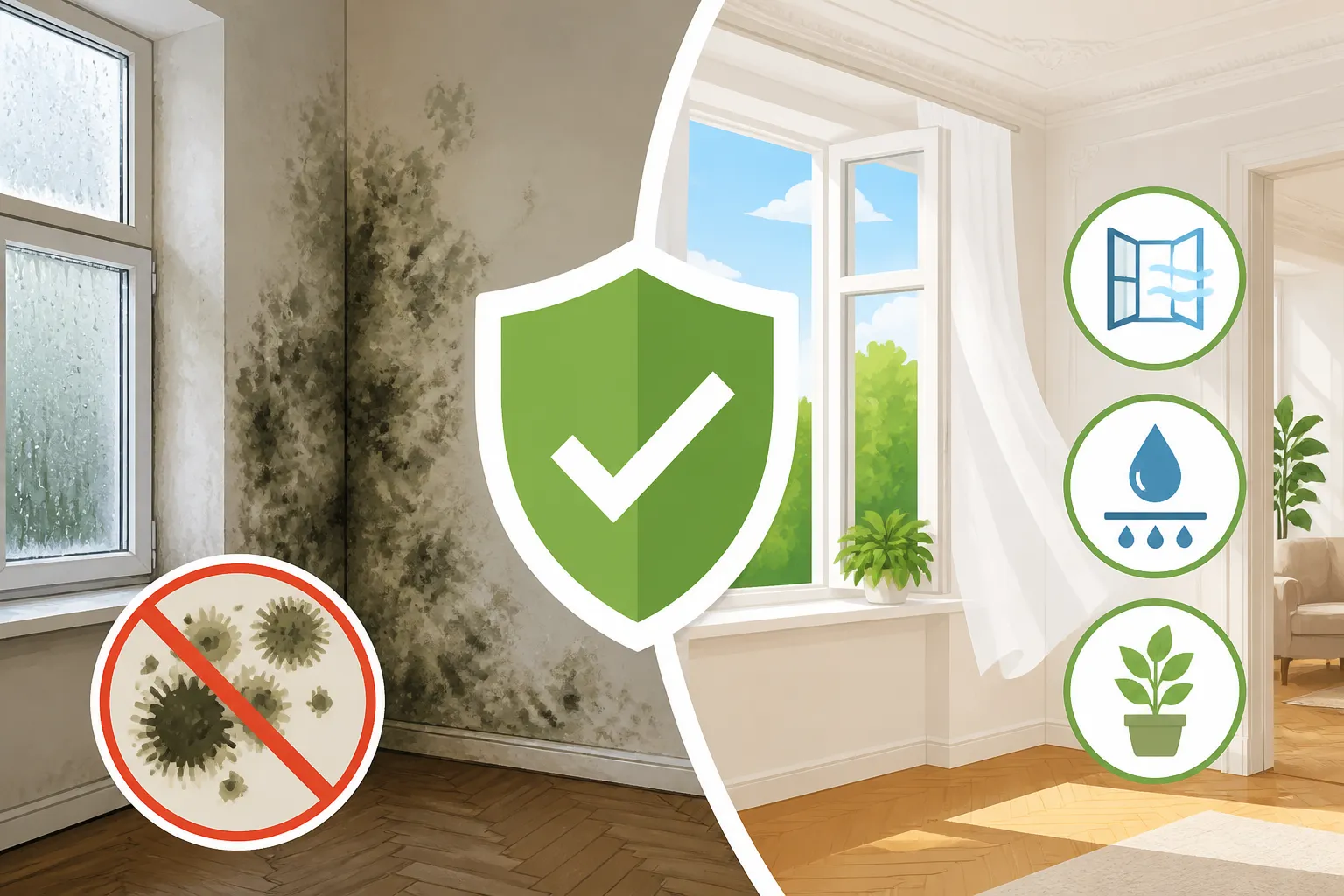
Moving into a high-ceilinged, 19th-century Altbau feels like a dream until you spot that fuzzy black patch lurking behind your wardrobe in February. I still remember the heart-sinking moment I moved my sofa in my first Vienna apartment only to find a wall covered in damp, dark spores. This guide provides the exact ventilation and heating rituals needed to keep your Austrian home mold-free and healthy.
Understanding the Altbau Physics Why Mold Loves Old Buildings
Living in an Altbau is a quintessentially Austrian experience, but these beautiful buildings come with a specific set of physical challenges that modern apartments simply do not have. To understand how to prevent mold, or Schimmel, you first have to understand how these buildings breathe. Most Altbau structures were built with thick brick walls designed to absorb and release moisture slowly. However, over the decades, renovations have often disrupted this natural balance.
The most common issue arises from the installation of modern, double-glazed plastic windows in buildings that were never meant to be airtight. In the old days, original wooden windows were slightly drafty, allowing for a constant, albeit subtle, exchange of air. When these are replaced with high-efficiency windows, the apartment becomes a sealed box. All the moisture you produce—from cooking, showering, and even just breathing—has nowhere to go. It stays trapped inside, looking for the coldest surface to settle on.
In an Altbau vs Neubau: Differences in Rent, Charm, and Heating, you will notice that the exterior walls of older buildings are often significantly colder than those of modern constructions. When warm, moist air inside your flat hits a cold exterior wall, it reaches the "dew point." This results in condensation, which provides the perfect breeding ground for mold. This is why you will almost always find mold on the walls facing the street rather than the walls shared with your neighbors. Understanding this temperature differential is the first step in winning the war against Schimmel.
Another factor is the high ceilings. While they look magnificent, they create a massive volume of air that needs to be managed. Heat rises, meaning the air near your 3.5-meter-high ceiling might be toasty, while the air trapped behind a cabinet near the floor remains cold and damp. This stagnation is exactly what mold spores need to colonize a surface. If you are just starting your journey and settled into a classic flat, checking out a Living in Austria 2027: The Expat Starter Guide can help you understand the broader context of maintaining an older Austrian property.
The Art of Stoßlüften and Daily Maintenance
If there is one German word you must learn immediately, it is Stoßlüften. In many countries, people leave a window "cracked" or tilted (known as Kippen in Austria) for hours. In an Austrian Altbau, this is a recipe for disaster. Leaving a window tilted for a long time during winter cools down the masonry around the window frame without actually exchanging the air effectively. This creates a localized cold spot where condensation will inevitably form.
The correct technique is Stoßlüften: opening your windows completely wide for five to ten minutes, three to four times a day. This creates a "shock" exchange where the moist indoor air is replaced with dry outdoor air. Because the walls and furniture stay warm, the fresh air heats up quickly once you close the windows, keeping your energy bills manageable. When you do this, try to achieve Querlüften (cross-ventilation) by opening windows on opposite sides of the apartment to create a draft.
During my first winter in Graz, I thought I was doing enough by opening one window. I was wrong. You need to be aggressive with it. Open the balcony door, the kitchen window, and the bedroom window all at once. This is especially critical after activities that generate high humidity. If you have just finished a hot shower or boiled a big pot of pasta, you must perform a dedicated session of Stoßlüften. Don't rely on the tiny bathroom fan; in an Altbau, those fans are often decades old and barely move any air.
To take the guesswork out of this process, I highly recommend buying a digital hygrometer for every room. These devices are cheap and will show you the exact humidity percentage. Your goal is to keep the humidity between 40% and 55%. If you see it creeping toward 60%, it is time to open the windows wide. In the depths of a snowy January, the air outside is very dry, so even a five-minute blast will drop your indoor humidity significantly. This proactive monitoring is a staple of Winterizing Your Austrian Apartment Against Drafts and should be part of your daily routine.
| Metric | Ideal Range for Altbau | Impact of Going Outside Range |
|---|---|---|
| Relative Humidity | 40% – 55% | Above 60% triggers mold growth; below 35% causes dry skin and throat. |
| Room Temperature | 19°C – 21°C | Dropping below 16°C makes walls too cold, leading to condensation. |
| Ventilation Frequency | 3-5 times daily | Insufficient exchange leads to CO2 buildup and moisture stagnation. |
| Furniture Gap | 10cm – 15cm | Blocking airflow creates "cold pockets" where mold thrives undetected. |
Strategic Furniture Placement and Interior Layout
One of the most common mistakes expats make is pushing their heavy furniture directly against the walls. In a modern apartment, this is fine. In an Altbau, it is a death sentence for your wallpaper. Because the exterior walls are cold, you need to ensure that air can circulate behind your wardrobes, sofas, and beds. If you trap a pocket of air between a heavy wooden cabinet and a cold exterior wall, that air will stay still, get cold, and dump its moisture on the wall.
The "10-Centimeter Rule" is non-negotiable. Always leave a gap of at least 10 centimeters between your furniture and any exterior-facing wall. This allows the heat from your radiators to flow behind the furniture, keeping the wall surface temperature above the dew point. I learned this the hard way after finding a green forest growing behind my headboard. Now, I even use small spacers or blocks to ensure my furniture cannot be pushed back against the wall accidentally.
When planning your layout, try to place your largest pieces of furniture—like wardrobes and bookshelves—against interior walls (the walls you share with your neighbors). These walls are naturally warmer because there is a heated room on the other side. Save the exterior walls for smaller items like desks or low-standing chairs that don't block the entire wall surface. If you must place a bed against an exterior wall, choose a frame with legs rather than a solid divan base to allow air to flow underneath.
Pay special attention to the corners of the room. Corners are "thermal bridges" where heat escape is highest, making them the coldest points in the apartment. Avoid cluttering corners with boxes or laundry baskets. If you use a drying rack for clothes, never place it in a room with poor circulation or against an exterior wall. Drying a single load of laundry can release several liters of water into the air. If you don't have a tumble dryer, you must ventilate even more frequently while your clothes are drying. For those navigating the complexities of a new lease, understanding these physical quirks is as important as knowing the Renting in Austria: MRG Laws, Leases, and Bestellerprinzip.
Proper Heating Habits for Humidity Control
It is tempting to turn the heating off entirely when you leave for work to save money, especially with rising Wien Energie, Verbund costs. However, in an Altbau, letting the temperature drop too low is dangerous. When the air temperature falls, its ability to hold moisture decreases. If your apartment cools down to 15°C while you are at work, the moisture that was previously suspended in the air will settle onto your walls.
The golden rule is to keep a consistent base temperature. Never let your rooms drop below 17°C or 18°C, even at night or when you are away. Keeping the walls warm is much more energy-efficient than letting them freeze and then trying to blast them with heat later. Warm walls stay dry; cold walls get damp. If your apartment uses District Heating (Fernwärme) vs Gas Heating Costs, you likely have thermostatic valves on your radiators. Setting these to "2" or "3" is usually sufficient to maintain a safe baseline.
In rooms you don't use often, like a guest bedroom or a storage room, it is even more important to keep the door closed and the heat at a medium level. If you leave the door to a cold room open, the warm, moist air from the rest of the flat will rush into that cold room and condense on the walls. This is a classic "hidden" cause of mold in larger Altbau apartments. You think you are saving money by not heating the spare room, but you are actually inviting Schimmel to move in.
If you are worried about the cost of keeping the heat on, remember that damp air is actually harder and more expensive to heat than dry air. By keeping your humidity low through Stoßlüften and maintaining a steady temperature, your heating system will actually operate more efficiently. If you find yourself in a dispute with your landlord regarding heating systems or structural dampness, having Legal Protection Insurance (Rechtsschutzversicherung) Overview can be a lifesaver to ensure your rights are protected.
Legal Rights and Tenant Responsibilities in Austria
When mold appears, the first question is always: who is responsible? In Austria, this can be a contentious issue. Generally, the landlord is responsible for the structural integrity of the building, including issues like leaking pipes or rising damp. However, the tenant is responsible for "proper usage" of the apartment, which includes adequate heating and ventilation. If the landlord can prove that the mold is a result of your failure to ventilate or heat correctly, you may be held liable for the repair costs.
The moment you spot mold, you must inform your landlord or the Hausverwaltung (property management) in writing. Do not just call them; send an email with photos. This is critical for your Household Insurance (Haushaltsversicherung) Explained and for any future legal claims. If you ignore the problem, it will only get worse and more expensive to fix. If the mold is caused by a structural defect, such as a cracked facade or a roof leak, the landlord must pay for the remediation. This is a common scenario in older buildings where Plumbing Leaks: Landlord vs Tenant Repair Responsibilities often overlap.
In many cases, a landlord will immediately blame the tenant for not "lüften" enough. To protect yourself, keep a "Lüftungsprotokoll" (a log of when you ventilated and what the hygrometer readings were) for a week or two. This shows that you are doing your part as a responsible tenant. If the mold persists despite your best efforts, it is likely a structural issue. You might want to seek advice from the Mietervereinigung (Tenants' Association) or the Arbeiterkammer if you feel you are being unfairly blamed.
Be aware that minor surface mold (less than the size of a palm) can often be treated yourself with a 70% alcohol solution or a specialized anti-mold spray from a hardware store like OBI or Bauhaus. However, if the mold covers a large area or is growing deep into the plaster, professional intervention is required. Removing large amounts of mold yourself can release dangerous levels of spores into the air, which can cause respiratory issues or allergic reactions. If you need to perform significant repairs or move out due to the condition of the flat, ensure you follow all Quiet Hours (Ruhezeit) and Apartment Neighbor Etiquette during the cleanup process.
Summary Checklist for a Mold-Free Winter
Keeping an Altbau dry is a marathon, not a sprint. It requires a change in habits that might feel strange if you come from a climate where windows are always shut or central AC handles everything. By following these steps, you can enjoy the high ceilings and parquet floors without the health risks of Schimmel.
- Buy Hygrometers: Place one in the living room, bedroom, and bathroom.
- Stoßlüften Regularly: 5-10 minutes of wide-open windows, 3 times a day.
- Constant Heat: Never let the room temperature drop below 17°C.
- Furniture Gaps: Ensure 10cm of space behind all items on exterior walls.
- Laundry Logic: If drying clothes inside, ventilate twice as often.
- Bathroom Care: Wipe down shower walls and ventilate immediately after use.
- Monitor Corners: Keep an eye on the coldest spots of the apartment for early signs.
By staying proactive and understanding the unique needs of your Austrian home, you can prevent mold from ever becoming a major problem. It takes a bit of discipline, but the reward is a beautiful, healthy living space in one of the world's most charming architectural styles.
Disclaimer
This guide is intended for informational purposes only and does not constitute legal or professional advice. Building regulations and tenant laws in Austria can change, and individual lease agreements may contain specific clauses regarding apartment maintenance. Always consult with a qualified legal professional or a certified mold remediation specialist for specific issues regarding your residence. Use chemical mold removers with caution and follow all manufacturer safety instructions.