Finding a Dentist (Zahnarzt): What ÖGK Covers and What You Pay
Waking up with a throbbing toothache is a nightmare in any language, but navigating the Austrian dental system as an expat adds a layer of administrative anxiety that can feel overwhelming. I remember sitting in a cold waiting room in Vienna’s 7th district, staring at a German-only intake form and wondering if my standard public insurance would cover a basic filling or if I was about to spend my entire grocery budget for the month. This guide simplifies the process of finding a dentist, understanding what the ÖGK covers, and navigating the inevitable out-of-pocket costs.
The Reality of Dental Care in Austria: Public vs. Private
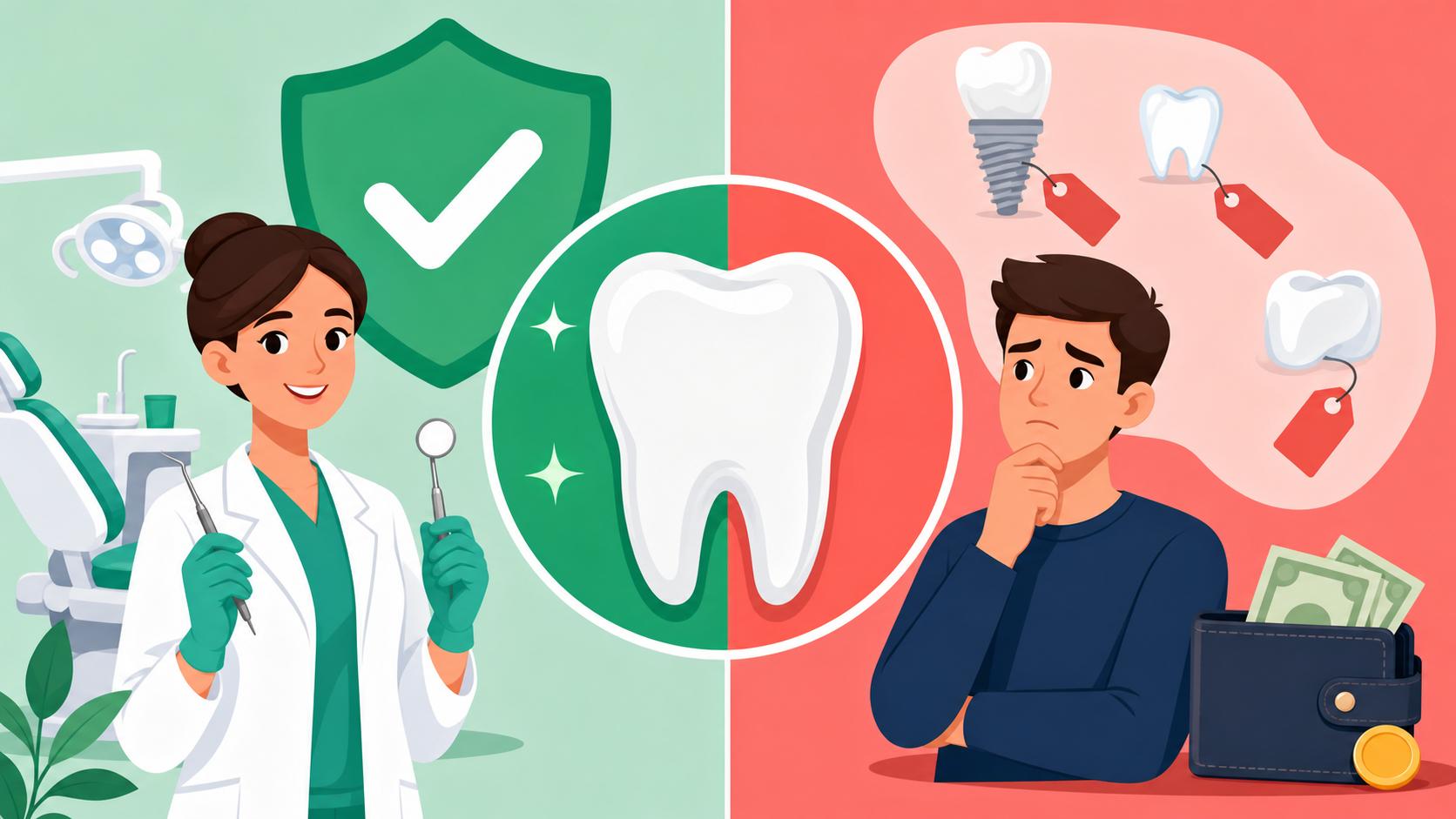
When you first start looking for a dentist, or "Zahnarzt," you will immediately notice two distinct paths: the Kassenarzt and the Wahlzahnarzt. This distinction is the bedrock of the Public vs Private Health Insurance in Austria Explained framework and dictates exactly how much you will pay at the end of your appointment. A Kassenarzt has a direct contract with the social insurance carriers, meaning they bill the ÖGK directly. You show up, hand over your card, and for many basic services, you never see an invoice.
The Wahlzahnarzt, or private dentist, operates differently. They do not have a direct billing contract with the public insurance system. You pay the full amount upfront—often via a bank transfer or card at the reception—and then you must navigate the process of How to Submit a Wahlarzt Invoice to ÖGK for Refund. While you can get back approximately 80% of what a public doctor would have been paid for the same service, the private doctor’s rates are usually much higher, leaving you with a significant "Selbstbehalt" or deductible.
Wait times are the biggest differentiator here. If you are looking for a Kassenarzt in a central location, you might be told that the next available appointment for a routine checkup is three months away. Private dentists, on the other hand, can often see you within the week. I’ve personally found that for emergencies, having a private backup is a lifesaver, but for my Annual Free Health Checkup (Gesundenuntersuchung) Details, sticking to a public doctor is much more budget-friendly.
Managing Wait Times and Appointment Booking
If you are in pain, you cannot wait three months. In Austria, most public dental clinics have "Schmerzstunden" or pain hours, usually early in the morning. If you show up at 7:30 AM without an appointment, they are legally required to treat your acute pain, though you might wait several hours in a crowded hallway. For non-emergencies, using tools like DocFinder can help you see real-time reviews and sometimes even book online, which is a godsend for those of us still perfecting our German telephone etiquette.
When booking, always ask specifically: "Haben Sie alle Kassen?" (Do you take all insurance providers?). This ensures that they accept your specific carrier, whether it is the ÖGK, SVS, or BVAEB. It is a common mistake to assume a "Kassenarzt" takes every insurer, only to find out the practice is limited to certain providers. It is a vital part of Finding Medical Care in Austria: Clinics, Hospitals, and Referrals to confirm this before you sit in the chair.
The Role of the Zahnambulatorium
If you cannot find a private practice with an open slot, Austria has a network of "Zahnambulatorien." These are large, state-run dental clinics operated directly by the health insurance funds. They are often located in larger district centers. While they lack the "boutique" feel of a private office, they are incredibly efficient and deal with everything from basic cleanings to complex surgeries. For many expats, this is the most reliable way to ensure you are staying within the bounds of what the Austria Healthcare System 2027: Complete Guide for Foreign Residents covers.
What the ÖGK Public Insurance Actually Covers
The Austrian public health system is generous, but it is focused on "necessary and appropriate" care rather than aesthetic perfection. This means that the Mandatory Coverage: Who Must Register for Public Health Insurance includes basic dental preservation. If you have a cavity, the ÖGK will pay for it to be filled. However, there is a catch that catches many expats off guard: the material of the filling.
In the public system, the standard covered filling for molars (the teeth in the back) is often amalgam (silver). If you want "white" composite fillings in your back teeth, you will almost always have to pay a "Zuschuss" or an additional fee out of your own pocket. For the front teeth (the ones visible when you smile), white fillings are generally covered because they are considered socially necessary. It is a strange distinction to navigate during a procedure, so it is wise to ask for the price of composite versus amalgam before the dentist starts drilling.
Emergency Procedures and Pain Management
If you find yourself needing Emergency Services in Austria: 144, Hospitals, and Crisis Steps, the dental equivalent is quite robust. Simple tooth extractions, the opening of an abscess, and basic root canal treatments are fully covered by the ÖGK. The goal of the public system in an emergency is to get you out of pain and prevent infection. If a tooth is deemed "non-savable," the extraction is free.
However, if you want to save a tooth through a highly complex, multi-visit root canal using microscopic technology, the public insurance will only cover the "standard" version. Many dentists will offer the advanced version as a "privatleistung" (private service), where you pay for the extra time and tech. It’s a classic example of Healthcare Costs: Kassenarzt vs Wahlarzt Differences Explained; the basic health need is met for free, but the "gold standard" comes at a price.
Surgery and Extractions
Wisdom tooth removal is a rite of passage that is luckily covered under the public scheme if a dentist or oral surgeon deems it medically necessary. If you are referred to a specialist (Kieferchirurg), you should check if they are a "Vertragspartner" (contract partner) of your insurance. If they are, the surgery, the local anesthesia, and the follow-up stitches are all handled via your The Austrian e-card: Registration, Photo Rules, and Usage Guide. If you opt for general anesthesia for a simple extraction because of dental anxiety, be prepared to pay for the anesthesiologist yourself, as this is often viewed as a "luxury" rather than a medical necessity.
The Out of Pocket Reality: What You Will Pay For
This is where the "free" healthcare myth meets the reality of the dentist’s chair. There are several common procedures in Austria that almost no public insurance covers fully. The most common is the "Mundhygiene" or professional dental cleaning. Unlike in some other countries where a cleaning is part of your biannual checkup, in Austria, it is treated as a preventive private service.
| Procedure | ÖGK Coverage Status | Estimated Out-of-Pocket Cost |
|---|---|---|
| Annual Checkup | 100% Covered | €0 |
| Professional Cleaning (Mundhygiene) | Not Covered | €80 – €160 |
| White Filling (Back Teeth) | Partial/Not Covered | €40 – €120 |
| Root Canal (Standard) | 100% Covered | €0 |
| Dental Implant | Not Covered | €1,500 – €3,000 |
| Porcelain Crown | Partial (Small Grant) | €600 – €1,200 |
As you can see, the Cost of Professional Dental Cleaning (Mundhygiene) in Austria can vary wildly. Many expats are shocked to find that even with top-tier employment insurance, they still have to pay for a cleaning. However, some insurance groups like the SVS (for freelancers) offer a "Health Bonus" if you complete certain preventive steps, which can sometimes offset these costs.
High-End Aesthetics and Prosthetics
If you are looking for veneers, professional whitening, or expensive gold inlays, the ÖGK will provide zero subsidy. These are considered purely cosmetic. Crowns and bridges fall into a gray area. The ÖGK provides a "fixed subsidy" (Festzuschuss), but it is usually a small fraction of the total cost. If a crown costs €900, the insurance might only contribute €150, leaving you with a massive bill.
This is the primary reason many locals and expats alike look into Private Health Insurance: Hospital Class Coverage Upgrades or specific dental add-ons. If you know you have "bad teeth" inherited from your parents, a private dental plan might be the only way to avoid a five-figure bill for a bridge or implants later in life.
Braces and Orthodontics
For adults, the ÖGK almost never pays for braces unless it is related to a severe jaw deformity or a corrective surgery. For children, the rules changed significantly a few years ago with the introduction of "Gratis-Zahnspange" (Free Braces). If a child has a severe misalignment (classified as IOTN grade 4 or 5), the insurance covers 100% of the cost with a contract dentist. If the misalignment is minor, the parents pay. Understanding if Does ÖGK Cover Braces (Zahnspange) for Children? applies to your family requires a specific screening by an orthodontist who has a contract for these "free" services.
Navigating Your First Visit: Logistics and Documentation
Your first visit will always begin with the e-card. Without this piece of plastic, you are effectively a private patient. If you are new to the country, ensure you have completed The e-card Photo Requirement: How and Where to Register to keep your card active. When you arrive, the receptionist will swipe the card to see if you have valid insurance. If you have recently changed jobs, there can sometimes be a lag in the system, so having a copy of your ÖGK Enrollment Step-by-Step for Employed Residents in Austria paperwork can be a lifesaver.
Communication Strategies
Many dentists in major cities like Vienna, Graz, or Salzburg speak excellent English, but the support staff (assistants and receptionists) may not. If your German is shaky, I recommend writing down your symptoms beforehand. Phrases like "Ich habe Zahnschmerzen" (I have a toothache) and "Ist das eine Kassenleistung?" (Is this covered by insurance?) are essential. If you are struggling to find someone who speaks your language, check our specific city guides like Vienna Healthcare Guide: Top Expat Clinics and Hospitals for recommendations of international-friendly practices.
The Heil- und Kostenplan
Before any major work is done—anything beyond a simple filling—the dentist is required to give you a "Heil- und Kostenplan" (Treatment and Cost Plan). This document is your financial Bible. It lists exactly what the dentist intends to do, what the ÖGK will pay, and what your "Privatanteil" (private share) will be. Do not sign this until you understand it. I’ve had cases where I took this plan to a second dentist for a "Zweitmeinung" (second opinion) and saved several hundred euros. In the Austria Healthcare System 2027: Complete Guide for Foreign Residents, you have the right to ask for a cheaper alternative, such as a metal crown instead of porcelain, to save money.
Reimbursement and Financial Strategies
If you choose a private dentist (Wahlarzt), the payment process is a two-step dance. First, you pay the doctor the full amount. Then, you submit the detailed, itemized invoice to the ÖGK. You can do this via the "Meine SV" app or the Logging into FinanzOnline with the ID Austria App portal. The reimbursement is not based on what you paid, but on 80% of what the ÖGK would have paid a public doctor for that same work.
If your private dentist charges €200 for a filling that the ÖGK values at €50, you will only get back €40 (80% of 50). This is a common point of frustration for expats. It is why Using a Wahlarzt (Private Doctor) and Claiming 80% Refunds is a strategy best reserved for those with supplemental private insurance or those who value speed and comfort over cost-saving.
Tax Deductions for Dental Work
One "pro-tip" many expats miss is that high dental costs can be tax-deductible. In Austria, if your "extraordinary expenses" (including medical and dental bills not covered by insurance) exceed a certain percentage of your income, you can claim them on your Filing Income Tax (Einkommensteuer) as a Freelancer or your standard employee tax return. Keep every single receipt, even the small ones for Pharmacies (Apotheken) and Medication Rules in Austria, as they all add up toward that threshold.
Specialized Care and Emergency Situations
What happens when your crown falls out on a Saturday night? Every province in Austria has a "Zahnärztlicher Notdienst" (Dental Emergency Service). In Vienna, there is a dedicated night clinic at the University Dental Hospital. You don't need an appointment, but you do need your e-card and a lot of patience. These clinics only perform "emergency maintenance"—they won't give you a new bridge, but they will cement a temporary one or provide the necessary Emergency Rooms in Austria: Triage, Waiting, and What to Bring care to stop a hemorrhage or infection.
Finding an Emergency Dentist on a Weekend
You can find the list of "on-call" dentists by calling 141 or checking the website of the Austrian Dental Chamber (Zahnärztekammer). Be aware that if you visit a dentist on a Sunday or public holiday, there is often a "Feiertagszuschlag" (holiday surcharge). This is usually covered by the ÖGK if it’s a public emergency doctor, but always confirm. For more on late-night health needs, see Calling 1450: Austria's 24/7 Telephone Health Advice Line.
Pediatric Dentistry
Taking a child to the dentist in a foreign country adds another layer of stress. Austria has excellent "Kinderzahnärzte" who specialize in making the experience less terrifying. For children, the Pediatricians (Kinderarzt): Required Vaccines and Checkups schedule often includes recommendations for their first dental visit around their first birthday. The goal is to get the child used to the "Stuhl" (chair) before any actual work is needed. Most of these preventive visits for children are fully covered, and establishing a relationship early can prevent the need for expensive corrective work later.
Important Disclaimer
The information provided in this guide is for informational purposes only and does not constitute legal, financial, or medical advice. Healthcare regulations, insurance coverage limits, and costs in Austria are subject to change. Always consult with your insurance provider (ÖGK, SVS, BVAEB) or a qualified tax professional regarding your specific situation and coverage eligibility. Refer to official government resources for the most up-to-date legal requirements.