Insurance Essentials: What’s Mandatory vs Optional
Moving to Austria often feels like a constant battle with paper and ink, especially when you realize that "insurance" isn't just a suggestion here—it’s a social pillar. I remember the sheer panic I felt when my landlord asked for my "Privathaftpflicht" and I had no idea what that word even meant. This guide breaks down exactly which policies you legally need and which ones are just local favorites to keep you protected and compliant.
The Austrian Insurance Landscape: Navigating the Mandatory Basics
Austria is a country that prizes security and social solidarity, which translates into a system where certain insurance types are non-negotiable. If you are living, working, or even just driving here, the state and the law require you to be part of the collective safety net. This is not just a matter of avoiding fines; it is often a prerequisite for your residence permit or your ability to register a vehicle at the local "Zulassungsstelle."
Public Health Insurance and Social Security
The most critical component of life in Austria is the mandatory social insurance system. Unlike some countries where you choose a provider on the open market, Austria assigns you to a specific carrier based on your employment status and location. If you are an employee, you are likely covered by the ÖGK (Österreichische Gesundheitskasse), while freelancers and the self-employed navigate the nuances of SVS Health Insurance: Rules for Freelancers and Self-Employed. This coverage is comprehensive, covering everything from hospital stays to basic dental work, and it is funded via direct deductions from your gross salary.
Once you are registered, you will receive the social security card, or e-card. Navigating The Austrian e-card: Registration, Photo Rules, and Usage Guide is one of the first administrative hurdles every expat must clear. It serves as your digital key to the entire Austria Healthcare System 2027: Complete Guide for Foreign Residents, allowing doctors to bill the state directly for your visits. Without this, you are essentially "invisible" to the public medical system, which can lead to massive out-of-pocket expenses for even a routine check-up.
For those who do not fit into the standard employment boxes, such as students or those on specific "Settlement" permits without work rights, voluntary self-insurance is often the only path. The state allows you to "opt-in" to the public system to ensure you meet the legal requirements for your visa. It is a dense system, and many find that Public vs Private Health Insurance in Austria Explained helps clarify why you might still want a private "Zusatzversicherung" even when you are already paying hundreds of Euros into the public pot every month.
Motor Vehicle Liability Insurance
If you plan on owning a car in the Alpine Republic, you cannot even get your license plates without proof of "Kfz-Haftpflichtversicherung" (Third-Party Liability). This insurance is mandatory to protect other road users from the costs of accidents you might cause. When you go to register your car, the registration office will ask for an "Abfragecode" or a digital insurance confirmation. Without this, the process stops dead in its tracks.
The mandatory portion only covers damage to others. However, given the price of repairs in Austria and the frequency of hail storms or deer collisions in rural areas, most expats quickly realize the "mandatory" minimum isn't enough. You will hear locals talking about "Kasko" insurance—either "Teilkasko" (Partial) or "Vollkasko" (Comprehensive). While these are technically optional, many banks will require "Vollkasko" if you are financing the car. It covers theft, vandalism, and damage to your own vehicle, which is a lifesaver when a sudden "Hagelschaden" (hail damage) dents your hood during a summer storm in Styria.
Another quirk of the Austrian system is how the cost is calculated. It is not just about your driving history; it is also about the engine power (kW) and the "Bonus-Malus" system. You start at a base level (usually Level 9), and for every year you drive without an accident, you move down a level, which lowers your premium. If you have a clean driving record from your home country, try to get a written confirmation from your previous insurer. Some Austrian providers, like Allianz or Generali, might credit you those years, potentially saving you hundreds of Euros annually.
The New ORF-Beitrag and Household Compliance
While not "insurance" in the traditional sense of a policy against risk, the broadcasting levy is a mandatory household obligation that acts much like a social tax. As of 2024 and continuing into 2026, the old GIS system has been replaced. Every household, regardless of whether you own a television or a radio, must pay the fee. Understanding the ORF-Beitrag 2026: The New Broadcasting Household Levy Guide is essential because the authorities are proactive about enforcement, and ignoring the bills can lead to administrative fines that far exceed the original cost.
The logic behind the change was to move away from the "monitoring" of devices and toward a "solidarity" model where everyone contributes to public media. For expats, this is often a point of frustration, especially if your German isn't yet fluent enough to enjoy the programming. However, there are exemptions for low-income households, students receiving certain grants, or people with disabilities. If you fall into these categories, you must actively apply for the exemption; it is never granted automatically.
The payment is usually collected annually or every two months via SEPA direct debit. If you are moving between apartments, you must remember to deregister your old address and register the new one, as the "Meldezettel" system is linked to these databases. It is one of those small administrative tasks that, if forgotten, results in a "Yellow Slip" from the post office and a headache of back-payments that can ruin a monthly budget.
Essential Personal Protections: The Non-Negotiable Optional Insurance
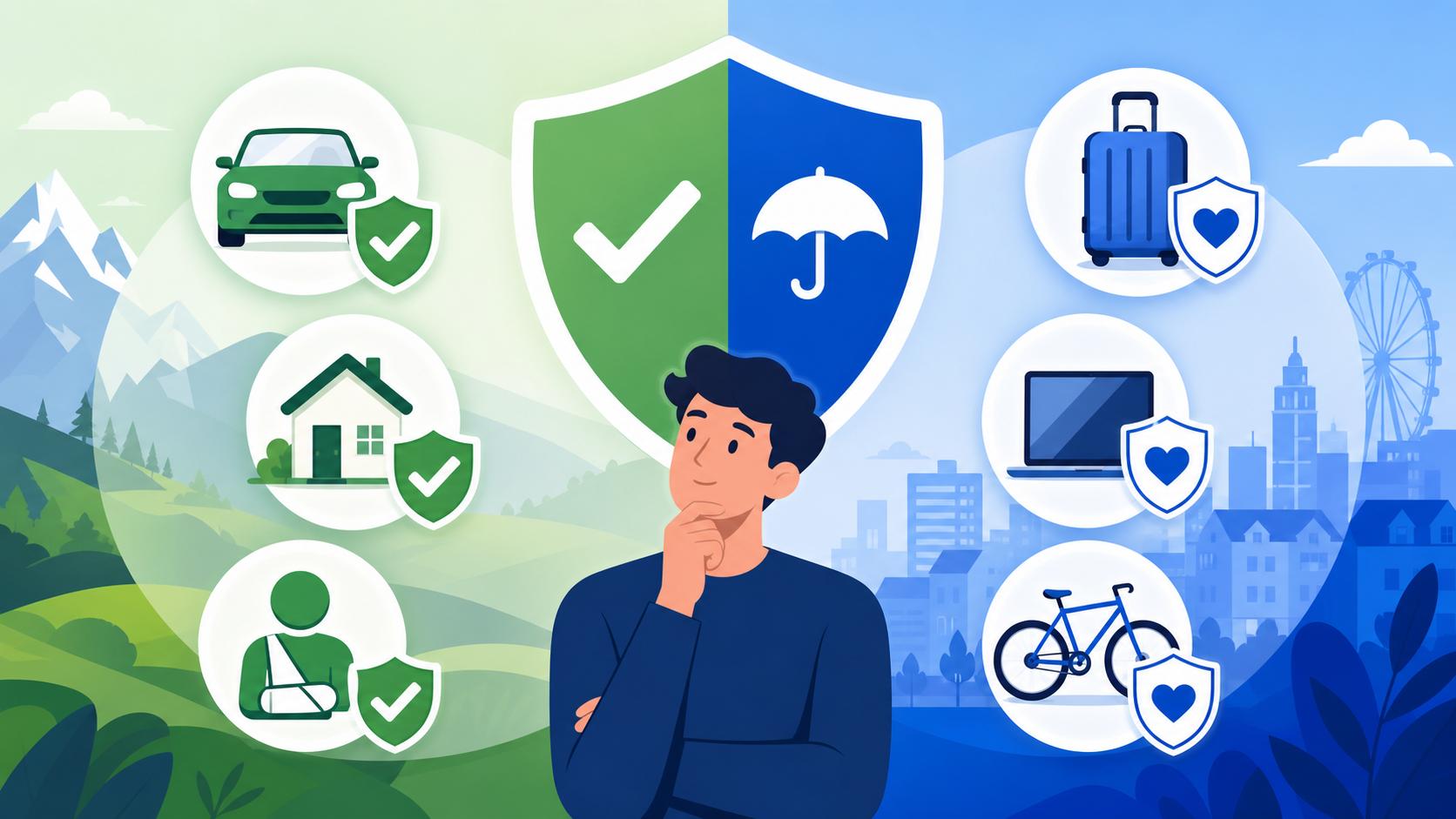
In Austria, there is a category of insurance that is technically optional by law but effectively mandatory in social practice. If you do not have these, you are viewed as taking a massive, unnecessary risk. landlords will often refuse to sign a lease without proof of coverage, and if you cause an accident as a pedestrian or cyclist, the lack of these policies can lead to personal bankruptcy.
Personal Liability Insurance (Privathaftpflicht)
If you only buy one optional insurance policy in Austria, let it be this one. Personal Liability Insurance (Privathaftpflicht): A Must-Have protects you if you accidentally injure someone or damage their property. In Austria, the legal liability for personal negligence is unlimited. If you accidentally step into the bike lane and cause a cyclist to crash and require surgery, you are personally responsible for their medical bills, loss of income, and "Schmerzensgeld" (pain and suffering).
What many foreigners don't realize is how broad this coverage is. It usually covers you, your spouse/partner, and your children. It even covers you if you are a tenant and accidentally cause a fire or water damage that ruins the building. Most "Privathaftpflicht" policies in Austria are bundled into a household insurance policy, but they can be bought separately.
In 2026, most policies offer coverage up to 5 or 10 million Euros for a very small monthly premium (often less than 10 Euros). This is the "peace of mind" policy that keeps you safe from the litigious side of European law. It also covers "passive legal protection," meaning if someone makes an unjustified claim against you, your insurance company will hire the lawyers to fight it on your behalf.
Household Insurance (Haushaltsversicherung)
If you are renting an apartment, your "Mietvertrag" (lease) will almost certainly include a clause requiring you to have Household Insurance (Haushaltsversicherung) Explained. This covers the contents of your home—furniture, electronics, clothes—against fire, theft, water damage, and storms. More importantly, as mentioned above, it almost always includes that vital personal liability component.
When setting up your policy, you need to be careful about "Unterversicherung" (under-insurance). The insurance company calculates the value of your belongings based on the square meters of your apartment. If you have a 100sqm apartment but only insure it for the value of a studio, they will only pay out a fraction of any claim you make. Always ensure you are providing the correct square footage and mention any high-value items like professional camera gear or expensive jewelry, as these often require a "Zusatz" (add-on).
Another local nuance is the coverage for "Grobe Fahrlässigkeit" (gross negligence). Standard policies might refuse to pay if you leave a candle burning or leave a window open and get robbed. In the competitive 2026 market, many premium policies now include gross negligence as standard. Given how easy it is to forget a stove burner or leave a "tilt" window open, this is an add-on often recommended to expats. It is also worth checking if your policy covers Finding English-Speaking Plumbers and Electricians in an emergency, as some insurers offer a "Home Assistance" hotline.
Legal Protection Insurance (Rechtsschutzversicherung)
Austrians are generally law-abiding, but they are also very quick to involve lawyers when disputes arise over property lines, noise, or employment contracts. Legal Protection Insurance (Rechtsschutzversicherung) Overview is the shield that allows you to stand your ground. Whether it is a dispute with a landlord over a security deposit or a disagreement with an employer about "Abfertigung" (severance), the costs of a lawyer in Austria can quickly reach thousands of Euros.
A standard "Rechtsschutz" policy allows you to call a legal hotline for advice and covers the costs of attorney fees, court costs, and expert witnesses. For expats, this is particularly valuable when dealing with Employment Rights: Arbeiterkammer, Contracts, and Leave issues. If you feel you were wrongfully terminated or denied your 14th salary, having an insurance company back your legal case gives you significant leverage.
Keep in mind that these policies usually have a "Wartezeit" (waiting period) of three months before you can make a claim. This means you cannot buy the insurance today to solve a problem that started yesterday. I highly recommend getting a policy that includes "Miet-Rechtsschutz" (rental protection) and "Arbeits-Rechtsschutz" (labor protection). In a foreign country where the laws are written in complex "Juristendeutsch," having a professional in your corner is worth every cent of the premium.
Health and Medical Supplements: Bridging the Gap
While the public system is robust, it is not perfect. Long wait times for specialists and the "Kassenarzt" vs "Wahlarzt" dilemma lead many expats to look for supplemental coverage. If you want a more "premium" experience in the Austrian medical system, you have to look beyond the mandatory e-card.
Private Health Insurance Upgrades (Sonderklasse)
The biggest complaint among expats is the lack of privacy in public hospitals—you are often in a room with three to six other people. "Sonderklasse" insurance is a private upgrade that covers the cost of a double or single room and allows you to choose your own treating physician or surgeon. It also significantly reduces wait times for non-emergency surgeries like knee replacements or cataracts.
There are two main types of private health insurance in Austria: hospital coverage and outpatient coverage. Outpatient coverage allows you to visit "Wahlärzte" (private doctors) who don't take the e-card. These doctors generally have much shorter wait times and offer longer consultation periods. You pay the doctor's bill upfront and then submit it to both your public insurer and your private supplement to get 100% of the cost back.
The cost of this insurance depends heavily on your age and health status when you sign up. If you are a young expat planning to stay in Austria long-term, signing up early "freezes" your health profile, making it much cheaper than if you wait until your 40s or 50s. It is also worth noting that How the e-card Service Fee is Deducted applies regardless of whether you have private insurance; the private policy is always an "on top" expense, never a replacement for the mandatory social contributions.
Occupational Disability Insurance (Berufsunfähigkeit)
While the Austrian state provides a "Berufsunfähigkeitspension" (disability pension), the requirements to qualify are incredibly strict, and the payout is often not enough to maintain an expat's lifestyle or cover a mortgage. Occupational disability insurance pays you a monthly "Rente" (pension) if you can no longer work in your specific profession due to illness or injury.
This is particularly important for high earners or those in specialized fields like IT, engineering, or surgery. If a surgeon loses the dexterity in their hands, they might still be able to work a desk job, and the state might refuse a full pension. A private "BU" policy, however, would trigger a payout because they can no longer perform their specific job.
When choosing a policy, look for the "Verzicht auf abstrakte Verweisung" clause. This ensures the insurance company cannot tell you to go work a different, lower-paying job instead of paying your claim. It is a complex product, and it is wise for expats to sit down with a "Versicherungsmakler" (broker) to ensure the definitions of "disabled" match their career reality.
Dental Supplements (Zahnversicherung)
The public e-card covers basic dental work—think silver fillings and extractions. However, if you want white composite fillings, implants, or high-end orthodontics, the out-of-pocket costs in Austria are staggering. A "Zahnzusatzversicherung" (supplemental dental insurance) bridges this gap.
Most of these policies have a "Staffelung" (sliding scale) for payouts. In the first year, they might only pay 500 Euros, increasing each year you are a member. They also usually cover "Mundhygiene" (professional cleaning) once or twice a year, which costs about 120-150 Euros in Vienna. If you go twice a year, the insurance often pays for itself just through the cleanings alone.
For parents, checking whether the policy covers braces for children is vital. The state only covers the most severe cases of misalignment (the "Kassen-Zahnspange"). For cosmetic or moderate corrections, you will be looking at bills of 3,000 to 5,000 Euros. Having a dental supplement for your kids starting at age 4 or 5 can save you a fortune during their teenage years.
Lifestyle and Leisure Insurance: Protecting Your Hobbies
Austria is an outdoor playground, but the mountains and the lakes come with specific risks that standard policies often exclude. If you are an active expat, you need to look at your coverage through the lens of your weekend adventures.
Alpine Safety and Mountain Rescue
One of the most shocking realizations for many newcomers is that the mandatory e-card does not cover mountain rescue. If you twist your ankle on a hiking trail in the Tyrolean Alps and need a helicopter (Christophorus) to get you down, you will receive a bill for several thousand Euros. Mountain Rescue Costs (Alpinpolizze) is the solution to this "Alpine trap."
You can get this coverage through several channels. The most common is joining the "Alpenverein" (Austrian Alpine Club). Your membership fee includes a comprehensive insurance package that covers mountain rescue, repatriation, and even liability for mountain sports. Alternatively, many private accident insurance policies include a "Bergungskosten" (recovery costs) rider.
Even if you are "just a hiker," don't skip this. The weather in the Alps changes in minutes, and even the most prepared person can find themselves needing help. The cost of a yearly membership is roughly the price of a couple of pizzas in Vienna, making it the best value-for-money insurance in the country for anyone who leaves the city limits.
Pet Insurance (Tierkrankenversicherung)
Austrians love their dogs, but the cost of veterinary care has risen sharply in recent years. While Mandatory Liability Insurance for Dog Owners in Vienna is a legal requirement in many provinces (to cover if your dog bites someone or causes a crash), "Tierkrankenversicherung" (health insurance for pets) is optional but growing in popularity.
A major surgery for a dog can easily cost 2,000 Euros or more. Modern pet policies cover surgeries, diagnostic imaging like MRIs, and chronic medications. Some even contribute toward the "Hundeabgabe" (dog tax) or vaccinations. When looking for a policy, check for "OP-Versicherung" vs "Vollschutz." OP-Versicherung only covers surgeries, which is the most common "catastrophic" cost, and is much more affordable than full coverage.
Be aware that most pet insurers will not cover "pre-existing conditions." If your dog already has hip dysplasia, you won't find a policy that covers it. This is why most veteran expats suggest insuring your pet as soon as you bring them to Austria or as soon as they are puppies.
Travel and Accident Insurance
While your e-card works in other EU countries (via the back of the card), the coverage is limited to what a local would receive. This often means no medical repatriation back to Austria. Private travel insurance is essential for any trips outside the EU and highly recommended for trips within the EU to cover the "return transport" home if you are seriously ill.
Furthermore, a private "Unfallversicherung" (Accident Insurance) is vital because the state accident insurance only covers you while you are at work or on the direct commute to work. If you fall off a ladder at home on a Sunday or crash your bike during a weekend trip to the Neusiedler See, the state won't pay any disability or lump-sum benefits.
Private accident insurance pays out a lump sum based on the degree of permanent impairment. It also covers things like "cosmetic surgery" after an accident or "home conversion costs" if you end up in a wheelchair. For expats who might not have a massive family support network in-country, this financial buffer is a critical part of a long-term safety plan.
Understanding the Cost: Premiums, Deductibles, and Taxes
Insurance in Austria isn't just about the base price; there are several factors that influence what actually leaves your bank account every month. Understanding these will help you compare offers more effectively.
How Insurance Premiums are Calculated in Austria
In Austria, insurance premiums are usually quoted as a monthly or yearly price. A key factor is the "Versicherungssteuer" (Insurance Tax), which is usually 11% for most property and liability policies and 4% for life insurance. This is already included in the price you see on comparison sites like Durchblicker, but it’s good to know why the math might look slightly "off" compared to the net premium.
Your location matters significantly. A "Haushaltsversicherung" for an apartment in the 10th district of Vienna might be priced differently than one in a rural village in Vorarlberg due to the calculated risk of burglary or natural disasters like flooding. Age is also a major factor for any "person-related" insurance, such as health or life coverage. The "entry age" (Eintrittsalter) determines your premium for the life of the contract, which is a strong incentive to sign up for supplemental health insurance while you are young.
Dealing with Deductibles (Selbstbehalt)
Almost every optional insurance policy in Austria offers the choice of a "Selbstbehalt" (deductible). This is the amount you pay out of pocket before the insurance kicks in. For example, a 150 Euro deductible on your household insurance can lower your monthly premium by 20% or more.
While it is tempting to choose a high deductible to save money, you need to be realistic about your cash flow. If you have three small claims in a year (a broken window, a stolen bike, and a water leak), you will pay that deductible three times. Some policies offer a "disappearing deductible" where the amount you pay decreases for every year you don't make a claim. This is a popular feature in the Austrian market and is worth asking about when signing a new "Polizze."
Tax Deductibility of Insurance Premiums
One of the few silver linings of the high Austrian tax rate is that some insurance premiums can be tax-deductible as "Werbungskosten" or "Sonderausgaben." For example, if you are a freelancer, your SVS contributions are fully deductible as business expenses. Similarly, the "Arbeits-Rechtsschutz" portion of a legal insurance policy can often be deducted because it relates to your income-earning activities.
For private individuals, the rules for "Sonderausgaben" (special expenses) have become stricter in recent years, but it is always worth keeping your "Lohnzettel" and insurance confirmations for your yearly tax return (Arbeitnehmerveranlagung). If you are unsure, consulting a "Steuerberater" (tax advisor) can help you maximize these deductions, especially if you have high-cost policies like private health or occupational disability.
Dealing with Claims and Bureaucracy: An Expat’s Survival Guide
The true value of insurance is only revealed when you have to use it. In Austria, the claims process is formal, documented, and requires a specific "Etikette" to ensure a smooth payout.
The Role of the Insurance Broker (Versicherungsmakler)
Unlike in some countries where you buy everything through a "Captive Agent" who only works for one company, most expats in Austria benefit from using an independent "Versicherungsmakler." A broker has a legal "duty of care" to the client, not the insurance company. They compare the entire market to find the best deal and, most importantly, they handle the claims for you.
If you have an accident, you call your broker. They tell you exactly what photos to take, which forms to fill out, and they negotiate with the insurer if a claim is unjustly denied. The best part? The broker's service is usually free for you, as they are paid a commission by the insurance company. Finding a broker who speaks English is one of the most effective ways to lower your "administration stress" in Austria.
Filing a Claim: The Paperwork Trail
When an incident occurs—whether it is a car crash or a flooded bathroom—the first rule in Austria is: Document everything. Take high-resolution photos from multiple angles before you clean anything up. If it is a theft or a car accident involving another person, you must get a "Polizeiprotokoll" (police report). Most insurance companies will not process a theft claim without a police file number.
For medical claims, ensure the bill is "detailliert." It should show the diagnosis code, the specific services rendered, and proof of payment (usually a bank transfer receipt or a cash receipt). You then submit this to your public insurer first. Once they pay their small portion (or issue a rejection letter), you submit the remainder to your private insurer. Modern apps like "Meine ÖGK" or the apps from private insurers like UNIQA or Merkur have made this process much faster in 2026.
Switching or Cancelling Contracts
Austrian insurance contracts often have long "Laufzeiten" (terms). It is common for a household or legal policy to have a 3-year or even a 10-year term. However, there is a legal "right to cancel" after the third year, regardless of what the contract says, provided you give three months' notice.
If you are leaving Austria permanently, you have a "special right of termination" (Sonderkündigungsrecht). You will need to provide proof of your "Abmeldung" (deregistration from the city) to cancel your policies before the term is up. Always send your cancellation via "Einschreiben" (registered mail) to ensure you have proof of the date it was received. In the digital age, some companies allow cancellation via "ID Austria," but the old-fashioned registered letter remains the "gold standard" for avoiding disputes.
Comparative Table: Mandatory vs. Highly Recommended Insurance
| Insurance Type | Legal Status | Mandatory For | Key Benefit |
|---|---|---|---|
| Public Health (ÖGK/SVS) | Mandatory | Everyone (Employees/Self-Employed) | Basic medical care, e-card access |
| Motor Liability (Kfz) | Mandatory | Car/Motorcycle Owners | Registration plates, 3rd party damage |
| ORF-Beitrag | Mandatory | Every Household | Compliance with public media levy |
| Personal Liability | Optional | Highly Recommended for Everyone | Protection against unlimited damage claims |
| Household (Haushalt) | Optional | Most Tenants (via Lease) | Protection for furniture and fire damage |
| Legal (Rechtsschutz) | Optional | Employees and Tenants | Attorney fees and court cost coverage |
| Mountain Rescue | Optional | Hikers and Skiers | Avoidance of 5,000+ Euro helicopter bills |
| Private Health | Optional | High Earners / Families | Private rooms, choice of doctor, shorter waits |
Important Disclaimer
The information provided in this guide is for informational purposes only and does not constitute legal or financial advice. Insurance laws and regulations in Austria are subject to change, and specific policy terms can vary significantly between providers. We strongly recommend consulting with a licensed insurance broker or legal professional before signing any contracts or making changes to your coverage to ensure the policies meet your individual needs and legal obligations. Don’t just take my word for it—get it in writing from a pro!