Cross-Border Money: Best Ways to Transfer Funds
Sending money across borders while living in Austria often feels like navigating a labyrinth of hidden fees and opaque exchange rates that quietly eat away at your hard-earned savings. I remember the frustration of my first major transfer to Vienna, where a "flat fee" ended up costing me hundreds because of a terrible currency conversion rate. This guide solves the complexity of international transfers by breaking down the most cost-effective, secure, and legally compliant methods for moving your funds.
Understanding the Austrian Banking Landscape for Cross-Border Transfers
When you first arrive and begin the process of Opening an Austrian Bank Account: Requirements and Top Banks, you are quickly introduced to the traditional world of Austrian finance. The "Big Three"—Erste Bank, Raiffeisenbank, and Bank Austria—dominate the physical landscape with their ubiquitous branches. However, when it comes to moving money internationally, these institutions often operate on legacy systems that favor the bank’s profit margins over the expat's wallet. I've spent many afternoons sitting in wood-paneled offices in the First District, trying to decode why a simple wire transfer was taking five business days.
The traditional banking system in Austria is built on stability and personal relationships, which is great for a mortgage but less ideal for high-frequency or high-volume international transfers. These banks typically use the SWIFT network for non-Euro transfers, which involves multiple intermediary banks, each taking a small "correspondent" fee. By the time your money reaches its destination, the final amount can be significantly lower than what you sent. For those of us living here, understanding the nuances of how these banks interface with the global market is the first step toward financial literacy in the Alpenrepublik.
Furthermore, traditional banks often provide a "retail" exchange rate rather than the mid-market rate you see on Google or Reuters. This spread—the difference between the rate the bank uses to buy currency and the rate they sell it to you—is effectively a hidden tax. When you are paying for International vs Bilingual Schools in Vienna and Beyond or sending money home to pay off a student loan, these percentage points add up to thousands of euros over a few years. It is essential to look beyond the "zero-fee" marketing slogans and scrutinize the actual exchange rate offered.
The Role of Traditional Austrian Banks
Traditional Austrian banks still hold a significant place in the ecosystem because of the perceived security and the "Hausbank" culture. Many expats find that having a dedicated advisor at a branch like Sparkasse or Raiffeisen provides a sense of security, especially when dealing with the high-value transfers required for Property Taxes and Notary Fees for Real Estate Purchases. If a large sum of money goes missing in transit, being able to walk into a physical office and speak to a human who knows your face is a luxury that digital-only platforms cannot always match.
However, the cost of this luxury is high. Traditional banks are notorious for their lack of transparency regarding "incoming" wire fees. If you are receiving a transfer from outside the EU, your Austrian bank might charge a flat fee (often between 15 and 40 EUR) just to accept the money into your account. This is on top of whatever the sending bank and the intermediary banks have already deducted. For small, regular transfers, this makes traditional banking almost prohibitively expensive. I learned this the hard way when I tried to send 200 EUR to a friend and nearly 25% of it vanished in fees.
Another factor to consider is the documentation requirement. Austrian banks are strictly regulated by the Financial Market Authority (FMA). For transfers exceeding certain thresholds, your bank might "freeze" the funds until you provide a Certified Translations of Documents: What the Rules Demand or proof of the source of funds. This can be a stressful experience if you aren't prepared. Having a solid relationship with your local branch manager can sometimes smooth this process, but it won't exempt you from the legal reporting requirements that all Austrian residents must follow.
SEPA vs. Non-SEPA Transfers
If you are moving money within the European Union or the European Economic Area, you will primarily deal with SEPA (Single Euro Payments Area) transfers. SEPA was a revolutionary change for expats in Austria, effectively making a transfer from Vienna to Berlin as easy and cheap as a transfer from the 7th District to the 22nd. Most Austrian bank accounts include unlimited SEPA transfers as part of their monthly maintenance fee, which you can read more about in Bank Fees: Understanding Account Maintenance and ATM Charges.
The beauty of SEPA is the "SEPA Instant" feature, which many Austrian banks have now adopted. This allows you to move Euros between participating banks in seconds, 24/7, including weekends and public holidays. When I’m Paying Rent or splitting a bill with friends using their IBAN, SEPA Instant is my go-to. However, be aware that while the "standard" SEPA is usually free, some traditional banks still try to charge a small premium for the "Instant" version. Always check your specific account terms to avoid these "micro-fees" that can clutter your bank statement.
Non-SEPA transfers, on the other hand, are where things get complicated and expensive. These are transfers involving different currencies (like USD, GBP, or CAD) or countries outside the SEPA zone. These rely on the SWIFT network. Unlike SEPA, which uses a standardized IBAN system, SWIFT requires a BIC (Bank Identifier Code) and often involves a chain of banks. The lack of a direct link between the sender and receiver is why non-SEPA transfers take longer and cost significantly more. If you are moving money from a non-EU country to fund your life in Austria, you need a strategy that bypasses the traditional SWIFT route whenever possible.
SWIFT/BIC Codes and Required Documentation
When initiating a non-SEPA transfer, the accuracy of your SWIFT/BIC code and IBAN is paramount. In Austria, the IBAN always starts with "AT" followed by 18 digits. Mistakes in these codes can lead to the transfer being rejected, and unfortunately, most banks will not refund the transfer fees even if the money is returned to the sender. We recommend double-checking these details in your ID Austria and E-Government Tools for Foreign Residents portal or your banking app before hitting send.
Beyond the codes, Austrian law requires banks to monitor for money laundering. If you are transferring a large sum—say, for a down payment on an apartment—you should proactively provide your bank with a "Mittelherkunftsnachweis" (proof of origin of funds). This could be a sale contract for a previous home, a payslip, or an inheritance document. Providing this upfront can prevent your funds from being stuck in "compliance limbo" for weeks. It’s one of those administrative hurdles that makes Living in Austria 2027: The Expat Starter Guide so uniquely challenging yet manageable if you know the rules.
Also, keep in mind the reporting obligations to the Austrian National Bank (OeNB). While the bank usually handles the technical reporting for statistical purposes, the responsibility for ensuring the transfer is legal and taxed correctly lies with you. If you are receiving foreign income, you must ensure it is correctly declared on your Filing Income Tax (Einkommensteuer) as a Freelancer or your annual return to avoid heavy fines from the Finanzamt. The Austrian system is very efficient at cross-referencing bank data with tax records, so transparency is always the best policy.
Digital Money Transfer Services: The Modern Expat's Tool
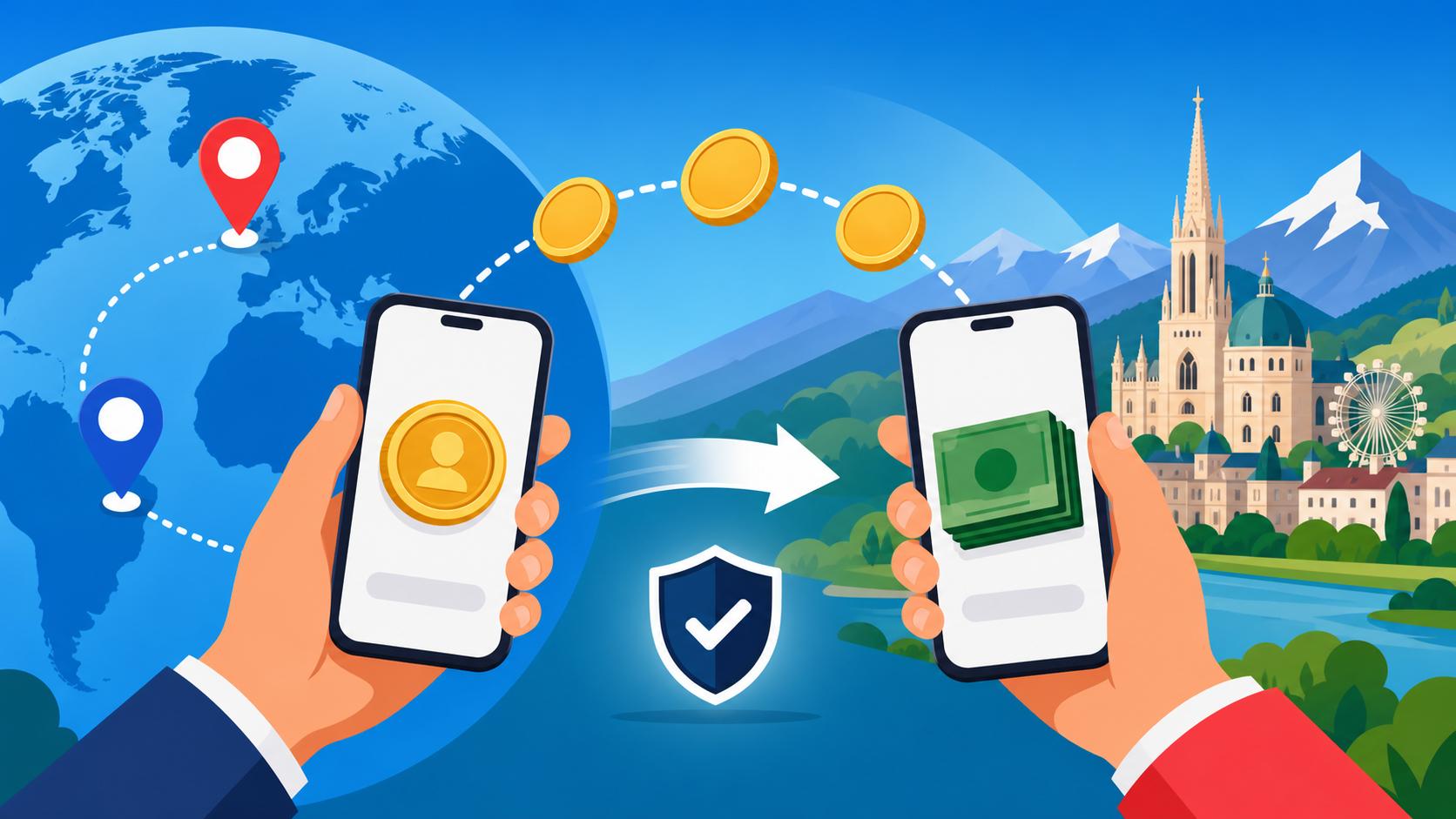
In the last decade, the rise of financial technology (FinTech) has completely changed how we handle Money in Austria 2027: Banking, Payments, and Financial Setup. Companies like Wise (formerly TransferWise), Revolut, and Atlantic Money have disrupted the monopoly held by traditional banks. These services work by maintaining large pools of currency in different countries, allowing them to "match" transfers locally. When you send USD to Austria via a digital service, you aren't actually sending money across the Atlantic; you're sending USD to their US account, and they are releasing the equivalent in EUR from their Austrian or European account.
This "local-to-local" model eliminates the need for the SWIFT network and the correspondent bank fees that come with it. It also allows these companies to offer exchange rates that are much closer to the mid-market rate. For most expats, using a digital transfer service is the single most effective way to save money on currency conversion. I personally haven't used a traditional bank for an international transfer in over five years, and the savings have likely funded several of my weekend trips to the Alps.
However, it is important to remember that these are not "banks" in the traditional sense, even if some have banking licenses in certain jurisdictions (like Revolut’s license in Lithuania). They are electronic money institutions. While they are heavily regulated and required to "safeguard" customer funds in separate accounts, they do not always offer the same level of deposit insurance as a traditional Austrian bank. For day-to-day transfers and currency exchange, they are excellent, but for holding your entire life savings, many expats prefer a hybrid approach.
Peer-to-Peer Transfer Mechanics
The core of the digital revolution is the peer-to-peer (P2P) or "matched" transfer system. This mechanism is why these services can be so much faster than traditional wires. Because the money never actually crosses a border, the transfer can often be completed in minutes or even seconds. If you use a service that supports the Austrian "eps" payment system, you can pull money directly from your Erste or Raiffeisen account and have it converted and sent abroad almost instantly.
This efficiency is particularly useful when you're managing a Budgeting in Austria: Accurate Cost of Living Benchmarks and need to pay a bill in another currency quickly. For example, if you still have a mortgage or credit card bill in your home country, a P2P service allows you to time the market. You can wait for a favorable exchange rate, execute the transfer, and have the bill paid the same day. This level of control was unimaginable in the era of paper forms and three-day waiting periods.
One thing to watch out for with P2P services is the "weekend markup." Because the global currency markets close on Friday evening and reopen on Sunday night, some services add a small percentage to their exchange rate to protect themselves against market volatility during the weekend. If you can, always schedule your transfers for Tuesday through Thursday to get the absolute tightest spread. This is a small trick that can save you an extra 0.5% to 1% on every transaction.
Multi-Currency Accounts and Virtual IBANs
One of the most useful features of modern FinTech platforms is the ability to hold multiple currencies in one place. These "multi-currency accounts" often come with virtual IBANs for different regions. For example, you can have a Euro IBAN, a UK Account Number and Sort Code, and a US Routing Number—all within the same app. This is a game-changer for freelancers who work with international clients while living in Austria, as it allows you to get paid like a local in multiple countries.
If you are a Freelancer (Neue Selbständige) vs Gewerbe Immigration Paths candidate, having a multi-currency account simplifies your bookkeeping immensely. You can receive USD from a client, hold it in your account, and only convert it to EUR when you need to pay your SVS Health Insurance: Rules for Freelancers and Self-Employed contributions or your rent. This helps you avoid losing money on every single incoming payment and gives you the flexibility to manage your cash flow more effectively.
Moreover, these accounts often come with a debit card that automatically spends in the local currency. If you're traveling from Vienna to London, you don't need to visit a "Wechselstube" or pay your Austrian bank’s foreign transaction fees. The card simply detects you’re in the UK and spends from your GBP balance. If you don't have a GBP balance, it converts from your EUR balance at the mid-market rate. This level of integration is why Neobanks in Austria: Using N26 or Revolut for Salaries have become so popular among the international community.
Security and Regulation in the EU
Security is the number one concern for anyone moving large sums of money. In the EU, digital transfer services must comply with the Payment Services Directive (PSD2), which mandates strong customer authentication (SCA). This usually means you’ll need to approve every transfer through a notification on your phone or a biometric scan. While it can be a bit of a hassle when you're in a rush, it provides a crucial layer of protection against fraud.
In Austria, any service you use should be either registered with the FMA or have a "passported" license from another EU member state. This ensures that the company follows strict rules regarding capital requirements and the "safeguarding" of funds. "Safeguarding" means that if the transfer company were to go bankrupt, your money is held in a separate account at a major bank (like Barclays or JP Morgan) and cannot be used to pay the company’s creditors. It’s not exactly the same as the 100,000 EUR deposit guarantee (Einlagensicherung) you get with a Comparing Erste Bank, Raiffeisen, and Bank Austria account, but it is a very robust form of protection.
New arrivals are well advised to enable every security feature available: two-factor authentication, transaction limits, and "freeze" toggles for their cards. Also, be wary of "phishing" emails that look like they're from your transfer service. These services will never ask for your password or PIN via email. If you ever feel suspicious, stop the process and contact their support directly through the official app. Staying safe while managing Money in Austria 2027: Banking, Payments, and Financial Setup is about being both tech-savvy and cautious.
Comparing Costs: Exchange Rates, Fees, and Hidden Margins
To truly find the "best" way to transfer money, you have to look at the Total Cost of Ownership (TCO) for a transfer. This isn't just the upfront fee; it's the sum of the fee, the exchange rate margin, and any "landing" fees charged by the receiving bank. Some people choose a service because it advertised "0% Commission" only to lose 4% of their money to a rigged exchange rate. In the world of cross-border finance, there is no such thing as a free lunch.
The most transparent way to compare services is to ask one simple question: "If I send 1,000 EUR, how much of the target currency will land in the recipient's account?" By focusing on the final amount received, you bypass all the marketing jargon about fees and commissions. This is particularly important when you are budgeting for Cost of Living in Vienna: Singles vs Families and every Euro counts.
The Mid-Market Rate Explained
The mid-market rate is the "real" exchange rate—the midpoint between the buy and sell prices on the global currency markets. This is the rate that banks use to trade with each other. Most traditional banks and many older transfer services add a "spread" to this rate. For example, if the mid-market rate for EUR/USD is 1.10, a bank might give you 1.06. That 4-cent difference is their profit. On a 10,000 EUR transfer, that's 400 USD out of your pocket.
When evaluating a transfer service, check if they use the mid-market rate. Services like Wise and Atlantic Money are famous for using this rate and charging a separate, transparent fee. This allows you to see exactly what you are paying for the service. It is much more honest than a bank claiming to have "low fees" while hiding a massive margin in the exchange rate. I always keep a tab open with a currency converter like XE.com when I'm setting up a transfer to ensure I'm getting a fair deal.
Fixed Fees vs. Percentage-Based Charges
Different services use different fee structures. Some charge a flat "fixed fee" regardless of the amount (e.g., 3 EUR per transfer), while others charge a percentage (e.g., 0.5% of the total). Which one is better depends entirely on the amount you are sending. If you are sending a small amount, like 50 EUR, a fixed fee of 3 EUR is a massive 6% charge. In that case, a percentage-based service would be much cheaper.
Conversely, if you are transferring 50,000 EUR to fund a down payment for a home, a 0.5% fee would be 250 EUR. In this scenario, a service with a capped or fixed fee (like Atlantic Money, which often charges a flat £3 or equivalent for large transfers) would save you hundreds of euros. This is a crucial distinction for expats moving large sums for Securing a Mortgage in Austria Without Permanent Residency. Always do the math for your specific transfer volume before choosing your provider.
The "Free" Transfer Myth
Many banks and apps lure customers with the promise of "Free International Transfers." In 99% of cases, this is a marketing trick. The "free" part usually only refers to the upfront transaction fee. The service makes its money by offering an exchange rate that is significantly worse than the mid-market rate. It's a clever way to make a profit while appearing consumer-friendly.
Whenever you see "Free," "No Commission," or "0% Fee," your alarm bells should go off. Take the total amount you want to send and compare the final output to a service that uses the mid-market rate. Often, you will find that the "free" transfer actually costs you more than a service that charges a 10 EUR fee but offers a fair exchange rate. Being a financially savvy expat in Austria means looking past the headlines and reading the fine print of your Lohnzettel Breakdown: Gross vs Net Salary Explained and your bank statements.
Tax and Legal Compliance for Large International Transfers
Austria is a country that loves its paperwork, and the financial sector is no exception. If you are moving significant amounts of money into or out of the country, you need to be aware of the regulatory landscape. The authorities are particularly interested in two things: ensuring that taxes are paid on global income and preventing money laundering. Ignoring these rules can lead to frozen accounts, hefty fines, or even legal trouble with the Finanzamt.
For most expats, the threshold to remember is 12,500 EUR. This is the point at which transfers into or out of Austria must generally be reported to the Austrian National Bank (OeNB) for statistical purposes. While most banks handle this automatically for you, they may ask you for a "Zweck des Zahlungsverkehrs" (purpose of the payment). Being prepared to explain where the money is coming from and what it's for will save you a lot of headaches.
Reporting Requirements to the Austrian National Bank (OeNB)
The OeNB tracks the flow of capital to maintain the stability of the Euro and to produce economic statistics. As mentioned, for transfers over 12,500 EUR, there is a reporting requirement. If you are using a digital service like Wise, they usually collect this information from you during the transfer setup process and pass it along to the relevant authorities.
If you are Filing Income Tax (Einkommensteuer) as a Freelancer, these reports are cross-referenced with your tax filings. If the OeNB sees 50,000 EUR coming in from a foreign source, and your tax return only shows 20,000 EUR in income, the Finanzamt will likely send you a letter asking for an explanation. This isn't necessarily a cause for panic—it could be a gift or a loan—but you must have the documentation to prove it. I always keep a digital folder of every major transfer and its corresponding "proof" (like a loan agreement or a gift letter from parents).
Anti-Money Laundering (AML) and Source of Funds
Austrian banks are under immense pressure to prevent money laundering. This means they are required to "Know Your Customer" (KYC). When you move a large sum, the bank’s compliance algorithm might trigger a "Source of Wealth" check. They might ask for bank statements from the sending account for the last 3-6 months to see how the money was accumulated.
This can be particularly frustrating if the money is coming from a country with a less "structured" banking system. However, the bank is legally obligated to perform these checks. If you are planning a major move, such as buying property, I recommend speaking to your bank's compliance officer a few weeks in advance. Ask them exactly what documents they will need to see so you can have them ready. This proactive approach is a hallmark of a veteran expat who has mastered Navigating Social Insurance: ÖGK, SVS, and BVAEB Overview and other complex Austrian systems.
Tax Residency and Foreign Income Declaration
Once you spend more than 183 days in Austria, you are generally considered a tax resident. This means you are liable for Austrian tax on your worldwide income. If you have a rental property in your home country or receive dividends from foreign stocks, you must declare this income to the Austrian tax authorities, even if it never enters an Austrian bank account.
Moving that money into Austria via a cross-border transfer creates a digital paper trail. The Finanzamt can use this trail to identify undeclared foreign income. It is highly advisable to consult with a "Steuerberater" (tax advisor) who specializes in international tax law. They can help you navigate the Income Tax Brackets 2026: Navigating the 0% to 55% Rates and ensure you aren't being double-taxed, thanks to the many Double Taxation Agreements (DTA) Austria has with other countries.
Transferring Money for Specific Life Milestones in Austria
Life in Austria often involves major financial events that require moving large sums across borders. Whether you're buying your first "Eigentumswohnung," supporting family back home, or eventually Leaving Austria: Financial Exits, Pension Reforms, and Accounts, each milestone requires a different strategy. Using the wrong method for a 200,000 EUR house payment can cost you enough in fees to have bought a brand-new car.
Funding a Property Purchase or Mortgage
Buying property in Austria is a high-stakes financial game. The "Nebenkosten" (additional costs) alone—including land transfer tax, notary fees, and the land registry fee—can add up to 10-12% of the purchase price. Most of this money needs to be available in an Austrian escrow account ("Treuhandkonto") before the sale can be finalized. If your funds are sitting in a foreign currency, the timing of your transfer is everything.
For these amounts, I highly recommend using a specialized currency broker. Unlike standard apps, these brokers can offer "Forward Contracts," which allow you to lock in an exchange rate for a future date. If you've signed a contract to buy a flat in three months, you can lock in today's rate to protect yourself against a sudden drop in the Euro. This provides peace of mind when dealing with Securing a Mortgage in Austria Without Permanent Residency, where every cent of your deposit counts toward your loan-to-value ratio.
| Transfer Method | Best For | Typical Fee | Speed |
|---|---|---|---|
| SEPA Instant | EU Transfers < 100k | 0 – 2 EUR | Seconds |
| Wise / Revolut | Small to Medium (up to 10k) | 0.4% – 0.7% | 0 – 2 Days |
| Currency Brokers | Property / Large Sums (> 50k) | Negotiable | 1 – 3 Days |
| Traditional SWIFT | High Security / Personal Service | 30 – 60 EUR + Margin | 3 – 5 Days |
Sending Monthly Support to Family Abroad
Many of us send a portion of our 13th and 14th Salary Tax Benefits: Why They Matter back home to support parents or pay for family expenses. For these regular, smaller transfers, convenience and automation are the priorities. Most digital services allow you to set up a "Dauerauftrag" (standing order) that automatically pulls money from your Austrian account and sends it abroad on a specific day each month.
When sending money to non-Western countries, look for services that offer "Mobile Wallet" transfers. In many parts of Asia and Africa, sending money directly to a recipient’s phone (like M-Pesa or GCash) is faster and more secure than a bank transfer. These services often have lower fees for "emerging market" currencies because they bypass the correspondent banking network entirely.
Repatriating Funds When Leaving Austria
If the time comes to leave the beautiful Alps, you'll need to move your savings out of the country. This process includes Claiming a Refund of Pension Contributions After Leaving, which can result in a significant lump sum being deposited into your Austrian account months after you've already moved. You’ll need to keep an Austrian account open (or use a multi-currency account with an IBAN) to receive these funds.
When repatriating large sums, the same rules about exchange rate margins apply. Don't just let your bank "wire" the money to your new home. Instead, link your Austrian account to a transfer service, pull the funds into your digital wallet, and then convert them at the mid-market rate. This final financial act in Austria can save you a few thousand euros—a nice "parting gift" from your time as an expat.
Optimizing Transfers for Non-EU/Schengen Currencies
Moving money between Euro and other major currencies like the US Dollar, British Pound, or Swiss Franc has its own unique set of challenges. Each currency pair has different liquidity levels and regulatory hurdles. For instance, the Post-Brexit Taxation for UK Expats in Austria has changed how some financial flows are monitored, making transfers to and from the UK slightly more bureaucratic than they used to be.
Handling US Dollars and the FATCA Factor
If you are a US citizen living in Austria, you are already well-aware of the challenges of FATCA Reporting for US Citizens at Austrian Banks. Many Austrian banks are hesitant to deal with "US Persons" because of the heavy reporting requirements from the IRS. This also extends to international transfers. Some banks may place extra scrutiny on transfers coming from the US.
When moving USD to EUR, using a service that provides a US-based routing and account number is vital. This allows you to perform a local ACH transfer from your US bank to the transfer service, which is usually free. From there, you can convert to EUR and send it to your Austrian account. This avoids the 40-50 USD "International Wire Fee" that US banks love to charge for SWIFT transfers.
Transfers to the UK Post-Brexit
Since the UK left the EU, it is no longer part of the same regulatory framework, though it remains a member of SEPA for Euro transfers. However, if you are sending GBP, you are back in the world of non-SEPA transfers. Fortunately, the EUR/GBP corridor is one of the most competitive in the world, meaning the fees are generally very low if you use a digital provider.
One thing to note for UK expats is that some UK banks have started closing accounts of residents living in the EU. If you still have a UK account, ensure it is with a provider that supports "Expat" or international residents. Using a multi-currency account as a "bridge" between your UK and Austrian financial lives is often the safest and most flexible way to manage your Money in Austria 2027: Banking, Payments, and Financial Setup.
Dealing with Emerging Market Currencies
If you are transferring money to countries like India, Brazil, or the Philippines, the exchange rate volatility can be significant. For these corridors, look for a service that offers a "Rate Lock." This allows you to "freeze" the exchange rate for 24 to 48 hours while your money is in transit from your Austrian bank. This protects you from a sudden market swing that could reduce the value of your transfer before it arrives.
Also, check for "Cash Pickup" options. In some countries, the recipient might not have easy access to a bank account. Services like Remitly or WorldRemit allow you to send money from your Austrian bank account for the recipient to pick up in cash at a local pharmacy or convenience store. While the exchange rates for these services are slightly less favorable than Wise, the speed and accessibility are often worth the small extra cost for family emergencies.
Practical Step-by-Step Guide to Your First Transfer
Setting up your first international transfer from Austria can feel daunting, but it’s a straightforward process once you have your documents in order. The key is to do the setup before you actually need to move the money. Verification can sometimes take a few days, and you don't want to be waiting on a compliance officer when your rent is due.
Setting Up Your Account and Verification
First, choose your provider. Based on the volume and destination, this will likely be a digital service. You will need to provide a high-quality scan of your passport or EU ID card. Crucially, they will also ask for "Proof of Address." In Austria, your Meldezettel is the gold standard for this. Make sure the address on your Meldezettel matches the address you enter into the app exactly.
Once you’ve uploaded your documents, the service will perform a "liveness check"—usually a quick selfie or a short video of you turning your head. I've found that doing this during business hours in Europe results in much faster verification. Most of the time, I’ve been verified and ready to send money within two hours. If you are a high-volume sender, they might ask for additional info about your Employment Rights: Arbeiterkammer, Contracts, and Leave to verify your income source.
Initiating the Transfer from an Austrian Account
To fund the transfer, you have several options. The cheapest is usually a "Manual Bank Transfer." The app will give you an IBAN and a unique reference code. You then log into your Austrian banking app (like George from Erste Bank) and send the money to that IBAN. Never forget the reference code. This code is how the service knows the money belongs to you. If you forget it, your money will sit in their "unidentified" pile for days until you manually resolve it with customer support.
Alternatively, you can use "Direct Debit" or "eps." Eps is a specifically Austrian payment method that redirect you to your bank’s login page. It’s faster than a manual transfer but sometimes comes with a small additional fee. For my regular monthly transfers, I prefer the manual transfer because it's free and I can set it up as a "Template" in my George app, making subsequent transfers a two-click process.
Tracking and Troubleshooting Delays
Once the money leaves your Austrian account, the transfer service will usually give you a tracking link. You can see exactly when they received your Euros, when they converted them, and when they sent them out to the destination bank. If a transfer is delayed, the first place to check is your email. Most of the time, a delay is caused by a "compliance flag," and the service has sent you an email asking for a bit more information.
If the money hasn't arrived at the destination after three business days, contact the receiving bank first. Ask them if there is an "incoming" transfer pending that requires further documentation. Only if the receiving bank has no record of it should you contact the transfer service. In my experience, 90% of delays are on the "receiving" end, where the local bank is holding the funds for verification. Being patient but persistent is part of the Austrian Work Culture: 14 Salaries, Meetings, and Etiquette and it applies to banking just as much as to office life.
Healthcare and Financial Security
While this guide focuses on moving money, remember that your financial health in Austria is intrinsically linked to your legal status and insurance. Whether you are Navigating Social Insurance: ÖGK, SVS, and BVAEB Overview or managing your private savings, keeping your accounts transparent and compliant is the best way to ensure a stress-free life in this beautiful country. The effort you put into optimizing your transfers today will pay dividends throughout your entire expat journey.
Disclaimer
The information provided in this article is for informational purposes only and does not constitute financial, legal, or tax advice. While every effort has been made to ensure the accuracy of the details, rules regarding international money transfers, tax residency, and banking regulations in Austria can change frequently. You should consult with a qualified professional, such as a tax advisor or legal expert, before making significant financial decisions or moving large sums of money. The author and publisher are not responsible for any financial losses or legal issues arising from the use of this guide.