ELGA (Electronic Health Record): How to Opt-Out
Stepping into an Austrian doctor's office for the first time can feel like a high-stakes interrogation, especially when they seemingly know your entire medical history before you’ve even sat down. I remember the unsettling feeling of a specialist in the 9th district reciting my previous prescriptions from a different clinic, making me realize my data was floating in a system I hadn't explicitly joined. This guide will walk you through exactly how the ELGA system works and provide the precise steps to reclaim your medical privacy by opting out.
Navigating the Austrian Electronic Health Record Landscape
When you first receive your social insurance number and that bright green card, you are automatically part of a massive digital network known as ELGA (Elektronische Gesundheitsakte). For many of us who moved here from countries with fragmented medical systems, the efficiency is startling, but it comes with a significant trade-off in terms of data centralisation. The Austria Healthcare System 2027: Complete Guide for Foreign Residents highlights how integrated our lives have become with state digital services, and ELGA is the cornerstone of that integration.
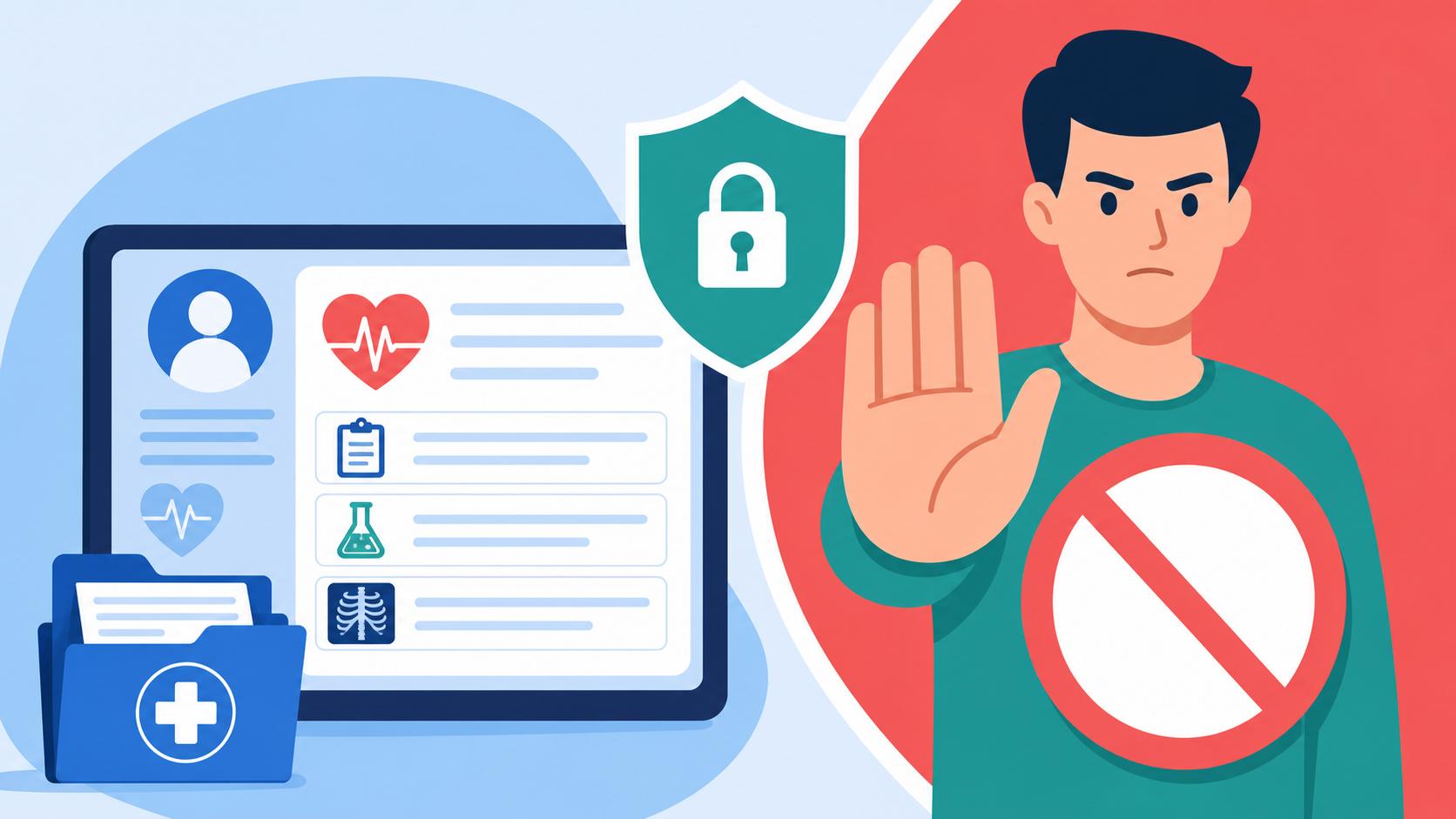
The system is designed to store your discharge reports, lab results, radiology reports, and medication history in a way that any authorized doctor can access by swiping your card. While the government pitches this as a life-saving convenience, many expats feel a deep-seated discomfort with the idea of a permanent, digital "medical footprint" that they didn't technically ask for. If you are someone who values strict boundaries between different medical providers, or if you simply don't trust the security of a centralized database, the "opt-out" (Widerspruch) is your legal right under Austrian law.
It is important to understand that ELGA is not the same thing as your physical e-card. You still need your card to access care, and opting out of the record system does not invalidate your insurance. Many newcomers worry that "leaving ELGA" means they won't be able to see a doctor. That isn't the case at all. You are simply choosing to keep your medical files in the "analog" world, or at least ensuring they stay within the four walls of the specific clinic you are visiting. To get a better handle on the basics, you might want to review The Austrian e-card: Registration, Photo Rules, and Usage Guide to see where the physical card ends and the digital record begins.
The Philosophy of the Opt-Out Movement in Austria
In Austria, privacy (Datenschutz) is treated with a level of reverence that can surprise people from more "online" cultures. There is a strong cultural belief that your health is your business, and the "opt-out" mechanism was a hard-fought compromise during the system's implementation. When you choose to opt out, you aren't being a "difficult" patient; you are exercising a standard civic right that many locals also use.
However, you should be prepared for a bit of a "why?" from your Hausarzt. Because the Healthcare Checklist for Your First 30 Days in Austria often focuses on getting registered and getting your card, the nuances of data privacy often fall by the wayside until you’re already in the system. Some doctors find ELGA incredibly helpful for avoiding drug interactions, so if you opt out, you take on the responsibility of remembering your own medical history and past prescriptions in detail.
The Digital Path to Opting Out via ID Austria
The most efficient way to manage your ELGA status is through the official ELGA portal. This is almost entirely handled through the ID Austria and E-Government Tools for Foreign Residents framework. If you haven't upgraded from the old Handy-Signatur yet, you’ll find that the portal is much stricter about security protocols.
Once you log into the portal (gesundheit.gv.at), you have the power to do more than just a total opt-out. You can see exactly which doctors have accessed your file in the last 28 days. This transparency is one of the few perks of staying in the system, as it allows you to play "detective" with your own data. But if you’re certain you want out, you’ll navigate to the "Participation" (Teilnahme) section.
Within the portal, the process is instantaneous. You click a few buttons, sign with your ID Austria app on your phone, and your record is effectively "locked." One thing I learned the hard way is that even after you opt out, the records that were already there don't necessarily vanish into thin air; they are just no longer accessible to new doctors through the ELGA interface. If you are concerned about specific past entries, you can actually use the portal for Downloading Your Medical Records via ID Austria before you shut the door, ensuring you have your own copies for your private files.
Understanding Partial vs Total Opt-Out
Many people don't realize that the choice isn't binary. You have three main levels of control, and choosing the right one depends on your specific "privacy vs. convenience" scale.
- Total Opt-Out: This is the "ghost" mode. No discharge reports, no lab results, and no e-medication history will be stored or accessible. You are a blank slate every time you enter a new clinic.
- Partial Opt-Out (e-Medication Only): You might be fine with a surgeon seeing your blood type or past surgeries, but you don't want every doctor to see your history of antidepressants or birth control. You can opt out of just the "e-Rezept" portion of the system.
- Individual Deletion: You can stay in ELGA but manually delete specific documents. For example, if you had a sensitive lab test done and you don't want it following you forever, you can go into the portal and "hide" or "delete" that specific entry.
If you choose a partial opt-out, make sure you understand How the e-Rezept (Electronic Prescription) System Works in 2026. Without the e-medication link, you’ll be back to relying on printed paper prescriptions or your doctor manually searching for your insurance data, which can occasionally lead to longer wait times at the Apotheke.
The Paper-Based Opt-Out for the Digitally Wary
If the idea of using a digital portal to opt out of a digital record feels counter-intuitive, or if you simply haven't set up your ID Austria yet, you can go the "paper route." This is a very Austrian process involving a physical form, a pen, and a mailbox. You need to download the "Widerspruchsformular" from the official ELGA website or request it from the ELGA-Serviceline.
Once you have the form, you'll need to provide your 10-digit social security number and a copy of a valid photo ID (like your passport or Aufenthaltstitel). The form is then mailed to the "ELGA-Widerspruchsstelle" in Vienna. From my experience helping friends with this, it takes about one to two weeks for the request to be processed. You will eventually receive a physical letter in the mail confirming that your opt-out has been registered in the system.
This method is particularly useful for those who are still navigating the complexities of Public vs Private Health Insurance in Austria Explained, as private insurers sometimes have different views on digital record sharing. Keep that confirmation letter! If you ever find a doctor insisting they can't see your data because of a "system error," you’ll want to be able to tell them clearly: "No, it's not an error; I have opted out."
Crucial Steps for the Paper Application
When filling out the physical form, you must be incredibly precise. The Austrian bureaucracy has zero tolerance for typos in a social security number.
| Step | Action Required | Why It Matters |
|---|---|---|
| Download | Obtain the "ELGA-Widerspruch" PDF | Ensures you use the legally recognized version. |
| ID Copy | Attach a clear copy of your Passport/ID | The Widerspruchsstelle must verify your identity. |
| Selection | Mark "Genereller Widerruf" for total opt-out | Prevents partial participation by mistake. |
| Send via "Einschreiben" (Registered Mail) | Gives you a tracking number and proof of delivery. | |
| Confirm | Wait for the official "Bestätigung" letter | Your legal proof that the opt-out is active. |
Sending it as "Einschreiben" is a pro-tip for anything involving the Austrian government. It costs a few extra Euros at the Post, but it saves you the headache of the office claiming they never received your sensitive data. This is a common theme in Medical Privacy Laws: What Employers Can Ask About Illness, where maintaining a paper trail is your best defense.
The Practical Consequences of Living "Off the Grid"
So, you’ve opted out. What does your next doctor’s visit actually look like? First, be prepared for a small "Information" flag to pop up on the doctor's screen when they swipe your e-card. It simply tells them that no ELGA record is available. In a high-pressure environment like a hospital emergency room, this might mean the doctors have to spend a few extra minutes asking you questions that would otherwise be on the screen.
If you are someone who frequently moves between different specialists, you will now become the "courier" of your own health data. You’ll need to ask for printed copies of your blood tests and "Arztbriefe" (doctor's letters) to take to your next appointment. In the private sector, this is already standard practice, but in the public system, it can feel a bit old-fashioned.
Furthermore, opting out can affect how you interact with the How the e-Rezept (Electronic Prescription) System Works protocols. While the e-card will still "store" the fact that you have a prescription, the deep history of what you’ve taken over the last year won't be visible to a new doctor. This is the ultimate goal for privacy seekers, but it does mean you need to be very proactive. I always keep a list of my current medications in a notes app on my phone—it’s a simple "manual" version of ELGA that I control.
Can You Change Your Mind Later?
The beauty of the Austrian system is that nothing is permanent. If you find that the lack of data sharing is making your healthcare too complicated—perhaps you’ve developed a chronic condition that requires multiple doctors to stay in sync—you can "opt back in" (Widerruf des Widerrufs) at any time.
This is done through the same portal or paper process. Once you opt back in, the system starts recording from that day forward. It doesn't "backfill" the period when you were opted out, which is a key detail for those concerned about a "gap" in their records. For many, the best strategy is to stay opted out during their healthy years and only consider joining if their medical situation becomes complex enough to justify the data exposure.
ELGA and the Future of Digital Health in Austria
As we move forward, ELGA is expanding. We are seeing more integration with The Digital Eltern-Kind-Pass 2026: What Changed for Parents, which is moving away from the old yellow booklet. For parents, opting out of ELGA can have ripple effects on how their children's check-ups are recorded. It’s a complex web, and the decision to opt out shouldn't be taken lightly, but it should always be your decision.
Ultimately, opting out of ELGA is about agency. It’s about deciding that you are the primary gatekeeper of your medical story. Whether you do it because of a bad experience with data in another country, or simply because you prefer the "old way" of doing things in your local district, Austria provides the framework to make it happen. Just remember that with great privacy comes the great responsibility of carrying your own folders!
Disclaimer
This guide is for informational purposes only and does not constitute legal or medical advice. Healthcare regulations and digital systems in Austria are subject to change. Always consult with the official ELGA service portal or a legal professional regarding your specific data privacy rights.