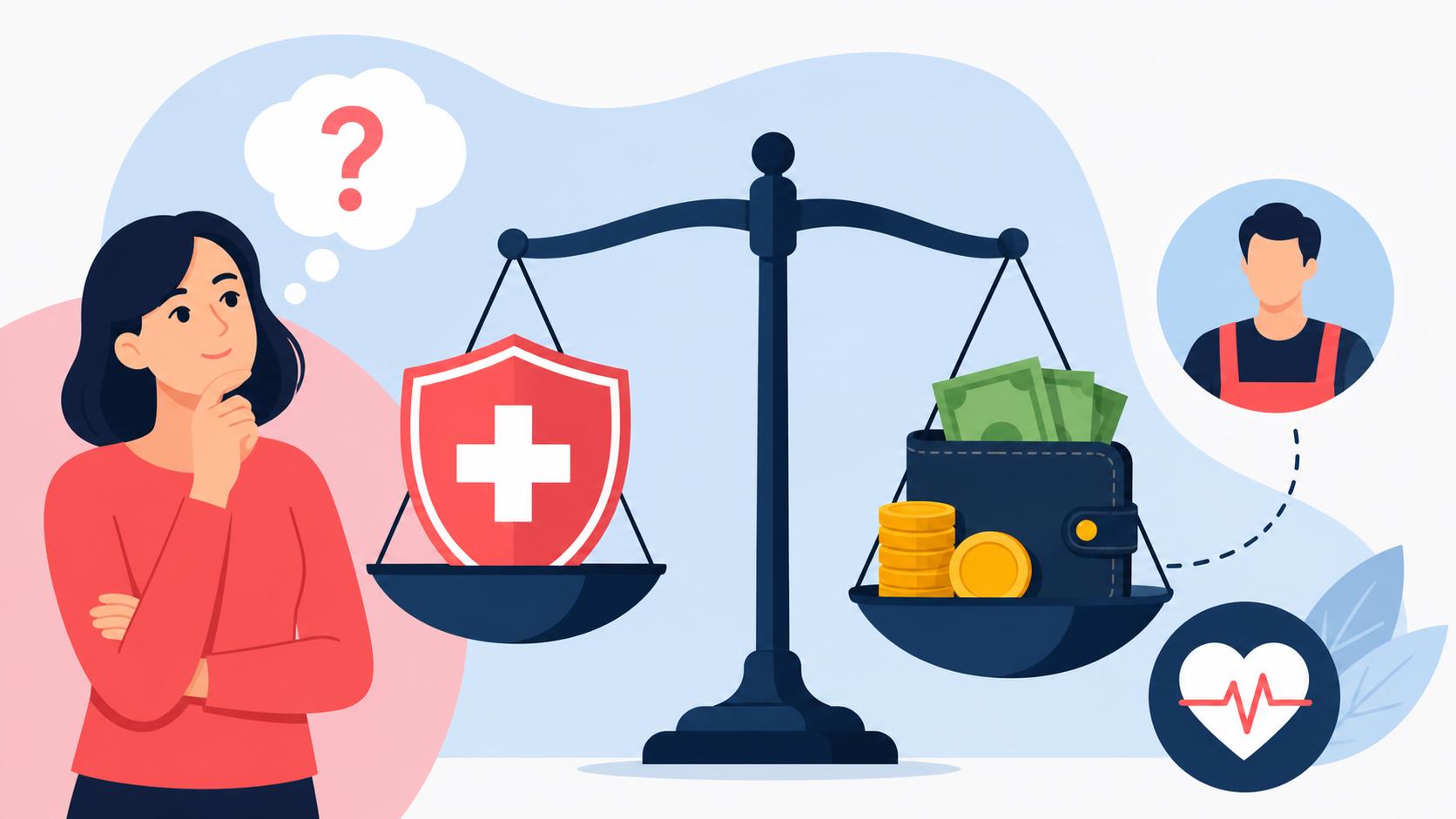
What is the Geringfügigkeitsgrenze (Marginal Earnings) for Health Insurance?
Navigating the labyrinth of Austrian bureaucracy often feels like a full-time job in itself, especially when you are just trying to pick up a few extra hours of work on the side. When I first arrived in Vienna, I thought a "mini-job" was a simple way to cover my groceries without triggering a mountain of paperwork, only to realize that the difference of a single Euro in my monthly paycheck could completely overhaul my health insurance status. This guide breaks down the 2026 Geringfügigkeitsgrenze (marginal earnings limit) so you can avoid the "social insurance trap" and keep your coverage secure.
Understanding the Geringfügigkeitsgrenze in 2026
The term "Geringfügigkeitsgrenze" refers to the specific income threshold that determines whether a job is considered "marginal" or "fully insured" under the Austrian social security system. For the year 2026, this limit is set at 551.10 Euro per month. Interestingly, while this figure usually increases slightly every year to keep up with inflation, the Austrian government decided to keep the 2026 limit identical to the 2025 figure to address budget considerations.
In practical terms, if your gross monthly income is exactly 551.10 Euro or less, your job is classified as marginal. At this level, you do not automatically pay for health or pension insurance through your paycheck. Instead, your employer only pays a small contribution for accident insurance. While this means more cash in your pocket today, it leaves a significant gap in your social safety net because you are not "automatically" covered for doctor visits, hospital stays, or pension contributions. This is a crucial distinction to grasp when evaluating Mandatory Coverage: Who Must Register for Public Health Insurance.
It is also vital to note that the "daily" limit, which used to exist years ago, is long gone. The only thing the authorities care about now is the total amount you earn within a single calendar month. If you work three hours one week and forty hours the next, as long as the monthly total stays under the 551.10 Euro cap, the employment remains marginal. However, staying under this cap requires precision, as even earning 552.00 Euro triggers full insurance obligations immediately.
The Reality of Health Insurance Coverage for Marginal Workers
The biggest misconception I see among new expats is the belief that "being registered" for a job means you have health insurance. If you are earning below the Geringfügigkeitsgrenze, you are only covered for accidents that happen at work or on your way to and from work. If you wake up with the flu or need a routine checkup, your marginal job does not provide the coverage you need to visit a doctor using the standard system.
Because you aren't paying into the system, you also won't automatically receive the famous green plastic card everyone talks about in The Austrian e-card: Registration, Photo Rules, and Usage Guide. Without this card or a valid replacement, you may be asked to pay out-of-pocket for medical services, which can quickly exceed any extra cash you earned from your side gig.
For those who rely solely on a marginal job, the system offers a way out called "voluntary self-insurance" (Selbstversicherung). This allows you to pay a flat monthly fee to gain full health and pension insurance benefits as if you were a full-time employee. In 2026, this voluntary insurance for marginally employed people costs 83.49 Euro per month. This is often the best route for people who are not Co-insuring Family Members (Mitversicherung) on Your Policy or don't qualify for Student Self-Insurance Requirements and Monthly Costs 2026.
The Multiple Job Trap: Aggregating Your Income
This is where many expats get hit with unexpected "back-payments" from the social insurance office. If you have two different marginal jobs—say, you work ten hours a month at a café and another ten hours as a delivery driver—you might think both are exempt from insurance because each is below the 551.10 Euro limit.
However, the Austrian Health Insurance Fund (ÖGK) looks at your total income across all employers. If Job A pays 300 Euro and Job B pays 300 Euro, your total monthly income is 600 Euro. Since 600 is greater than 551.10, you are no longer considered a marginal worker. You are now "fully insured" (vollversichert).
The frustrating part is that your employers might not know about each other, so they won't deduct the insurance from your pay. Instead, the ÖGK will track this through your registration data and send you a bill, often months later, asking for the employee’s share of the insurance contributions for the entire period you were over the limit. This can result in a bill for hundreds of Euros arriving just when you least expect it. Understanding how this fits into the broader Navigating Social Insurance: ÖGK, SVS, and BVAEB Overview is essential for anyone balancing multiple gigs.
How to Calculate and Monitor Your Limits
To stay safe, you need to look at your "Gross" (Brutto) pay. In a marginal job, your "Net" (Netto) pay is usually the same as your Gross because no taxes or social contributions are taken out. However, if you are nearing the limit, you must account for any bonuses or "13th and 14th salary" payments that might be triggered by your contract. While the 551.10 Euro limit is the standard monthly cap, special payments can sometimes push you over the edge if not managed correctly.
| Feature | Marginal Employment | Full Employment | Voluntary Self-Insurance (Marginal) |
|---|---|---|---|
| Monthly Income Limit | Up to €551.10 | Above €551.10 | Up to €551.10 |
| Health Insurance | Not included | Mandatory | Included (via opt-in) |
| Pension Insurance | Not included | Mandatory | Included (via opt-in) |
| Accident Insurance | Employer-paid | Mandatory | Included |
| Monthly Cost (Employee) | €0.00 | ~18.12% of Gross | €83.49 (flat rate) |
| e-card Eligibility | No (unless self-insured) | Yes | Yes |
If you find yourself constantly hovering around the limit, it is worth checking Is ÖGK Health Insurance Free for Expats in Austria?) to see if there are other ways to maintain your coverage. If you are a freelancer, the rules change slightly as you deal with the SVS Health Insurance: Rules for Freelancers and Self-Employed, which has its own thresholds and "opting-in" scenarios.
New 2026 Restrictions: Marginal Income and Unemployment
A major shift occurred on January 1, 2026, regarding "Zuverdienst"—the ability to earn extra money while receiving unemployment benefits from the AMS. In previous years, you could work a marginal job and still receive your full unemployment check. This was a lifesaver for many who were between major roles.
As of 2026, this is significantly restricted. For most people, earning any marginal income while receiving unemployment benefits (Arbeitslosengeld) or emergency assistance (Notstandshilfe) will result in the loss of those benefits. There are very few exceptions, such as if you had already held the marginal job for at least 26 weeks alongside a fully insured job before becoming unemployed. If you are currently in this situation, you must be extremely careful not to lose your primary support system. This is another reason why knowing ÖGK Enrollment Step-by-Step for Employed Residents in Austria is vital—you need to know exactly when your status changes from "unemployed" to "employed."
Practical Steps to Opt-In for Coverage
If you have a marginal job and realize you aren't covered elsewhere, don't wait for a medical emergency to act. The process of How to Opt-in for Voluntary Health Insurance in Austria is relatively straightforward but requires a proactive application.
- Wait for your employer to register you: You cannot apply for voluntary marginal insurance until your employer has officially registered your "marginal" status with the ÖGK.
- Download the 'Selbstversicherung' form: Visit the ÖGK website or your local customer service center.
- Submit the application: You can usually do this online via ID Austria or by mailing the paper form.
- Pay the monthly fee: In 2026, the fee is 83.49 Euro. Setting up a "Dauerauftrag" (standing order) with your bank is highly recommended so you don't forget a payment and lose coverage.
- Receive your e-card: Once processed, you will be issued an e-card, allowing you to access the same doctors and hospitals as a full-time worker.
Remember that this voluntary insurance also counts as "insurance months" toward your future Austrian pension. For many of us who plan to stay in the country long-term, these small monthly contributions are an investment in our future residency rights and retirement. It also helps you avoid issues like What is the Yearly e-card Service Fee for 2026?), which is a small annual fee that applies to all insured residents.
Handling the 'Dienstleistungsscheck' for Household Work
If you work in a private household—cleaning, gardening, or providing childcare—you might be paid via the "Dienstleistungsscheck" (Service Check). This system has a higher marginal limit of 755.01 Euro per month in 2026. This is a specialized corner of the law designed to make it easier for families to hire help legally. If you are using this system, you still aren't automatically health-insured; you must still use the same voluntary opt-in process and pay the 83.49 Euro fee to get your e-card and full benefits.
Managing your work life in Austria means keeping one eye on your paycheck and the other on the current legal thresholds. While the 551.10 Euro limit might feel restrictive, it is the gatekeeper to the broader social system. Whether you are staying under it to maximize your take-home pay or opting into voluntary insurance to protect your health, being informed is the only way to avoid the stress of unexpected bills and "Krankenstand" (sick leave) complications. For more on managing your time away from work, see our guide on Sick Leave (Krankenstand): Employer Notification and Doctor Notes.
Medical and Legal Disclaimer
The information provided in this article is for informational purposes only and does not constitute legal, financial, or medical advice. Social insurance laws and income thresholds in Austria are subject to frequent change by the federal government and social insurance carriers (ÖGK, SVS, BVAEB). While we strive to keep our data current for 2026, always verify your specific situation with the Arbeiterkammer (Chamber of Labour) or your respective insurance provider before making employment or insurance decisions. This guide is based on expat experiences and publicly available data and should not be used as a substitute for professional consultation.