Tick Bites in the Alps: When to See a Doctor
Navigating the lush Austrian Alps or even the manicured lawns of a Vienna park is a dream until you find a tiny, dark speck burrowed into your skin. I remember my first summer in Styria, feeling completely overwhelmed by the local obsession with "Zecken" (ticks) because I hadn't yet mastered the Austria Healthcare System 2027: Complete Guide for Foreign Residents. This guide breaks down exactly when that bite requires a professional, how to handle removal like a local, and why the Austrian "Zecken-Impfung" is a rite of passage for every expat.
Identifying the Risk: Ticks in the Austrian Landscape
When you first move to Austria, the beauty of the "Wienerwald" or the mountains of Tyrol is intoxicating. However, these areas are prime real estate for the Ixodes ricinus, the common wood tick. Unlike some parts of the world where ticks are confined to deep wilderness, in Austria, they are everywhere—from your backyard in a Graz suburb to the high-altitude trails of the Alps. The reality is that Austria is a high-risk zone for tick-borne diseases, and the local medical community takes this very seriously.
Ticks here are active whenever the temperature rises above 7 degrees Celsius. While many expats assume they are only a summer problem, I’ve found them on my hiking gear as early as March and as late as November. This long season is part of what makes the Annual Free Health Checkup (Gesundenuntersuchung) Details so important, as your doctor will likely check your vaccination status and skin during these routine visits.
There are two primary concerns when you are bitten in the Alps: FSME (Frühsommer-Meningoenzephalitis) and Lyme Borreliosis. FSME is a viral infection that affects the central nervous system. It is preventable via vaccine but not treatable with antibiotics. Lyme Borreliosis, on the other hand, is bacterial. There is no vaccine for it, but it can be treated effectively with antibiotics if caught early. Understanding the difference between these two is the first step in knowing when to call your Finding an English-Speaking Hausarzt in Your District.
The Golden Hour of Tick Removal: A Step-by-Step Tutorial
If you find a tick, the most important thing is not to panic, but to act quickly. The risk of transmitting Lyme Borreliosis increases significantly the longer the tick is attached—usually after 12 to 24 hours. FSME, however, can be transmitted almost immediately through the tick's saliva. This is why immediate removal is your best defense.
In my early days here, I made the mistake of trying to "suffocate" a tick with oil, a common old wives' tale. Never do this. It can cause the tick to vomit into the wound, increasing the chance of infection. Instead, go to the nearest Apotheken in Austria: Prescription Workflow and Night Shifts and buy a "Zeckenzange" (tick tweezers) or a "Zeckenkarte" (tick card). These tools are specifically designed to slide under the tick's body and pull it out without squeezing the abdomen.
To remove it correctly:
- Grasp the tick as close to the skin's surface as possible.
- Pull upward with steady, even pressure. Do not twist or jerk the tick, as this can cause the mouth-parts to break off and remain in the skin.
- If the head stays in, don't obsess over it. Let the skin heal, and it will eventually be pushed out like a splinter.
- Disinfect the bite area and your hands with alcohol or soap and water.
- Save the date. I always mark it on my calendar so I can track the 30-day window for potential symptoms.
If you are hiking and don't have tools, and you are hours away from home, you can use your fingernails in a pinch, but a "Zeckenkarte" in your wallet is a standard part of the expat survival kit. If you find you’ve been bitten by multiple ticks or can't reach the bite (like on your back), it might be worth Booking a Kassenarzt (Public Doctor): Wait Times and Tips to have them professionally removed.
When to See a Doctor: Red Flags and Symptoms
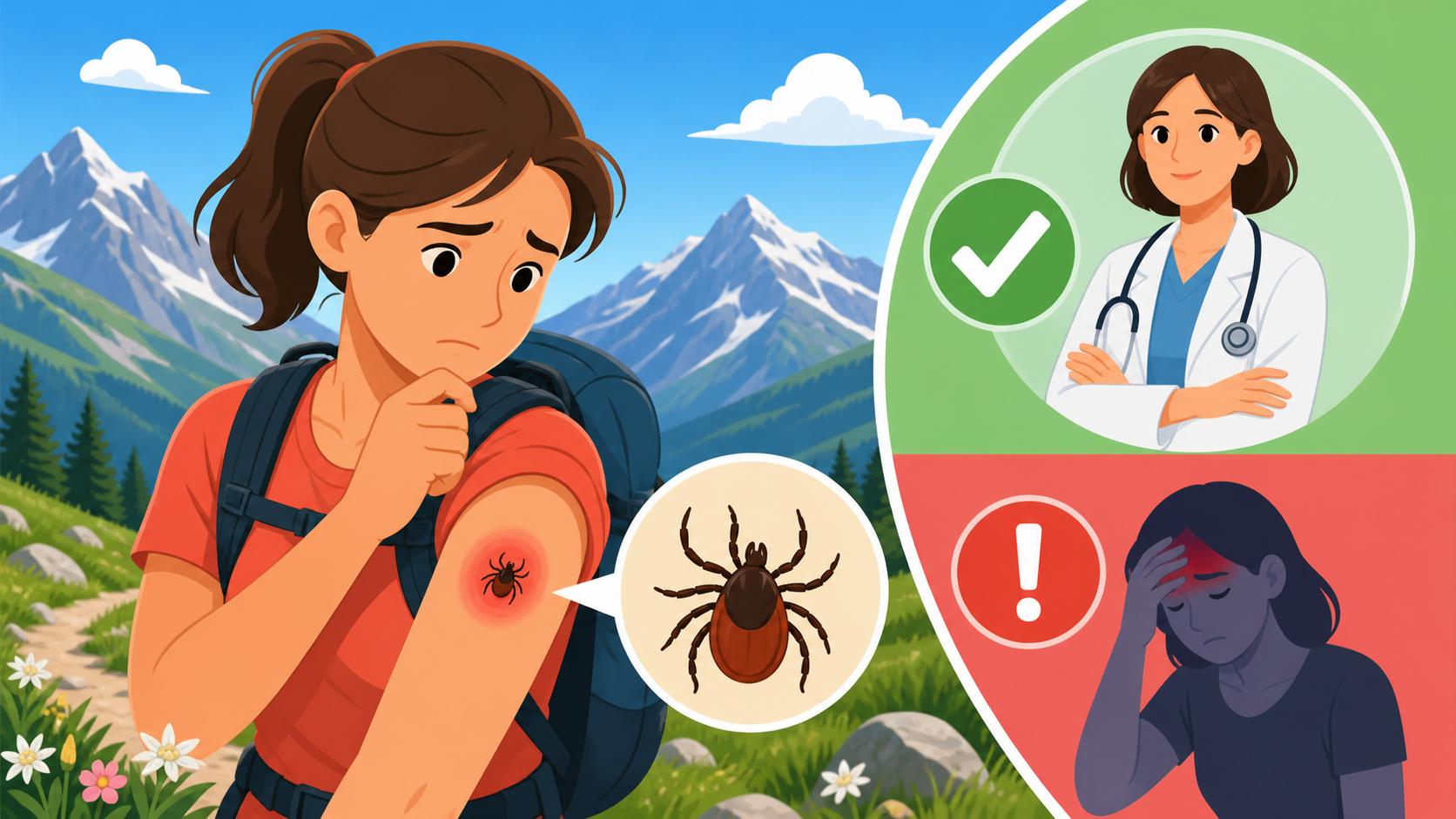
Most tick bites result in a small red bump, similar to a mosquito bite, which disappears in a few days. This is normal. However, you need to be vigilant for the "Wanderröte" (Erythema migrans). This is a circular, expanding red rash that often looks like a bullseye. It usually appears between 3 and 30 days after the bite. If you see this, go to a doctor immediately. It is a definitive sign of Lyme Borreliosis.
Another reason to seek medical help is the onset of flu-like symptoms. If you experience a sudden fever, headache, muscle aches, or extreme fatigue a week or two after a hike, do not ignore it. This could be the first stage of FSME. I’ve known expats who thought they just had a "summer cold," only to realize later it was something more serious. If you are unsure, you can always start by Calling 1450: Austria's 24/7 Telephone Health Advice Line. They can advise you on whether you need to visit an emergency room or if it can wait until morning.
| Symptom | Possible Cause | Action Required |
|---|---|---|
| Expanding "Bullseye" Rash | Lyme Borreliosis | See Hausarzt for antibiotics immediately |
| High Fever / Severe Headache | FSME (Stage 1) | Seek medical attention immediately |
| Small, Static Red Bump | Normal Reaction | Monitor for 30 days; no doctor needed |
| Facial Palsy / Joint Pain | Advanced Lyme | Visit a specialist or hospital |
| Nausea / Dizziness | FSME or Heatstroke | Call 1450 for guidance |
If you develop neurological symptoms, such as a stiff neck, sensitivity to light, or tingling in your limbs, this is an emergency. You should head to one of the Emergency Rooms in Austria: Triage, Waiting, and What to Bring immediately. In Austria, these symptoms are treated with high priority because of the prevalence of FSME in the region.
Prevention and the Famous Austrian FSME Vaccine
If you live in Austria for more than one season, you will notice the "Zecken-Impfung" posters appearing in every pharmacy window. The Tick-Borne Encephalitis (FSME) Vaccine: Why You Need It is one of the most successful public health initiatives in the country. Over 80% of the local population is vaccinated. As an expat, you might feel hesitant about adding another vaccine to your list, but given that there is no cure for FSME once it progresses, the protection is invaluable.
The vaccination schedule usually involves three doses for the primary immunization, followed by boosters every five years (or every three years for those over 60). You can get the vaccine at your Finding an English-Speaking Hausarzt in Your District or at specialized vaccination centers run by the city. While the vaccine itself is often subsidized by the Navigating Social Insurance: ÖGK, SVS, and BVAEB Overview, you may still have to pay a small fee for the serum at the pharmacy.
Beyond vaccination, physical prevention is key when exploring the Alps.
- Wear long trousers: Tuck them into your socks. It looks ridiculous, but it’s a standard Austrian "Wandertag" (hiking day) look for a reason.
- Use Repellent: Look for sprays containing DEET or Icaridin.
- The Tick Check: This is the most vital step. When you get home, do a full-body check. Ticks love warm, thin-skinned areas like the back of the knees, the groin, the armpits, and behind the ears. For children, check their scalp thoroughly.
If you are new to the country and haven't set up your insurance yet, you should prioritize this before the peak of hiking season. Check the Healthcare Checklist for Your First 30 Days in Austria to ensure you are covered before heading into the woods.
Navigating Costs and Insurance for Tick Bites
One of the common frustrations for foreigners is understanding who pays for what when a "minor" thing like a tick bite happens. If you go to a "Kassenarzt" (a doctor contracted with the public insurance), the removal and the consultation are covered by your Austrian e-card: Registration, Photo Rules, and Usage Guide. You won't pay out of pocket for the visit.
However, if you choose to see a private doctor, you will need to understand the Healthcare Costs: Kassenarzt vs Wahlarzt Differences Explained. While you can get a partial refund for the visit, the cost of specific blood tests for Lyme Borreliosis can sometimes be tricky. Doctors usually won't test for Lyme antibodies immediately after a bite because it takes weeks for them to show up in your blood. If a doctor suggests a test too early, it might be a waste of money.
If you do require antibiotics for Lyme Borreliosis, the prescription will be filled at any "Apotheke". You will typically only pay the standard prescription fee (Rezeptgebühr), which is around 7 Euro in 2026. This is one of the many reasons why Public vs Private Health Insurance in Austria Explained is a topic every resident should study—the public system is exceptionally robust for these types of environmental health risks.
Final Advice for Expat Hikers
Living in Austria means embracing the outdoors, and ticks are simply a part of the landscape. Don't let the fear of "Zecken" keep you from the mountains. By staying up to date with your vaccinations, keeping a removal tool in your backpack, and knowing the specific red flags that require a trip to the doctor, you can enjoy the Alpine summer with peace of mind.
I’ve had my fair share of bites over the years, and while the first one was scary, the Austrian medical system is so well-equipped to handle this that it eventually becomes just another routine part of life here. Just remember: pull, don't twist; watch for the bullseye; and get your shots.
Medical Disclaimer
The information provided in this article is for informational and educational purposes only and is not intended as medical advice or a substitute for professional medical consultation, diagnosis, or treatment. Always seek the advice of a qualified healthcare provider in Austria regarding any medical condition or symptoms. Never disregard professional medical advice or delay seeking it because of something you have read in this guide. If you believe you are experiencing a medical emergency, call 144 or 1450 immediately.