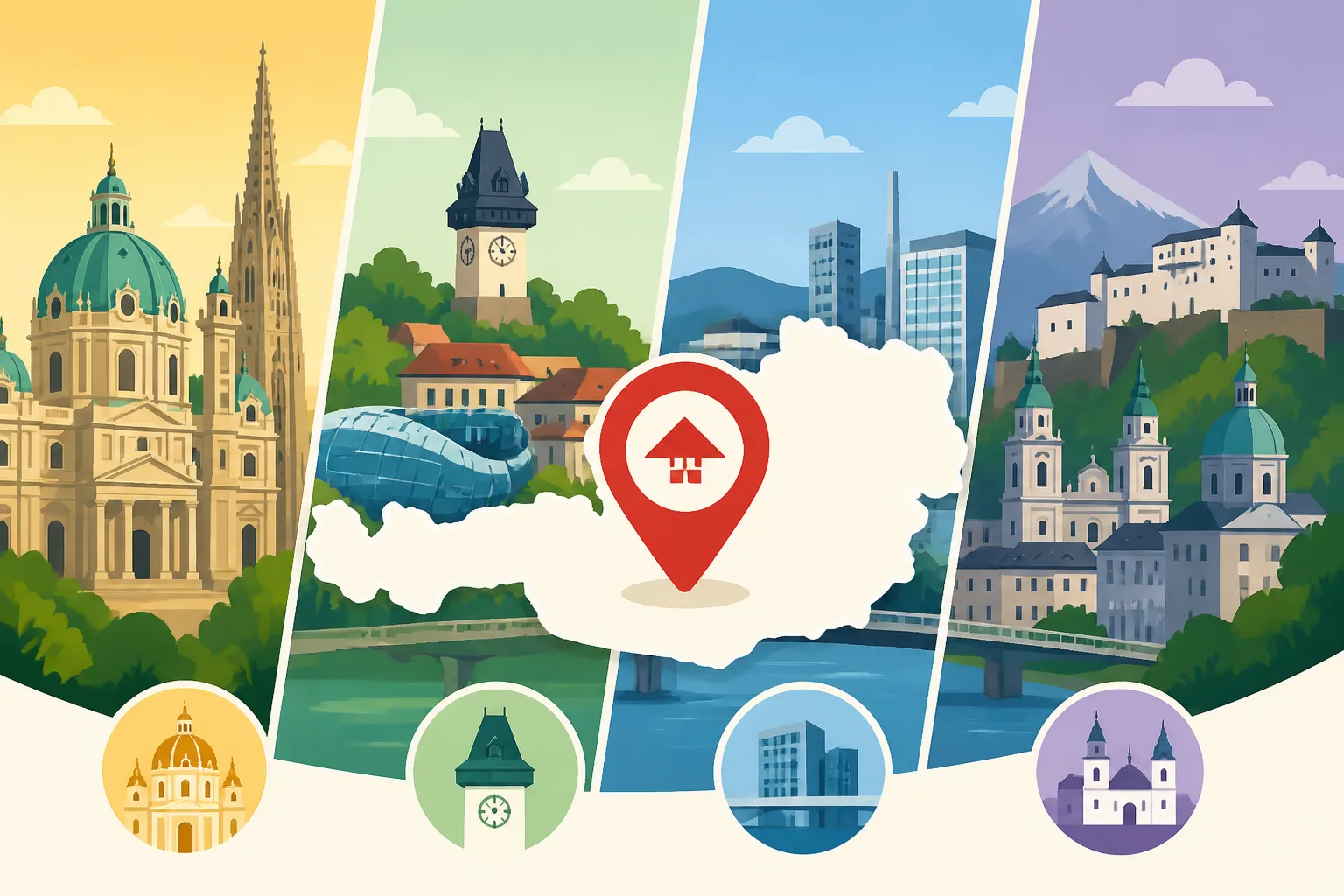
Where to Live: Comparing Vienna, Graz, Linz, and Salzburg
Choosing where to settle in Austria is a high-stakes decision that often feels like throwing a dart at a map of historical monuments and mountain ranges. Many newcomers choose a city based purely on an enjoyable weekend vacation, only to realize that living somewhere and visiting it are two very different administrative beasts. This guide breaks down the four major hubs to ensure your choice aligns with your career, budget, and lifestyle.
Vienna The Grand Metropolis of Culture and Contrast
Vienna is often described as a living museum, but for the thousands of expats who call it home, it is a complex, multi-layered machine that requires a bit of a learning curve to navigate. It consistently ranks at the top of global quality-of-life indices, yet it possesses a certain "Grant," a uniquely Viennese grumpiness that can be jarring to newcomers. Living here means embracing the imperial history of the First District while likely finding your actual home in the more residential outer rings.
Living in the World's Most Livable City
The infrastructure in Vienna is arguably the best in Europe. You can practically set your watch by the arrival of the U-Bahn, and the integration of the city’s public transit means you truly do not need a car. Imagine a rainy Tuesday morning where you need to get from the 22nd District to the 7th for a meeting; the seamless transition between bus, tram, and subway is something I personally found life-changing after years of traffic jams in other countries. This efficiency extends to the city's parks and recreational areas. From the vast Prater woods to the vineyards of the 19th District, green space is baked into the urban planning.
However, the "livability" of Vienna also comes with a unique social climate. The city can feel quite anonymous compared to the smaller Austrian hubs. While the services are impeccable, the social integration often requires more effort. You might find that your neighbors are polite but distant, adhering strictly to the Quiet Hours (Ruhezeit) and Apartment Neighbor Etiquette that govern apartment living. It is a city that rewards those who take the initiative to join "Vereine" (clubs) or frequent the same "Schanzigarten" (outdoor seating area) until they become a recognized regular.
Choosing the Right District
Vienna is divided into 23 districts, each with a distinct personality and price point. The inner city (District 1) is largely reserved for luxury boutiques, government offices, and wealthy residents, making it a rare choice for the average expat. Most foreigners find their footing in the "inner districts" (2 through 9), which offer a blend of historical architecture and modern amenities. For instance, the 7th District (Neubau) is the hipster heart of the city, filled with independent galleries and vegan cafes, while the 2nd District (Leopoldstadt) offers a mix of the trendy Praterstern area and traditional Jewish quarters.
For those moving with families, the outer districts like the 13th (Hietzing) or the 18th and 19th (Währing and Döbling) offer a suburban feel with high-end villas and proximity to international schools. Conversely, if you are looking for more affordable entry points, the 10th District (Favoriten) or the 15th (Rudolfsheim-Fünfhaus) provide a more multicultural, gritty, and fast-paced environment. To dive deeper into these nuances, you should consult a comprehensive Vienna Neighborhood Guide: Best Districts for Expats to see which specific street vibes match your daily needs.
Costs and the Social Housing Paradox
Vienna is famous for its social housing model, which keeps rents relatively stable compared to London or Paris. However, as a new expat, you likely won't have immediate access to a "Gemeindebau" (municipal apartment) or a "Genossenschaftswohnung" (cooperative housing). You will be operating in the private rental market, where prices have risen significantly in 2026. You should expect to pay a significant portion of your income on "Warmmiete" (rent including heating and operating costs), especially in the desirable Neubau areas.
When budgeting, remember that the Cost of Living in Vienna: Singles vs Families varies wildly based on your lifestyle. A single professional might thrive on a budget that prioritizes dining out and "Kaffeehaus" culture, whereas a family of four will need to account for higher utility bills and the inevitable "Nachzahlung" (annual adjustment payment) for heating. I learned the hard way to set aside an extra 100 Euros a month just for these year-end surprises. The rental process itself is governed by strict laws, so make sure you understand Renting in Austria: MRG Laws, Leases, and Bestellerprinzip before signing anything, as the "Bestellerprinzip" means that as of 2026, the landlord usually pays the agent fee, not you.
Graz The Mediterranean Soul of the South
If Vienna is the formal opera, Graz is the relaxed jazz club. Located in the province of Styria, Graz enjoys a milder climate and a noticeably slower pace of life. It is Austria's second-largest city, but it feels more like a collection of interconnected villages. The Italian influence is palpable here, not just in the Renaissance architecture of the Landhaus courtyard, but in the general attitude toward work-life balance and outdoor dining.
Student Life and Academic Excellence
Graz is a city of students. With six universities, the population of young people is high, which keeps the city's energy vibrant even during the sleepy winter months. This academic focus means that the city is incredibly welcoming to researchers, professors, and international students. The "Univiertel" (University Quarter) is the heart of the social scene, where the bars and cafes are packed with people debating philosophy or engineering over local Styrian beer.
For an expat, this means that English is more widely spoken here than in some of the more industrial cities, and there is a constant influx of new faces. However, the student-heavy population also means that the rental market for smaller apartments can be incredibly competitive in September and February. If you are moving here for work but want to avoid the constant noise of student parties, you might want to look into a Graz Neighborhood Guide: Family Areas vs Student Hubs to identify the quieter residential pockets of districts like Geidorf or St. Leonhard.
Affordability and the Culinary Landscape
One of the biggest draws of Graz is that your Euro tends to go further than in Vienna or Salzburg. While it is certainly not "cheap" by global standards, the costs for groceries, local transport, and even dining out are noticeably lower. Styria is known as the "Delicatessen of Austria," and Graz residents take their food seriously. The farmers' markets at Kaiser-Josef-Platz and Lendplatz are not just places to shop; they are social events where you can buy world-class pumpkin seed oil directly from the producer.
In my experience, the lower cost of living allows for a higher quality of everyday life. You might find that you can afford a slightly larger apartment with a balcony, which is essential for enjoying the Styrian sunshine. However, the job market is smaller than Vienna’s and is heavily focused on technology, automotive engineering (thanks to Magna Steyr), and academia. If your career lies outside these niches, finding a high-paying role might require more networking and a higher level of German proficiency.
Connectivity and Styrian Hospitality
Living in Graz means you are perfectly positioned for weekend getaways to Slovenia, Italy, or the South Styrian Wine Road. The connectivity is excellent, though the airport is smaller than Vienna's. Most residents rely on the efficient tram network within the city. If you plan on exploring the surrounding countryside—which I highly recommend for your mental health—the Is the Klimaticket Worth It? Cost and Benefit Analysis is a must-read, as it can save you thousands on regional travel.
The people in Graz, known as Grazers, are generally perceived as friendlier and more approachable than their Viennese counterparts. There is a sense of "Gemütlichkeit" (coziness/friendliness) that defines the local culture. You are more likely to be invited to a backyard BBQ or a "Buschenschank" (wine tavern) here. This makes the social integration process significantly less painful for expats who might feel isolated in a larger metropolis.
Linz The Industrial Powerhouse Turned Cultural Tech Hub
For a long time, Linz had a reputation as a gray, industrial city focused solely on steel production. While the "Voestalpine" steel plant still dominates the skyline and the economy, Linz has undergone a massive transformation into a center for digital media, arts, and IT. It is a city of pragmatists—hardworking, innovative, and surprisingly forward-thinking.
Career Opportunities in Engineering and IT
If you are an engineer, a software developer, or a tech specialist, Linz is likely where you will find your best career prospects. The city is the economic engine of Upper Austria, and the demand for international talent in technical fields is relentless. Companies here are often more accustomed to working in English-speaking environments than those in more traditional Austrian sectors. The presence of the Ars Electronica Center and the Tabakfabrik (a massive creative and tech hub) signifies the city's commitment to the future.
However, the "industrial" nature of the city means that the work culture is very direct. People in Linz value efficiency and punctuality. I have found that while the social scene is less "flashy" than Vienna's, the professional networking is much more accessible. It is a city where you can build a stable, high-earning career while enjoying a much lower cost of living than the capital. To understand where the workers live, a Linz Neighborhood Guide: Urfahr, Center, and Industrial Areas can help you find a balance between proximity to the factory hubs and the greener residential zones.
Modern Living and Urban Development
Linz is a very functional city. The apartments are often more modern, and the urban layout is designed for easy commuting. Unlike the sprawling districts of Vienna, Linz is compact. You can cycle from the city center to the surrounding hills in about fifteen minutes. The city has invested heavily in modernizing its public spaces, particularly along the Danube. The "Lände" (the riverbank area) is a popular spot for jogging, picnicking, and attending open-air concerts in the summer.
For expats, the "modernity" of Linz can be a double-edged sword. It lacks the imperial "chocolate box" charm of Salzburg or Vienna, which some people find disappointing. But what it lacks in Baroque facades, it makes up for in practicality. Everything works, the schools are excellent, and the Austria Healthcare System 2027: Complete Guide for Foreign Residents is well-represented by high-tech clinics and specialized hospitals that cater to the industrial workforce.
Proximity to the Danube and Nature
The Danube is the lifeblood of Linz. Living here gives you a front-row seat to one of Europe’s most important waterways. The river isn't just for industry; it’s a recreational paradise. Whether you’re taking a cruise to the Wachau valley or simply walking along the banks, the water provides a sense of openness that can be missing in more densely packed cities.
Furthermore, Linz is the gateway to the Mühlviertel to the north and the Salzkammergut lake district to the south. If you enjoy hiking, sailing, or skiing, you can reach some of Austria’s most beautiful natural sites in under an hour. For many expats in Linz, the city serves as a highly efficient "base camp"—a place to earn a good living during the week and escape into the mountains or the lakes on the weekend.
Salzburg Baroque Elegance and Alpine Proximity
Salzburg is the city that most people picture when they think of Austria. It is breathtakingly beautiful, nestled at the foot of the Alps and divided by the turquoise Salzach river. However, for an expat, living in the "City of Mozart" comes with specific challenges that the tourists never see. It is a city of high prestige, high prices, and a very traditional social structure.
Tourism, Tradition, and the Mozart Legacy
Salzburg’s economy is heavily driven by tourism and the arts. If you work in hospitality, luxury retail, or the cultural sector, this is your mecca. The Salzburg Festival is the pinnacle of the global classical music calendar, and during the summer, the city is transformed into a high-society playground. For residents, this means the city center is often overcrowded and geared toward visitors rather than locals.
The "tradition" here is not just for show. Salzburg is a conservative city where local customs, traditional dress (Tracht), and Catholic heritage play a large role in daily life. As an expat, you may find it harder to "break in" to local social circles here than in Graz or Linz. The "Salzburger Nockerl" is sweet, but the people can be a bit more formal and reserved. It is a place where "knowing the right people" still carries significant weight in both business and social life.
High Cost of Living and the Rental Market
The primary hurdle for moving to Salzburg is the cost. It is consistently one of the most expensive cities in Austria for housing. Because the city is geographically constrained by the surrounding mountains and the German border, there is very little room for expansion. This has led to a permanent housing shortage. Finding an affordable apartment in the city center is nearly impossible for a newcomer.
Most expats end up living in the suburbs or nearby villages and commuting into the city. Areas like Itzling or Lehen are more affordable but lack the "magic" of the Altstadt. If you are determined to live in Salzburg, you must be prepared for a long and expensive search. Checking a Salzburg Neighborhood Guide: Altstadt vs Affordable Suburbs is vital to understanding where you can realistically afford to live without spending 60% of your salary on rent.
Outdoor Lifestyle and Mountain Access
The trade-off for the high cost of living is the unparalleled access to nature. From Salzburg, you can be on a world-class ski slope or a hiking trail in twenty minutes. For those who prioritize an active, outdoor lifestyle, Salzburg is unbeatable. The air is crisp, the water is pure, and the scenery is literally a movie set (The Sound of Music was filmed here for a reason).
Living here means your weekends will likely be spent in the "Berge" (mountains). Many residents are members of the Alpine Club and spend their winters skiing and their summers "Hüttenhüpfen" (hiking from hut to hut). If you thrive in the mountains and don't mind the "Schnürlregen" (the famous Salzburg persistent drizzle), the lifestyle here is truly idyllic. Just ensure you have your medical paperwork in order, as mountain sports come with their own risks, and you'll want to know the Emergency Services in Austria: 144, Hospitals, and Crisis Steps before you head up the peaks.
Practical Comparison Factors for Expats
Choosing a city is about more than just the "vibe"; it’s about how your daily life will function. You need to consider the practicalities of administration, healthcare, and transport before you sign a lease. Austria is a highly bureaucratic country, and while the systems are consistent, the "feel" of these services can vary by city.
Transport and the Klimaticket
Austria has made a massive push toward sustainable transport with the Klimaticket, which allows for unlimited travel on all public transport for a fixed annual fee. In Vienna, the network is so dense that you'll use it every single day. In Graz and Linz, you'll use it for commuting and occasional weekend trips. In Salzburg, it becomes your ticket to the mountains.
| City | Primary Transit Type | Car Needed? | Walkability | Transit Vibe |
|---|---|---|---|---|
| Vienna | U-Bahn & Tram | No | High | Fast, efficient, anonymous |
| Graz | Tram & Bus | Optional | Medium | Relaxed, student-heavy |
| Linz | Tram & Bus | Optional | Medium | Pragmatic, industrial |
| Salzburg | Bus & S-Bahn | Recommended | Low (outer) | Scenic, often crowded |
Regardless of the city you choose, the first thing you must do upon arrival is The Meldezettel Process: Registering Your Address Legally. Without this piece of paper, you cannot get a bank account, a phone contract, or a transit pass. Expats can lose weeks of time simply because they don't realize they had to register within three days of moving into their permanent apartment.
Public Services and Healthcare Accessibility
Austria’s healthcare system is top-tier, but your experience will differ based on your location. In Vienna, you have an abundance of specialists, but the waiting times for a "Kassenarzt" (a doctor who takes public insurance) can be long. In Graz and Salzburg, the service feels more personal, but you might have to wait longer for highly specialized treatments.
If you don't speak fluent German yet, finding medical care can be daunting. It is wise for newcomers to look for Finding English-Speaking Doctors in Austria's Major Cities ahead of time. Don't wait until you have a fever to find out your local GP only speaks the local dialect. In cities like Linz and Graz, the medical community is very professional, but the "default" language is German, so having a list of English-speaking providers is a lifesaver.
Language Barriers and Community Integration
While English is common in the tech hubs of Linz and the tourist center of Salzburg, your quality of life in Austria is directly tied to your German level. In Vienna, you can survive in an "expat bubble" for years, but you will always feel like an outsider. In the smaller cities, people will appreciate your effort to speak the language much more.
Integration is a slow process here. It’s not like the US or the UK where you might become best friends with your neighbor in a week. It takes time to earn the trust of Austrians. My advice? Be consistent. Go to the same bakery, join a local sports club, and always say "Grüß Gott" in the hallway. These small gestures go a long way in turning a city from a temporary workplace into a true home.
Finding Your Home Practical Tips
Once you’ve narrowed down your city, the real work begins: the apartment hunt. This is where most expats face their first major "Austrian hurdle." The market moves fast, and the requirements are strict. You won't just need money; you’ll need a portfolio of documents.
The Rental Search and Legalities
In Austria, apartments are often listed as "unfurnished," which in some cases (especially in older buildings) means there isn't even a kitchen installed. You might find a beautiful Altbau in Vienna that is literally four walls and a floor. I remember the shock of my first "empty" apartment—I had to buy everything from the sink to the stove. This is less common in modern Neubau buildings, but always check the listing carefully.
The competition is fierce. When you go to a viewing, bring your "rental folder" with you. This should include your last three payslips, a copy of your work contract, and your passport. Landlords want to see stability. If you are a freelancer or a student, you may need a "Bürgschaft" (a guarantee) from someone with a stable Austrian income. It sounds intense, but being prepared is the only way to beat the crowds in Salzburg or Vienna.
Registration and Administrative First Steps
The moment you have a signed lease, your first stop is the "Meldeamt" (registration office). This is non-negotiable. You’ll also need to set up your utilities. In Vienna, this usually means dealing with Wien Energie, while other cities have their own regional providers. Don't forget the ORF-Beitrag, the mandatory household broadcasting levy that every resident must pay, regardless of whether they own a TV.
Finally, ensure your healthcare is active. If you are employed, your employer handles the registration, but you still need to get your physical e-card. If you’re moving as a family, look into Co-insuring Family Members (Mitversicherung) on Your Policy to ensure everyone is covered from day one. Navigating these steps can feel like a full-time job, but once the paperwork is filed, you can finally sit back in a coffee house and enjoy the fact that you now live in one of the most beautiful countries on Earth.
Final Comparison Table
| Feature | Vienna | Graz | Linz | Salzburg |
|---|---|---|---|---|
| Primary Industry | Finance, Gov, Tech | Education, Auto | Steel, IT, Engineering | Tourism, Arts |
| Rent Level | High (but stable) | Moderate | Moderate | Very High |
| Vibe | Imperial, Fast | Mediterranean, Cozy | Modern, Industrial | Baroque, Traditional |
| English Level | High | Medium-High | Medium (Professional) | High (Tourist) |
| Nature Access | Good (Woods/River) | Excellent (Hills) | Good (Danube/Lakes) | Unbeatable (Alps) |
| Best For | Global Careers | Students & Research | Tech Specialists | Outdoor Enthusiasts |
Disclaimer
This guide is intended for informational purposes only and reflects the personal experiences and research of the author as of 2026. Living conditions, rental laws, and economic factors in Austria are subject to change. Always consult official government sources (such as help.gv.at or the specific city magistrate) and professional legal or tax advisors before making significant financial or relocation decisions. The author is not responsible for any changes in local regulations or market conditions that may occur after the publication of this article.