Emergency Rooms in Austria: Triage, Waiting, and What to Bring
Sitting in a dimly lit waiting room at 3:00 AM while clutching a painful abdomen or watching your child struggle with a sudden rasping cough is a universal expat nightmare. I remember my first late-night dash to the AKH in Vienna; the sheer panic of not knowing which door to enter or if my German would fail me was almost worse than the ailment itself. This guide breaks down exactly how the Austrian emergency room system functions, how you are prioritized, and what items will make your "Notaufnahme" experience manageable.
Decoding the Austrian Emergency Room Notaufnahme System
The first thing you need to realize is that in Austria, the "Notaufnahme" (Emergency Room) is not a catch-all clinic for every ailment. It is part of a highly structured, multi-tiered medical environment. If you show up with a mild sore throat or a routine prescription request, you will likely face a stern lecture about the Austria Healthcare System 2027: Complete Guide for Foreign Residents and be sent home. Understanding where to go is the first step in avoiding frustration.
Knowing When to Go vs Using the 1450 Filter
In Austria, the 1450 health advice line has become the "gatekeeper" of the medical system. Before you rush to the hospital, unless it is a life-threatening emergency like a heart attack or severe trauma, you are strongly encouraged to call 1450. I’ve found this service invaluable; a medically trained professional will speak with you—often in English if requested—and determine if your situation requires an ER visit or if you can wait for an After-Hours Medical Care: Weekend Clinics and Night Doctors visit.
If you bypass Calling 1450: Austria's 24/7 Telephone Health Advice Line, be prepared to justify your presence at the hospital intake desk. The staff are professional but very direct. They distinguish between "Notfall" (acute emergency) and "Akut-Patient" (urgent but not life-threatening). If you fall into the latter category, you might be redirected to a "Bereitschaftsdienst" (on-call doctor) or a specialized "Erstversorgungszentrum" (primary care center) to keep the hospital beds free for trauma cases.
The Different Types of Emergency Departments
Not all hospitals in Austria handle every type of emergency. There are specific "Unfallkrankenhäuser" (Trauma Hospitals) which deal exclusively with injuries like broken bones, deep cuts, or sports accidents. If you have a high fever, chest pain, or an allergic reaction, you need an "Allgemeines Krankenhaus" (General Hospital) with an "Interne Notaufnahme" (Internal Medicine ER).
In major cities, you might also find specialized pediatric ERs. For instance, if you are a parent, checking a Vienna Healthcare Guide: Top Expat Clinics and Hospitals will show you that the Kinder-Notfallambulanz at specific locations is much better equipped for children than a general adult ER. Going to the wrong type of ER doesn't mean you won't be treated, but it often means you’ll be stabilized and then transferred by ambulance to another facility, which adds hours of waiting and administrative headache to your night.
Public vs Private Emergency Realities
While Austria has a world-class public health system, the experience in a public ER versus a private one is markedly different. In a public Notaufnahme, the care is excellent, but the environment is functional, busy, and sometimes chaotic. If you have Public vs Private Health Insurance in Austria Explained, you might have access to private emergency departments or "Sonderklasse" (special class) treatment.
However, it’s important to manage your expectations: even with top-tier private insurance, a public trauma center is usually the best place to be for a major life-threatening event because they have the most advanced equipment and specialists on-site 24/7. Private hospitals in Austria often focus more on elective surgeries and high-comfort recovery rather than high-intensity trauma.
The Triage Protocol How Hospitals Prioritize Care
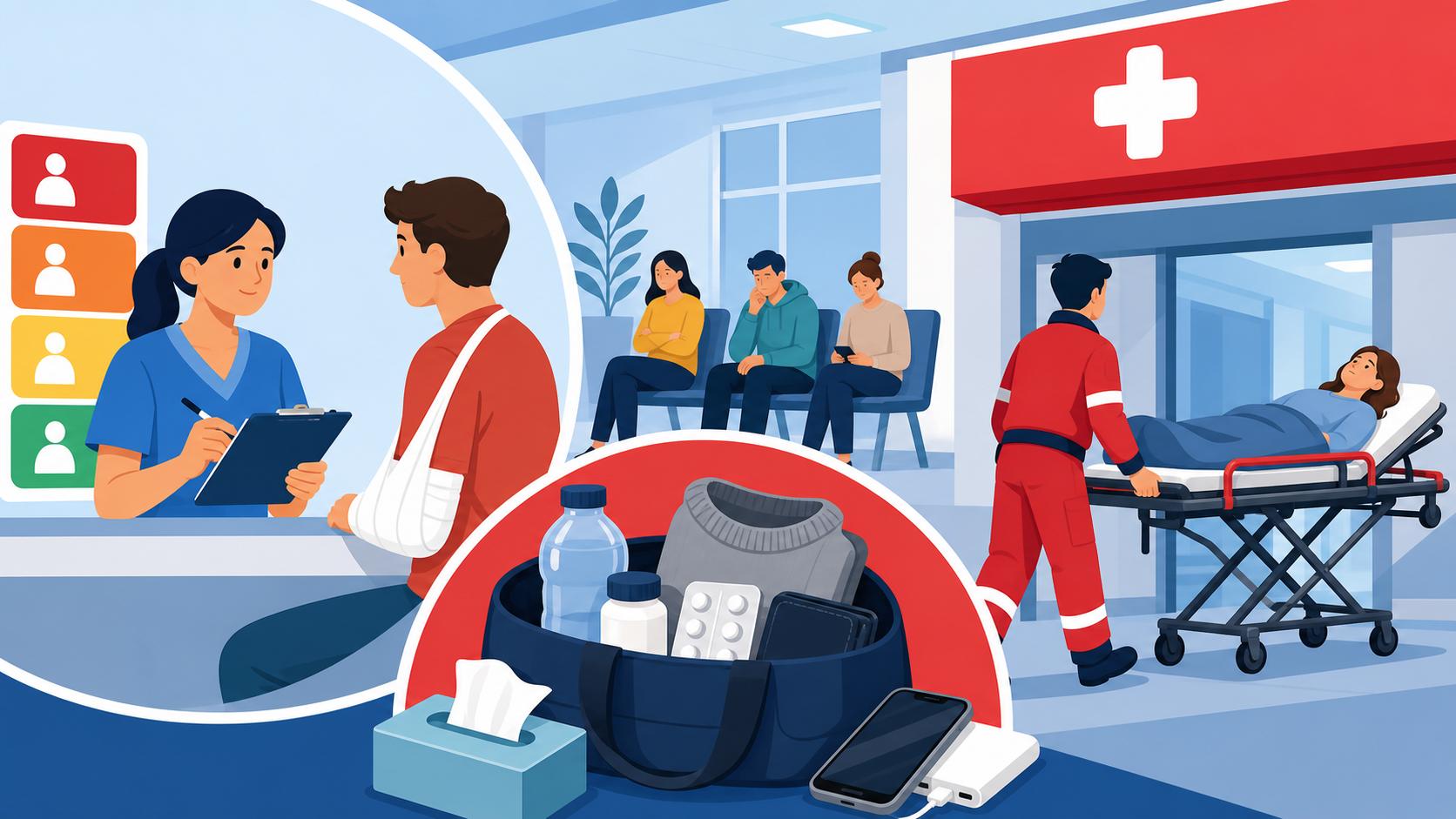
Once you walk through those sliding glass doors, your first stop is the "Anmeldung" (Registration) and then the "Triage." This is where the "I've been waiting for four hours" complaints usually start. Understanding the Manchester Triage System (MTS) used in most Austrian hospitals will help lower your blood pressure while you wait.
The Manchester Triage System MTS
Austria uses a color-coded triage system. As soon as you arrive, a nurse will assess your vitals and symptoms. You will be assigned a color:
- Red: Immediate (Life-threatening; you go straight to a treatment room).
- Orange: Very Urgent (Targeted wait time under 10 minutes).
- Yellow: Urgent (Wait time can be up to 60 minutes).
- Green: Standard (Wait time can be 2 hours or more).
- Blue: Non-Urgent (You are at the bottom of the list and may wait 4+ hours).
I’ve sat in a "Green" category for five hours before. It’s frustrating, but it means you are stable. If you see someone arrive after you and get whisked inside immediately, it’s because they are Red or Orange. It isn't personal; it's clinical.
Communicating Your Pain Level Effectively
When the triage nurse asks about your pain, be honest but precise. Austrians tend to be quite stoic. If you say your pain is "fine" or "okay" when you are actually in agony, they will take you at your word and put you in a lower priority category. Use a scale of 1 to 10 ("Schmerzskala"). If you struggle with German, don't worry—most medical staff in the ER speak decent English, but having a few key phrases like "Ich habe starke Schmerzen" (I have strong pain) or "Ich kann nicht atmen" (I cannot breathe) is vital.
The Waiting Room Reality
Expect the waiting room to be a cross-section of society. You will see everything from people with minor sports injuries to those in significant distress. In the post-2024 era, most Austrian waiting rooms are equipped with digital displays that show wait times, but these are "estimates" at best. If a major multi-car accident happens nearby, every wait time in the hospital will instantly double. This is why knowing Navigating Social Insurance: ÖGK, SVS, and BVAEB Overview is helpful, as it reminds you that your coverage is guaranteed, even if the timing is inconvenient.
Documentation and Administrative Prep
In the heat of a medical emergency, the last thing you want to do is hunt for paperwork. However, the Austrian bureaucracy lives and breathes on specific documents. Without them, the "Anmeldung" process becomes a bureaucratic hurdle that adds unnecessary stress.
The e-card and ID
Your The Austrian e-card: Registration, Photo Rules, and Usage Guide is your golden ticket. It tells the hospital which social insurance provider is paying for your visit. The e-card system is more integrated than ever, but you still need a physical card or a digital version via the ID Austria app. Along with the e-card, you must have a photo ID (Passport or Residence Permit). The hospital needs to verify that the person on the e-card is the person standing in front of them.
The Meldezettel and Previous Records
While not always strictly required for immediate life-saving treatment, having your "Meldezettel" (proof of residence) or at least knowing your exact Austrian address is important for the billing and follow-up paperwork. Furthermore, if you have a complex medical history, bring your "Befunde" (medical reports). If you have been using the ELGA (Electronic Health Record): How to Opt-Out system, the doctors can see your history digitally, but many expats opt-out. If you’ve opted out, you are the sole bearer of your medical history. Bring a list of your current medications and allergies.
Proof of Insurance for Non-EU Expats
If you are in Austria on a D-Visa or are a newly arrived expat whose e-card hasn't arrived yet, bring your private travel insurance or the "Bestätigung" from your insurance provider. If you are an EU citizen, your EHIC (on the back of your home country's health card) is usually sufficient, but the hospital may ask for additional ID. For those here on specific permits, having your Medical Certificates Required for Specific Visa Applications handy isn't necessary for the ER, but knowing your insurance status is.
Practical Items for Your Stay
ER visits in Austria are rarely quick. If you are admitted for observation, you might spend 24 hours in a holding ward before being moved to a room or discharged. Packing a small "Go-Bag" for emergencies is a veteran expat move.
Clothing and Personal Hygiene
Austrian hospitals provide the basics, but they are very basic. Bring:
- Comfortable, loose clothing: You’ll likely be in a hospital gown for exams, but having your own leggings or a soft t-shirt makes a huge difference.
- Slippers or "Hausschuhe": Austrians take the "no shoes indoors" rule seriously even in hospitals. You’ll want something easy to slip on if you need to walk to the bathroom.
- Basic Toiletries: A toothbrush, small toothpaste, and deodorant. Public ER bathrooms are clean but rarely stocked with "luxury" items.
Power, Entertainment, and Communication
Your phone will be your lifeline. Austrian hospitals usually have free Wi-Fi (often called "WLAN-Gast"), but it can be spotty.
- Extra-long charging cable: Outlets in ER cubicles are often in awkward places behind the bed.
- Power bank: In case you are stuck in a waiting room chair for 6 hours without an outlet.
- Noise-canceling headphones: ERs are loud. Machines beep, people cry, and staff talk. If you need to sleep while waiting for test results, headphones are a godsend.
Snacks and Cash
Most Austrian ERs have vending machines, but they often only take coins or specific cards. Having 10-20 Euro in small change is helpful for water or a quick snack. Note that if you are presenting with abdominal pain, do not eat or drink until a doctor sees you, as you might need surgery and need to be "nüchtern" (fasting).
| Category | Must-Have Item | Why You Need It |
|---|---|---|
| Admin | e-card & Photo ID | To process insurance and verify identity. |
| Medical | List of Medications | Prevents dangerous drug interactions. |
| Communication | Phone & Long Charger | Keeping family updated and staying entertained. |
| Comfort | Slippers (Hausschuhe) | Standard Austrian hospital etiquette. |
| Financial | Small Change (€) | For vending machines and parking. |
| Work | Employer Contact Info | To trigger the Sick Leave (Krankenstand): Employer Notification and Doctor Notes process. |
Insurance and Payment Realities
One of the best things about living here is that you won't be bankrupted by an ER visit, but that doesn't mean it's entirely "free" for everyone. Depending on your status, there are certain costs to be aware of.
Public Insurance Coverage
If you are covered by ÖGK, SVS, or BVAEB, the cost of the ER visit itself is covered. However, if you are admitted to the hospital overnight, there is a "Kostenbeitrag" (daily contribution fee). As of 2026, this is usually around 12 to 15 Euro per day, capped at 25 days per year. It’s a nominal fee, but you will receive a bill in the mail a few weeks later. Don't ignore it; the Navigating Social Insurance: ÖGK, SVS, and BVAEB Overview system is efficient at debt collection.
Ambulance Fees and Specialized Rescue
Here is a trap many expats fall into: Ambulance Fees and Mountain Rescue Costs (Alpinpolizze). If you call an ambulance (144) and it is deemed a medical necessity, your insurance covers it. If you call an ambulance for a non-emergency (e.g., you just didn't want to take a taxi), you might be billed for the transport. More importantly, if you are rescued in the mountains while hiking or skiing, the costs are not covered by standard public insurance. You need private "Unfallversicherung" or an Alpenverein membership for that.
After-Care and Prescriptions
When you are discharged from the ER, the doctor will give you a "Arztbrief" (discharge letter). This is for your Hausarzt. They will also give you a prescription if needed. If it’s late at night, you’ll need to find a "Nachtapotheke." Be aware that Apotheken in Austria: Prescription Workflow and Night Shifts involve a small "night fee" (Nachtdienstgebühr) for filling prescriptions outside of normal hours. The hospital itself rarely gives you more than a single dose of medication to get you through the night.
Special Situations and Local Tips
Emergency care isn't just about the ER. Sometimes, the "Notaufnahme" isn't the best place for your specific crisis.
Pediatric Emergencies
If you have a child, the "Eltern-Kind" medical culture in Austria is very protective. You should always look for a specialized "Kinder-Notfallambulanz." These are designed to be less scary for kids and have pediatric specialists on hand. In 2026, ensure your The Digital Eltern-Kind-Pass 2026: What Changed for Parents is accessible on your phone, as the doctors will want to see the vaccination records and previous check-ups during an emergency.
Dental and Eye Emergencies
Do not go to a general ER for a toothache or a lost filling. They don't have dentists on staff. You need to look for the "Zahnärztlicher Notdienst" (Emergency Dental Service). Every region in Austria has one designated dentist on call for weekends and holidays. Similarly, for eye injuries, only specific hospitals have an "Augen-Notdienst." Check the local hospital website for "Fachambulanzen" to ensure they can actually treat your specific issue.
The Employer Notification
If your ER visit results in you missing work the next day, you must follow the Sick Leave (Krankenstand): Employer Notification and Doctor Notes rules. You must notify your employer "unverzüglich" (immediately). The hospital can give you a "Bestätigung" that you were there, but you usually still need to visit your regular Hausarzt to get the official "Krankenmeldung" (sick note) that goes to the insurance company.
Medical Disclaimer
The information provided in this guide is for informational purposes only and does not constitute professional medical advice, diagnosis, or treatment. Always seek the advice of your physician or other qualified health provider with any questions you may have regarding a medical condition. Never disregard professional medical advice or delay in seeking it because of something you have read on this website. In the event of a life-threatening emergency, immediately call 144 in Austria or 112 for European emergency services.