Can an Employer Fire You During Sick Leave in Austria?
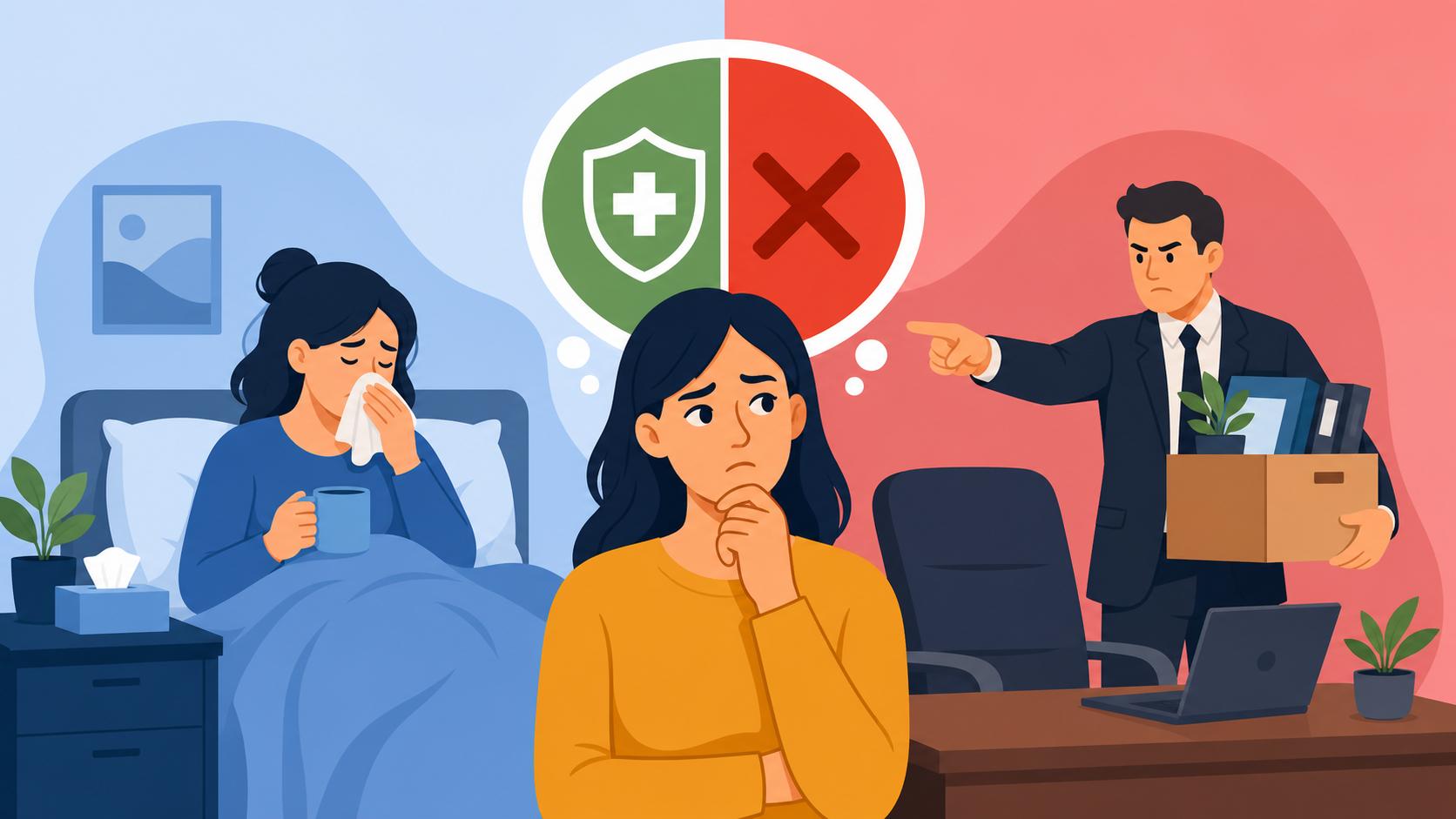
The realization that you might lose your job while lying in bed with a fever is a unique kind of Austrian anxiety. I remember my first winter in Vienna, shivering in my Altbau apartment, terrified that calling in sick would result in a termination letter in my mailbox the next Monday. This guide clarifies the brutal reality and the protective nuances of being fired during sick leave in Austria.
The Harsh Legal Reality of Termination During Sick Leave
Many expats arrive in Austria under the impression that "Krankenstand" (sick leave) acts as a magical shield against termination. I certainly did. However, the legal truth is more sobering: in Austria, an employer generally can fire you while you are on sick leave. Unlike some other European jurisdictions where being sick freezes the ability to terminate a contract, Austrian law allows a "Kündigung" (notice of termination) to be delivered even if you are currently incapacitated.
This often comes as a massive shock to international workers. You might be recovering from surgery or dealing with a severe flu, and your employer can still trigger the notice period. It is vital to understand that the sickness itself does not prevent the employer from ending the employment relationship, provided they follow the correct notice periods and dates established in your contract or the relevant Understanding the Kollektivvertrag (Collective Agreement).
However, while they can fire you, they cannot necessarily escape the financial obligations associated with your illness. This is where the Austrian system shows its supportive side. If you are fired while sick, your entitlement to continued pay typically does not end on the day you receive the notice, nor does it necessarily end on your last day of work if you are still ill.
The Myth of the Protected Period
There is no "protected period" for the average worker that forbids termination during illness. Whether you have a broken leg or a chronic condition, the employer is legally permitted to send that termination letter. The only thing they must respect is the delivery of the notice. If they send it via registered mail and it arrives at your home while you are sick, the notice period begins to tick.
Many expats here wait until they were back in the office to "confess" an illness, fearing immediate firing. In reality, the law is designed to ensure that even if you are let go, you are not left without income while you are physically unable to seek new work. This is managed through a complex system of tiers involving both your employer and the Navigating Social Insurance: ÖGK, SVS, and BVAEB Overview.
Termination vs Dismissal for Cause
It is crucial to distinguish between a "Kündigung" (standard termination with notice) and an "Entlassung" (immediate dismissal for cause). An employer can terminate you "properly" without giving a specific reason, as long as they observe the notice period. However, they cannot use your sickness as a reason for an immediate "Entlassung" unless you have committed a serious breach of duty—such as faking the illness or repeatedly failing to provide a doctor's note.
If you find yourself in a situation where you believe the firing was a direct retaliation for being sick, you have rights, but the burden of proof can be tricky. This is why understanding Employment Rights: Arbeiterkammer, Contracts, and Leave is the most important step for any expat facing this stress.
Financial Obligations and Continued Pay
The silver lining in this stressful situation is the "Entgeltfortzahlung"—the continued payment of wages. Even if your employer fires you during your sick leave, they are usually obligated to keep paying you until your sick leave ends or until your legal entitlement to pay is exhausted, whichever comes first.
The duration of this pay depends entirely on your seniority with the company. For example, in your first year of employment, you are generally entitled to six weeks of full pay and two weeks of half pay from your employer. If you are fired in the middle of a three-week sick leave, the employer must pay you for those three weeks, even if your notice period is shorter.
How Seniority Affects Your Protection
The longer you have been with a company, the more expensive it becomes for them to fire you during a long-term illness. The tiers for continued pay increase significantly over time:
- After 1 year: 6 weeks full / 2 weeks half pay
- After 5 years: 8 weeks full / 4 weeks half pay
- After 15 years: 10 weeks full / 4 weeks half pay
- After 25 years: 12 weeks full / 4 weeks half pay
If the employer terminates the contract specifically to avoid these payments, the law often forces them to pay out the full entitlement anyway. This is a crucial detail to check on your Money & Finance statements and final "Lohnzettel."
What Happens to Your 13th and 14th Salary
In Austria, your Christmas and Holiday bonuses (the 13th and 14th salaries) are part of your total annual compensation. If you are fired during sick leave, you are still entitled to the pro-rata portion of these bonuses for the time you were employed. Some employers try to "forget" these when calculating the final payout for a sick employee, but these are legally mandated by most collective agreements. You can learn more about how these work in our guide on Austrian Work Culture: 14 Salaries, Meetings, and Etiquette.
The Essential Role of the Doctor and the E-card
To ensure you are protected financially, your "Krankenstand" must be official. You cannot simply stay home and tell your boss you aren't coming in. In the eyes of the Austrian state and the Public vs Private Health Insurance in Austria Explained system, you are only "sick" when a licensed physician says you are.
The process usually involves visiting your "Hausarzt" (General Practitioner) and presenting your The Austrian e-card: Registration, Photo Rules, and Usage Guide. The doctor then enters the diagnosis into the system, which electronically notifies the insurance provider (like the ÖGK). You will receive a physical or digital slip—the "Krankmeldung"—which you must provide to your employer.
Strict Notification Duties
Your employer is entitled to know that you are sick from the very first hour of your absence. Even if your contract says you only need a doctor's note after the third day, the law allows an employer to demand it from day one. If you are fired while sick and you haven't followed the Exact Steps to Notify Your Employer of a Krankenstand, your legal standing to challenge the firing or claim continued pay is significantly weakened.
The Importance of the e-Rezept System
While you are sick and facing a potential termination, the last thing you want to worry about is running back and forth to the doctor for paper prescriptions. Austria’s "e-Rezept" system allows your doctor to upload prescriptions directly to your e-card. This means you can go to any Pharmacies (Apotheken) and Medication Rules in Austria to pick up your meds, ensuring you stay compliant with your "recovery obligations"—which we will discuss next.
Behavior During Sick Leave: What is Allowed?
A common trap for expats is the "Verhalten im Krankenstand" (behavior during sick leave). If your employer fires you, they might look for reasons to justify it as a "dismissal for cause" (Entlassung) to avoid paying out your notice period. One way they do this is by proving you acted in a way that hindered your recovery.
In Austria, when you are on sick leave, your primary "job" is to get healthy. If your doctor prescribes bed rest, and you are spotted having a Mélange at a café in the 1st district, you are in trouble. However, you are allowed to do things necessary for survival and recovery, such as:
- Going to the pharmacy or the doctor.
- Grocery shopping (if you live alone and have no one to help).
- Taking a short walk if the doctor specifically recommended fresh air (common for mental health-related leave).
Failure to adhere to these rules can lead to an immediate dismissal, which voids your notice period and your 13th/14th salary payouts. For more details on these rules, see our article on Sick Leave (Krankenstand): Employer Notification and Doctor Notes.
| Feature | During Employment | After Termination Notice (While Sick) |
|---|---|---|
| Employer Can Fire You? | Yes | N/A (Already fired) |
| Continued Pay? | Full/Half Pay based on seniority | Continues until end of illness or entitlement |
| Must Provide Doctor Note? | Yes, immediately | Yes, until the last day of the contract |
| Health Insurance Coverage? | Via Employer | Remains active during sick pay/unemployment |
| Notice Period Required? | Yes, per contract/KV | Must be respected by employer |
Legal Recourse and the Arbeiterkammer
If the termination feels wrong—perhaps you were fired specifically because you have a chronic illness or because you took a week off for a necessary surgery—you are not alone. This is where the "Arbeiterkammer" (AK) comes in. Every employee in Austria (except some civil servants) is a member of the AK. They are the most powerful advocates for workers' rights in the country.
Socially Unjustified Termination (Sozialwidrige Kündigung)
In Austria, you can challenge a termination if it is "socially unjustified." This applies if you have been with the company for at least six months and the company has at least five employees. If losing your job would cause you significant financial hardship (which is almost always true for expats on a Red-White-Red Card (RWR): Application and Requirements), the AK can help you sue to have the termination overturned.
The AK Vienna (located near the Belvedere) has taken on cases where expats were targeted for termination the moment they fell ill. They provide free legal advice and, in many cases, will represent you in court for free.
The Works Council (Betriebsrat)
If your company has a "Betriebsrat" (Works Council), the employer must notify them before firing anyone. The council has the right to comment on the termination. If they object to it, it makes your legal case much stronger if you decide to fight the termination later. Always check if your company has a council representative; they are often more approachable than HR when you are in the middle of a crisis.
Moving Forward: Insurance and the AMS
If the termination stands and your notice period ends while you are still sick, your "Entgeltfortzahlung" from the employer stops, but you aren't left with zero. At this point, the Navigating Social Insurance: ÖGK, SVS, and BVAEB Overview takes over and begins paying "Krankengeld" (sick pay).
Once you are healthy again, you must immediately register with the AMS (Arbeitsmarktservice) to receive unemployment benefits. Be aware that the AMS requires you to be "ready for work," so you cannot claim unemployment while you are still officially on sick leave. This transition can be tricky for expats, especially regarding Healthcare Checklist for Your First 30 Days in Austria as a newly unemployed person.
Practical Tips for Navigating Sick Leave
- Over-communicate with HR: Don't just send an email. If possible, call or ensure you get a "read receipt." Documentation is your best friend.
- Keep Every Receipt: If you go to a Finding Medical Care in Austria: Clinics, Hospitals, and Referrals, keep the confirmation of your visit time.
- Check Your Contract: Know your notice periods. Austrian notice periods often align with the end of a calendar quarter or the 15th of the month.
- Don't Sign Anything: If HR calls you in while you are sick or just returning and hands you a "Einvernehmliche Auflösung" (mutual termination), do not sign it without talking to the Arbeiterkammer first. Signing this usually means you waive your notice period and may face a "waiting period" for unemployment benefits.
Disclaimer
This guide provides a general overview of labor laws and sick leave practices in Austria as of 2026. However, individual employment contracts and specific collective agreements (Kollektivverträge) can vary significantly. This information does not constitute formal legal advice. For specific cases, especially those involving potential litigation or residency status, always consult with a qualified legal professional or the Arbeiterkammer.