Tap Water Quality (Hochquellenwasser) in Vienna
One of the biggest culture shocks I faced when moving to Vienna was watching my neighbors haul heavy crates of bottled water up four flights of stairs while I stood at my sink staring at the faucet. I spent my first month overspending on plastic bottles because I simply didn't trust that "city water" could be as good as everyone claimed. This guide solves the mystery of Vienna's tap water and explains how to manage it in your own home.
Understanding Hochquellenwasser The Alpine Source
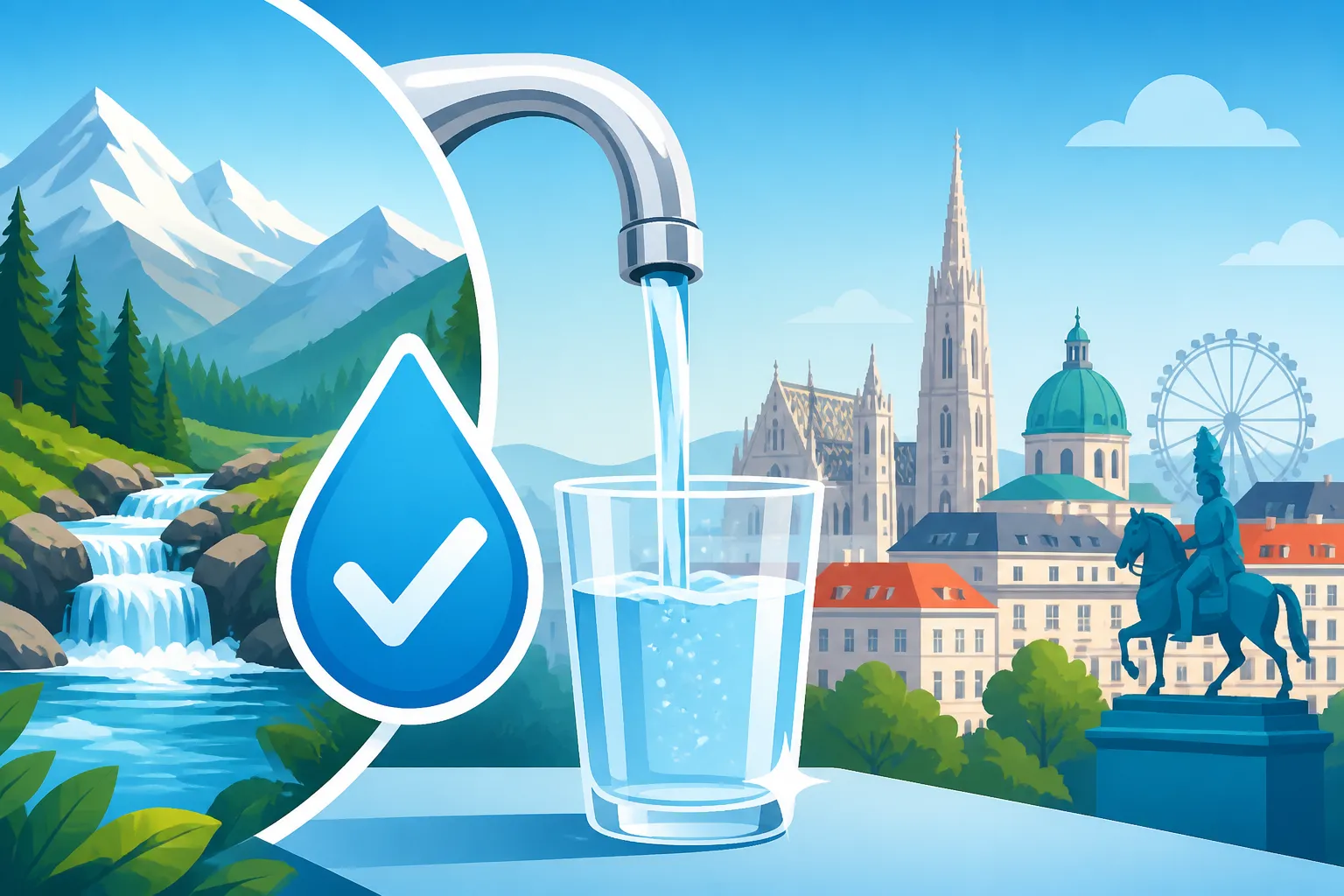
Vienna is one of the few cities in the world that provides its residents with high-quality mountain spring water directly through the municipal grid. This isn't just "filtered" water; it is known as Hochquellenwasser, or high-spring water. The system was a marvel of 19th-century engineering and remains the crown jewel of the city's infrastructure today. When you turn on your tap in the 7th district, you are drinking water that was flowing through the Alps just 24 to 36 hours prior.
The water travels through two massive pipelines entirely by gravity, meaning no pumps are required to bring the water from the mountains to the city reservoirs. This natural flow helps maintain the water’s cool temperature and fresh taste. If you have just finished your Utilities Setup: Electricity, Gas, Water, and Internet, you might be wondering if you need to buy a filtration system. The short answer is usually no, but there are nuances depending on the age of your building.
The History of the First Spring Pipeline
The First Vienna Mountain Spring Pipeline (I. Wiener Hochquellenleitung) was opened in 1873 by Emperor Franz Joseph I. It sources water from the Rax, Schneeberg, and Schneealpe massifs in the Lower Austrian-Styrian Alps. This was a revolutionary response to the cholera outbreaks that plagued the city in the mid-1800s. The pipeline spans roughly 150 kilometers.
Living in certain districts, like the 1st through the 6th or parts of the 10th, you are primarily served by this first line. The water is exceptionally soft and has a distinct, crisp profile that many locals swear by. It is one of the reasons why the Vienna Neighborhood Guide: Best Districts for Expats often highlights the quality of life; the simple act of drinking water feels like a luxury.
The Second Spring Pipeline and Current Infrastructure
As the city expanded, the Second Mountain Spring Pipeline (II. Wiener Hochquellenleitung) was added in 1910. This line brings water from the Hochschwab region in Styria. It is significantly longer, stretching about 200 kilometers, and serves the higher-numbered districts and the growing northern parts of the city.
The infrastructure includes massive reservoirs, such as the one at Rosenhügel, which help regulate pressure and ensure that even during peak summer heatwaves, the water remains at a steady, chilly 6 to 10 degrees Celsius. This natural refrigeration is a lifesaver when you are trying to stay cool during the peak of summer.
Why You Should Skip the Bottled Water Aisles
From a financial perspective, drinking tap water in Vienna is a no-brainer. If you look at the Cost of Living in Vienna: Singles vs Families, you will find that grocery bills can stack up quickly. A liter of bottled water at a supermarket can cost anywhere from 50 cents to over a Euro, whereas a liter of Vienna tap water costs a fraction of a cent. Over a year, this can save a household hundreds of Euros.
Beyond the cost, the mineral composition of Hochquellenwasser is comparable to many premium bottled brands. It contains essential minerals like calcium and magnesium, which are absorbed naturally as the water filters through the Alpine limestone.
Chemical Composition and Health Benefits
Vienna's water is strictly monitored by the city's water department (MA 31). They conduct thousands of tests annually to ensure the water is free from harmful bacteria and pollutants. Unlike many North American or European cities, the use of chlorine is kept to an absolute minimum—usually only as a temporary safety measure during heavy rainfall or construction. You will rarely, if ever, smell or taste chemicals in your glass.
| Mineral / Property | Average Value (approx.) | Benefit |
|---|---|---|
| Calcium | 40 – 50 mg/L | Bone health and nerve function |
| Magnesium | 10 – 15 mg/L | Muscle function and energy |
| pH Value | 7.6 – 8.0 | Slightly alkaline, great for taste |
| Water Hardness | 6 – 11 °dH | Generally soft to medium-hard |
Environmental Impact and Sustainability
One of the most important aspects of Living in Austria 2027: The Expat Starter Guide is adapting to the local commitment to sustainability. Austria has a very high standard for waste management. By choosing tap water, you are actively participating in Managing Household Waste: Strict Recycling Rules Explained by reducing the number of PET bottles that need to be processed.
Even though the city has Strict Recycling Rules Explained, the energy required to recycle plastic is significant. Using a reusable glass bottle or a high-quality stainless steel flask is the "Viennese way." You will see locals filling up their bottles at the many public fountains across the city, especially during the hiking season.
Cost Savings for Expats
When you are first settling in, every Euro counts. The savings from avoiding bottled water can be redirected toward your Everyday Etiquette: Garbage Sorting, Noise, and Ruhezeit preparations or even a nice meal at a traditional Gasthaus. The convenience of never having to carry heavy bags from the supermarket is a physical relief that many expats underestimate until they make the switch.
Managing Old Pipes and Water Hardness in Your Apartment
While the water leaving the reservoir is pristine, the final few meters of its journey—through the pipes of your apartment building—can change things. This is a common point of frustration for foreigners who move into older buildings. I remember my first apartment in the 15th district; the water was perfect, but the "Kalk" (limescale) was a constant battle.
Dealing with Calcification and Limescale
The term "Kalk" will become a regular part of your vocabulary. Because the water travels through limestone mountains, it picks up calcium carbonate. While this is healthy to drink, it is a nightmare for appliances. Your kettle, coffee machine, and dishwasher will develop a white, crusty buildup within weeks.
If you don't stay on top of this, your expensive espresso machine will stop working. Most locals use citric acid (Zitronensäure) or vinegar to "entkalken" (descale) their appliances monthly. You don't need fancy branded cleaners; a simple bag of citric acid from the supermarket is the most effective and eco-friendly way to handle it.
Water Quality in Old Buildings vs New
The age of your building plays a significant role in your daily water experience. When choosing between Altbau vs Neubau: Differences in Rent, Charm, and Heating, consider the plumbing.
- Altbau (Old Buildings): These often have older lead or galvanized steel pipes. While lead pipes are largely replaced, some very old buildings might still have them in the internal walls. If you live in an Altbau, it is a good habit to let the water run for 30 seconds in the morning until it feels cold. This flushes out any water that has been sitting in the pipes overnight.
- Neubau (New Buildings): These use modern plastic or stainless steel piping, meaning the water quality is almost identical to what leaves the city reservoir. You rarely have to worry about metallic tastes or sediment.
Regardless of the building type, you should keep an eye out for moisture levels. Improperly managed water usage can lead to Preventing Mold (Schimmel) in Old Altbau Apartments, especially if you don't ventilate your bathroom properly after showering.
Practical Tips for Newcomers and Water Access in the City
Vienna goes out of its way to make water accessible. You are never far from a cold drink, even when you are away from your kitchen. However, there are some social rules and "hacks" that will make your life easier as you integrate.
Finding Drinking Fountains Across Vienna
During the summer, the city activates over 1,300 drinking fountains (Trinkbrunnen). These range from historic cast-iron fountains to modern, high-tech "mist" fountains that cool the surrounding air. You can find their locations on the "Stadt Wien" app or website.
There are also several mobile "drinking water curtains" set up in heat-vulnerable areas like Favoriten. These are fantastic for families. If you are exploring the city, look for the word "Trinkwasser" (drinking water) on the fountain. If you see "Kein Trinkwasser," it is usually recycled water used for plants or decoration—do not drink it.
Restaurant Etiquette Asking for Leitungswasser
This is where many expats get tripped up. In a traditional Viennese coffee house, you will almost always receive a small glass of tap water (Leitungswasser) on a silver tray alongside your coffee. This is a complimentary part of the service.
However, if you sit down for a full meal and order only a large carafe of tap water, some restaurants may charge a small fee (usually 1 to 2 Euros) for the "service" and cleaning of the glasses. This is a point of contention even for locals, but it is legal. To avoid any awkwardness, it is best to order a paid drink first (like a Melange or a Soda Zitron) and then ask for an extra glass of tap water.
How to Test Your Own Tap Water Quality
If you are genuinely concerned about the pipes in your specific building—perhaps because the water has a slight tint or you see sediment—you can have it tested. The city offers a service through "Viennese Water" (MA 31) where you can order a testing kit for a fee.
Alternatively, there are private labs in the city that specialize in checking for lead and heavy metals. For most residents, this is unnecessary, but for those living in very old, unrenovated Altbaus with small children, it can provide significant peace of mind. Simply letting the water run until it is "mountain cold" is the best free precaution you can take.
Disclaimer
The information provided in this guide is for informational purposes only and reflects the conditions as of 2026. While Vienna's tap water is generally of the highest quality, individual building conditions may vary. Always consult with your building management (Hausverwaltung) if you have specific concerns about the plumbing in your residence. This guide does not constitute legal or medical advice regarding water safety or health.