Correctly Formatting an Austrian Address for International Mail
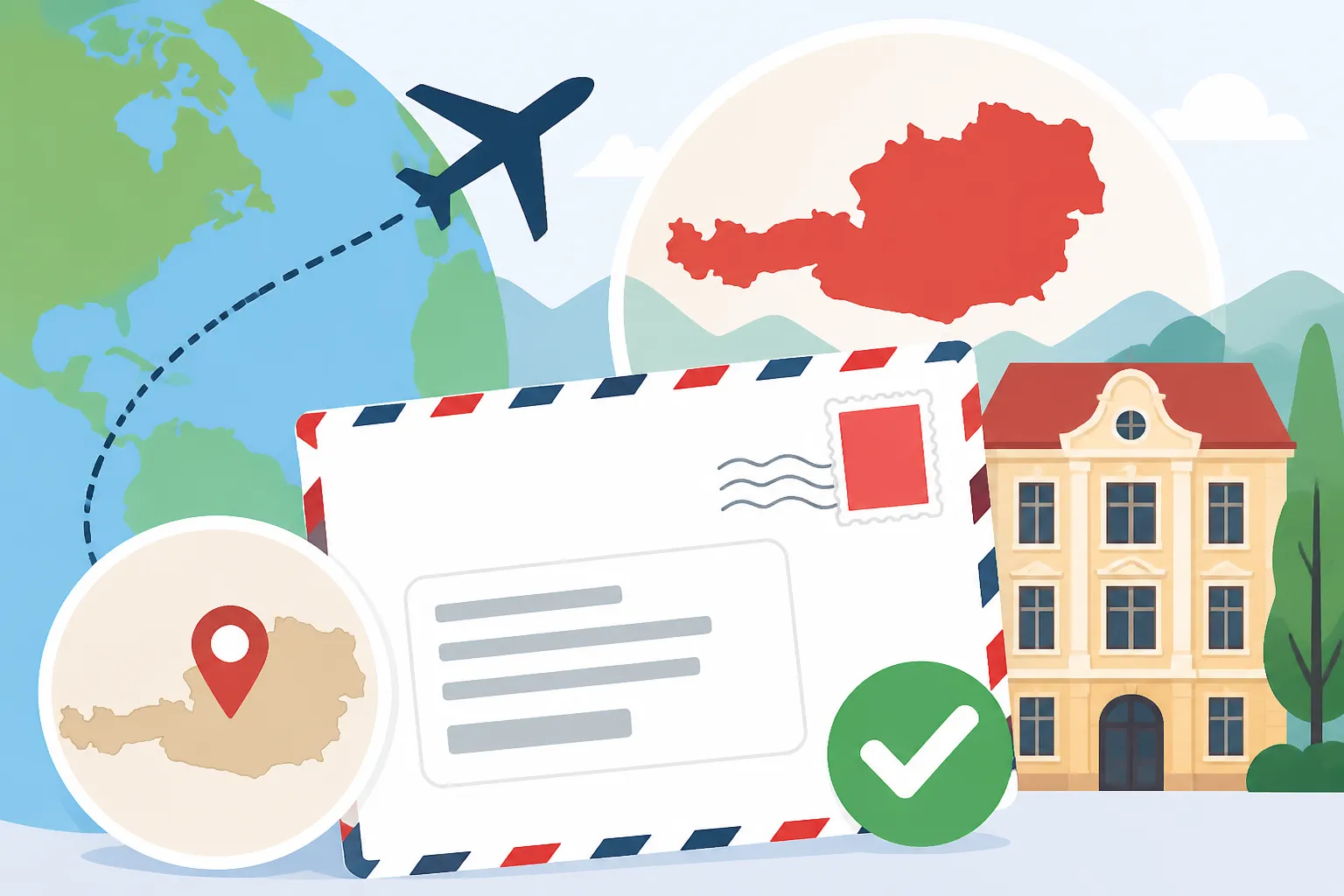
Few things are as disheartening as waiting weeks for a care package from home, only to see it marked as undeliverable because your aunt missed a single digit in your address. I remember my first Christmas in Graz, watching a box of my favorite childhood snacks disappear back into the postal void because I hadn't yet mastered the staircase numbering system. This guide ensures your international mail reaches your Austrian doorstep every single time.
Understanding the Logic of the Austrian Address System
When you first arrive, the Living in Austria 2027: The Expat Starter Guide will tell you that bureaucracy is a way of life here. The postal system is no exception. Unlike the streamlined street-and-number systems in the US or UK, an Austrian address is a multi-layered map of a building. It is designed to lead a postal carrier not just to your building, but to the exact floor and door where you live. This is particularly important in older European cities where one street number might represent a massive complex with dozens of separate units.
The foundational logic of the address starts with the recipient's name, followed by the street name, the house number, and then the specific apartment identifiers. For international mail, the final line must always be the country name, ideally in English or German (AUSTRIA or ÖSTERREICH). If you are living in a temporary setup while navigating The Meldezettel Process: Registering Your Address Legally, you must be even more careful. If your name is not yet on the physical mailbox, your mail will likely be returned to the sender unless you include a C/O (Care Of) line with the primary tenant's name.
The Mystery of Stiege Stock and Tür
One of the biggest hurdles for foreigners is the "Stiege" and "Tür" system. In Austrian Address System: Staircases (Stiege) and Door Numbers, we see that larger apartment blocks, especially the classic "Altbau" buildings, are often split into multiple staircases or sections. If your address includes a "Stiege," this refers to the staircase. The "Stock" refers to the floor, and the "Tür" refers to your specific door number.
In a formal address format, these are often separated by slashes. For example, "Hauptstraße 10/2/15" would translate to house number 10, staircase 2, door 15. If your family back home sees this string of numbers, they might get confused and leave them out, thinking they are typos. You must emphasize to them that these numbers are non-negotiable. Without the door number (Tür), the postman has no way of knowing which of the 50 mailboxes in the foyer belongs to you, especially since mailboxes are rarely labeled with just apartment numbers; they almost always require a last name that matches the envelope.
Formatting Your Name and the C/O Rule
In Austria, your name is your identity in the eyes of the Post.at carrier. If the name on the envelope does not match the name on the doorbell or the mailbox exactly, the mail is frequently marked as "Empfänger unbekannt" (Recipient unknown). This is a shock to many who come from countries where the postman just drops mail through a slot regardless of the name. If you are staying with a friend or in a sublet, you must use the "c/o" format.
For example, if your name is Jane Doe and you are staying with Max Mustermann, the address should read:
Jane Doe
c/o Max Mustermann
Street Name 12/4
1010 Vienna
AUSTRIA
This tells the carrier to look for the Mustermann mailbox but deliver the contents to Jane. When you are first setting up your life and handling Utilities Setup: Electricity, Gas, Water, and Internet, you’ll notice that every official contract uses this exact naming convention. Accuracy here prevents your first bank cards or residence permits from being sent back to the authorities, which can cause weeks of administrative delays.
The Four-Digit Postcode and District Coding
The Austrian "Postleitzahl" (PLZ) is a four-digit number that carries a lot of weight. The first digit represents the region. For instance, "1" is for Vienna, "8" is for Styria, and "4" is for Upper Austria. In Vienna, the middle two digits actually tell you which district you are in. A postcode like 1070 means you are in the 7th district (Neubau). If you are looking at a Vienna Neighborhood Guide: Best Districts for Expats, you will start to recognize these codes instantly.
When writing the postcode for international mail, it should always precede the city name on the same line. For example: "1010 Wien." Do not put the postcode on a separate line or after the city name, as this can confuse the automated sorting machines used by international hubs like DHL or FedEx. The machines are calibrated to look for the "Postcode + City" pattern. If you are sending mail from Austria abroad, the same logic applies in reverse—always follow the destination country's specific postal standards to ensure speed.
Comparison of Austrian vs International Address Formats
| Element | Austrian Format | US/UK Format Comparison |
|---|---|---|
| Recipient | Name (with Title if applicable) | Name |
| Street | Name + House Number (e.g., Landstraße 15) | Number + Name (e.g., 15 Main St) |
| Unit Details | /Stiege/Door (e.g., 15/2/4) | Apt or Suite Number |
| Postcode | Before City (e.g., 1010 Wien) | After City/State (e.g., London SW1) |
| Country | Last Line (AUSTRIA) | Last Line (USA/UK) |
Common Pitfalls for International Senders
Family members often try to "help" by translating terms. They might write "Staircase 1" instead of "Stiege 1" or "Floor 2" instead of "2. Stock." While some experienced carriers might figure it out, it is much safer to keep the German terms or use the numerical slash format. The slash format (House/Stiege/Door) is the most "international-proof" way to communicate your location because it fits easily onto the limited character lines of online shopping forms.
Another common mistake is the placement of the house number. In English-speaking countries, the number comes before the street. In Austria, the street name always comes first. If your sender puts the number first, the sorting machine might misread it as part of the postcode or a different street entirely. If you are living in a smaller town and receiving packages while your Moving to Austria with Family: Schools and Logistics plans are underway, ensure your relatives know that the street name is the primary identifier.
Handling Apartment Complexes and Business Addresses
If you are receiving mail at an office or a large campus, the "Abgabestelle" (delivery point) becomes even more specific. Many modern buildings have a central mailroom. In these cases, including the department name or the floor number is vital. For those working in tech hubs in Linz or Graz, your address might look like a string of code. Don't simplify it.
If you are expecting a package and you aren't home, the carrier will leave a "gelber Zettel" (yellow slip). Knowing Missed a Post.at Delivery? Where to Find Your Yellow Slip is a rite of passage for every expat. The slip will tell you which "Postfiliale" (post office) or "Abholstation" (pickup station) is holding your item. You will need a photo ID to claim it. Increasingly, the Post is moving toward digital notifications, which you can track if you have registered for ID Austria and E-Government Tools for Foreign Residents.
The Role of Digital Tools in Modern Delivery
The integration of the "Post App" with your digital identity has made things much easier. You can now redirect packages in real-time or grant a "Postvollmacht" (power of attorney) to a neighbor to pick up your mail. If you find that your home address is difficult for international carriers to find—perhaps you live in a new development that isn't on Google Maps yet—you might consider Registering for Post Packstation Lockers (Empfangsbox). These are 24/7 lockers located throughout cities like Vienna, Salzburg, and Innsbruck.
Using a Packstation address for international orders can sometimes be more reliable than a home address if your building has a broken buzzer or a confusing layout. However, be aware that not all international couriers can deliver to a Post.at Packstation. Usually, only items handled by the national post or specific partners can be dropped there. If you are moving house, don't forget the importance of Setting Up Mail Forwarding (Nachsendeauftrag) with Post.at to ensure your international subscriptions and letters follow you to your new district.
Specific Tips for Rural vs Urban Addresses
In Vienna, the address system is rigid and numerical. In rural Austria, however, you might encounter "Vulgonamen" or house names that have existed for centuries. In some small villages, there are no street names at all—only the village name and a house number (e.g., "Dorf am See 12"). If you are living in the countryside, your postcode is your most important asset.
For international senders, writing a rural address can feel like they are missing information. They might ask, "But what is the street?" You have to explain that the house number is the street. In these cases, including the recipient's phone number on the package is a lifesaver. Austrian delivery drivers in rural areas are often locals who will call you if they can't find your farm or "Gasthof." This level of personal service is less common in the city but a wonderful perk of alpine living.
Ensuring Success for Important Documents
When you are expecting critical documents—like those related to your The e-card Photo Requirement: How and Where to Register or tax papers—always ask the sender to use a "Registered" (Einschreiben) service. This requires a signature upon delivery and provides a tracking number that works across borders. International mail can often "go dark" once it leaves the origin country and before it is scanned into the Austrian system.
A tracking number allows you to see exactly when it hits the sorting center in Inzersdorf (Vienna) or Wolfurt (Vorarlberg). Once it is in the Austrian system, you can use the Post.at website to see the estimated delivery window. If the address was formatted correctly, you'll see it move from "In Distribution" to "Out for Delivery." If there is an error in the formatting, this is the moment you can sometimes intervene via the app to correct it before it is sent back across the ocean.
Final Checklist for Your International Senders
To make it as easy as possible for your family and friends, send them a "copy-paste" version of your address. Tell them specifically not to change the order of the lines.
- Full Name (as it appears on your mailbox)
- Street Name + House Number / Stiege / Door Number
- Four-digit Postcode + City Name
- AUSTRIA (In all caps)
If you are receiving a package with a high value, remind the sender that they must include a customs declaration (CN22 or CN23). If this is missing or the address is illegible, the package will be held at the customs office, and you will receive a notification (another one of those famous slips) asking you to provide proof of value. Correct formatting and proper documentation are the two pillars of a successful international delivery in the Austrian system.
Disclaimer
The information provided in this guide is for general informational purposes only and reflects the postal standards and practices in Austria as of 2026. While we strive for accuracy, postal regulations and digital service features may change. Always verify specific delivery requirements with Post.at or your international courier service.