After-Hours Medical Care: Weekend Clinics and Night Doctors
Finding yourself struck down by a sudden fever or a throbbing toothache at 8:00 PM on a Friday in Austria can feel like a genuine crisis, especially when you realize your local doctor’s office has been shuttered since noon. I remember my first winter in Vienna, staring at a closed pharmacy door in a panic while my toddler’s temperature spiked, feeling completely abandoned by a system that seemed to sleep while I was suffering. This guide breaks down exactly how to access after-hours care, from the 141 night doctors to weekend clinics, ensuring you never feel stranded in the dark.
Understanding the Austrian After-Hours Landscape
The first thing you learn as an expat in Austria is that the country takes its "Feierabend" and weekends very seriously. This cultural commitment to rest extends to the medical field. Most general practitioners (Hausärzte) operate on a schedule that might seem erratic to newcomers—often closing early on Fridays and remaining shut until Monday morning. While this is great for the work-life balance of the doctors, it creates a significant hurdle for someone who needs Finding Medical Care in Austria: Clinics, Hospitals, and Referrals outside of standard business hours.
However, the system isn't designed to leave you hanging; it’s designed to redirect you. The Austrian medical infrastructure relies on a tiered system of on-call services known as "Bereitschaftsdienst." The goal is to keep the hospital emergency rooms clear for life-threatening traumas while shifting non-emergency but urgent cases to a network of rotating doctors and specialized call centers. Understanding this distinction is the key to navigating the night without a massive headache or a twelve-hour wait in a triage room.
The Concept of Bereitschaftsdienst (On-Call Service)
In every district, from the busy streets of Vienna to the quiet valleys of Tyrol, there is always a doctor "on call." This doesn't mean your specific doctor is available, but rather that the local medical association has designated specific practitioners to cover the gaps. In smaller towns, this might be a single GP who keeps their office open for a few hours on a Sunday morning. In cities, it’s a more sophisticated network of dedicated weekend clinics.
This on-call system is funded through the social insurance system, meaning if you have your e-card ready, most of these services are covered just like a normal visit. If you are still navigating the nuances of Public vs Private Health Insurance in Austria Explained, it’s important to know that the public safety net for after-hours care is robust and accessible to anyone with valid coverage. The challenge is simply knowing which number to call and which door to knock on.
Why You Should Avoid the Emergency Room for Minor Issues
It is a common expat reflex to head straight to the "Notaufnahme" (Emergency Room) the moment a clinic is closed. In Austria, this is often the least efficient way to get help for non-life-threatening issues. If you show up at a major hospital like the AKH in Vienna with a sore throat or a moderate ear infection on a Saturday night, you will be triaged at the bottom of the list. You might find yourself sitting in a plastic chair for six to eight hours while ambulances bring in critical cases.
The Austrian system incentivizes using the "Ärztefunkdienst" or the 1450 hotline instead. These services are specifically designed to treat the "urgent but not dying" category. By using these channels, you often get seen faster, and you help keep the critical care pathways clear for those in genuine danger. Before you grab your keys for a hospital run, check if your needs can be met by Emergency Services in Austria: 144, Hospitals, and Crisis Steps or the local weekend GP rotations.
The 1450 Health Line: Your First Point of Contact
If there is one number you should save in your phone immediately, it is 1450. Known as "Wenn’s weh tut! 1450" (When it hurts! 1450), this is the national health advice hotline. It acts as the gateway to the entire medical system during the night and on weekends. I’ve called them at 2:00 AM more times than I care to admit, and every time, they’ve managed to talk me down from a panic and provide a clear path forward.
Calling 1450: Austria's 24/7 Telephone Health Advice Line is staffed by qualified nursing professionals who use a sophisticated software-based triage system. They don't just give vague advice; they follow a medical protocol to determine the severity of your symptoms. Based on your answers, they will either tell you to wait for your regular doctor, direct you to the nearest open weekend clinic, or, in some cases, dispatch an ambulance if they suspect something serious like a stroke or heart attack.
How the Triage System Works
When you call 1450, be prepared to answer a series of very specific questions. They will ask about your age, your temperature, the exact location of any pain, and how long the symptoms have persisted. This can feel a bit clinical, but it is a vital safety measure. The nurses are looking for "red flag" symptoms that you might not even realize are significant.
Once the assessment is complete, the nurse will provide a recommendation. This might involve self-care tips for the night, or they might send a digital referral to the "Ärztefunkdienst" (the night doctor service). One of the best perks of this system is that 1450 has a real-time database of which pharmacies are open and which doctors are on duty in your specific postal code. They can save you from driving across town to a clinic that just closed its doors.
Language Support and English Services
A major concern for many expats is the language barrier, especially during a medical stressful situation. While the official language of the 1450 service is German, many of the nursing staff speak excellent English. In my experience, if you start the conversation by politely asking, "Sprechen Sie Englisch?" they will usually try their best to accommodate you or find a colleague who can.
If your German is still at a basic level, it helps to have your symptoms written down or translated beforehand. However, don't let a lack of German fluency stop you from calling. The staff are trained to be patient and helpful. They deal with international residents and tourists daily, particularly in hubs like Vienna, Salzburg, and Innsbruck. They are your best resource for Finding English-Speaking Doctors in Austria's Major Cities who might be working the weekend shift.
Weekend Clinics and General Practitioners
When the weekend arrives, the "Hausärztlicher Notdienst" (HND) takes over. This is the weekend standby service for general practitioners. In many Austrian states, GPs rotate the responsibility of keeping their offices open on Saturdays, Sundays, and public holidays. This is not for routine checkups or getting a The e-card Photo Requirement: How and Where to Register sorted; it is strictly for acute illnesses that cannot wait until Monday.
Finding these open clinics used to require scanning the local newspaper, but today it is much simpler. You can use the "DocFinder" app or the website of the Medical Association (Ärztekammer) for your specific province. These sites list the "Wochenenddienst" (weekend service) for your area. It is important to note that these offices often have limited hours—for example, they might only be open from 9:00 AM to 12:00 PM and 5:00 PM to 6:00 PM.
Finding an Open Hausarzt on Saturdays
In larger cities, there are dedicated "Bereitschaftsordinationen" (emergency clinics) that are centrally located and open all day Saturday and Sunday. In Vienna, for example, the "Ärztefunkdienst" center at 1030 Vienna is a well-known hub for weekend care. You don't usually need an appointment for these clinics, but you should expect a wait.
When you go, you must bring The Austrian e-card: Registration, Photo Rules, and Usage Guide and a valid ID. The doctors here will treat your immediate symptoms and can issue prescriptions that are valid at any open pharmacy. If the doctor determines that you need a specialist, they can provide a "Zuweisung" (referral) that will get you seen faster at a hospital or specialist clinic.
Specialized Weekend Services (Dentists and Pediatrics)
Not all medical emergencies are general. Toothaches and sick children are two of the most common reasons for seeking after-hours care. Fortunately, the system accounts for this. Every region has a "Zahnärztlicher Notdienst" (Dental Emergency Service). This is usually a rotating system where one dentist in the district stays open for a few hours on weekend mornings to handle extractions, severe pain, or trauma. You can find these listings through the Finding an Emergency Dentist on a Weekend in Vienna resources or your local state dental board.
For parents, the "Kinderärztlicher Notdienst" (Pediatric Emergency Service) is a lifesaver. In Vienna, there are dedicated pediatric clinics like the "Payergasse" clinic or hospital-based outpatient departments that specifically handle children on weekends. These are much better options than a general ER, as the staff are specialists in pediatric care. Having a plan for Family Health: Eltern-Kind-Pass 2026 and Maternity Care System issues before the weekend starts can save a lot of family stress.
Night Doctors and Home Visits (Ärztefunkdienst)
If you are too sick to leave the house—perhaps you have a debilitating migraine, a high fever, or severe gastrointestinal issues—Austria offers a unique service: the "Ärztefunkdienst" (141). This is a mobile doctor service that operates during the night (usually from 7:00 PM to 7:00 AM) and 24 hours a day on weekends and holidays.
I remember calling 141 when I had the flu so badly I couldn't stand up. Within two hours, a doctor arrived at my apartment with a medical bag, checked my vitals, and even provided the first dose of medication right there. It felt like a throwback to an older era of medicine, but it is a standard, highly efficient part of the Austrian healthcare system.
The 141 Number: Requesting a Doctor to Your Door
When you call 141, you will speak to a dispatcher who will evaluate your situation. They need your exact address, your phone number, and a description of your symptoms. The service is divided into two parts: the "Ordination" (where you go to them) and the "Visitendienst" (where they come to you).
If the dispatcher determines you need a home visit, they will add you to the doctor's route. You cannot request a specific time, and the wait can vary significantly based on how many calls are in the queue. On a snowy Sunday night in January, the wait might be several hours. However, for a standard fee covered by your insurance, it is an incredible service for those who truly cannot travel. Ensure you know the Healthcare Costs: Kassenarzt vs Wahlarzt Differences Explained as this service is strictly a public health offering.
What to Expect During a Home Visit
When the doctor arrives, they will need to see your e-card. They will perform a basic physical exam and can provide immediate relief for pain or fever. They are also authorized to write prescriptions. If your condition is more serious than they can handle in a living room, they have the authority to call for an ambulance and arrange for your immediate admission to a hospital.
It is important to understand that these doctors are often generalists. They are there to stabilize you and manage acute symptoms. They will not provide long-term care or handle administrative tasks like filling out The Digital Eltern-Kind-Pass 2026: What Changed for Parents forms. Their focus is purely on getting you through the night safely until you can see your regular doctor.
Pharmacies in the Dark: The Night Shift System
In Austria, pharmacies (Apotheken) don't just close their doors and go home. They operate on a strict, legally mandated rotation system called "Bereitschaftsdienst." At any given time, day or night, there is at least one pharmacy open in your area. These are known as "Nachtapotheken."
Finding one is easier than it looks. Every pharmacy in the country is required to post a sign in their window listing the nearest open pharmacies for that night. If you find yourself at your local pharmacy and the lights are out, just look for the illuminated sign or the paper taped to the door. It will give you the address and a small map to the closest "Apotheke" that is currently on duty.
Locating an Apotheke After Hours
Beyond the signs in the windows, the most reliable way to find an open pharmacy is the "Apotheken-Ruf" (1455). This is a 24/7 hotline that can tell you exactly which pharmacy is open based on your current location. There is also an excellent app called "Apo-App" which uses your GPS to show you the "Bereitschaft" schedule.
When you arrive at a night pharmacy, the main doors will likely be locked. You will need to look for a small bell, often called the "Nachtglocke." When you ring it, the pharmacist will speak to you through an intercom and then open a small drawer or window to take your prescription and provide your medicine. This is a security measure and is standard practice across the country. For more on the rules, check out Pharmacies (Apotheken) and Medication Rules in Austria.
Understanding the Nachtdienstgebühr (Night Service Fee)
There is a small catch to using a pharmacy after hours: the "Nachtdienstgebühr." This is a surcharge for the convenience of the night service. In 2026, this fee is typically a few euros. However, there is a very important rule to remember: if your doctor has marked your prescription as "Urgent" (often by writing "Noctu" or checking a specific box), you do not have to pay this fee. The insurance covers it.
If you are just buying over-the-counter cough drops or a toothbrush at 3:00 AM, you will have to pay the fee out of pocket. This system is designed to discourage people from using the night pharmacy for non-essential items, keeping the pharmacist free to handle genuine medical prescriptions. You can find more details in our guide on Understanding the Apotheke Night Service Fee (Nachtdienstgebühr).
| Service Type | Availability | Best Use Case | Cost Factor |
|---|---|---|---|
| 1450 Hotline | 24/7 | First symptom assessment, advice | Free |
| 141 Night Doctor | 7 PM – 7 AM / Weekends | Too sick to leave home, urgent pain | Covered by e-card |
| Weekend Clinic | Sat/Sun (Specific hours) | High fever, infections, minor injuries | Covered by e-card |
| Nachtapotheke | 24/7 Rotation | Urgent prescriptions, late-night meds | Surcharge applies |
| Hospital ER | 24/7 | Life-threatening emergencies only | Covered by e-card |
Emergency Situations and Hospital Triage
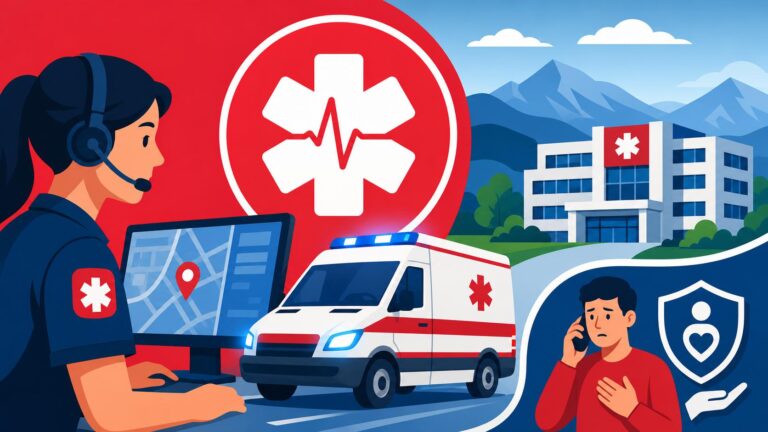
While we’ve focused on the "in-between" services, sometimes the situation really is an emergency. If someone is unconscious, having trouble breathing, or has suffered a major injury, the after-hours clinics are not the place for you. You need a hospital. In Austria, the emergency number is 144.
When you call 144, you are connected to the "Rettungsdienst" (Ambulance Service). They are incredibly professional and fast. Unlike some other countries, the paramedics in Austria have a high level of training and can begin life-saving treatments the moment they reach you. For a deeper dive into these numbers, see Emergency Numbers: 144 Ambulance, 133 Police, 122 Fire.
When to Call 144 vs. Visiting a Clinic
The rule of thumb is simple: if the "time to treatment" is the critical factor for survival, call 144. If you can wait an hour or two without the risk of permanent damage or death, use the 1450/141 pathway. Calling an ambulance for a minor issue like a common cold is not only frowned upon but can lead to questions about the necessity of the transport.
If you do decide to drive yourself to the hospital, make sure you go to one that has an "Unfallambulanz" (Accident Clinic) or a "Notaufnahme" (Emergency Intake). Not every hospital in Austria is a full-service emergency center. Some are specialized clinics that do not take walk-in emergencies at night. Using How to Find the Nearest Sunday Pharmacy (Nachtapotheke) or the 1450 line can help you identify which hospital is actually "on intake" for your district that night.
Survival Tips for the Waiting Room
If you end up in a weekend clinic or a hospital waiting room, patience is your best friend. The Austrian triage system is based on medical urgency, not the order of arrival. You might see five people who arrived after you get called in first; this simply means their condition was deemed more critical.
Bring a book, a charger for your phone, and your e-card. If you don't have your e-card with you, you may be asked to pay a "Kaution" (deposit) which can be quite high, often over 100 Euros. You will get this back once you present your e-card at a later date, but it’s a hassle you’ll want to avoid. If you've lost yours, refer to the Lost e-card: Reporting and Replacement Process Explained guide immediately.
Actionable Checklist for After-Hours Care
To ensure you are prepared for a medical hiccup in the middle of the night, keep this checklist handy:
- Save the Numbers: Put 1450 (Advice), 141 (Night Doctor), and 144 (Emergency) in your contacts now.
- Know Your Nearest Nachtapotheke: Use the "Apo-App" or 1455 to find the pharmacy rotation for your neighborhood.
- Keep Your e-card Handy: Always know where your card is. Check that the photo is up to date according to The e-card Photo Requirement: How and Where to Register rules.
- Identify Your Weekend Clinic: Check the Finding Medical Care in Austria: Clinics, Hospitals, and Referrals list or the local Ärztekammer website on Friday afternoon to see which local GP is on call for the weekend.
- Translate Your Symptoms: If your German is weak, have a few key phrases ready: "Ich habe Schmerzen" (I have pain), "Fieber" (fever), "Atemnot" (difficulty breathing).
Living in Austria means adapting to a different rhythm of life, and the medical system is no exception. While it might feel frustrating that your local doctor isn't available 24/7, the backup systems—1450, 141, and the rotating pharmacies—are world-class. Once you know how to pull the right levers, you’ll find that help is always available, even in the quietest hours of a Sunday morning.
Health and Medical Disclaimer
The information provided in this article is for informational and educational purposes only and is not intended as medical advice, diagnosis, or treatment. Always seek the advice of a qualified healthcare provider with any questions you may have regarding a medical condition. Never disregard professional medical advice or delay in seeking it because of something you have read here. If you are experiencing a medical emergency, call 144 immediately.