Top-Loading vs Front-Loading Compact Washing Machines
Finding an apartment in an Austrian city is already a victory, but the real challenge begins when you try to fit a modern life into a 100-year-old bathroom. I spent my first three weeks in Vienna washing socks in the sink because I couldn't find a machine that didn't block the toilet or the shower door. This guide solves the compact laundry puzzle for every expat facing the unique spatial constraints of Austrian housing.
The Spatial Reality of Austrian Apartments
When you move into a classic Altbau, you are dealing with thick walls and layouts designed long before the invention of the automated washing machine. Often, the plumbing is shoehorned into a tiny corner of the bathroom or, quite frequently in Austria, hidden under a kitchen counter. Before you even look at a catalog, you need to understand that every centimeter counts in these configurations. If you are still in the process of searching for a home, understanding Altbau vs Neubau: Differences in Rent, Charm, and Heating can help you anticipate these laundry hurdles before you sign a lease.
The first step is measuring the "Schleuse" or the narrow hallways common in Viennese apartments. It does not matter if the machine fits in the bathroom if it cannot get through the bathroom door. Many internal doors in older buildings are narrower than the standard 60cm width of a front-loading machine. In some cases, an entire door frame has to be removed just to get a standard front-loading unit inside. This is where the choice between top-loading and front-loading becomes more than a preference—it becomes a necessity.
In many modern Neubau apartments, you might have a dedicated niche with a "Waschmaschinenanschluss" (washing machine connection). However, even these can be surprisingly shallow. You should also consider the shared facilities. Many larger apartment blocks in Austria offer a "Waschküche" (communal laundry room) in the basement. Before buying, check your rental contract to see if you even need a private machine, as some landlords prefer you use the communal system to prevent water damage in the units. You can find more details on these norms in the Living in Austria 2027: The Expat Starter Guide.
Front-Loading Compact Machines The Versatile Choice
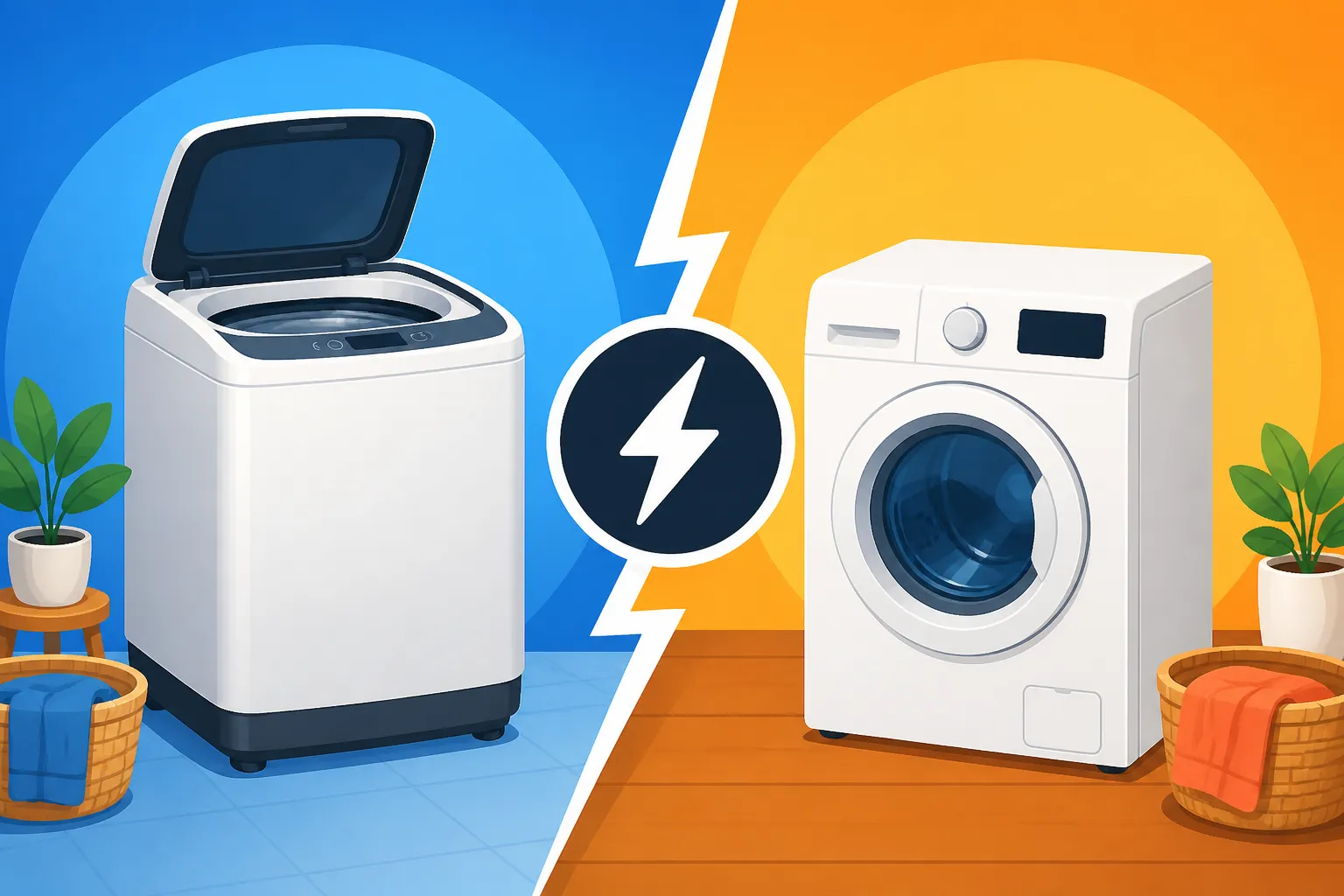
Front-loading machines are the standard in most of Europe, including Austria. When we talk about "compact" front-loaders, we are usually looking at two sub-categories: "Slim" models and "Mini" models. A standard machine is 60cm deep, but a slim model can go down to 40cm or 45cm. This is often the difference between being able to close your bathroom door and having to leave it permanently ajar.
The primary advantage of a front-loader in an Austrian context is the ability to use the top surface. In a small bathroom, that machine becomes your vanity or a place to stack your towels. If your plumbing is in the kitchen—a very common setup here—you will likely need an "Unterbau" (under-counter) model. These allow you to remove the top lid of the machine so it can slide directly under the kitchen worktop. If you are currently setting up your first home, you might want to look at Affordable Furniture Shopping: IKEA, XXXLutz, and Willhaben to find cabinetry that complements these installations.
However, front-loaders have a significant "swing radius." You must account for the space required to fully open the door to load and unload laundry. In a narrow hallway-style bathroom, a front-loader might fit against the wall, but you won't be able to get your laundry out without hitting the opposite wall or the bathtub. If you find yourself in this tight spot, you’ll need to look specifically for "Compact" units with a 3kg to 5kg capacity, which are smaller in height and width, though these are rarer and often more expensive than their full-sized counterparts.
Top-Loading Machines The Space Saving Hero
In North America, top-loaders are seen as old-fashioned, but in Austria, they are the high-tech solution for tiny spaces. A typical top-loader here is only 40cm wide. It is tall and deep, but that narrow width is a lifesaver for those awkward gaps between the sink and the wall. I eventually switched to a top-loader in my second apartment because it was the only way to keep the Everyday Etiquette: Garbage Sorting, Noise, and Ruhezeit standards of my building by keeping the machine tucked away where it wouldn't vibrate against the thin bathroom partition.
The ergonomics of a top-loader are also a major plus. You don't have to crouch down to load the laundry, which is something your back will thank you for if you live in a fourth-floor walk-up. Furthermore, top-loaders in Europe are designed with "Soft Open" lids and drum positioning that stops the opening at the top every time. They are not the agitator-style machines you find elsewhere; they use a drum similar to a front-loader, just oriented differently. This means they are just as gentle on your clothes as a front-loading unit.
The downside is that you lose the surface area. You cannot install a top-loader under a counter, and you cannot stack a dryer on top of it. In Austria, where space is at a premium and most people air-dry their clothes on a "Wäscheständer" (drying rack), this might not be a dealbreaker. If you are worried about moisture from air-drying, be sure to read up on Preventing Mold (Schimmel) in Old Altbau Apartments to keep your home healthy.
| Feature | Compact Front-Loader | Slim Top-Loader |
|---|---|---|
| Typical Width | 60 cm | 40 cm |
| Typical Depth | 40-45 cm | 60 cm |
| Installation | Under-counter or Stackable | Freestanding only |
| Top Surface | Usable for storage | Not usable (lid opens up) |
| Best For | Kitchens & Large Bathrooms | Tiny Bathrooms & Nooks |
| Capacity | 4kg to 7kg | 5kg to 7kg |
Technical and Cultural Considerations for Laundry in Austria
Before you click "buy" on a site like MediaMarkt or Amazon.at, you need to verify your connections. Austrian plumbing usually involves a "Zulauf" (water inlet) and an "Ablauf" (drainage). If your apartment doesn't have a dedicated drain pipe, you might have to drain the machine into the bathtub or sink, which requires a secure U-bracket to prevent flooding. If you aren't comfortable with this, it's worth Finding English-Speaking Plumbers and Electricians to handle the initial setup. A leak in an Austrian apartment can lead to massive liability claims, so getting it right is crucial.
Energy efficiency is another major factor. Electricity prices in Europe are high, and the EU energy label (A to G) is strictly followed. A compact machine might be cheaper upfront, but an "A" rated machine will save you significant money over the years. This is especially true if you are trying to manage your Estimating Average Utility Costs (Electricity/Gas) in Winter effectively. Look for machines with a "Short Wash" or "Eco" mode, as these are highly valued in the Austrian market.
Finally, we must talk about the "Ruhezeit." Austrians take their peace and quiet very seriously. Most rental agreements and house rules (Hausordnung) forbid the use of washing machines after 10:00 PM and before 6:00 AM, as well as all day on Sundays and public holidays. If you buy a cheap machine that vibrates like a jet engine during the spin cycle, your neighbors will complain. Look for "Inverter Motors" or "Silent Mode" features. If your machine is particularly loud, you can buy a "Vibrationsdämpfer" (a thick rubber mat) at stores like OBI or Bauhaus to place underneath it. This small investment can prevent a lot of tension with the person living below you.
Maintenance and Longevity in the Austrian Climate
Austria’s water is often quite "hard" (kalkhaltig), particularly in regions like Vienna that get their water from the mountains. This limestone buildup can destroy the heating element of a compact washing machine in just a few years. It is standard practice here to use a descaler like "Calgon" or a cheaper store-brand "Antikalk" tabs with every wash. If you notice your machine taking longer to heat the water, it's a sign that the scale is building up.
Another local tip is the "Thermenwartung" period. While the technician is there to check your gas boiler, they often have great advice on the general plumbing health of your bathroom. You should also ensure that your Household Insurance (Haushaltsversicherung) Explained policy specifically covers "Leitungswasserschäden" (water pipe damage), which includes accidents caused by washing machine hoses bursting. Many expats overlook this until they are facing a bill for a ruined ceiling in the apartment downstairs.
If you are on a budget, don't forget the second-hand market. Austrians are very meticulous with their appliances, and you can often find high-end Miele or Siemens compact machines on local platforms. Just make sure you follow the advice in Sourcing Cheap Used Furniture on Willhaben Safely to avoid scams. A well-maintained second-hand Miele will often outlast a brand-new "budget" machine and offer much quieter operation during those sensitive evening hours.
Making the Final Decision
Choosing between these two comes down to a simple "tape measure test." If you have a space that is 60cm wide but very shallow, the slim front-loader is your best friend. If you have a narrow gap but plenty of depth, the top-loader is the undisputed champion.
Consider your lifestyle as well. If you are a student or a single professional, a 4kg mini front-loader might be plenty. However, if you are Moving to Austria with Family: Schools and Logistics, you will find that a 7kg top-loader is necessary to keep up with the endless cycle of school clothes and sports gear. Whatever you choose, ensure the machine has a "High Spin" (1200-1400 RPM) capability, as air-drying in a humid Austrian winter can take days if the clothes are still dripping wet.
Taking the time to choose the right machine isn't just about clean clothes—it's about making your limited Austrian square footage work for you rather than against you. Once the machine is installed and the first load is spinning quietly during legal hours, you’ll truly start to feel at home in your new city.
Disclaimer
The information provided in this guide is for informational purposes only and based on personal expat experiences and general Austrian housing standards as of 2026. Laws, appliance specifications, and rental regulations can change. Always consult your specific rental agreement and a qualified technician for plumbing installations to ensure compliance with local safety standards and insurance requirements.