Nudity Rules in Austrian Saunas and Wellness Centers
Walking into an Austrian wellness center for the first time often results in a specific kind of paralyzing culture shock: the moment you realize your swimsuit is actually forbidden. I vividly remember my first trip to a Styrian spa, standing frozen in my bikini while a group of pensioners chatted comfortably nearby without a stitch of clothing on. This guide serves as your cultural roadmap to navigating the "textile-free" zones of Austrian saunas with confidence and grace.
The Cultural Roots of FKK and Nudity in Austria
To understand why Austrians are so comfortable being naked in public wellness spaces, you have to understand the concept of Freikörperkultur, or FKK. This translates literally to "free body culture." It is a philosophy that has been deeply embedded in Central European life for over a century. Unlike in many English-speaking countries, nudity in a wellness context is not viewed as sexual or scandalous; it is seen as a natural, healthy, and egalitarian state. When you enter a sauna in Austria, you are leaving your social status and your modesty at the door in favor of health and relaxation.
This cultural perspective is something most newcomers struggle with initially. You might feel exposed or vulnerable, but to the locals, someone wearing a swimsuit in a sauna is the one behaving strangely. Wearing synthetic materials in a high-heat environment is considered unhygienic because the heat causes the fabric to release chemicals and traps sweat against the skin, which is the antithesis of the "purifying" experience Austrians seek. Understanding this is the first step toward overcoming Culture Shock: Adapting to Direct Austrian Communication regarding local rules.
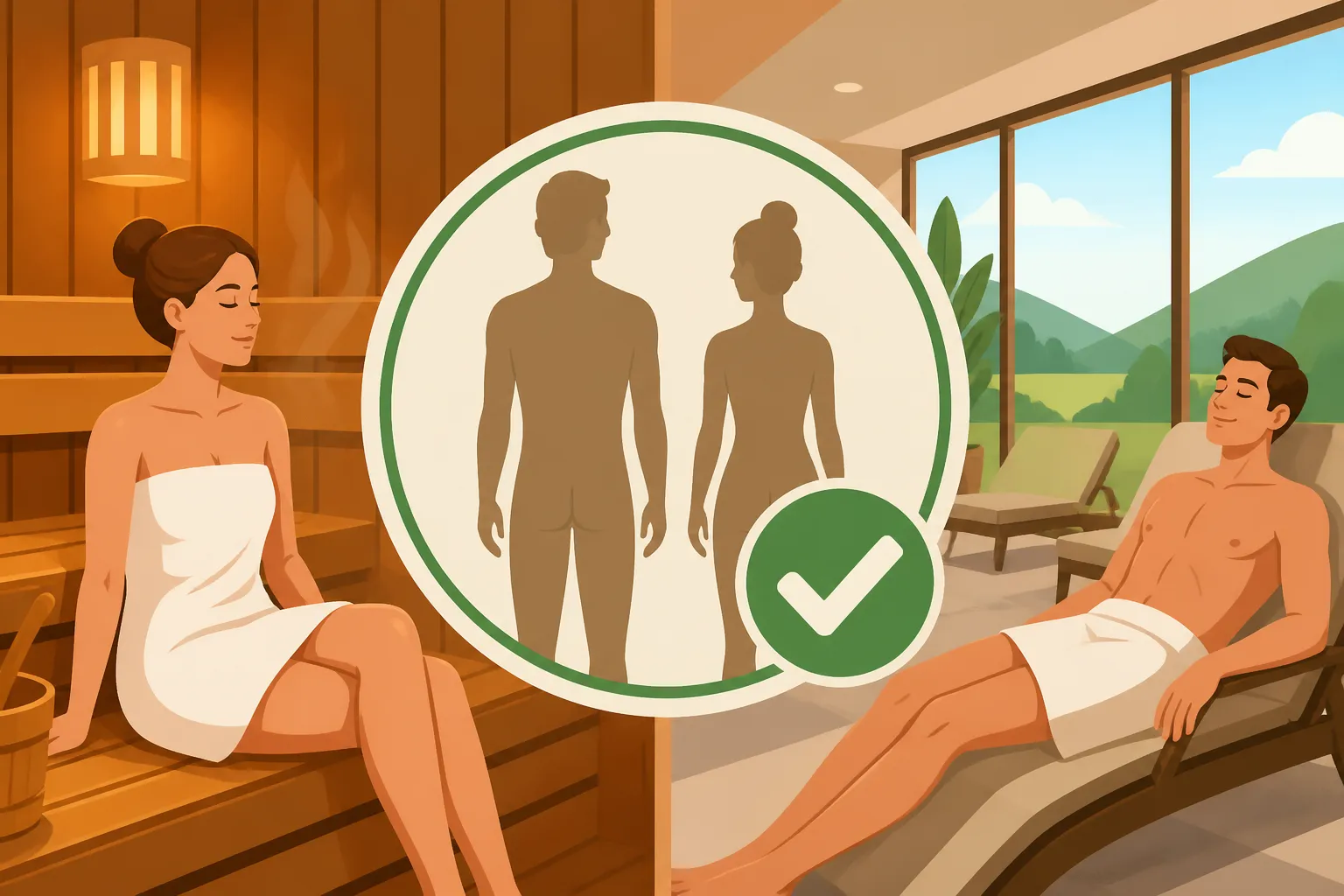
In most large wellness complexes, known as a Therme, you will find two distinct areas. The pool area is for families and is "textile-mandatory," meaning swimsuits are required. However, the "Sauna World" or "Wellness Area" is almost always "textile-free." Once you cross that threshold, your swimsuit must stay in your locker or be carried in your bag. This is a standard rule across the country, whether you are visiting a high-end spa or a local gym. If you are just starting your journey in the country, this is a core part of Living in Austria 2027: The Expat Starter Guide when it comes to social integration.
Essential Etiquette and the Unwritten Laws of the Sauna
Once you’ve braced yourself for the nudity, the next hurdle is the etiquette. Austrians take their sauna rules very seriously, and failing to follow them will likely result in a very direct verbal correction from a fellow guest. The most important rule—the golden rule of the Austrian sauna—is "no sweat on wood." This means you must always have a towel large enough to cover the entire area where your body touches the wooden benches. Your feet, your back, and your seat must all be buffered by your towel.
Hygiene is the cornerstone of the experience. Before you even think about entering a sauna cabin or a steam room, you must take a thorough shower. This isn't just a quick rinse; it's a full soap-and-water scrub to ensure the communal waters and high-heat rooms remain clean. After you leave a sauna and before you jump into the "Kaltbecken" (the ice-cold plunge pool), you must shower again to rinse off the sweat. Skipping this step is considered one of the biggest social faux pas you can commit.
The social atmosphere inside the sauna is generally one of silence or very low-volume whispering. These are designated quiet zones intended for meditation and physical recovery. While you might see locals who have known each other for decades sharing a quiet joke, as a newcomer, it is best to remain silent. This focus on tranquility is part of why saunas are often recommended as a supplement to Mental Health in Austria: Counseling, Therapy, and Expat Support.
| Sauna Category | Average Temp | Humidity Level | Recommended Duration |
|---|---|---|---|
| Finnish Sauna | 80°C – 100°C | 5% – 10% | 8 – 15 minutes |
| Bio Sauna | 50°C – 60°C | 40% – 55% | 15 – 25 minutes |
| Steam Bath | 40°C – 50°C | 100% | 10 – 20 minutes |
| Infrared Cabin | 35°C – 45°C | Low | 20 – 30 minutes |
The Art of the Aufguss Ritual
The highlight of any Austrian sauna visit is the Aufguss. This is a scheduled ritual where a "Saunameister" (sauna master) enters the cabin, pours water infused with essential oils over the hot stones, and uses a towel to circulate the hot, fragrant steam around the room. It is a sensory experience that is both intense and deeply relaxing. If you see a crowd gathering outside a sauna door five minutes before the hour, an Aufguss is likely about to begin.
Participating in an Aufguss requires a specific set of behaviors. First, arrive early. Once the Saunameister closes the door to begin the ritual, it is considered extremely rude to enter, as it lets the carefully managed heat escape. If the heat becomes too intense for you during the ritual, you are allowed to leave, but you should do so quickly and quietly. Once you leave, you cannot re-enter until the session is finished. The Saunameister will often perform "rounds," waving the towel to create a "heat wave" that hits the participants. It is customary to stay for the full three rounds, which usually takes about 10 to 12 minutes.
After the Aufguss, the ritual continues outside. The standard procedure is to walk into the fresh air—most wellness centers have a "Saunagarten" or outdoor balcony—to cool your lungs first. Then, you head to the showers to rinse off the sweat with lukewarm water, followed by a dip in the cold plunge pool. Finally, you must rest. The "Ruheraum" (relaxation room) is where you spend at least 20 to 30 minutes wrapped in a robe, allowing your heart rate to normalize. This cycle of hot, cold, and rest is a pillar of Preventive Care: Gesundenuntersuchung and Routine Checkups for many health-conscious residents.
Practical Tips for the Self-Conscious Expat
If the idea of being completely naked still feels daunting, there are ways to ease into the experience. Many wellness centers offer "Damensauna" (ladies-only) days or specific hours where the area is restricted to women. This can be a much more comfortable environment for those who aren't used to mixed-gender nudity. You can check the websites of major spas in your area for these schedules; for instance, the Vienna Neighborhood Guide: Best Districts for Expats often includes local "Bezirksbäder" that offer these private sessions.
Another tip is to bring two towels. Use one large "Saunatuch" for sitting on inside the cabins and a second, drier towel for showering and drying off later. You should also bring a bathrobe (Bademantel) and flip-flops (Badeschlappen). While you are naked inside the sauna, you are expected to wear your robe when walking between the different saunas or resting in the café area. Flip-flops are essential for hygiene while walking around, but they must be left outside the door of the sauna cabin itself—never wear plastic shoes onto the wooden benches.
Finally, keep your eyes to yourself. The "unspoken gaze" in an Austrian sauna is much like the gaze on a crowded subway: you look at the walls, the ceiling, or close your eyes entirely. Staring is not only rude but can make others feel uncomfortable in a space that is supposed to be safe. If you find yourself in a situation where you need to greet someone, a simple "Guten Tag" or "Grüss Gott" is sufficient, as noted in our guide on Austrian Greetings: Grüss Gott, Servus, and Handshakes.
Navigating Costs and Accessibility
Visiting a Therme or a wellness center is not an inexpensive hobby, but it is considered a vital part of the Austrian lifestyle. Prices can range from 20 EUR for a three-hour "evening ticket" at a local pool to over 50 EUR for a full day at a luxury resort like Therme Wien or Rogner Bad Blumau. If you are budgeting for your move, keep in mind that wellness is a frequent line item in the Cost of Living in Vienna: Singles vs Families.
Many residents actually have some of these costs covered or incentivized through their health insurance. For example, staying active and utilizing wellness facilities can sometimes earn you "bonus points" or discounts on certain private supplementary plans. Understanding the nuances of Public vs Private Health Insurance in Austria Explained can help you determine if your insurance provider offers any wellness grants (SVA-Gesundheitshunderter, for instance, is a common one for the self-employed).
Even if you aren't a "spa person," the health benefits are hard to ignore. Regular sauna use is credited with improving circulation, boosting the immune system, and aiding in respiratory health. This is why it remains a central feature of Annual Free Health Checkup (Gesundenuntersuchung) Details discussions when doctors recommend lifestyle changes to manage stress or chronic minor ailments. Embracing the heat—and the nudity—might just be the most "Austrian" thing you do this year.
Disclaimer
This article is for informational purposes only and does not constitute medical or legal advice. Always consult with a healthcare professional before beginning a new high-heat wellness routine, especially if you have underlying cardiovascular conditions. Regulations regarding nudity and dress codes may vary by individual establishment; always check the specific house rules (Hausordnung) of the facility you are visiting.