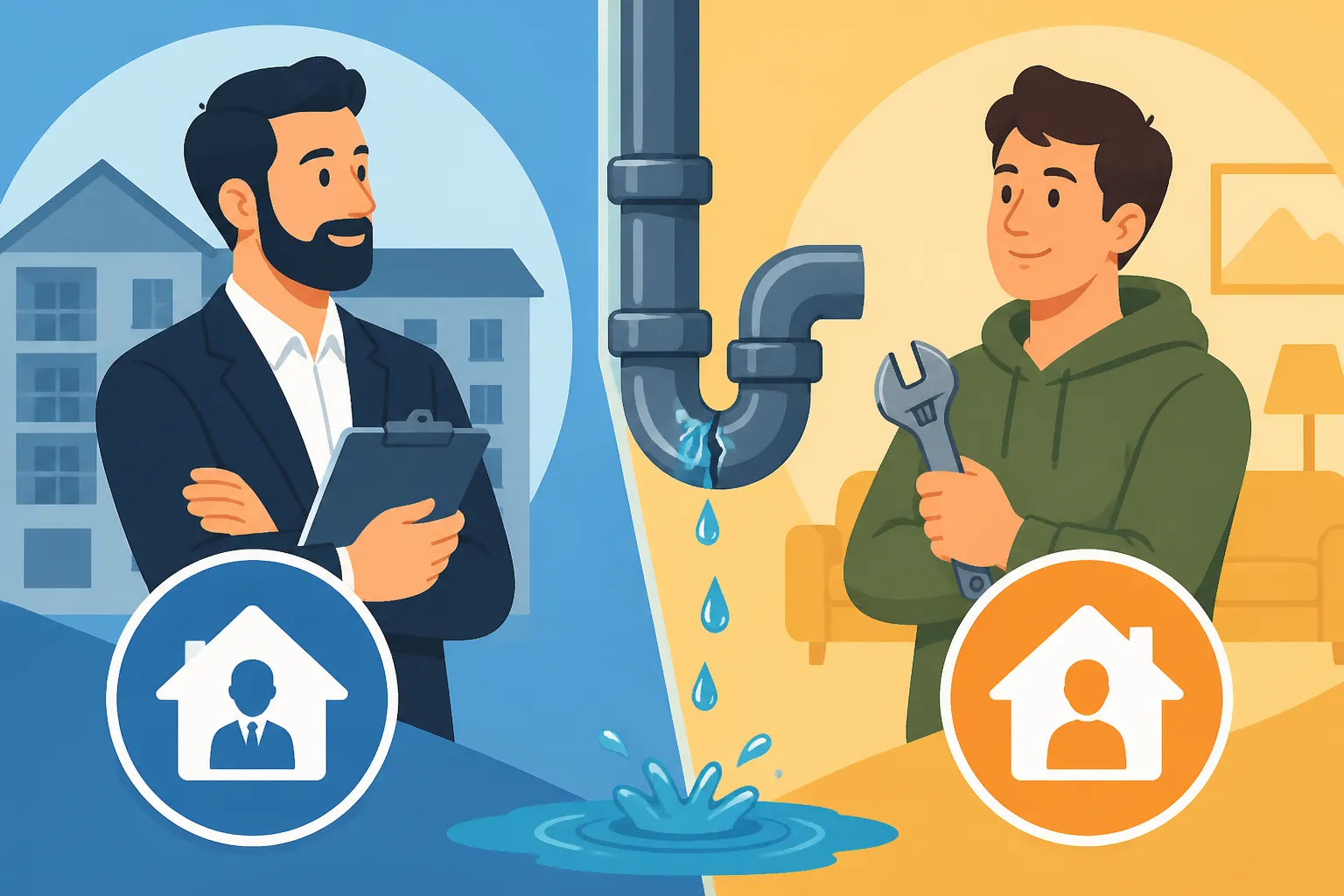
Plumbing Leaks: Landlord vs Tenant Repair Responsibilities
Waking up to the sound of water dripping onto your parquet floor is a universal nightmare, but in Austria, the anxiety is doubled by the complex Mietrechtsgesetz (MRG) laws. I remember the panic of my first leak in a Vienna Altbau, staring at a damp patch on the ceiling and wondering if my security deposit was about to vanish into a legal vacuum. This guide clarifies exactly who pays for what, helping you navigate the delicate balance between tenant maintenance and landlord structural responsibility.
Understanding the Austrian Mietrechtsgesetz and Maintenance
The first thing any expat needs to understand is that Austrian rental law, or the Mietrechtsgesetz (MRG), is the backbone of your rights and obligations. However, it is not a "one size fits all" document. Whether your apartment is in an Altbau vs Neubau: Differences in Rent, Charm, and Heating significantly impacts which parts of the law apply to you. Generally, the law distinguishes between "full application," "partial application," and "non-application" of the MRG. This distinction dictates whether your landlord is strictly bound by statutory maintenance rules or if your individual lease contract carries more weight.
In most residential leases, the responsibility for the "proper state" of the building falls on the landlord. This includes the building's exterior, the roof, and the common areas. Inside your four walls, the lines get a bit blurrier. The landlord is legally obligated to fix "serious damage" to the property. This typically refers to issues that affect the structural integrity of the building or pose a health risk, such as a major pipe burst inside a wall or a failing gas line. If the water is coming from a source you cannot access without a hammer and a chisel, you are likely looking at a landlord responsibility.
However, as a tenant, you have a "duty of care." This means you are expected to maintain the interior of the apartment so that it doesn't deteriorate. While you aren't expected to renovate the place, you are expected to handle minor maintenance. This is where the term "Schönheitsreparaturen" (cosmetic repairs) and "Gebrauch" (usage) come into play. If a faucet starts dripping because the washer has worn out after five years of your use, the system often views this as a tenant maintenance issue. Understanding these nuances is vital before you call a 24-hour emergency plumber and get stuck with a 500 Euro bill.
When the Landlord Must Pay for Plumbing Issues
In the Austrian legal framework, the landlord's primary duty is "Erhaltung," or preservation. This means they must ensure the apartment remains in a habitable state. When it comes to plumbing, this almost always covers the "hidden" infrastructure. If a pipe bursts behind your kitchen tiles or under the floorboards of your bathroom, this is considered a structural issue. Since you, as a tenant, have no way of maintaining or preventing wear on pipes buried in concrete, the financial burden for the repair—and the subsequent restoration of the wall or floor—falls squarely on the landlord or the Hausverwaltung (property management).
Another critical area of landlord responsibility involves issues that lead to Preventing Mold (Schimmel) in Old Altbau Apartments. If a slow leak from a communal drain pipe causes moisture to seep into your walls, the landlord must intervene. Under Austrian law, a tenant has the right to a rent reduction (Mietzinsminderung) if the apartment's use is significantly impaired by such damage. However, you must notify the landlord immediately. If you notice a damp spot and wait three months to report it, the landlord might argue that your negligence worsened the damage, potentially shifting some of the cost back to you.
Finally, the landlord is responsible for the "standard" equipment that was provided with the apartment if it fails due to old age or structural defects. For example, if the main water shut-off valve for your unit ceases to function, that is a landlord fix. If you are struggling with a complex dispute regarding these structural issues, it is often worth looking into Legal Protection Insurance (Rechtsschutzversicherung) Overview to ensure you have the backing to challenge a stubborn property manager.
Pipes Inside the Walls and Structural Leaks
Structural plumbing is the most common "big ticket" repair. In many older Viennese buildings, the piping can be decades old. When these pipes fail, it isn't just about your apartment; it can affect the neighbors below you. In these cases, the landlord's insurance (Gebäudeversicherung) usually covers the cost of the plumber and the drying equipment. Your role is strictly to provide access and report the issue.
You should never attempt to repair structural pipes yourself. Not only are you likely not qualified, but doing so could void the landlord's insurance policy. If you find yourself in this situation, your first call shouldn't be to a plumber you found on Google, but to the Hausverwaltung. They usually have "contract plumbers" who are familiar with the specific quirks of the building's plumbing system.
Serious Health Hazards and Mold Prevention
Water damage rarely stays "just" water damage. In the porous brickwork of an Austrian Altbau, water travels far and fast. If a leak is left unaddressed, mold is inevitable. Austrian courts have historically been very protective of tenants when it comes to health hazards. If a plumbing leak creates an environment where mold flourishes, the landlord is mandated to not only fix the leak but also professionally remediate the mold.
If the landlord fails to act, you may have grounds for a significant rent reduction. However, documenting the timeline is essential. Take photos of the initial leak, the progression of the dampness, and any mold growth. Keep copies of all emails sent to the Hausverwaltung. This trail of evidence is your best defense if they try to claim the mold was caused by your failure to ventilate the room properly—a common counter-argument in Austrian rental disputes.
Tenant Responsibilities: Small Repairs and Maintenance
While the "big pipes" belong to the landlord, the "visible bits" often belong to the tenant's maintenance sphere. This is the area of "minor repairs." In Austria, it is generally accepted that things like showerheads, flexible hoses, and the seals on your faucets are the tenant's responsibility to maintain and, if necessary, replace. If your shower hose starts leaking because it’s been kinked too many times, don't expect the landlord to send a technician. You are expected to head to the nearest hardware store and swap it out.
Clogged drains are another frequent point of contention. If a drain is clogged because of "normal usage"—which the law sometimes interprets as a buildup of hair or grease—the tenant is usually responsible for the cleaning cost. However, if the clog is located deep within the building's vertical stack (the "Fallleitung"), it becomes the landlord's problem. A good rule of thumb: if a plunger or a basic store-bought drain cleaner doesn't fix it, and the blockage is affecting multiple fixtures, it’s time to call the Hausverwaltung.
One of the most specific tenant duties in Austria is the Gas Boiler Maintenance (Thermenwartung): Tenant Responsibility. While the boiler itself is a piece of plumbing/heating equipment, the annual servicing is almost always the tenant's financial burden. This is not just a suggestion; it is a contractual obligation. Failing to do this can lead to the tenant being held liable if the boiler breaks down or, worse, if a leak occurs due to lack of maintenance.
Faucets, Siphons, and Clogged Drains
The "Siphon" (the U-bend under your sink) is the most common site for tenant-side plumbing issues. If your sink is draining slowly, it is your job to unscrew that Siphon and clean it out. It’s a messy job, but it’s part of living in an Austrian apartment. Similarly, if a faucet starts to leak from the handle, it usually requires a new cartridge or O-ring.
If you are not handy, you might need to hire help. Finding a reliable professional can be tricky, so checking a guide on Finding English-Speaking Plumbers and Electricians can save you from a lot of "lost in translation" moments. Keep in mind that for these small repairs, you are paying out of pocket. This is why many expats choose to have Household Insurance (Haushaltsversicherung) Explained which sometimes includes "Home Assistance" services for minor emergencies.
The Gas Boiler Maintenance Rules
The "Therme" (gas boiler) is the heart of most Austrian apartments. Every year, you must have a professional technician service the unit. They will check for gas leaks, clean the burners, and ensure the pressure is correct. You must keep the receipt for this service. If the boiler breaks and you cannot prove you had it serviced in the last 12 months, the landlord can legally refuse to pay for the repair, even if the part that failed had nothing to do with the service.
The breakdown of costs for a boiler is usually:
- Tenant: Annual maintenance (Wartung) and cleaning.
- Landlord: Replacement of major parts (e.g., the heat exchanger) or the entire unit, provided the tenant has proof of regular maintenance.
| Issue | Responsibility | Typical Cost Coverage |
|---|---|---|
| Burst pipe inside a wall | Landlord | 100% (Landlord Insurance) |
| Leaking shower hose | Tenant | 100% (Out of pocket) |
| Annual Gas Boiler Service | Tenant | 120 – 200 EUR |
| Replacing a 20-year-old boiler | Landlord | 100% (If maintained) |
| Clogged kitchen sink (grease) | Tenant | 100% (Out of pocket) |
| Main building drain blockage | Landlord | 100% (Building costs) |
Immediate Steps to Take When You Find a Leak
When you find water where it shouldn't be, the first 30 minutes are crucial. Your priority is damage limitation. Turn off the main water valve if the leak is localized to your unit. In most Austrian apartments, this valve is located in the bathroom or under the kitchen sink. If you can't find it, you need to ask your Hausverwaltung for a "building tour" the day you move in. Knowing where this valve is can be the difference between a minor annoyance and a 10,000 Euro flooring replacement.
Once the water is off, document the scene. Use your phone to take video and photos. This is not just for the landlord; it's for your Personal Liability Insurance (Privathaftpflicht): A Must-Have. If the water from your leaking washing machine damaged the ceiling of the neighbor below, your liability insurance is what will protect you from their repair claims. In Austria, liability insurance is often bundled with your household insurance, and it is arguably the most important document you will own as a tenant.
After documenting, contact the Hausverwaltung immediately via phone and follow up with an email (Schriftlichkeit). In Austria, official communication is still very much driven by "writing." An email creates a timestamped record that you fulfilled your duty to report the damage. If it’s outside of business hours, check the notice board in the hallway (Hausflur) of your building. There is almost always a list of emergency numbers for plumbers and electricians authorized by the building management.
Documenting Everything for Your Insurance
Insurance companies in Austria are meticulous. If you file a claim for damaged furniture or rugs due to a plumbing leak, they will want to see proof of the cause. Do not throw away the faulty part (like a burst washing machine hose) until the insurance adjuster has given the okay. If the leak was caused by an appliance you own, your household insurance covers your belongings, while your liability insurance covers damage to the building or neighbors.
If the leak was structural, the landlord's insurance covers the building, but it does not cover your personal items. This is a common misconception among expats. If a pipe in the wall bursts and ruins your 3,000 Euro laptop, the landlord is not legally required to replace the laptop—only to fix the wall. This is why having your own policy is non-negotiable.
Contacting the Hausverwaltung Correctly
When dealing with a Hausverwaltung, be firm but polite. Use terms like "Gefahr im Verzug" (imminent danger) if the water is actively flowing. This triggers a higher priority for them to act. Always ask for an estimated timeline for the repair. If they are slow to respond, remind them of your right to a rent reduction under the MRG if the apartment is partially unusable.
If you are just moving in and worried about these issues, make sure you understand the Understanding Kaution (Deposit) and Provision (Commission) rules. Sometimes, landlords try to deduct "unreported" plumbing wear from your deposit when you move out. Having a clear record of all maintenance and reported leaks during your tenancy is the only way to ensure you get your full deposit back.
Summary of Legal Recourse
If you find yourself in a stalemate with a landlord who refuses to fix a structural leak, you have options. In Vienna, the "Schlichtungsstelle" is a government body designed to resolve landlord-tenant disputes without needing a full court case. They are incredibly helpful and often side with the tenant if the evidence of structural neglect is clear. Additionally, the Mietervereinigung (Tenants' Association) or the Arbeiterkammer (Chamber of Labour) offer legal consultations for a very small fee or as part of your membership.
Navigating the waters of Austrian plumbing isn't just about wrenches and gaskets; it's about knowing where your "four walls" end and the landlord's "building" begins. By keeping your boiler serviced, having the right insurance, and knowing how to communicate with your Hausverwaltung, you can turn a potential disaster into a manageable repair.
Disclaimer
This guide is provided for informational purposes only and does not constitute legal advice. Austrian rental laws are subject to change and may vary based on specific lease agreements and regional regulations. Always consult with a qualified legal professional or a tenant advocacy group like the Mietervereinigung for advice regarding your specific situation.