Public Holiday Closing Times: Navigating Feiertage Errands
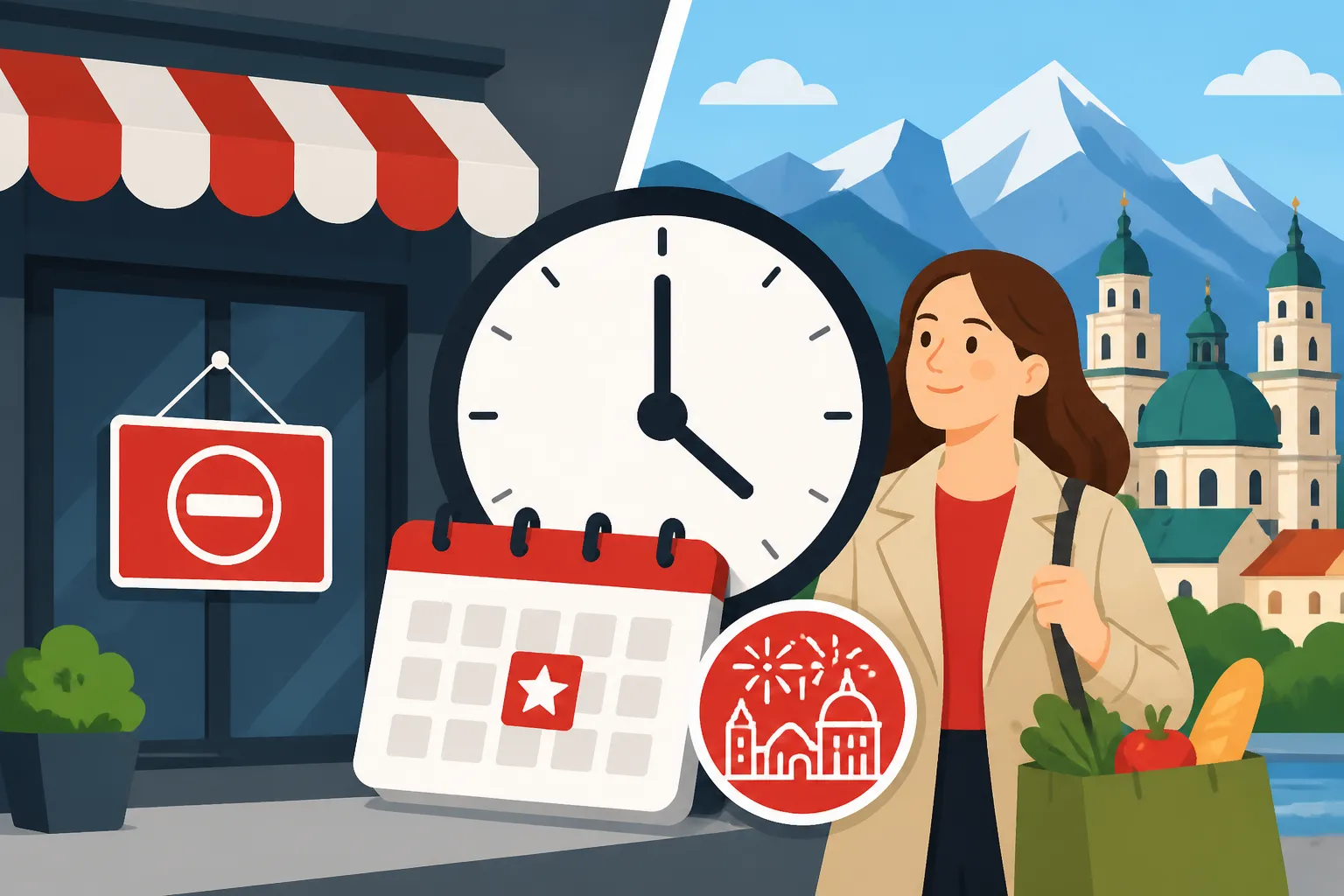
Nothing quite matches the visceral panic of standing in front of a locked supermarket door at 6:30 PM on a Friday, only to realize that tomorrow is a public holiday and everything will remain shut until Monday morning. I still remember my first Whit Monday in Vienna, staring at an empty fridge and wondering if I was expected to hibernate for 48 hours. This guide solves the confusion surrounding Austrian public holiday closing times so you never go hungry or miss an errand again.
The Cultural Reality of Austrian Feiertage
In Austria, public holidays—known as Feiertage—are taken very seriously. Unlike many other countries where a holiday might just mean slightly shorter opening hours, in Austria, it represents a near-total shutdown of the retail and administrative sectors. This stems from a deep-rooted cultural and legal tradition that prioritizes rest and family time over commercial convenience. For an expat, this can be one of the steepest learning curves, especially if you come from a "24/7" culture.
The legal framework governing this is the Opening Hours Act, which strictly limits when shops can operate. While there have been minor relaxations over the years, the core principle remains: if it is a holiday or a Sunday, the shutters stay down. This is why understanding Sunday Shopping Laws: Why Everything is Closed is essential for any newcomer. It isn't just about the shops being closed; it’s about a shift in the city's energy. The streets become quieter, the pace slows down, and if you haven’t planned your grocery run by Saturday afternoon, you will find yourself in a very long queue at one of the few "exception" stores.
A unique Austrian phenomenon you must prepare for is the "Fenstertag" or "window day." This occurs when a public holiday falls on a Thursday or a Tuesday. Many Austrians will take the Friday or Monday off to create a four-day weekend. While major supermarkets will be open on these "window days," many smaller, family-run businesses, doctor's offices, and specialist boutiques might simply close for the duration. Always check the door of your local bakery or tailor a few days in advance; they often post handwritten signs announcing their temporary closure.
Navigating Grocery Shopping During Holidays
If you find yourself with an empty pantry on a Feiertag, do not lose hope, but do prepare for a bit of a trek. The law allows for certain exceptions, primarily for shops located in major transportation hubs like train stations (Bahnhöfe) and airports. In Vienna, for instance, the Billa at Praterstern or the Spar at Franz-Josefs-Bahnhof are legendary among the expat community for being open 365 days a year. However, be warned: these locations are often smaller, more crowded, and the checkout process requires patience as you navigate the Coping with Supermarket Checkout Speeds in Austria which can feel even more intense when the entire district is trying to buy milk at the same time.
Gas station shops, known as Tankstellenshops, are another lifesaver. Many of them have partnered with major supermarket chains like Billa (Billa Stop & Shop) or Spar (Spar Express). While the selection is limited to essentials—bread, eggs, pasta, and some frozen goods—they are open late and on every public holiday. The prices are slightly higher than a standard supermarket, but when it’s 9:00 PM on Ascension Day and you’ve run out of coffee, those extra cents feel like a bargain.
In recent years, we have also seen the rise of autonomous "smart" container shops in rural areas and suburban fringes. These are small, unstaffed kiosks where you can scan your debit card to enter and purchase local produce, dairy, and snacks. They are a fantastic innovation for those living outside the major cities where the nearest open train station might be an hour away. When you are Comparing Grocery Prices: Billa vs Spar vs Hofer, keep in mind that these convenience-based options rarely offer the discount prices you’d find during a standard weekday shop.
| Holiday Name (English) | Austrian Name | 2026 Date | Typical Closing Status |
|---|---|---|---|
| New Year's Day | Neujahr | Jan 1 | All closed |
| Epiphany | Heilige Drei Könige | Jan 6 | All closed |
| Easter Monday | Ostermontag | April 6 | All closed |
| State Holiday (Labor Day) | Staatsfeiertag | May 1 | All closed |
| Ascension Day | Christi Himmelfahrt | May 14 | All closed |
| Whit Monday | Pfingstmontag | May 25 | All closed |
| Corpus Christi | Fronleichnam | June 4 | All closed |
| Assumption of Mary | Mariä Himmelfahrt | Aug 15 | All closed |
| National Day | Nationalfeiertag | Oct 26 | All closed |
| All Saints' Day | Allerheiligen | Nov 1 | All closed |
| Immaculate Conception | Mariä Empfängnis | Dec 8 | Retail often open* |
| Christmas Day | Christtag | Dec 25 | All closed |
| St. Stephen's Day | Stefanitag | Dec 26 | All closed |
*Note: December 8th is a special case where many retail shops are allowed to open to facilitate Christmas shopping, though many smaller boutiques still choose to stay closed.
Essential Errands and Administrative Delays
Public holidays don't just affect your ability to buy a schnitzel; they halt the entire machinery of the state. If you are in the middle of a visa application or need to register your address, you must account for these breaks. Public offices, including the MA 35 in Vienna or any Bezirkshauptmannschaft in the provinces, will be closed. This is why Living in Austria 2027: The Expat Starter Guide emphasizes the importance of checking the calendar before scheduling any move-in activities.
The postal service also takes a break. There are no mail deliveries on Feiertage, and post offices (Postfilialen) are closed. This includes the yellow pickup stations located inside post office foyers if the building itself is locked, though many modern self-service "Poststationen" accessible from the street remain functional. If you are expecting an urgent package, add at least 24 to 48 hours to the estimated delivery time if a holiday is approaching.
Banking is another area where the holiday shutdown is noticeable. While online banking works 24/7, SEPA transfers do not process on bank holidays or weekends. If you have a rent payment due on the 1st of the month and that day is a holiday, the transfer likely won't "leave" your account or arrive in the landlord's account until the next business day. It is always wise to set up a "Dauerauftrag" (standing order) a few days early to avoid any late-payment friction. Even the stock market and physical bank branches will be entirely inaccessible, so ensure you have sufficient cash if you are heading to a rural mountain hut where cards might not be accepted.
Planning Your Social Life: Restaurants and Museums
The good news is that while the commercial world stops, the world of leisure often thrives. Most restaurants, cafes, and traditional Wirtshäuser remain open on public holidays, as these are the days when Austrians go out to eat with their families. In fact, on major holidays like Easter Sunday or Mother’s Day, it is nearly impossible to find a table without a reservation weeks in advance. If you are planning a holiday meal, call ahead or use a booking app rather than just showing up.
Museums and cultural institutions almost always stay open on Feiertage, with the notable exception of some smaller galleries on Christmas Day or New Year's Day. It is actually one of the best times to visit places like the Kunsthistorisches Museum or the Albertina, as the atmosphere is festive and relaxed. However, be aware that public transport runs on a "Sunday schedule" during holidays. This means longer intervals between U-Bahn trains and fewer bus connections in the outer districts. Always check the Wien Mobil app or the ÖBB Scotty app to ensure you don't get stranded after a late dinner.
If you are visiting during the winter months, the holiday schedule becomes even more complex. For example, Etiquette at Austrian Christmas Markets (Christkindlmarkt) changes significantly around December 24th. Most markets close by 4:00 PM on Christmas Eve and may not reopen at all, or only for a few days as "New Year's Markets." It is a time for "Besinnlichkeit" (reflection), and the loud, bustling commercialism of the markets is swapped for quiet family gatherings.
Troubleshooting and Emergency Scenarios
The most stressful part of a public holiday is facing a medical issue when your regular Hausarzt is closed. Do not panic; the system is designed to handle this. For non-life-threatening issues, you can call 1450, the health advice line, where professionals can guide you to the nearest open clinic. If you need a doctor in person, you should look for After-Hours Medical Care: Weekend Clinics and Night Doctors available in your specific district.
Pharmacies (Apotheken) operate on a rotation system called "Bereitschaftsdienst." While your local pharmacy might be closed, there will always be one pharmacy in the area open for emergencies 24 hours a day. You can find the schedule posted on the door of any pharmacy or check online. When you arrive at a pharmacy after hours, the front door will be locked. You will need to press a small buzzer—the How to Use the Night Bell at an After-Hours Pharmacy—and a pharmacist will assist you through a small window. Note that there is a small "Nachtdienstgebühr" (night service fee) added to your purchase during these times.
For true emergencies, the standard Emergency Numbers: 144 Ambulance, 133 Police, 122 Fire are active 24/7, regardless of whether it is Christmas, Easter, or National Day. The hospital emergency rooms (Notaufnahme) are always staffed, but be prepared for longer wait times for non-critical issues, as they often deal with a higher volume of patients on days when regular clinics are shut. Knowing How to Find the Nearest Sunday Pharmacy (Nachtapotheke) before you actually need it is one of the best ways to lower your stress levels during your first year in Austria.
Last-Minute Checklist for Expats
To survive your first few "Feiertage" without the stress of an empty fridge or a missed deadline, keep this checklist in mind:
- The 48-Hour Rule: Always shop for food at least two days before a holiday. The day immediately preceding a holiday is often chaotic, with supermarkets reaching peak capacity by midday.
- Check the "Ruhezeit": Remember that public holidays are treated like Sundays regarding noise. Do not use your washing machine, vacuum, or power tools, as your neighbors will likely remind you of the rules quite firmly.
- Cash is King: While big cities are becoming more card-friendly, some seasonal events or rural cafes open on holidays might still be "Barzahlung" (cash only).
- Digital Backups: Keep the Wien Mobil and 1450 apps on your phone. They are the most reliable sources of truth when the world around you seems to have gone on vacation.
Living in Austria means embracing the rhythm of these breaks. Once you get past the initial frustration of the "closed" signs, you’ll find there is something quite beautiful about a country that collectively decides to stop working for a day and just breathe.
Disclaimer
This guide is provided for informational purposes only and reflects the general status of public holiday regulations in Austria as of 2026. Opening hours for specific stores, pharmacies, and public offices can change without notice. Always verify local listings or official government announcements for the most current information regarding specific holidays and emergency services in your district.